Frost and Fire by Ray Bradbury: Summary, Themes, Meaning & Analysis
Ray Bradbury’s Frost and Fire is a powerful work of science fiction that combines a thrilling survival story with profound questions about time, mortality, human ambition, and the desire to overcome impossible limitations. Set on a hostile planet where human beings are born, mature, and die within just eight days, the story explores what it means to live a meaningful life when time itself becomes humanity’s greatest enemy. Through Sim’s determination to escape the cycle of suffering, Bradbury examines both the resilience and the restlessness that define the human spirit.
Beyond its dramatic setting, Frost and Fire reflects many of Bradbury’s recurring concerns about hope, scientific progress, human nature, and the tension between accepting fate and challenging it. Although filled with spectacular speculative ideas, the story remains deeply human, asking readers whether courage lies in accepting life's limits or refusing to surrender to them. As with many of Bradbury’s finest stories, it rewards close analysis of its symbolism, structure, and philosophical questions. For more analyses of Bradbury's fiction, explore the Ray Bradbury Hub, or browse the wider Literature Library for additional short stories, novels, and poetry guides.

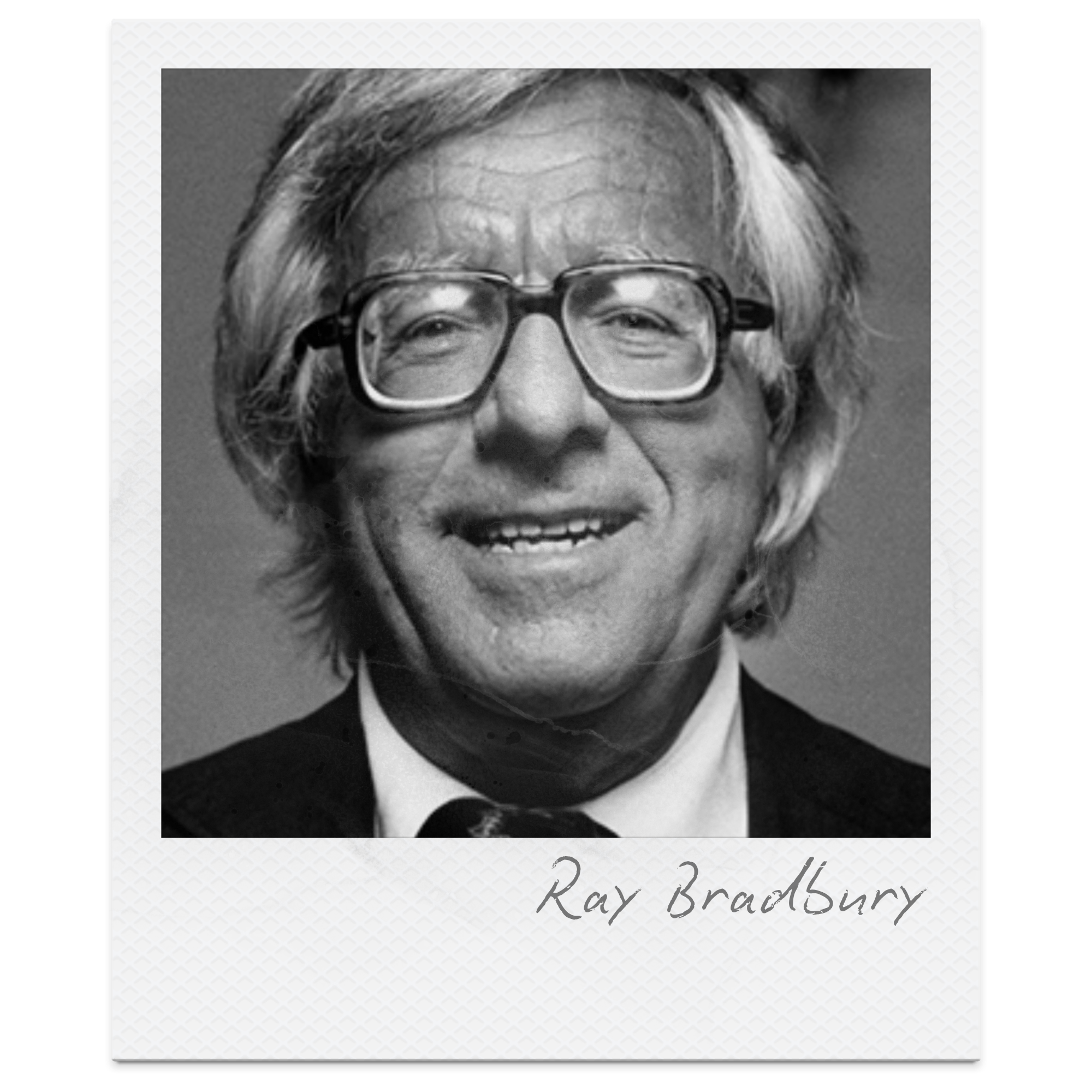
Context of Frost and Fire
First published in 1946, Frost and Fire reflects Ray Bradbury's fascination with the relationship between science, humanity, and the struggle against forces that appear beyond human control. Written during the rapid scientific advances of the mid-twentieth century, the story belongs firmly within the tradition of science fiction, yet its central concerns are deeply philosophical rather than technological. Bradbury imagines an extreme world where the environment has reshaped human biology, reducing an entire lifespan to just eight days. Rather than focusing on scientific accuracy, he uses this extraordinary premise to explore timeless questions about mortality, knowledge, hope, and the cost of survival. Like many of his stories, Frost and Fire demonstrates Bradbury's belief that speculative fiction can illuminate fundamental truths about human existence. If you'd like to explore the recurring ideas and influences that shaped Bradbury's fiction, read our post on Ray Bradbury's Background and Context,
The story's extraordinary setting becomes a powerful metaphor for the pressures of human life itself. By compressing childhood, adulthood, love, conflict, and death into a single week, Bradbury exposes how quickly opportunities disappear and how easily fear can prevent meaningful change. At the same time, Sim's determination to challenge an inherited cycle of suffering reflects Bradbury's enduring optimism that curiosity, imagination, and scientific inquiry offer humanity its greatest hope. Frost and Fire therefore functions not simply as an adventure story, but as a meditation on whether people should accept the limits imposed upon them or continue striving for a better future, even when success seems impossible.
Frost and Fire: At a Glance
Form: Short story; science fiction with elements of survival fiction, speculative fiction, and philosophical allegory.
Mood: Urgent, claustrophobic, tragic, yet ultimately hopeful, as moments of wonder and determination emerge from an otherwise hostile world.
Central tension: Sim must decide whether to accept the brutally short life imposed by his planet or risk everything in the hope of finding a way to escape, challenging both nature and the beliefs of his own people.
Core themes: Mortality, time, survival, scientific progress, hope, human resilience, knowledge, love, sacrifice, violence, fate, and the conflict between acceptance and change.
One-sentence meaning: Frost and Fire suggests that although death is inevitable, it is humanity's curiosity, courage, and refusal to accept impossible limits that create the possibility of a better future.
Quick Summary of Frost and Fire
Sim is born on a hostile planet where every human lives for only eight days, rapidly growing from infancy to adulthood as generations struggle to survive between freezing nights and scorching days. Through inherited racial memory and telepathy, Sim quickly understands the tragic fate awaiting his people and becomes determined to find a way to escape their endless cycle of suffering. He learns of an abandoned spaceship resting on a distant mountain, believing it offers humanity's only hope of a longer future.
As Sim grows, he joins a small group of Scientists who dedicate their brief lives to solving the mysteries of the planet instead of accepting tradition. Along the way he forms a deep bond with Lyte, makes an enemy of Chion, and becomes increasingly convinced that knowledge and perseverance are more valuable than violence. However, believing that victory could bring him closer to the abandoned ship, Sim reluctantly joins a dangerous war against a neighbouring settlement in the hope of gaining precious extra days of life.
The battle ends in betrayal, leaving Sim injured and stranded with Lyte as the deadly sun rises. Refusing to surrender, Sim challenges a warrior from the opposing settlement to single combat, setting in motion the final stage of his struggle for survival. Through courage, intelligence, and determination, he pursues the possibility of reaching the long-abandoned spaceship, challenging both the limitations of his world and the belief that humanity must simply accept its fate.
Title of Frost and Fire
Bradbury's titles rarely do more than simply identify a story. Instead, they establish tone, suggest central conflicts, introduce symbolism, and shape readers' expectations before the narrative begins. In Frost and Fire, the title immediately presents two opposing elemental forces that appear to define the hostile planet on which the story takes place. However, as the narrative develops, these extremes become increasingly symbolic, representing not only the physical dangers of the setting but also the wider struggle between life and death, hope and despair, and acceptance and resistance.
At first, the title encourages readers to expect a story driven by environmental survival. The contrast between frost and fire reflects the planet's freezing nights and burning days, suggesting that nature itself will be the story's greatest antagonist. Bradbury quickly fulfils this expectation by revealing a world where every living thing must adapt to violent shifts in temperature simply to survive.
By the conclusion, however, the meaning of the title has expanded considerably. Frost and fire no longer refer only to the climate but to the relentless extremes that govern every aspect of human existence. The people are trapped between opposing forces—birth and death, hope and despair, knowledge and ignorance—while living lives compressed into just eight days. The title therefore comes to symbolise a civilisation caught between destruction from without and limitation from within.
The pairing of these elemental opposites also carries strong symbolic weight. Throughout literature, ice and fire often represent conflicting forces, and Bradbury draws upon these familiar associations to create a world defined by constant tension. The title gives the story an almost mythic quality despite its science fiction setting, suggesting that Sim's struggle is not merely against his environment but against the universal limits placed upon human life.
There is also a powerful irony within the title. Although the inhabitants fear the freezing nights and scorching days, neither element is ultimately their greatest enemy. Even when they survive both extremes, they remain condemned by accelerated ageing and an eight-day lifespan. The apparent conflict suggested by the title therefore conceals the deeper tragedy that humanity's greatest prison is biological rather than environmental.
Ultimately, Frost and Fire is an economical yet deeply resonant title. In just three words, Bradbury captures the story's physical setting, its central conflict, and its wider exploration of mortality, scientific progress, human resilience, and the refusal to accept impossible limits. As Sim pursues the possibility of escape, the title comes to represent not simply the world he inhabits but the opposing forces that humanity has always struggled to overcome.
Structure of Frost and Fire
Bradbury uses the structure of Frost and Fire to reinforce the story's central concern with time. Rather than following a conventional pace, the narrative mirrors the accelerated lives of its characters, moving rapidly from birth to death while continually raising the stakes. This compressed structure creates constant urgency, allowing readers to experience the same pressure as the characters, who know that every decision could determine the success or failure of an entire lifetime.
Opening (Exposition)
The story begins in an immediately unsettling way with Sim's birth, but instead of presenting infancy as a time of innocence, Bradbury plunges readers into a world dominated by fear, death, and confusion. Within moments, Sim witnesses elderly people dying, discovers that his own father considers killing him out of mercy, and learns through racial memory that he has only eight days to live. By revealing the world's extraordinary rules almost immediately, Bradbury establishes both the story's speculative premise and the emotional urgency that drives the narrative.
Rising Action
The rising action follows Sim's rapid physical and intellectual development as he begins searching for a way to break humanity's endless cycle of suffering. His discovery of the abandoned spaceship, his decision to join the Scientists, his growing relationship with Lyte, and his rivalry with Chion steadily increase both the emotional and narrative stakes. Bradbury continually introduces new obstacles—war, superstition, limited time, and the hostile environment—ensuring that every stage of Sim's journey feels increasingly difficult because each setback consumes a significant portion of his already brief life.
Turning Point / Climax
The structural turning point occurs when Sim abandons the relative safety of the Scientists to join the assault on the neighbouring settlement, believing that victory could bring him closer to the spaceship and a longer life. The disastrous battle leaves him wounded and betrayed by Chion, forcing him to confront death directly. Rather than surrender, Sim challenges a warrior from the opposing settlement to single combat, transforming the conflict from a chaotic war into a highly personal struggle driven by intelligence, courage, and determination. This shift focuses the story's central question: whether one individual can overcome seemingly impossible limitations.
Falling Action
Following the duel, the narrative shifts from large-scale conflict to a race against both time and the hostile environment. The emphasis moves away from warfare and towards Sim's determination to reach the abandoned spaceship, while revelations about the planet and humanity's origins bring together the story's earlier mysteries. Bradbury accelerates the pace even further, reflecting the fact that Sim's remaining lifetime is rapidly disappearing even as hope finally becomes possible.
Ending (Resolution)
The ending resolves the immediate conflict while deliberately leaving readers thinking beyond the final page. Although Sim achieves what earlier generations believed impossible, Bradbury avoids presenting the conclusion as a simple victory. Instead, the resolution represents the beginning of a new future rather than the end of the struggle, suggesting that knowledge, scientific curiosity, and the refusal to accept inherited limits are capable of transforming civilisation. The ending therefore replaces despair with cautious optimism while preserving the story's larger questions about human progress, survival, and the price of change.
Setting of Frost and Fire
The setting of Frost and Fire is far more than the backdrop to the narrative. Bradbury transforms the planet into a symbolic landscape that shapes every aspect of human behaviour, belief, and identity. The hostile environment dictates how people live, love, fight, and die, making nature itself the story's most powerful force. Throughout the narrative, Bradbury contrasts spaces of relative safety with landscapes of overwhelming danger, using vivid sensory imagery to reinforce the fragility of civilisation.
The Planet
The unnamed planet immediately establishes a world governed by violent extremes. Bradbury describes it as a place where 'the nights burned with cold, the days were like torches of fire,' presenting cold and heat as equally destructive forces. The paradoxical phrase 'burned with cold' blurs the distinction between opposing elements, suggesting that survival is impossible no matter which extreme dominates. The setting therefore symbolises a universe that is fundamentally hostile to human life.
The Caves
The network of caves functions as humanity's only refuge, protecting the inhabitants from the deadly environment beyond. Hidden 'in the cliffs,' these spaces provide physical shelter but also become symbols of limitation and stagnation. Although the caves preserve life, they also imprison the survivors within an existence governed by fear and routine. Bradbury repeatedly contrasts the security of the caves with the dreams of escape represented by the outside world, highlighting the tension between survival and freedom.
The Valley
The narrow valley becomes a place of both opportunity and danger. During the brief moments when conditions are liveable, 'plants grew instantly' and 'birds were flung like pellets across the sky,' creating a landscape bursting with sudden vitality. The rapid growth reflects the accelerated rhythm of life itself, while the fleeting abundance emphasises how little time the characters have to enjoy beauty before destruction returns. The valley therefore symbolises the temporary nature of hope, youth, and happiness.
The Mountain and the Spaceship
The distant mountain holding the abandoned spaceship represents the possibility of transformation. Sim repeatedly focuses on the 'metal seed' lying 'perfect, unscarred' upon the mountain, imagery that contrasts sharply with the decaying world around him. While the caves represent confinement, the spaceship symbolises knowledge, progress, and the chance to escape inherited limitations. Its physical distance mirrors the emotional and intellectual challenge of changing a civilisation that has accepted suffering as inevitable.
The Battlefield
The battlefield beneath the neighbouring cliffs exposes the destructive consequences of a society shaped by scarcity. As 'rocks hailed down' and the conflict becomes a 'synthetic avalanche,' Bradbury transforms the landscape itself into a weapon. The merging of natural and human violence suggests that the planet has influenced not only the bodies of its inhabitants but also their behaviour, reinforcing the idea that desperate environments often create desperate societies.
The Cyclical World
Perhaps the most significant aspect of the setting is its relentless repetition. Every day follows the same pattern of freezing night, brief dawn, burning daylight, and renewed struggle for survival. This cyclical landscape mirrors the repeated generations trapped within an eight-day lifespan, making the setting itself a symbol of humanity's imprisonment. Only Sim's determination to reach the abandoned spaceship offers the possibility of breaking both the physical and symbolic cycle, demonstrating that true change requires escaping not only a place but the beliefs it creates.
Narrative Voice in Frost and Fire
The narrative voice of Frost and Fire plays a crucial role in shaping readers' understanding of both the extraordinary world and Sim's emotional journey. Although the story is told through a third-person narrator, the perspective remains closely aligned with Sim, allowing readers to discover the planet's terrifying reality as he does. This limited focus creates both suspense and empathy, while Bradbury's lyrical descriptions prevent the story from becoming purely scientific or detached.
The story is told through a third-person limited perspective that closely follows Sim's thoughts, discoveries, and emotional development. Readers experience the strange world through his rapidly expanding consciousness, learning alongside him that people 'would live exactly eight days' and witnessing his growing horror as he begins to understand what this means. Because the narration rarely moves beyond Sim's awareness, every revelation feels immediate and personal, strengthening the emotional impact of the story.
Bradbury also limits information in order to create mystery and sustain narrative tension. At the beginning, readers know no more than Sim himself as the terrifying world gradually comes into focus. Details about the planet's history, the abandoned spaceship, and the work of the Scientists are revealed slowly, encouraging readers to piece together the wider story alongside the protagonist. This controlled release of information mirrors Sim's own intellectual growth and keeps the focus firmly on discovery rather than exposition.
The narrative voice combines moments of detached observation with deeply emotional colouring. Bradbury frequently presents dramatic events in clear, almost matter-of-fact language before shifting into highly poetic imagery, describing life as 'childhood was over in a flash' and 'adolescence was a sheet of lightning.' These metaphors reinforce the unnatural speed of existence while allowing readers to feel the tragedy of lives that disappear almost as soon as they begin.
Although the narrator remains closely aligned with Sim, there is also an underlying sense of dramatic irony. Readers gradually recognise patterns within the society that Sim cannot fully understand until later in the story, including the destructive effects of superstition, endless warfare, and resistance to scientific progress. This encourages readers to question the values of the society rather than simply accept them, reinforcing Bradbury's wider critique of fear and short-term thinking.
Ultimately, the narrative voice positions readers to admire Sim's curiosity while also sharing his frustration, grief, and hope. By combining a limited perspective with vivid descriptive language and carefully controlled revelations, Bradbury transforms an extraordinary science fiction premise into an intensely human story about mortality, knowledge, and the determination to imagine a better future.
The Purpose and Impact of Frost and Fire
Bradbury uses Frost and Fire to explore what happens when time becomes humanity's greatest enemy. Beneath its imaginative science fiction premise lies a profound meditation on mortality, hope, and the importance of challenging inherited limitations. Rather than celebrating technological achievement alone, Bradbury argues that genuine progress begins with curiosity, courage, and the refusal to accept suffering as inevitable. The story leaves readers questioning not only how they would respond in Sim's position but also whether societies can ever progress if people become too focused on immediate survival.
One of the story's clearest purposes is to serve as a warning against accepting unjust systems simply because they have existed for generations. Most of the planet's inhabitants have resigned themselves to an eight-day lifespan, devoting their short lives to routine, conflict, or superstition. In contrast, Sim refuses to believe that 'This was so impossibly unfair,' making his determination to seek another future a rejection of passive acceptance. Bradbury suggests that meaningful change only becomes possible when individuals are willing to question traditions that others consider unavoidable.
The story also has a powerful emotional impact because readers witness an entire human life compressed into just a few days. Childhood, friendship, love, ambition, and grief occur with astonishing speed, making every triumph and every loss feel intensely significant. Sim's relationships with Dark, Lyte, and the Scientists gain emotional weight precisely because there is so little time available to experience them. Bradbury reminds readers that life's value is measured not by its length but by what individuals choose to do with the time they possess.
Alongside its emotional force, the story creates a lasting intellectual impact by encouraging readers to reflect on humanity's relationship with science, knowledge, and progress. The contrast between the Scientists, who sacrifice their own happiness for future generations, and those who pursue only immediate survival raises difficult questions about responsibility, innovation, and long-term thinking. Bradbury challenges readers to consider whether civilisation advances through comfort and acceptance or through those willing to imagine possibilities beyond existing limits.
The narrative also generates profound moral unease. There are no simple villains, because many of the characters' harshest actions are driven by desperation rather than cruelty. War, superstition, and betrayal all emerge from a society struggling to survive in impossible circumstances. Even Chion's actions reflect a desire to live longer rather than simple malice, forcing readers to consider how extreme environments can distort ordinary human behaviour.
Finally, Bradbury leaves the story deliberately ambiguous enough for its ending to linger long after the final page. While Sim's journey offers genuine hope, it does not erase the suffering experienced by countless previous generations or guarantee an easy future. Instead, the conclusion suggests that progress is always uncertain, requiring perseverance rather than certainty. This unresolved optimism gives Frost and Fire its enduring power, encouraging readers to believe that although individuals cannot always control the circumstances into which they are born, they can still choose whether to accept those circumstances or fight to transform them.
Characters in Frost and Fire
Bradbury's characters are more than individuals within a science fiction adventure. Each represents a different response to mortality, time, and the possibility of change. Through their contrasting beliefs and actions, Bradbury explores the tension between hope and despair, knowledge and ignorance, and self-interest and self-sacrifice. Rather than presenting heroes and villains in simple terms, he uses each character to embody competing philosophies about how life should be lived when time is desperately short.
Sim
Sim is the story's protagonist and represents curiosity, human resilience, and the refusal to accept inherited limitations. Unlike those around him, he immediately questions the society into which he is born, recognising that 'This was so impossibly unfair.' Rather than accepting the world's brutal conditions, Sim continually seeks alternatives, making him the driving force behind the story's exploration of scientific progress and hope.
Bradbury emphasises Sim's exceptional nature through his rapid intellectual development. His ability to draw upon racial memory allows him to understand far more than his years would normally permit, while his determination to reach the 'metal seed' symbolises humanity's instinct to search for a better future. His curiosity distinguishes him from those who simply endure suffering, presenting knowledge as an act of resistance.
Sim also develops emotionally throughout the story. His growing love for Lyte, respect for Dienc, and rejection of unnecessary violence demonstrate that his desire to survive is motivated not only by self-preservation but by the hope of creating a different future for others. Bradbury therefore presents Sim as both an individual hero and a symbol of humanity's capacity for innovation and perseverance.
Lyte
Lyte represents love, compassion, and emotional strength within a world dominated by survival. From the moment Sim meets her, she offers an alternative to the violence and competition embodied by Chion, creating one of the few relationships founded on mutual trust rather than necessity.
Bradbury portrays Lyte as remarkably loyal, remaining beside Sim even when she knows it may lead to her own death. Her declaration that 'If you fall, I fall' transforms their relationship into a symbol of shared sacrifice rather than romantic idealism alone. She repeatedly supports Sim's ambitions without attempting to control them, demonstrating courage that matches his own.
At the same time, Lyte reminds readers that hope is sustained through human connection as much as scientific ambition. Her presence ensures that Sim's quest never becomes solely about personal survival but also about preserving the possibility of love, community, and a future worth living.
Chion
Chion functions as Sim's principal rival and represents the destructive consequences of fear, jealousy, and short-term thinking. His rivalry with Sim begins in childhood but grows into open hostility as both compete for Lyte and pursue different visions of survival.
Bradbury uses Chion to demonstrate how desperation can corrupt human behaviour. His willingness to betray Sim during battle reflects a society in which limited time encourages selfishness rather than cooperation. His belief that violence offers the best path to survival contrasts sharply with Sim's faith in knowledge and exploration.
However, Chion is not portrayed as purely evil. Like everyone else on the planet, he is shaped by a world where every day is precious and survival often depends upon defeating others. Bradbury therefore presents him as a product of his environment, suggesting that destructive systems create destructive individuals.
Dienc
Dienc embodies wisdom, scientific inquiry, and selfless commitment to future generations. As the leader of the Scientists, he recognises that genuine progress requires sacrifice, even though he knows he will never live long enough to enjoy its rewards.
His observation that 'anything they do cannot possibly insure their own lives' highlights the central tragedy facing the Scientists. Unlike most of society, they willingly surrender personal happiness in the hope that later generations may eventually succeed where they cannot. Bradbury presents this willingness to think beyond one's own lifetime as one of humanity's greatest strengths.
Dienc also acts as Sim's mentor, recognising the young man's unusual determination and encouraging him to continue questioning accepted beliefs. Through this relationship, Bradbury suggests that knowledge survives not through individuals but through the transmission of ideas from one generation to the next.
Sim's Parents
Although they appear only briefly, Sim's mother and father establish the emotional foundations of the story. Sim's father initially believes death would spare his son unnecessary suffering, asking, 'What has he to live for?' His despair reflects the crushing psychological impact of generations trapped within the same hopeless cycle.
In contrast, Sim's mother insists, 'He must live! There may be a future for him!' Her faith introduces the story's central idea that every new generation carries the possibility of change. Together, the parents embody the conflict between resignation and hope, a tension that continues throughout the narrative.
The Scientists
The Scientists collectively represent reason, perseverance, and humanity's determination to overcome impossible circumstances. Working despite knowing they will die before completing their research, they reject immediate gratification in favour of long-term progress.
Their efforts contrast sharply with the wider society's focus on daily survival, illustrating Bradbury's belief that civilisation advances because individuals are willing to work for futures they may never personally experience. Collectively, they symbolise the enduring power of knowledge, cooperation, and intellectual curiosity in the face of overwhelming adversity.
Key Themes in Frost and Fire
Bradbury explores a rich range of themes in Frost and Fire, using his extraordinary science fiction setting to examine universal questions about human existence, mortality, and progress. Although the story is set on a distant planet, its ideas remain deeply relevant because they reflect fundamental aspects of human nature. Through Sim's journey, Bradbury argues that while people cannot always control the circumstances into which they are born, they can choose how they respond to them.
Mortality
Mortality dominates every aspect of the story, as every character is born knowing they will live for only eight days. Bradbury repeatedly reminds readers of this brutal reality through the declaration that people 'would live exactly eight days,' transforming death from a distant possibility into an immediate presence. Rather than treating mortality as simply tragic, Bradbury explores how an awareness of death shapes ambition, relationships, and personal choices, suggesting that life's brevity makes every decision more significant.
Time
Bradbury presents time as humanity's greatest enemy. Childhood, adulthood, love, and old age pass with astonishing speed as 'childhood was over in a flash' and 'adolescence was a sheet of lightning.' These vivid metaphors compress an entire lifetime into moments, emphasising how impossible it becomes to build knowledge or lasting civilisation when every generation disappears almost immediately. Time therefore functions as both a physical limitation and a symbolic barrier to progress.
Survival
Throughout the story, survival extends beyond remaining alive from one day to the next. The inhabitants struggle constantly against freezing nights, burning days, starvation, avalanches, and warfare, yet Sim recognises that simply surviving is not enough. His determination to reach the spaceship suggests that genuine survival means escaping the conditions that trap humanity rather than merely enduring them.
Scientific Progress
Bradbury celebrates scientific progress as humanity's greatest hope. While most people devote their lives to immediate needs, the Scientists sacrifice personal happiness in pursuit of discoveries that may benefit future generations. Their willingness to continue despite repeated failure demonstrates Bradbury's belief that meaningful progress depends upon perseverance, curiosity, and long-term thinking rather than instant success.
Hope
Despite its bleak setting, hope remains central to the story. Sim refuses to accept that 'This was so impossibly unfair,' choosing instead to believe another future is possible. The abandoned 'metal seed' becomes a recurring symbol of that hope, representing the possibility that humanity can overcome even the most impossible circumstances through determination and imagination.
Human Resilience
Bradbury portrays human resilience through characters who continue living, loving, and dreaming despite overwhelming adversity. Sim repeatedly recovers from physical injury, emotional loss, and disappointment without abandoning his purpose. His resilience demonstrates that true strength lies not in avoiding suffering but in refusing to let suffering define one's future.
Knowledge
The story presents knowledge as the force capable of breaking destructive cycles. Sim's inherited racial memory, his education among the Scientists, and his constant questioning distinguish him from those who accept tradition without challenge. Bradbury suggests that ignorance preserves suffering, whereas curiosity creates the possibility of transformation.
Love
Although love develops rapidly because of the characters' accelerated lives, Bradbury portrays it as genuine and deeply meaningful. Sim and Lyte build a relationship founded upon trust, loyalty, and shared purpose rather than convenience. Her promise to remain beside him, even when death seems certain, demonstrates that love provides emotional strength capable of resisting despair.
Sacrifice
Sacrifice appears in many forms throughout the narrative. The Scientists sacrifice their own happiness for future generations, while Lyte risks her life by refusing to abandon Sim. Even Sim himself repeatedly sacrifices immediate safety in pursuit of a future that he may never personally enjoy. Bradbury suggests that lasting progress always demands individuals willing to place collective hope above personal comfort.
Violence
Bradbury presents violence as both tragic and cyclical. Warfare arises because scarce resources and the promise of 'three extra days' encourage people to destroy one another rather than cooperate. By showing that conflict grows from desperation rather than hatred alone, Bradbury criticises societies that allow fear and scarcity to replace compassion and reason.
Fate
The inhabitants initially believe their fate is fixed, accepting the eight-day lifespan as an unavoidable fact of existence. Sim challenges this belief from the moment he recognises that life 'was so impossibly unfair.' Bradbury therefore questions whether fate is truly inevitable or whether it survives only because people stop imagining alternatives.
Acceptance and Change
The conflict between acceptance and change lies at the heart of the story. Most characters accept their society's traditions because they cannot imagine another way of living, while Sim and the Scientists refuse to surrender to inherited limitations. Through this contrast, Bradbury argues that meaningful change begins when individuals challenge assumptions that previous generations accepted without question, making the pursuit of a better future an act of courage rather than certainty.
Symbolism in Frost and Fire
Bradbury fills Frost and Fire with powerful symbols that deepen its exploration of mortality, hope, scientific progress, and human resilience. Rather than functioning as simple objects or settings, these recurring images develop alongside Sim's journey, allowing Bradbury to communicate complex philosophical ideas through concrete details. As the story progresses, many symbols shift in meaning, reflecting Sim's growing understanding of both his world and his place within it.
Frost and Fire
The opposing forces of frost and fire symbolise the destructive extremes that dominate both the physical world and human existence. The planet where 'the nights burned with cold, the days were like torches of fire' becomes a metaphor for a life lived between opposing forms of destruction. As the story develops, these elements come to represent not only the environment but also the wider tensions between life and death, hope and despair, and acceptance and resistance. Sim's quest ultimately becomes an attempt to escape these destructive extremes altogether.
The Metal Seed (The Spaceship)
The abandoned 'metal seed' is the story's most significant symbol of hope and scientific progress. Unlike the fragile human settlements, it remains 'perfect, unscarred,' suggesting that knowledge and civilisation can survive even when individual lives cannot. To Sim, the spaceship represents freedom from biological limitations, but it also symbolises humanity's forgotten past and its potential future. As his understanding grows, the metal seed transforms from a distant object into a vision of possibility itself.
The Caves
The caves symbolise both protection and imprisonment. They shield humanity from the deadly climate, allowing civilisation to continue, yet they also isolate people from the wider world and reinforce their acceptance of an eight-day lifespan. Bradbury presents the caves as spaces where survival has become more important than progress, making them symbols of societies that preserve life while limiting imagination and change.
The Scientists
The Scientists symbolise the enduring power of knowledge and humanity's refusal to surrender to impossible circumstances. Although each scientist knows they will die before completing their work, they continue their research for future generations. Their collective efforts symbolise the idea that true progress is built through shared knowledge rather than individual achievement, reinforcing Bradbury's belief that civilisation advances because people are willing to sacrifice for those who come after them.
Sim's Eight-Day Life
Sim's accelerated eight-day lifespan symbolises the brevity of human existence itself. By compressing an entire lifetime into a single week, Bradbury strips away the illusion that people always have more time, forcing both Sim and the reader to confront life's fragility. The symbol encourages readers to consider how they use their own time, suggesting that purpose is determined not by the length of life but by the choices made within it.
War
The conflict between neighbouring settlements symbolises the destructive consequences of fear, scarcity, and short-term thinking. The promise of 'three extra days' encourages people to kill one another instead of working together to solve their shared problems. Bradbury uses this conflict to criticise societies that sacrifice long-term progress for immediate advantage, suggesting that violence often delays the very future it seeks to secure.
Lyte
Lyte functions as a symbol of love, hope, and the emotional reasons for seeking a better future. Her unwavering loyalty to Sim demonstrates that survival alone is not enough; life gains meaning through relationships, compassion, and shared dreams. By remaining beside him even when death appears certain, she symbolises the human capacity to choose connection over fear, reinforcing Bradbury's belief that emotional resilience is as important as scientific discovery.
The Sun
The sun symbolises both the power and the indifference of nature. Each dawn brings life to the valley before becoming an unstoppable force of destruction, reminding readers that nature is neither cruel nor compassionate but simply beyond human control. At the same time, the rising sun creates constant urgency throughout the narrative, becoming a symbolic clock that measures the relentless passage of time and the approach of death.
Key Techniques in Frost and Fire
Bradbury combines language, structure, and imagery to create a story that feels both intellectually ambitious and emotionally immediate. His techniques reinforce the relentless pace of the narrative while encouraging readers to think beyond the surface adventure, revealing deeper ideas about mortality, human resilience, and scientific progress.
◆ Symbolism — Bradbury uses recurring symbols such as the metal seed, the caves, and the opposing forces of frost and fire to represent hope, knowledge, imprisonment, and the struggle to overcome humanity's limitations.
◆ Extended metaphor — The planet's accelerated eight-day lifespan becomes an extended metaphor for the brevity of human life, forcing readers to confront how precious and fragile time really is.
◆ Juxtaposition — Bradbury repeatedly contrasts life and death, hope and despair, science and superstition, and survival and progress, highlighting the choices facing both Sim and his society.
◆ Vivid sensory imagery — Rich descriptions of 'the nights burned with cold' and 'the days were like torches of fire' immerse readers in the hostile environment while reinforcing the planet's extreme and unforgiving nature.
◆ Paradox — Phrases such as 'burned with cold' combine contradictory ideas to emphasise the unnatural conditions of the planet and the constant tension between opposing forces.
◆ Hyperbole — The extraordinary concept of an eight-day lifespan exaggerates reality to explore universal questions about mortality, urgency, and the value of time.
◆ Compressed chronology — Bradbury dramatically accelerates the passage of time, allowing readers to experience an entire lifetime within a few pages and mirroring the frantic pace of the characters' existence.
◆ Foreshadowing — Early references to the abandoned metal seed and Sim's determination to escape hint at the story's central conflict and sustain anticipation throughout the narrative.
◆ Third-person limited narration — By closely following Sim's perspective, Bradbury allows readers to discover the world's terrifying realities alongside the protagonist, creating empathy and sustained suspense.
◆ Racial memory and telepathy — These speculative devices allow Bradbury to communicate history, philosophy, and inherited knowledge efficiently while exploring the relationship between memory, identity, and human evolution.
◆ Character contrast — The opposing beliefs of Sim, Chion, Lyte, and the Scientists highlight competing responses to mortality, emphasising the conflict between acceptance and change.
◆ Motif of time — Constant reminders of passing hours, ageing, dawn, sunset, and approaching death reinforce the relentless pressure under which every character must live and act.
◆ Natural symbolism — The sun, avalanches, and violent landscape reflect forces beyond human control, illustrating both the indifference of nature and the resilience required to survive within it.
◆ Ambiguous ending — Bradbury avoids offering complete certainty, allowing the conclusion to inspire hope while encouraging readers to reflect on the continuing challenges of progress, survival, and the future of humanity.
Important Quotes from Frost and Fire
Bradbury's quotes capture the story's exploration of mortality, hope, scientific progress, and human resilience. Through vivid imagery, memorable dialogue, and symbolic language, these moments reveal both the characters' emotional struggles and the story's larger philosophical concerns.
“He would live exactly eight days.”
◆ Analysis: This shocking statement establishes the story's central premise, forcing both Sim and the reader to confront the fragility of human existence. Every decision, relationship, and ambition is shaped by the knowledge that life is measured in days rather than decades.
◆ Method: Bradbury uses a short declarative sentence and precise numerical detail to present the extraordinary fact with absolute certainty, making it feel inescapable.
◆ Effect: Readers immediately experience a sense of urgency and sympathy, understanding that every moment in the story carries enormous significance.
◆ Link to theme: Mortality, time, survival, human resilience.
“This was so impossibly unfair.”
◆ Analysis: Sim's response marks the beginning of his rejection of a society that accepts suffering without question. Unlike others, he refuses to believe that inherited limitations should simply be endured.
◆ Method: The emotive adjective 'impossibly' intensifies the injustice of the situation, while the simple language reflects Sim's instinctive moral response.
◆ Effect: Readers identify with Sim's outrage and begin to view him as a character driven by curiosity and hope rather than resignation.
◆ Link to theme: Hope, fate, acceptance and change, human resilience.
“The nights burned with cold, the days were like torches of fire.”
◆ Analysis: This description captures the planet's brutal extremes, presenting nature as an overwhelming force that governs every aspect of life.
◆ Method: Bradbury combines paradox, contrast, and vivid imagery to create an unforgettable picture of the hostile environment.
◆ Effect: The setting feels alien, dangerous, and oppressive, reinforcing the relentless struggle for survival.
◆ Link to theme: Survival, mortality, fate, human resilience.
“The metal seed.”
◆ Analysis: Although only two words, this recurring image becomes the story's central symbol of escape, civilisation, and humanity's forgotten potential. It represents the possibility that life does not have to remain trapped within its current limitations.
◆ Method: Bradbury employs symbolism and metaphor, comparing the spaceship to a seed capable of producing future growth and renewal.
◆ Effect: Readers associate the spaceship with optimism, making it a constant reminder that another future may exist.
◆ Link to theme: Scientific progress, hope, knowledge, acceptance and change.
“Anything they do cannot possibly insure their own lives.”
◆ Analysis: Dienc explains the tragedy of the Scientists' work: they sacrifice their own happiness for generations they will never meet. Bradbury presents scientific discovery as an act of selflessness rather than personal ambition.
◆ Method: The use of matter-of-fact dialogue and absolute language highlights the certainty of their sacrifice.
◆ Effect: Readers admire the Scientists' dedication while recognising the long-term thinking required for genuine progress.
◆ Link to theme: Scientific progress, sacrifice, knowledge, hope.
“If you fall, I fall.”
◆ Analysis: Lyte's declaration transforms their relationship into one based on loyalty and shared purpose rather than simple romance. She willingly places love above self-preservation.
◆ Method: Bradbury uses parallel structure and concise dialogue to express unwavering commitment with emotional clarity.
◆ Effect: The simplicity of the statement makes Lyte's devotion especially powerful, deepening readers' emotional investment in both characters.
◆ Link to theme: Love, sacrifice, hope, human resilience.
“Three extra days.”
◆ Analysis: These words explain why the neighbouring settlements wage war despite already living such short lives. Bradbury reveals how desperation can encourage violence when survival appears scarce.
◆ Method: The repetition of the phrase throughout the conflict turns it into a powerful motif representing temptation and desperation.
◆ Effect: Readers understand how even a small extension of life becomes valuable enough to justify devastating choices.
◆ Link to theme: Violence, survival, time, fate.
“I want to live.”
◆ Analysis: Sim's simple declaration expresses far more than a fear of death. It reflects his determination to challenge the assumptions of his society and search for a future beyond accepted limitations.
◆ Method: Bradbury uses direct first-person dialogue and an uncomplicated sentence to communicate a universal human desire.
◆ Effect: The line becomes emotionally powerful because its simplicity reflects a truth shared by every reader.
◆ Link to theme: Hope, human resilience, survival, acceptance and change.
Alternative Interpretations of Frost and Fire
Bradbury's science fiction encourages multiple valid interpretations because it combines an imaginative setting with timeless questions about human nature, society, and progress. Rather than offering a single message, the story invites readers to consider how different perspectives change its meaning.
Psychological Interpretation: Fear shapes human behaviour
The planet can be read as a metaphor for the way fear dominates human decision-making. Most characters become trapped by anxiety about survival, causing them to accept violence, superstition, and routine rather than imagining a different future. Sim's refusal to surrender to fear represents psychological resilience and the ability to challenge limiting beliefs.
Allegorical Interpretation: A civilisation trapped by its own thinking
The story may function as an allegory for societies that become imprisoned by tradition and short-term thinking. The Scientists symbolise innovation, while the wider population represents communities that resist change because immediate survival appears more important than long-term progress.
Existential Interpretation: Creating meaning despite mortality
Bradbury explores the existential question of how people create purpose when death is inevitable. Sim cannot prevent mortality, but he chooses to pursue knowledge, love, and hope, suggesting that life's meaning comes from individual choices rather than its duration.
Marxist Interpretation: Scarcity creates conflict
The war between neighbouring settlements can be interpreted as a critique of societies built upon scarcity and unequal access to resources. Competition for the cliffs that offer 'three extra days' reflects how unequal conditions encourage violence instead of cooperation.
Scientific Interpretation: Progress depends upon collective sacrifice
The Scientists represent the cumulative nature of scientific discovery. No individual lives long enough to solve the planet's problems, but each generation contributes knowledge for the next. Bradbury therefore presents science as a collaborative process built upon sacrifice rather than individual achievement.
Optimistic Interpretation: Humanity will always seek a better future
Despite its bleak setting, the story ultimately celebrates the human capacity for hope. Sim's determination to challenge accepted limitations suggests that curiosity, imagination, and perseverance are stronger than fear, making Frost and Fire not simply a survival story but a hopeful vision of humanity's potential.
Why Frost and Fire Still Matters
Although Frost and Fire was first published in 1946, its ideas remain strikingly relevant because it explores challenges that continue to shape the modern world. Bradbury's story is not simply about surviving on a hostile planet but about how individuals and societies respond to crisis, limited resources, and the possibility of change. Its exploration of science, hope, and human resilience continues to resonate with readers facing their own uncertain future.
One of the story's most enduring ideas is its exploration of scientific progress. In an age shaped by climate change, space exploration, artificial intelligence, and rapid technological development, Bradbury's belief that curiosity and innovation can transform society feels more relevant than ever. At the same time, he reminds readers that meaningful progress requires patience and sacrifice, with the Scientists working not for themselves but for generations they will never meet.
The story also reflects modern concerns about how people respond to fear and uncertainty. Faced with an unforgiving environment, many characters choose conflict, superstition, or resignation instead of cooperation. Bradbury suggests that societies under pressure can easily become trapped by short-term thinking, a warning that remains applicable to contemporary debates surrounding politics, environmental challenges, and global conflict.
Bradbury's exploration of time also speaks to modern readers. While few people face an eight-day lifespan, many experience the pressure of increasingly fast-paced lives, constant deadlines, and the feeling that time is always running out. Sim's determination to use his limited life purposefully encourages readers to reflect on how they spend their own time and whether they are pursuing goals that truly matter.
For students, Frost and Fire remains especially valuable because it demonstrates how science fiction can explore universal human questions rather than simply imagining futuristic technology. The story offers rich opportunities to analyse symbolism, structure, characterisation, and philosophical themes, making it an excellent text for developing analytical skills while encouraging wider discussion about human nature, progress, and the choices individuals make when confronted with seemingly impossible circumstances.
Teaching Ideas for Frost and Fire
Frost and Fire offers excellent opportunities to explore science fiction, symbolism, structure, and big philosophical ideas. Its unusual premise encourages students to move beyond plot and consider how Bradbury uses speculative fiction to examine human nature, scientific progress, and mortality.
1. Discussion Questions
Encourage students to move beyond literal understanding by exploring Bradbury's ideas about human behaviour and progress.
Why does Sim refuse to accept the world that everyone else accepts?
Does Bradbury suggest that knowledge is more powerful than violence? Why?
2. Model Paragraph Task (Analysis + Development)
Use the model below to examine how Bradbury presents hope through Sim's character.
Bradbury presents Sim as a symbol of hope because he refuses to accept the limitations imposed upon him. When Sim declares that life is 'so impossibly unfair,' he immediately challenges the beliefs accepted by everyone around him. The emotive language conveys his instinctive rejection of passive acceptance, while the simple declarative statement highlights the clarity of his moral conviction. Rather than accepting an eight-day lifespan as inevitable, Sim chooses to pursue the metal seed, which symbolises scientific progress and the possibility of change. Through Sim's determination, Bradbury suggests that humanity advances because individuals question accepted truths rather than simply accepting them.
This paragraph could answer questions such as:
How does Bradbury present hope in Frost and Fire?
How does Bradbury present Sim as a symbol of change?
Success criteria
Develop a clear conceptual argument.
Embed quotations naturally.
Analyse methods before explaining their meaning.
Link ideas directly to the wider theme.
Development task
Rewrite the paragraph by arguing that Sim is motivated primarily by survival rather than hope. Which interpretation is more convincing?
3. Essay Angles
These questions encourage students to explore different aspects of Bradbury's writing.
How does Bradbury present the conflict between acceptance and change?
Explore the importance of scientific progress in Frost and Fire.
4. Symbolism Focus
Ask students to track the development of the metal seed throughout the story.
How does its symbolic meaning change from the beginning to the end of the narrative?
What does it reveal about Bradbury's message regarding hope and progress?
5. Creative Writing Extension
Imagine you are one of the first settlers after escaping the planet. Write a journal entry describing your first full day in a world where people can live normal lifespans.
If you're looking for creative writing prompts and resources across a wide range of genres, tropes, and themes, explore the Creative Writing Archive.
Go Deeper into Frost and Fire
If you enjoyed Frost and Fire, there are many other stories that explore similar ideas about human nature, technology, survival, and the consequences of the choices we make. For more classroom recommendations, explore Best Bradbury for the Classroom, or discover how Bradbury's ideas continue to influence modern storytelling in Using Black Mirror to Teach Bradbury.
◆ The Long Rain by Ray Bradbury — explores human endurance, the hostility of alien environments, and the psychological effects of relentless survival, making it an excellent comparison for Bradbury's depiction of nature as an overwhelming force.
◆ Dark They Were, and Golden-Eyed by Ray Bradbury — examines adaptation, identity, and the relationship between humanity and unfamiliar worlds, offering an interesting contrast to Sim's determination to resist the planet's influence.
◆ The Pedestrian by Ray Bradbury — explores the conflict between individuality and social conformity, much like Sim's refusal to accept the beliefs that limit his society.
◆ The Machine Stops by E. M. Forster — presents another civilisation trapped by its own systems and assumptions, encouraging comparison of technology, human dependence, and the dangers of resisting meaningful change.
◆ The Time Machine by H. G. Wells — explores human evolution, social change, and the long-term consequences of civilisation, making it an excellent companion text for discussions of progress, survival, and humanity's future.
Bradbury's story sits comfortably alongside these classic works because each asks the same enduring question: will humanity accept the world it inherits, or find the courage to change it?
Final Thoughts
Frost and Fire is one of Ray Bradbury's most ambitious science fiction stories, combining an imaginative premise with timeless questions about mortality, hope, and human progress. By compressing an entire lifetime into just eight days, Bradbury strips life back to its essentials, asking what truly matters when time is limited. Through Sim's determination to challenge an inherited fate, the story becomes not only an exciting tale of survival but also a powerful celebration of curiosity, knowledge, and the courage to imagine a better future.
More than seventy years after its publication, Frost and Fire continues to resonate because its central concerns remain universal. Whether read as an adventure, a philosophical allegory, or a warning about the dangers of accepting unjust systems, the story reminds readers that meaningful change begins when someone refuses to believe that the world must remain as it is. For more Ray Bradbury analysis, explore the Ray Bradbury Hub, browse the wider Literature Library, or continue comparing Bradbury's most thought-provoking stories to deepen your understanding of his work.
Choose Your Next Text