Sleep by Kenneth Slessor: Analysis of Death, Rebirth and Surrender
Sleep by Kenneth Slessor is a richly symbolic poem that explores the relationship between sleep, death, birth, and renewal, blurring the boundaries between comfort and threat, surrender and loss, protection and annihilation. Through extended metaphor, body imagery, and unsettling shifts in tone, Slessor transforms the ordinary experience of sleep into a profound meditation on the cyclical nature of human existence. The poem invites readers to consider whether sleep represents temporary escape, symbolic death, a return to the womb, or a form of spiritual surrender, while its final images of awakening present life itself as a painful rebirth. If you are studying Paper 1 (2027 or 2028) of CIE AS & A Level Literature (9695), be sure to explore the other poems in the Songs of Ourselves Volume 2 Hub and the wider collection of poetry, prose, and drama resources in the Literature Library.
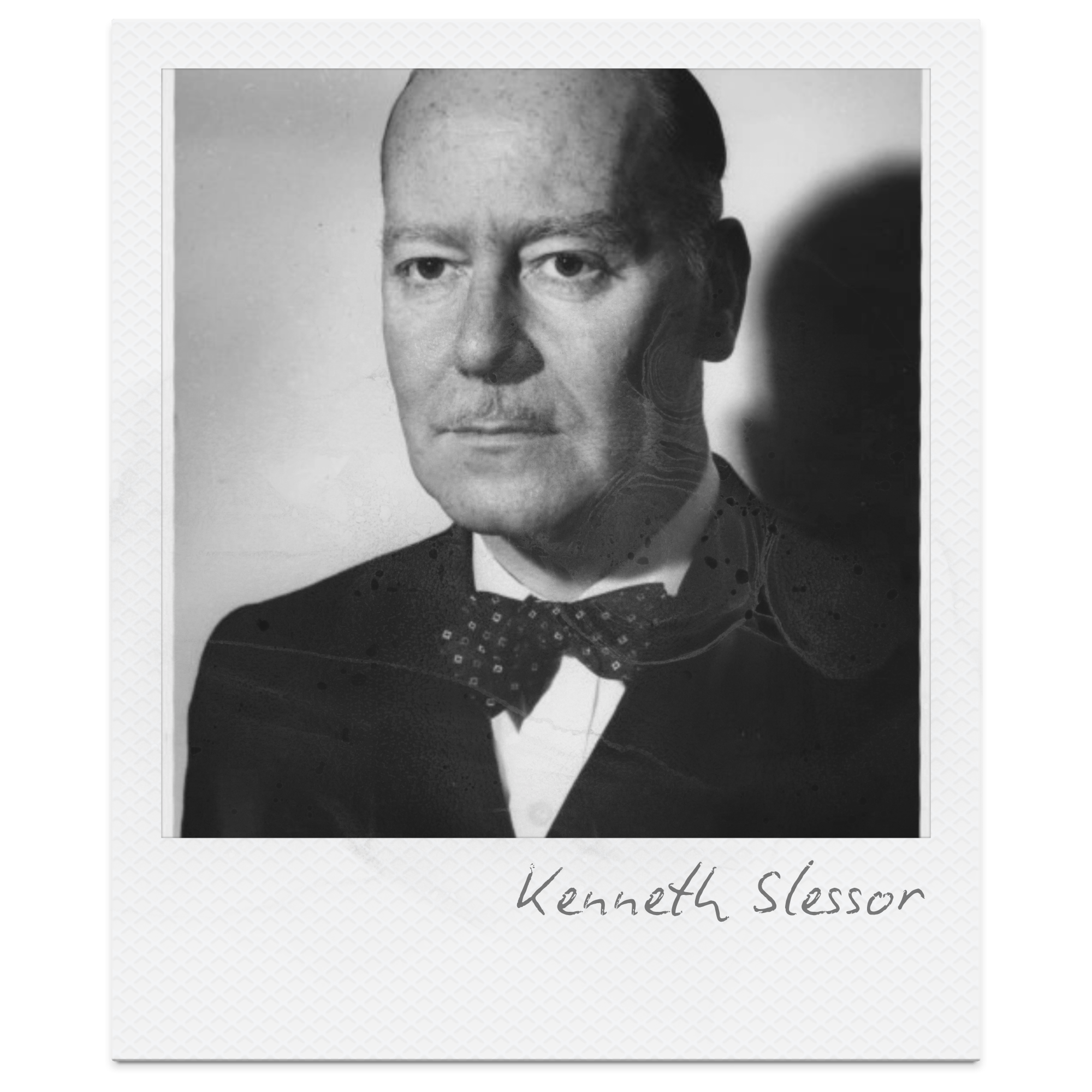
Context and Literary Background of Sleep
Kenneth Slessor (1901–1971) is widely regarded as one of Australia's most important twentieth-century poets. Alongside his work as a journalist and later a war correspondent during the Second World War, he played a significant role in moving Australian poetry beyond the traditional bush ballad tradition towards the more experimental and intellectually ambitious ideas associated with Modernism. Rather than focusing primarily on rural life and straightforward narrative verse, Slessor embraced rich imagery, symbolic complexity, and innovative approaches to language and form.
Sleep was published in 1939, at a moment when the world stood on the edge of another global conflict. Although the poem contains no direct references to contemporary political events, it reflects several concerns associated with Modernist literature, including uncertainty, psychological depth, fractured identity, and the tension between comfort and anxiety. Modernist writers were often interested in exploring hidden states of consciousness, dreams, memory, and the subconscious mind, all of which are central to Slessor's presentation of sleep.
Many of Slessor's poems explore the passage of time, the fragility of human life, and the ways memory reshapes experience. He was particularly drawn to symbolic and sensory imagery, frequently returning to images of the sea, water, tides, and movement. These recurring motifs reflect both his lifelong connection to Sydney's harbour landscape and his fascination with fluid states of transition. In Sleep, the speaker imagines sleep as an estuary, a tide, and a watery burial place, transforming an ordinary biological process into a symbolic journey between life and death.
The poem's imagery also reflects Modernism's interest in blurring boundaries and destabilising certainty. Sleep is simultaneously presented as a form of love, burial, gestation, and rebirth. The sleeper is consumed and protected, lost and preserved, dead and unborn. This deliberate ambiguity encourages readers to question where one state of existence ends and another begins.
Some readers have also connected the poem's imagery of water, engulfment, and burial to the death of Slessor's close friend Joe Lynch, who drowned in Sydney Harbour in 1927 and later inspired Slessor's famous elegy Five Bells. While there is no definitive evidence that Sleep was written directly in response to this loss, the poem's unsettling mixture of tenderness and annihilation may reflect a broader preoccupation with grief, mortality, and the persistence of memory.
Understanding this literary context helps illuminate why Sleep feels simultaneously comforting and disturbing. Rather than presenting sleep as simple rest, Slessor transforms it into a symbolic space where death and renewal, loss and protection, consciousness and oblivion exist side by side, reflecting many of the deeper concerns that shaped both Modernist poetry and his own work.
Sleep: At a Glance
◆ Form – A lyric poem structured as an extended dramatic address in which Sleep is personified and speaks directly to the sleeper, creating an intimate yet unsettling conversation.
◆ Tone and emotional movement – Begins as seductive and nurturing, becomes increasingly immersive and possessive, before ending with violence, disruption, and reluctant return to life.
◆ Central tensions – Sleep versus waking life; comfort versus annihilation; surrender versus loss of control; death versus rebirth; protection versus entrapment.
◆ Core concerns – Mortality, renewal, the unconscious mind, bodily vulnerability, cyclical existence, and humanity's desire to escape suffering and consciousness.
◆ Dominant imagery – Water imagery, estuaries, tides, burial, caves, womb imagery, bodily imagery, blood, birth, darkness, and enclosure.
◆ Stylistic features – Extended metaphor, personification, rich sensory imagery, symbolic landscapes, repetitive sounds, fluid movement, and striking shifts between tenderness and brutality.
◆ Key themes – Sleep and death, rebirth and renewal, the unconscious, mortality, surrender, transformation, cyclical existence, and the relationship between safety and vulnerability.
◆ One-sentence interpretation – Slessor presents sleep as a paradoxical state that resembles both death and gestation, suggesting that temporary surrender to oblivion is necessary for renewal, while awakening itself becomes a painful act of rebirth.
Quick Summary of Sleep
The poem begins with Sleep addressing the sleeper directly, asking whether they are willing to surrender themselves completely, both physically and spiritually. Sleep presents itself as a welcoming force and invites the sleeper to abandon consciousness without fear or resistance. What initially appears comforting gradually becomes more unsettling as Sleep describes carrying the sleeper away like a body borne towards burial.
As the poem develops, Sleep imagines enclosing and engulfing the sleeper within its vast body, creating imagery that combines death, the womb, and physical intimacy. The sleeper becomes suspended in a protected yet confined state, existing between life and oblivion. In the final stanza, the tone shifts dramatically as awakening is presented not as liberation but as a violent expulsion. Sleep compares the return to consciousness to a painful birth, ending the poem with images of force, suffering, and reluctant re-entry into the waking world.
Title, Form, Structure and Metre in Sleep
The formal features of Sleep are central to its exploration of surrender, death, rebirth, and the movement between consciousness and unconsciousness. Kenneth Slessor avoids a rigid traditional structure and instead creates a poem that feels fluid, immersive, and unpredictable, mirroring the gradual experience of falling asleep. The poem's shifting rhythms, unstable rhyme patterns, and flowing syntax reinforce its fascination with crossing boundaries between waking life and oblivion.
The Significance of the Title
The title Sleep appears deceptively simple, yet the poem quickly expands the concept far beyond ordinary rest. Throughout the poem, sleep becomes an extended metaphor for death, burial, sexual intimacy, gestation, and renewal. By choosing such a familiar title, Slessor begins with an everyday human experience before revealing its deeper symbolic and psychological dimensions.
Importantly, the title remains deliberately ambiguous. Sleep is simultaneously presented as comforting and threatening, nurturing and consuming. This tension creates one of the poem's central paradoxes: sleep resembles both a refuge from life and a temporary surrender of identity.
Form and Structure
The poem consists of four uneven stanzas and does not follow a traditional fixed form such as a sonnet, villanelle, or ballad. This structural freedom reflects Slessor's Modernist influences and allows the poem to develop organically rather than according to strict formal rules.
The poem follows a clear symbolic progression:
◆ An invitation to surrender
◆ Descent into sleep
◆ Complete immersion within sleep
◆ Expulsion into waking life
This movement creates a cyclical structure that mirrors the processes of death and rebirth. Sleep is not presented as a static state but as a transformative journey.
Many of the stanzas are built around long, flowing sentences that extend across multiple lines. The syntax rarely pauses for long, creating a sense of continuous movement. Readers are carried through the poem much as the sleeper is carried away from conscious awareness.
Rhythm and Metre
Although Sleep is written in free verse, its rhythms are carefully controlled. Rather than following a strict metrical pattern, many lines contain approximately four dominant stresses, creating a loose form of accentual tetrameter. This gives the poem musicality while preserving the fluidity associated with dreams and sleep.
For example:
not as a FUGitive, BLINDly or BITTerly
The line is not strictly regular, but the dominant stresses create a gentle falling rhythm that contributes to the poem's hypnotic atmosphere.
Similarly:
CARry you and FERry you to BURial mysTEriously
The four strong beats create a rolling movement that resembles waves or currents. This rhythm reinforces the poem's recurring imagery of water, estuaries, and transportation.
Other lines contain similarly strong rhythmic patterns:
BLINDly in BONES that ride aBOVE you
DELVE in my FLESH, disSOLVED and BEDded
The repeated stresses create a bodily, physical quality that reflects the poem's focus on flesh, enclosure, and embodiment.
The final stanza introduces a significant rhythmic shift:
life with reMORSEless FORceps BECKoning
The stresses become heavier and the consonants harsher. The earlier fluidity begins to break down as images of birth and awakening emerge.
The final line intensifies this effect:
PANGS and beTRAYal of HARSH BIRTH
The phrase HARSH BIRTH places two strong stresses together, creating an abrupt and emphatic ending. The rhythm suddenly feels forceful rather than soothing, reinforcing the violence of awakening.
Throughout the poem, Slessor uses rhythm to mirror experience itself. The flowing patterns of the opening stanzas evoke surrender and immersion, while the disrupted rhythms of the ending reflect expulsion, separation, and rebirth.
Rhyme and Sound Patterns
The poem does not follow a regular rhyme scheme, but Slessor uses rhyme strategically to create both cohesion and instability.
The opening stanza loosely follows an alternating pattern:
utterly (A)
flesh (B)
bitterly (A)
wish (B)
utterly (A)
The repeated sounds create reassurance and stability as Sleep first addresses the listener.
The second stanza becomes more fluid. Words such as estuary, mysteriously, and continually create loose slant rhymes, while repeated endings such as you generate an incantatory, almost lullaby-like quality.
In the third stanza, end rhyme largely disappears. Instead, Slessor relies on alliteration, internal echoes, and sound repetition. This absence of clear rhyme reflects the sleeper's complete immersion within the dream-like world of Sleep.
The final stanza introduces greater structural control:
awakening (A)
forth (B)
beckoning (A)
birth (B)
The return of a more recognisable rhyme pattern may symbolise the return to waking order. Sleep is associated with fluidity and dissolution, while consciousness imposes structure and definition.
Enjambment and Flow
Slessor makes extensive use of enjambment, allowing images and ideas to flow across line endings without interruption.
This technique mirrors the movement of tides, blood, breath, and drifting consciousness. Readers are repeatedly carried forward through the poem, creating a sensation that closely resembles the gradual loss of conscious control experienced while falling asleep.
The resulting flow contributes significantly to the poem's dream-like atmosphere and reinforces its recurring imagery of immersion and surrender.
Structural Contrast Between Sleep and Waking
Perhaps the poem's most significant formal achievement is its contrast between the flowing middle sections and the violent conclusion. For much of the poem, rhythm, syntax, and imagery create a sense of protection and enclosure. However, the final lines introduce aggressive diction such as "riving," "driving forth," "remorseless forceps," and "harsh birth."
The abrupt shift in sound, rhythm, and imagery disrupts the poem's earlier tranquillity. Awakening is not presented as liberation but as a painful expulsion from a protected state.
The poem's structure therefore reinforces one of Slessor's most provocative ideas: that sleep resembles a form of temporary death or return to the womb, while waking life itself can feel like a traumatic act of rebirth. Through its fluid rhythms and carefully controlled disruptions, the poem formally enacts the cycle of surrender, dissolution, and renewal that lies at the heart of its meaning.
Stanza-by-Stanza Analysis of Sleep
Slessor develops the poem through a carefully structured progression from invitation and surrender to immersion, dissolution, and finally rebirth. Each stanza deepens the symbolic complexity of Sleep, transforming it from a comforting presence into a force associated with death, gestation, protection, and ultimately violent awakening. The movement between stanzas mirrors the sleeper's journey away from consciousness and back again, while reinforcing the poem's central exploration of the cyclical relationship between life, death, and renewal.
Stanza 1: An Invitation to Complete Surrender
The opening stanza establishes the poem's intimate yet unsettling tone by presenting Sleep as a speaking presence that directly addresses the listener. Through a series of questions and paradoxes, Slessor immediately blurs the boundaries between physical and spiritual existence, suggesting that sleep requires a total surrender of the self. What initially appears to be a comforting invitation gradually acquires darker implications as Sleep asks not merely for rest, but for complete trust and submission. The stanza introduces many of the poem's central concerns, including identity, vulnerability, death, and the desire to escape conscious existence.
The poem opens with the question "Do you give yourself to me utterly," immediately establishing a relationship between Sleep and the sleeper. The verb "give" implies a voluntary act of surrender rather than something imposed. Sleep does not seize or capture the listener; instead, it asks for consent. However, the adverb "utterly" suggests a surrender that is absolute and uncompromising. The word carries powerful implications of total abandonment, foreshadowing the poem's later imagery of engulfment and dissolution.
The following phrase, "Body and no-body, flesh and no-flesh," introduces one of the poem's most important paradoxes. On one level, sleep involves the continued presence of the physical body, yet consciousness temporarily disappears. The speaker therefore presents sleep as a state that exists between presence and absence, life and death. The repetition of paired opposites creates a sense of instability, reflecting the liminal nature of sleep itself.
These paradoxes also encourage symbolic interpretations. Sleep becomes a state in which ordinary distinctions break down. The sleeper remains physically alive but temporarily detached from conscious awareness, creating similarities with death, dreaming, and even spiritual transcendence.
The next line continues this emphasis on surrender: "Not as a fugitive, blindly or bitterly." The noun "fugitive" introduces imagery of escape, pursuit, and fear. Sleep rejects the idea that the listener should approach it reluctantly or as a desperate refuge from life. The adverbs "blindly" and "bitterly" reinforce this distinction. Sleep does not seek unwilling submission but a conscious acceptance of its embrace.
This creates an important contrast with the poem's later imagery. While the opening presents surrender as voluntary and peaceful, later stanzas will complicate this apparent gentleness through imagery of burial, engulfment, and physical confinement.
The simile "But as a child might, with no other wish?" introduces imagery of innocence, trust, and dependency. A child naturally places complete faith in those who care for them, and Sleep asks for the same unquestioning confidence. The comparison also anticipates the poem's later womb imagery, where sleep becomes associated with a return to a protected pre-conscious state.
However, there is a subtle ambiguity beneath this comforting image. A child's dependence also involves vulnerability and a surrender of control. The simile therefore reinforces the tension between safety and powerlessness that runs throughout the poem.
The stanza concludes with the brief response: "Yes, utterly." This abrupt answer is striking because it removes any possibility of resistance. Whether spoken by the sleeper, imagined by Sleep, or existing as an internal response, the line signals complete acceptance of the invitation.
Structurally, the repetition of "utterly" at both the beginning and end of the stanza creates a circular effect. The word frames the entire exchange and emphasises the completeness of the surrender being described.
By the end of the opening stanza, Slessor has transformed sleep from a simple biological process into something far more profound and ambiguous. Through paradox, direct address, and imagery of trust and submission, he presents sleep as a state that exists between comfort and annihilation, establishing the central tensions that will shape the rest of the poem.
Stanza 2: Sleep as Burial, Protection and Possession
The second stanza deepens the poem's symbolism by transforming Sleep into a vast physical and geographical presence capable of carrying, enclosing, and absorbing the sleeper. The imagery becomes increasingly complex as Slessor combines references to water, burial, the womb, and physical intimacy, creating a vision of sleep that is simultaneously nurturing and threatening. What begins as an invitation to surrender now develops into a process of transportation and transformation, suggesting that sleep involves a temporary dissolution of individual identity.
The stanza opens with "Then I shall bear you down my estuary," introducing one of the poem's most significant symbols. An estuary is a transitional space where river and sea meet, making it an appropriate image for sleep itself. Like an estuary, sleep exists between two states, functioning as a threshold between consciousness and unconsciousness, life and symbolic death.
The verb "bear" carries several meanings simultaneously. It suggests transportation, protection, and even childbirth. This ambiguity allows the image to operate on multiple symbolic levels at once, foreshadowing the poem's later connection between sleep and rebirth.
The following line develops the movement further:
"Carry you and ferry you to burial mysteriously,"
The paired verbs "carry" and "ferry" reinforce the sense of passage from one state to another. The word "ferry" is particularly significant because ferries traditionally transport passengers across boundaries and divisions. In mythology and literature, journeys across water frequently symbolise movement between life and death, memory and forgetting, or one form of existence and another.
The destination of this journey is particularly striking. Rather than carrying the sleeper towards comfort or rest, Sleep transports them towards "burial." This introduces explicit associations with death and mortality. However, the adverb "mysteriously" softens the image, transforming burial into something enigmatic rather than terrifying. Sleep therefore presents death-like surrender as natural and even desirable.
The next lines become increasingly possessive:
"Take you and receive you,
Consume you, engulf you,"
The repeated sequence of verbs creates a cumulative effect. Each verb suggests a deeper level of absorption than the previous one. To "receive" someone implies welcome and acceptance, but "consume" and "engulf" carry much darker implications.
The language creates a tension between tenderness and annihilation. Sleep appears loving and protective, yet it simultaneously threatens to erase the boundaries of the individual self. This ambiguity lies at the heart of the poem's treatment of sleep as both refuge and dissolution.
The verbs are also notable for their rhythm and sound. The repeated structure creates an incantatory quality, almost like a lullaby or spell. Readers experience the same gradual pull towards surrender that the sleeper experiences within the poem.
The image then shifts dramatically:
"In the huge cave, my belly, love you"
This line introduces powerful womb imagery. The phrase "my belly" transforms Sleep into a maternal figure, suggesting nourishment, protection, and enclosure. The sleeper is no longer merely resting but has become physically contained within the body of Sleep itself.
The image of the "huge cave" strengthens this symbolism. Caves are often associated with origins, shelter, mystery, and the unconscious mind. They can function as symbols of both tombs and wombs, making them particularly appropriate for a poem that repeatedly blurs the distinction between death and rebirth.
The juxtaposition of "cave" and "belly" also creates a striking fusion of landscape and body. Sleep becomes simultaneously geographical and biological, an external place and a living presence.
The stanza concludes:
"With huge waves continually."
The repeated adjective "huge" emphasises the overwhelming scale of Sleep's power. The image of waves develops the poem's earlier water imagery and introduces a rhythmic, cyclical movement. Waves suggest repetition, inevitability, and surrender to forces greater than oneself.
On one level, the waves may represent the rhythms of sleep itself, including breathing, blood flow, and unconscious processes. On another level, they reinforce the poem's association between sleep and the sea, a traditional symbol of mystery, oblivion, and transformation.
The adverb "continually" is particularly important because it implies endless movement and ongoing immersion. Once inside Sleep's embrace, the sleeper becomes part of a larger cyclical process beyond individual control.
By the end of the stanza, Slessor has transformed Sleep into a paradoxical force that is simultaneously mother, lover, sea, womb, and grave. Through imagery of transportation, enclosure, and engulfment, the poem presents sleep as a state in which individual identity is temporarily surrendered, creating a powerful mixture of comfort, vulnerability, and existential uncertainty.
Stanza 3: Immersion Within the Body of Sleep
The third stanza develops the poem's imagery of enclosure and transformation by placing the sleeper fully inside the body of Sleep. The imagery becomes intensely physical, combining references to the womb, the unconscious, death, and rebirth. Unlike the previous stanza, which focused on transportation and descent, this section explores what it means to exist within Sleep itself. The sleeper is no longer being carried towards another state but has become completely immersed within it, suspended between individuality and dissolution.
The stanza opens:
"And you shall cling and clamber there
And slumber there, in that dumb chamber,"
The verbs "cling" and "clamber" suggest dependence and vulnerability. Rather than resting peacefully, the sleeper appears to be navigating an unfamiliar environment. These words imply effort and uncertainty, introducing a subtle tension beneath the apparent comfort of Sleep's embrace.
The repeated adverb "there" reinforces the sense that the sleeper has entered a separate realm distinct from ordinary waking existence. Sleep is no longer simply a condition but a place.
The phrase "dumb chamber" is particularly significant. The adjective "dumb" suggests silence, speechlessness, and the absence of conscious communication. Within Sleep, language and rational thought seem to disappear. The image evokes the isolation of the womb, the silence of the grave, and the mysterious world of dreams simultaneously.
The chamber itself functions as a symbolic space where ordinary distinctions between life and death become blurred. It is protective and enclosed, yet also disconnected from the external world.
The next lines deepen the poem's bodily imagery:
"Beat with my blood's beat, hear my heart move"
These lines create an extraordinary level of intimacy between Sleep and the sleeper. The repetition of "beat" imitates the rhythm of a heartbeat, producing a soothing and almost hypnotic effect.
The imagery strongly evokes prenatal existence. The sleeper appears to share the bodily rhythms of Sleep itself, much as an unborn child exists within and depends upon its mother's body. The focus on blood and heartbeat creates a sense of unity in which individual identity begins to dissolve.
At the same time, the language remains slightly unsettling. The sleeper no longer possesses an independent rhythm but has become absorbed into the larger body that contains them.
The image continues:
"Blindly in bones that ride above you,"
The adverb "blindly" reinforces the absence of conscious awareness. Sleep is presented as a state in which sight, reason, and deliberate control have been suspended.
The reference to "bones" is particularly ambiguous. Bones can symbolise life and physical structure, but they also carry associations with mortality and death. The image therefore continues the poem's persistent blending of womb and tomb imagery.
The phrase "ride above you" strengthens the impression that the sleeper exists within another body. The perspective is unusual because it positions the sleeper beneath the skeletal framework of Sleep itself, creating an almost prenatal viewpoint.
The stanza concludes:
"Delve in my flesh, dissolved and bedded,"
The verb "delve" suggests exploration and penetration. The sleeper moves deeper into the body of Sleep, becoming increasingly integrated with it.
The phrase "dissolved and bedded" is among the most significant in the poem. "Dissolved" suggests the breakdown of boundaries and individual identity. The sleeper's separate self appears to melt away within the larger presence of Sleep.
At the same time, "bedded" carries multiple meanings. It suggests rest, comfort, and security, but it also contains associations with sexuality and physical intimacy. This reinforces the poem's ongoing fusion of maternal, erotic, and death-related imagery.
Structurally, the stanza represents the deepest point of immersion within Sleep's embrace. The sleeper has moved beyond simple rest and entered a state of near-complete unity with the force addressing them. Through imagery of blood, flesh, bones, and enclosure, Slessor presents sleep as a temporary return to a pre-conscious condition where the boundaries between self and other, life and death, protection and annihilation become increasingly difficult to distinguish.
Stanza 4: Awakening as Violent Rebirth
The final stanza dramatically overturns the poem's earlier atmosphere of immersion and protection. Having spent the previous stanzas presenting Sleep as a place of enclosure, nourishment, and surrender, Slessor now depicts awakening as a painful act of separation. Through imagery drawn from childbirth, violence, and physical trauma, the poem transforms the return to consciousness into a form of rebirth. Rather than celebrating awakening as liberation, the stanza suggests that leaving the protective world of Sleep involves loss, rupture, and suffering.
The stanza begins:
"Through viewless valves embodied so –"
The adjective "viewless" reinforces the hidden, internal nature of the experience. The sleeper exists within a world beyond ordinary sight and conscious perception. The word "valves" introduces biological imagery associated with circulation, bodily processes, and enclosed systems.
At the same time, the image continues the poem's womb-like symbolism. Valves regulate movement between spaces, making them an appropriate metaphor for the threshold between unconsciousness and waking life.
The phrase "embodied so" suggests that the sleeper has become fully integrated within the physical body of Sleep. The self has been enclosed, protected, and temporarily transformed. However, the dash at the end of the line signals interruption and transition, preparing readers for the abrupt shift that follows.
The next line introduces a decisive turning point:
"Till daylight, the expulsion and awakening,"
The conjunction "Till" signals the end of the sleeper's protected state. The arrival of "daylight" traditionally symbolises knowledge, consciousness, and renewal. Yet Slessor immediately complicates these positive associations.
The noun "expulsion" carries powerful implications of force and unwilling separation. Rather than gently emerging from sleep, the sleeper is driven out of it. The word evokes childbirth, exile, and banishment, suggesting that awakening involves loss as well as renewal.
The pairing of "expulsion" and "awakening" therefore transforms what might ordinarily be considered a positive experience into something traumatic and involuntary.
This sense of violence intensifies in the following line:
"The riving and the driving forth,"
The verb "riving" means splitting, tearing, or forcibly separating. Its harsh sound and aggressive meaning contrast sharply with the softer imagery that dominates earlier sections of the poem.
Similarly, "driving forth" suggests compulsion rather than choice. Throughout the poem, surrender to Sleep has appeared voluntary, but the return to life is presented as something imposed upon the sleeper.
The alliteration of "riving" and "driving" creates a forceful rhythm that mirrors the violence being described. The language suggests rupture and displacement rather than peaceful transition.
The childbirth imagery reaches its climax in the next line:
"Life with remorseless forceps beckoning –"
This is one of the poem's most striking images. Forceps are instruments used during difficult deliveries to assist childbirth, introducing a powerful medical and physical dimension to the metaphor.
The adjective "remorseless" is particularly significant. It personifies Life as a force that shows no pity or hesitation. Life is not presented as comforting or desirable but as something that relentlessly demands participation.
The verb "beckoning" creates an interesting tension. It normally suggests invitation or attraction, yet when combined with "remorseless forceps," the invitation feels coercive. The image captures the paradox that life simultaneously calls to us and compels us.
The poem concludes:
"Pangs and betrayal of harsh birth."
The final line provides the culmination of the poem's extended metaphor. The noun "pangs" immediately evokes labour pains, suffering, and physical distress. The return to consciousness is therefore presented not as awakening from sleep but as being born once again.
The word "betrayal" is especially revealing. It implies that the sleeper experiences awakening as a loss of the safety and unity found within Sleep. The protected world of unconsciousness is abandoned, and the individual is forced back into the demands of separate existence.
The phrase "harsh birth" ends the poem with striking force. The adjective "harsh" sharply contrasts with the nurturing imagery of blood, flesh, belly, and waves found earlier in the poem. Birth is not idealised as joyful or miraculous but presented as painful and disruptive.
Structurally, the final stanza completes the poem's symbolic cycle. Sleep has functioned as a form of temporary death, a return to the womb, and a suspension of individual identity. Awakening therefore becomes a rebirth into the world of consciousness and responsibility. Through its powerful childbirth imagery, Slessor challenges conventional assumptions about sleep and waking life, suggesting that unconsciousness may offer a deeper sense of comfort and unity than the demanding reality into which we are continually reborn.
Key Quotes and Literary Methods in Sleep
Slessor's most significant quotations reveal how he transforms sleep into a powerful symbol of death, rebirth, surrender, and the temporary dissolution of the self. The poem's imagery repeatedly blurs the boundaries between comfort and threat, creating a richly ambiguous exploration of unconsciousness and renewal.
"Do you give yourself to me utterly"
◆ Method or literary feature: Direct address; rhetorical question; repetition.
◆ Interpretation and implied meaning: Sleep demands complete surrender from the sleeper, presenting itself as a force that requires total trust and submission.
◆ Why the poet uses it: To establish the intimate relationship between Sleep and the listener while introducing the poem's central theme of surrender.
◆ Emotional/intellectual effect: Creates both comfort and unease, as the invitation appears nurturing yet potentially possessive.
◆ Broader conceptual significance: Suggests that sleep involves a temporary relinquishing of identity, consciousness, and control.
"Body and no-body, flesh and no-flesh"
◆ Method or literary feature: Paradox; repetition; juxtaposition.
◆ Interpretation and implied meaning: The sleeper exists in a liminal state between physical presence and absence, life and symbolic death.
◆ Why the poet uses it: To emphasise the ambiguous nature of sleep as a condition that blurs ordinary distinctions.
◆ Emotional/intellectual effect: Creates uncertainty and encourages readers to question the boundaries of identity.
◆ Broader conceptual significance: Presents sleep as a transitional state between existence and oblivion.
"But as a child might, with no other wish"
◆ Method or literary feature: Simile; innocence imagery.
◆ Interpretation and implied meaning: Sleep asks to be trusted with the unquestioning faith of a child.
◆ Why the poet uses it: To associate sleep with safety, dependence, and vulnerability.
◆ Emotional/intellectual effect: Creates a comforting image while subtly highlighting the surrender of autonomy.
◆ Broader conceptual significance: Connects sleep to ideas of regression, protection, and return to an earlier state of being.
"bear you down my estuary"
◆ Method or literary feature: Extended metaphor; water imagery; symbolism.
◆ Interpretation and implied meaning: Sleep becomes a transitional landscape through which the sleeper travels.
◆ Why the poet uses it: To present sleep as a journey between different states of existence.
◆ Emotional/intellectual effect: Creates a sense of movement, inevitability, and immersion.
◆ Broader conceptual significance: The estuary symbolises thresholds, transformation, and the meeting point between life and death.
"Carry you and ferry you to burial mysteriously"
◆ Method or literary feature: Alliteration; water imagery; death imagery.
◆ Interpretation and implied meaning: Sleep is associated with a symbolic burial or temporary death.
◆ Why the poet uses it: To develop the connection between sleep and mortality.
◆ Emotional/intellectual effect: Simultaneously reassures and unsettles readers.
◆ Broader conceptual significance: Suggests that sleep represents a recurring encounter with death from which the sleeper later returns.
"Consume you, engulf you"
◆ Method or literary feature: Repetition; powerful verbs; cumulative imagery.
◆ Interpretation and implied meaning: Sleep absorbs and overwhelms the individual self.
◆ Why the poet uses it: To emphasise the loss of conscious control associated with sleep.
◆ Emotional/intellectual effect: Creates both comfort and claustrophobia.
◆ Broader conceptual significance: Suggests that sleep involves the temporary dissolution of personal identity.
"In the huge cave, my belly"
◆ Method or literary feature: Womb imagery; symbolism; metaphor.
◆ Interpretation and implied meaning: Sleep becomes a maternal space of enclosure and protection.
◆ Why the poet uses it: To connect sleep with gestation, nurture, and rebirth.
◆ Emotional/intellectual effect: Creates intimacy while reinforcing the poem's themes of dependency.
◆ Broader conceptual significance: Blurs the distinction between womb and tomb, birth and death.
"Beat with my blood's beat, hear my heart move"
◆ Method or literary feature: Repetition; auditory imagery; bodily imagery.
◆ Interpretation and implied meaning: The sleeper becomes synchronised with the rhythms of Sleep itself.
◆ Why the poet uses it: To reinforce the imagery of prenatal existence and complete immersion.
◆ Emotional/intellectual effect: Creates a hypnotic and intimate atmosphere.
◆ Broader conceptual significance: Suggests the temporary merging of individual identity into a larger force.
"Delve in my flesh, dissolved and bedded"
◆ Method or literary feature: Physical imagery; symbolism; alliteration.
◆ Interpretation and implied meaning: The sleeper becomes fully absorbed within the body of Sleep.
◆ Why the poet uses it: To explore the dissolution of boundaries between self and other.
◆ Emotional/intellectual effect: Creates both security and unease.
◆ Broader conceptual significance: Reflects the poem's fascination with surrender, transformation, and loss of individuality.
"Life with remorseless forceps beckoning"
◆ Method or literary feature: Personification; childbirth imagery; paradox.
◆ Interpretation and implied meaning: Life is presented as a force that compels participation rather than gently welcoming it.
◆ Why the poet uses it: To reverse traditional expectations about waking and sleeping.
◆ Emotional/intellectual effect: Creates shock and discomfort.
◆ Broader conceptual significance: Suggests that existence itself can be demanding, unavoidable, and even violent.
"Pangs and betrayal of harsh birth"
◆ Method or literary feature: Metaphor; childbirth imagery; emotive diction.
◆ Interpretation and implied meaning: Awakening is presented as a painful expulsion from the safety of Sleep.
◆ Why the poet uses it: To complete the poem's extended metaphor of rebirth.
◆ Emotional/intellectual effect: Leaves readers with a powerful sense of disruption and loss.
◆ Broader conceptual significance: Challenges conventional assumptions by suggesting that unconsciousness may feel more comforting than conscious life itself.
Key Techniques in Sleep
Kenneth Slessor employs a rich range of literary techniques to transform the familiar experience of sleep into a profound exploration of mortality, rebirth, identity, and the unconscious mind. Through personification, extended metaphor, bodily imagery, and carefully controlled sound patterns, the poem continually blurs the boundaries between sleep and death, protection and confinement, comfort and annihilation.
Personification
The poem's most significant technique is its sustained personification of Sleep.
Rather than presenting sleep as a biological process, Slessor gives it a voice, a body, emotions, and agency. Sleep becomes the poem's speaker, directly addressing the listener and inviting them to surrender themselves "utterly."
This personification gives Sleep an almost divine authority. It is capable of carrying, receiving, consuming, and protecting the sleeper. Sleep possesses a "belly," "blood," "heart," and "bones," transforming it into a living presence that surrounds and contains the listener.
The technique allows Slessor to explore sleep as both nurturing and threatening. Sleep resembles a mother, a lover, a guide, and even a force of death simultaneously, creating the poem's characteristic ambiguity.
Extended Metaphor
The entire poem functions as an extended metaphor in which sleep becomes far more than simple rest.
Throughout the poem, sleep is associated with:
◆ Death and burial
◆ Pregnancy and gestation
◆ Physical intimacy
◆ The unconscious mind
◆ Rebirth and renewal
Rather than developing a single symbolic comparison, Slessor layers multiple metaphors on top of one another. As a result, readers are never allowed to settle on one definitive interpretation.
This complexity reflects the mysterious nature of sleep itself, which exists between consciousness and oblivion.
Birth and Womb Imagery
One of the poem's most striking techniques is its sustained use of womb imagery.
Sleep describes the sleeper entering "the huge cave, my belly," listening to its heartbeat and blood flow while enclosed within its body. These images strongly evoke prenatal existence.
The final stanza completes this metaphor through images of "expulsion," "forceps," and "harsh birth." Awakening becomes a second birth, transforming sleep into a symbolic return to the womb.
This extended birth imagery challenges conventional assumptions by presenting sleep as the safer and more protected state, while waking life appears painful and traumatic.
Death Imagery
Alongside birth imagery, Slessor repeatedly employs imagery associated with death and burial.
The sleeper is carried "to burial mysteriously," consumed, engulfed, and enclosed within darkness. These images suggest a temporary death in which consciousness disappears and the self is surrendered.
Importantly, the poem never clearly separates sleep from death. Instead, Slessor deliberately blurs the distinction, encouraging readers to see sleep as a recurring encounter with mortality.
Water Imagery
Water imagery dominates the poem's central stanzas.
Words such as "estuary," "ferry," and "waves" create an extended maritime landscape through which the sleeper travels.
Water often symbolises transition, transformation, and the unconscious. Estuaries are particularly significant because they exist between river and sea, making them natural symbols of threshold states.
The continual movement of water also mirrors the gradual surrender to sleep, reinforcing the poem's atmosphere of immersion and dissolution.
Paradox
The poem repeatedly relies upon paradox to create ambiguity and complexity.
The opening phrase:
"Body and no-body, flesh and no-flesh"
immediately establishes a world in which opposites coexist.
Throughout the poem, sleep is simultaneously:
◆ Protective and consuming
◆ Maternal and destructive
◆ Life-giving and death-like
◆ Comforting and threatening
These paradoxes prevent readers from reducing sleep to a single symbolic meaning and reinforce the poem's fascination with liminal states.
Sensory and Bodily Imagery
The poem is saturated with physical imagery involving flesh, blood, bones, heartbeat, movement, and bodily enclosure.
Examples include:
◆ "Beat with my blood's beat"
◆ "hear my heart move"
◆ "Blindly in bones"
◆ "Delve in my flesh"
This intensely physical language creates a visceral experience for readers. Sleep is not presented as abstract or spiritual but as something deeply connected to the body.
The technique also strengthens the poem's recurring links between sleep, pregnancy, and mortality.
Repetition
Slessor frequently employs repetition to create a hypnotic and incantatory quality.
Examples include:
◆ "utterly"
◆ "Carry you and ferry you"
◆ "Consume you, engulf you"
◆ Repeated references to you
These repeated structures mimic the rhythmic pull of sleep itself. The listener appears gradually drawn deeper into Sleep's influence through the poem's repetitive patterns.
Repetition also reinforces the speaker's persuasive and seductive voice.
Alliteration
The poem uses alliteration to strengthen musicality and emphasise key ideas.
Examples include:
◆ "Body and no-body"
◆ "flesh and no-flesh"
◆ "blindly or bitterly"
◆ "cling and clamber"
◆ "blood's beat"
The repeated consonant sounds create cohesion while contributing to the poem's flowing and dream-like atmosphere.
In some cases, alliteration also highlights emotional or thematic connections between words.
Assonance and Consonance
Slessor frequently employs repeated vowel and consonant sounds to create musical texture.
The repeated long vowel sounds in phrases such as:
"Beat with my blood's beat"
create a slow, soothing rhythm that mirrors the body's internal processes.
Similarly, recurring soft consonants throughout the central stanzas contribute to the poem's atmosphere of immersion and tranquillity.
These sound patterns become noticeably harsher in the final stanza, reflecting the violence of awakening.
Symbolism
The poem relies heavily on symbolic imagery.
Key symbols include:
◆ Sleep – death, unconsciousness, surrender, renewal
◆ The estuary – transition and liminality
◆ The cave – womb, tomb, unconscious mind
◆ Waves – cyclical existence and transformation
◆ Forceps – involuntary participation in life
◆ Birth – awakening and consciousness
These symbols interact continuously throughout the poem, creating multiple layers of meaning.
Enjambment
The poem makes extensive use of enjambment, allowing ideas and images to flow across line endings without interruption.
This technique mirrors the movement of tides, blood, breath, and drifting consciousness. Readers are carried through the poem just as the sleeper is carried into unconsciousness.
The flowing syntax contributes significantly to the poem's dream-like atmosphere and reinforces the sense of surrender that dominates the opening sections.
Sound Patterning and Rhythm
Even though the poem is written in free verse, Slessor carefully controls its sound and rhythm.
Many lines contain four dominant stresses and employ falling rhythmic patterns that mimic drifting into sleep. The poem's musicality contributes to its hypnotic quality.
However, the final stanza disrupts these smoother rhythms through harsh sounds and stronger stresses:
"riving"
"driving forth"
"remorseless forceps"
"harsh birth"
The contrast between the flowing earlier rhythms and the violent final sounds reinforces the poem's presentation of awakening as a painful expulsion rather than a gentle return to life.
Together, these techniques allow Slessor to create a poem that is simultaneously lyrical, unsettling, and philosophically complex, transforming sleep into a symbolic exploration of death, identity, renewal, and the cyclical nature of human existence.
Symbolism in Sleep
Symbolism is central to Sleep. Kenneth Slessor transforms an everyday human experience into a rich symbolic journey that explores mortality, rebirth, identity, the unconscious, and the cyclical nature of existence. Rather than functioning as simple decorative imagery, the poem's symbols constantly overlap and interact, creating multiple possible interpretations. Sleep becomes simultaneously a refuge, a grave, a womb, and a force of transformation.
Sleep
Sleep itself is the poem's most important symbol.
On a literal level, it represents the temporary suspension of consciousness that occurs every night. Symbolically, however, Sleep becomes far more complex. It represents death, escape, oblivion, renewal, and a return to a pre-conscious state of existence.
The fact that Sleep speaks directly to the listener transforms it into an active force rather than a passive condition. It becomes something that welcomes, absorbs, and reshapes the sleeper.
As a result, Sleep symbolises both the loss of self and the possibility of renewal, making it one of the poem's most powerful paradoxes.
The Estuary
The estuary functions as a symbol of transition and liminality.
An estuary is neither entirely river nor entirely sea. It exists between different environments and constantly shifts between them. This makes it an ideal symbol for sleep, which also occupies a space between states.
The image suggests movement between:
◆ Consciousness and unconsciousness
◆ Life and death
◆ Selfhood and dissolution
◆ Waking and dreaming
The estuary therefore represents the threshold that must be crossed before transformation can occur.
Burial
The image of burial introduces symbolic associations with death and surrender.
Sleep describes carrying the listener "to burial mysteriously," suggesting that falling asleep resembles a temporary death. Conscious thought disappears, control is relinquished, and the self becomes vulnerable.
However, because the burial is temporary, the symbol also anticipates renewal. The sleeper will eventually return from this symbolic death through awakening.
The image therefore reinforces the poem's cyclical understanding of existence.
Water and Waves
Water imagery dominates the poem and carries multiple symbolic meanings.
The recurring images of waves, ferrying, and the estuary suggest movement, transformation, and immersion. Water is traditionally associated with the unconscious mind, dreams, memory, and emotional depth.
The waves that continually surround the sleeper suggest forces larger than individual consciousness. They symbolise the rhythms that govern life itself, including breathing, sleep cycles, tides, and biological processes.
Their repetitive movement also reinforces the poem's emphasis on recurring cycles rather than fixed states.
The Cave
The "huge cave" functions as one of the poem's richest symbols.
Caves frequently symbolise hidden knowledge, origins, mystery, and the unconscious. Here, the cave also resembles both a womb and a tomb, creating a powerful overlap between birth and death imagery.
As a result, the cave symbolises:
◆ Protection
◆ Confinement
◆ Origins
◆ Hidden transformation
◆ The unconscious mind
The ambiguity of the symbol reflects the poem's refusal to separate comfort from danger or creation from destruction.
The Belly
The image of Sleep's "belly" transforms the speaker into a maternal figure.
The belly symbolises nourishment, protection, gestation, and enclosure. The sleeper is imagined as existing within a larger body, sheltered from the demands of external life.
This image contributes to the poem's extended birth metaphor while reinforcing the idea that sleep represents a temporary return to a more primitive and dependent state.
The symbol therefore suggests both safety and loss of independence.
Blood and Heartbeat
The references to blood and heartbeat symbolise life itself.
These rhythms connect the sleeper to the body of Sleep, creating an image reminiscent of prenatal existence. The sleeper becomes aware of a larger biological rhythm beyond individual consciousness.
The symbolism emphasises connection, dependence, and unity.
At the same time, it suggests the dissolution of personal identity, as the sleeper's existence becomes synchronised with another living force.
Flesh and Bones
The recurring references to flesh and bones carry symbolic associations with both life and mortality.
Flesh suggests physical existence, sensation, and embodiment, while bones often symbolise mortality, permanence, and the underlying structure of life.
By placing the sleeper among flesh and bones, Slessor blurs the distinction between living and dead states.
These symbols reinforce the poem's suggestion that sleep exists somewhere between life and death.
The Womb
Although never explicitly named, the womb is one of the poem's most important symbolic presences.
The enclosed chamber, the surrounding body, the heartbeat, blood, and eventual expulsion all contribute to an extended symbolic representation of prenatal existence.
The womb symbolises:
◆ Protection
◆ Unity
◆ Dependence
◆ Origins
◆ Potential rebirth
Through this symbolism, sleep becomes a temporary return to a state before individual consciousness emerged.
Forceps
The image of "remorseless forceps" introduces one of the poem's most startling symbols.
Forceps are associated with difficult childbirths and medical intervention. Within the poem, they symbolise the unavoidable demands of existence itself.
Rather than presenting life as welcoming or comforting, Slessor portrays it as a force that actively pulls the sleeper away from safety and back into consciousness.
The forceps therefore symbolise:
◆ Inevitability
◆ Compulsion
◆ Human existence
◆ The impossibility of remaining permanently within sleep
Birth
The final image of birth functions as the culmination of the poem's symbolic structure.
Conventionally, birth symbolises beginnings, hope, and new life. However, Slessor complicates these associations by describing awakening as a "harsh birth."
The symbol therefore acquires a dual significance. Birth represents renewal and return to consciousness, but it also involves separation, pain, and loss.
This reversal encourages readers to reconsider assumptions about waking life and unconsciousness.
The Journey
Taken as a whole, the poem's movement from surrender to immersion to awakening functions as an extended symbolic journey.
The sleeper travels through a sequence of symbolic states:
◆ Surrender
◆ Death
◆ Gestation
◆ Transformation
◆ Rebirth
This journey reflects the cyclical nature of human existence itself. Sleep becomes a nightly rehearsal for death and renewal, reminding readers that life is defined not by permanence but by continual processes of dissolution and regeneration.
Through this intricate network of symbols, Slessor transforms a familiar experience into a profound meditation on mortality, identity, the unconscious, and the recurring cycles that shape human life.
How Slessor Creates Meaning and Impact in Sleep
The power of Sleep lies in Kenneth Slessor's ability to transform an ordinary human experience into a profound meditation on mortality, identity, renewal, and the fragile boundary between consciousness and oblivion. Through its rich symbolism and sustained ambiguity, the poem encourages readers to reconsider sleep not simply as rest, but as a state that resembles both death and rebirth. Rather than offering a single interpretation, Slessor creates a complex symbolic landscape in which opposing ideas coexist.
One of the poem's most significant achievements is its presentation of sleep as a form of complete surrender. From the opening question, Sleep asks whether the listener is willing to give themselves "utterly." This language suggests that sleep requires the temporary abandonment of conscious control, individuality, and self-awareness. The poem therefore explores a paradox at the heart of human existence: although people often value autonomy and independence, they must willingly surrender these qualities every time they sleep.
Slessor also creates meaning through the poem's sustained ambiguity. Sleep is repeatedly associated with contradictory experiences and states. It resembles a loving parent, an intimate partner, a protective womb, a grave, and even a force of annihilation. These overlapping associations prevent readers from settling on a single interpretation. Instead, the poem continually shifts between comfort and unease, suggesting that many aspects of human experience contain elements of both.
The poem's treatment of death is particularly important. Sleep carries the listener "to burial mysteriously," introducing imagery that links unconsciousness with mortality. However, death is not presented as frightening or catastrophic. Instead, it appears peaceful, nurturing, and natural. This challenges conventional assumptions and encourages readers to view death as part of a larger cycle of transformation rather than a simple ending.
At the same time, Slessor repeatedly connects sleep with gestation and prenatal existence. The imagery of blood, heartbeat, flesh, and enclosure transforms Sleep into a maternal presence. The sleeper becomes enclosed within a larger body, protected from the demands of external life. Through this imagery, the poem suggests that sleep represents a temporary return to a state that precedes individual identity and responsibility.
This symbolic return to the womb becomes especially significant in the final stanza. Rather than presenting awakening as liberation, Slessor depicts it as a painful act of expulsion. The imagery of "forceps,""pangs," and "harsh birth" transforms the return to consciousness into a traumatic rebirth. This reversal is one of the poem's most striking effects. Readers typically associate waking with life and sleep with passivity, yet Slessor complicates these assumptions by making sleep appear comforting while life itself becomes invasive and demanding.
The poem therefore invites reflection on the nature of human existence. Waking life is associated with struggle, separation, responsibility, and individuality, whereas sleep offers temporary release from these burdens. The poem does not suggest that life is undesirable, but it does acknowledge the attractions of unconsciousness, escape, and surrender. In doing so, it explores universal human desires for safety, rest, and freedom from the pressures of conscious experience.
Another important aspect of the poem's meaning is its exploration of cyclical existence. Sleep, death, gestation, birth, and awakening are all presented as interconnected processes rather than isolated events. The poem repeatedly dissolves boundaries between beginnings and endings, suggesting that life is shaped by recurring patterns of disappearance and return. Sleep becomes a nightly reminder of larger cycles that govern human existence.
Slessor also creates impact through his treatment of identity. As the sleeper is carried deeper into Sleep's embrace, the distinction between self and other begins to disappear. The listener beats with Sleep's blood, hears its heart, and becomes "dissolved and bedded" within its flesh. These images suggest a temporary loss of individuality and a return to a more collective or primal state of being.
Perhaps the poem's greatest achievement is its refusal to provide certainty. Is Sleep a symbol of death, the womb, sexual intimacy, spiritual transcendence, or the unconscious mind? The answer appears to be all of these simultaneously. This ambiguity ensures that the poem remains intellectually engaging because readers are continually encouraged to question and reinterpret its imagery.
Ultimately, Sleep presents unconsciousness as a state of profound transformation. Through its fusion of birth imagery, death imagery, bodily symbolism, and psychological exploration, the poem suggests that sleep is not merely an interruption of life but an essential part of what it means to be human. By portraying awakening as a painful rebirth and sleep as a place of protection and surrender, Slessor challenges readers to reconsider the relationship between life, death, and the cyclical processes that connect them.
Themes in Sleep
Kenneth Slessor's Sleep explores a range of interconnected themes that move far beyond the simple act of falling asleep. Through its complex symbolism and sustained ambiguity, the poem examines mortality, identity, renewal, and the cyclical processes that shape human existence. Rather than presenting clear distinctions between opposing states, Slessor repeatedly blurs boundaries, suggesting that life, death, birth, and sleep may be more closely connected than they initially appear.
Sleep and Death
One of the poem's most significant themes is the relationship between sleep and death.
Throughout the poem, sleep is repeatedly associated with burial, surrender, and the temporary disappearance of consciousness. Sleep carries the listener "to burial mysteriously," creating clear parallels between falling asleep and entering a death-like state.
However, death is not presented as frightening or destructive. Instead, it appears peaceful, protective, and even desirable. Sleep welcomes the listener into its embrace, offering refuge from the demands of conscious existence.
By linking sleep and death so closely, Slessor encourages readers to reconsider conventional fears surrounding mortality. The poem suggests that both states involve surrender, transformation, and release rather than simple annihilation.
Rebirth and Renewal
Alongside death imagery, the poem continually develops the theme of rebirth.
The imagery of the belly, blood, heartbeat, and enclosure transforms Sleep into a maternal presence. The sleeper becomes enclosed within a symbolic womb, protected from the outside world and temporarily returned to a pre-conscious state.
This imagery reaches its climax in the final stanza, where awakening is presented as a painful act of childbirth. Through images of "expulsion,""forceps," and "harsh birth," Slessor transforms waking into a form of rebirth.
The poem therefore presents existence as cyclical rather than linear. Each night involves a symbolic death and each morning a symbolic return to life.
The Unconscious
The poem also explores the mysterious world of the unconscious mind.
Sleep is portrayed as a hidden realm beyond ordinary awareness, a place where conscious thought disappears and deeper forms of experience emerge. The imagery of caves, enclosed chambers, darkness, and bodily immersion all reinforce this movement away from rational consciousness.
Importantly, the unconscious is not depicted as empty or passive. Instead, it possesses its own rhythms, energies, and forms of knowledge. The sleeper enters a world governed by blood, heartbeat, instinct, and transformation rather than logic or reason.
The poem therefore reflects a broader Modernist fascination with dreams, hidden psychological states, and the limits of conscious understanding.
Mortality
Questions of mortality underpin the entire poem.
Although death is never directly experienced, its presence is felt throughout the imagery of burial, dissolution, and surrender. Sleep becomes a symbolic rehearsal for mortality, reminding readers that consciousness is neither permanent nor fully under human control.
At the same time, the poem resists treating mortality as purely negative. Instead, death appears as part of a larger cycle of renewal and transformation. The recurring movement between sleeping and waking mirrors larger processes of ending and beginning that shape human life.
Slessor therefore presents mortality not simply as an ending but as a necessary aspect of existence itself.
Surrender
The theme of surrender appears from the opening line and continues throughout the poem.
Sleep repeatedly asks the listener to give themselves "utterly," suggesting that meaningful rest requires complete trust and relinquishment of control.
This surrender is both physical and psychological. The sleeper must abandon conscious awareness, independence, and self-possession in order to enter Sleep's embrace.
However, Slessor presents surrender as deeply ambiguous. It offers comfort and protection, but it also involves vulnerability and loss of autonomy. The poem therefore explores the tension between the human desire for control and the necessity of occasionally relinquishing it.
Transformation
The poem continually emphasises transformation.
The sleeper undergoes a series of symbolic changes throughout the poem:
◆ Individual to dependent being
◆ Consciousness to unconsciousness
◆ Life to symbolic death
◆ Death to rebirth
◆ Separation to immersion
Nothing remains fixed or stable. Sleep functions as a transformative force that alters the listener's relationship with selfhood, time, and existence.
This emphasis on transformation reflects the poem's broader interest in transitional states and liminal experiences.
Cyclical Existence
Underlying the entire poem is the theme of cyclical existence.
The structure itself follows a circular movement from surrender to immersion to rebirth. Sleep becomes a nightly repetition of larger patterns that govern life.
The recurring imagery of waves, tides, blood flow, and heartbeat reinforces this idea. These rhythms suggest that existence is defined not by permanence but by continuous cycles of disappearance and return.
Rather than presenting life as a straightforward progression, Slessor portrays it as a series of recurring transformations.
Safety and Vulnerability
One of the poem's most intriguing themes is the relationship between safety and vulnerability.
Sleep initially appears as a source of protection. The imagery of the womb, belly, heartbeat, and enclosure creates a sense of comfort and security. The sleeper is sheltered from the demands and pressures of waking life.
Yet this safety comes at a cost. To enter Sleep's embrace, the listener must surrender independence and control. The same force that protects also consumes and engulfs.
This tension prevents the poem from becoming sentimental. Slessor recognises that vulnerability is often inseparable from intimacy, trust, and protection.
The Human Desire for Escape
The poem also explores humanity's desire to escape the burdens of conscious existence.
Within Sleep's embrace, the listener is freed from responsibility, individuality, and self-awareness. The imagery suggests an attraction towards states in which thought, effort, and struggle temporarily disappear.
However, the final stanza makes clear that such escape can never be permanent. Life inevitably calls the sleeper back through "remorseless forceps."
The poem therefore acknowledges the appeal of oblivion while ultimately recognising the inescapable demands of existence.
Identity and the Self
Underlying many of the poem's images is a concern with the nature of identity itself.
As the sleeper moves deeper into Sleep, the distinction between self and other becomes increasingly blurred. The listener beats with Sleep's blood, hears its heart, and becomes "dissolved and bedded" within its flesh.
This temporary dissolution raises questions about what constitutes personal identity. Is the self something stable and permanent, or something that repeatedly disappears and reforms?
By refusing to provide a clear answer, Slessor leaves readers contemplating the fragile and fluid nature of human consciousness.
Ultimately, Sleep presents existence as a continual process of surrender, transformation, and renewal. Through its exploration of death, rebirth, vulnerability, and cyclical experience, the poem suggests that human life is shaped not by permanence or certainty, but by recurring movements between opposing states.
Alternative Interpretations of Sleep
Like many Modernist poems, Sleep resists a single definitive interpretation. Kenneth Slessor deliberately layers multiple symbolic possibilities throughout the poem, allowing readers to approach it through psychological, existential, religious, and even erotic perspectives. The poem's ambiguity is one of its greatest strengths, encouraging readers to continually reassess the significance of its imagery.
Psychological Interpretation: The Unconscious Mind
From a psychological perspective, the poem can be read as an exploration of the unconscious.
Sleep becomes a symbolic representation of the hidden regions of the mind that exist beneath conscious awareness. The descent into the estuary, cave, and enclosed chamber mirrors a journey away from rational thought and into deeper psychological territory.
The imagery of blood, heartbeat, and bodily immersion suggests a return to instinctive forms of experience that exist prior to conscious identity. The sleeper temporarily abandons the demands of self-awareness and enters a state where ordinary distinctions between self and world become blurred.
From this perspective, the final awakening represents the inevitable return of consciousness and individual identity after a temporary encounter with the unconscious mind.
Existential Interpretation: Escape from Consciousness
The poem can also be interpreted through an existential lens.
Throughout the poem, sleep offers escape from the burdens associated with conscious existence. Responsibility, individuality, and self-awareness disappear as the sleeper becomes absorbed into something larger than themselves.
The final stanza is particularly significant from this perspective. The image of "remorseless forceps" suggests that life itself is unavoidable. Conscious existence repeatedly imposes itself upon the individual regardless of personal desire.
The poem therefore raises important existential questions:
◆ Is consciousness a privilege or a burden?
◆ Why do humans repeatedly seek temporary escape from awareness?
◆ Does meaning emerge from participation in life or from moments of release from it?
Slessor never resolves these questions, leaving readers to confront them for themselves.
Death and Mortality Interpretation
A powerful interpretation views the poem as an extended meditation on death.
Sleep repeatedly resembles a symbolic death. The listener is carried towards burial, engulfed, enclosed, and separated from conscious experience. The imagery suggests that sleep functions as a recurring rehearsal for mortality.
However, unlike many depictions of death, Slessor's vision is largely comforting. Death-like surrender appears peaceful, nurturing, and protective rather than frightening.
From this perspective, the final awakening symbolises rebirth after symbolic death, reinforcing the cyclical relationship between endings and beginnings.
Womb and Prenatal Interpretation
The poem strongly supports a reading centred on prenatal existence.
Images of the belly, heartbeat, blood, flesh, enclosure, and eventual expulsion create sustained parallels with pregnancy and childbirth. Sleep becomes a symbolic return to the womb, a place of protection, dependency, and complete security.
The sleeper experiences a temporary return to a state before individuality and responsibility emerged.
The final images of "forceps" and "harsh birth" complete this metaphor, transforming awakening into a second birth. From this perspective, the poem suggests that sleep allows individuals to revisit an earlier and more protected form of existence.
Religious and Spiritual Interpretation
A spiritual interpretation focuses on the poem's emphasis on surrender and transcendence.
Sleep asks the listener to give themselves "utterly," language that resembles religious ideas of faith, trust, and submission. The surrender of the self may therefore be interpreted as a spiritual act rather than a purely physical one.
The movement away from conscious individuality towards a larger encompassing presence resembles mystical traditions in which personal identity is temporarily dissolved within a greater spiritual reality.
From this perspective, sleep symbolises transcendence and communion rather than simple unconsciousness.
Erotic Interpretation: Intimacy and Union
Some readers interpret the poem as containing significant erotic symbolism.
The language of surrender, bodily immersion, flesh, enclosure, and physical union creates clear associations with intimacy and sexual experience. Sleep repeatedly invites the listener into a state of complete vulnerability and shared embodiment.
The verbs "receive,""consume," and "engulf" can all be read through this lens, while the imagery of dissolution suggests the temporary disappearance of boundaries between individuals.
Importantly, this interpretation does not exclude the poem's other meanings. Instead, sexuality becomes one additional way in which Slessor explores surrender, transformation, and the temporary loss of self.
Modernist Interpretation: Uncertainty and Ambiguity
From a literary perspective, the poem reflects key Modernist concerns.
Rather than presenting a stable symbolic system, Slessor deliberately creates uncertainty. Sleep is simultaneously:
◆ Mother and lover
◆ Womb and tomb
◆ Protection and imprisonment
◆ Death and renewal
◆ Escape and transformation
The poem refuses to privilege one interpretation over another. This ambiguity reflects Modernism's scepticism towards simple certainties and its fascination with psychological complexity.
A Celebration of Renewal
Although much attention focuses on the poem's death imagery, it can also be interpreted as a celebration of renewal.
The final birth imagery reminds readers that sleep ultimately leads back to life. Every symbolic death is followed by a symbolic rebirth.
From this perspective, the poem emphasises resilience and regeneration rather than loss. Sleep becomes a restorative force that prepares individuals for continued existence.
A Critique of Waking Life
Another interpretation focuses on the poem's surprisingly negative portrayal of consciousness.
Awakening is described through images of violence, force, betrayal, and pain. Life itself appears demanding and intrusive, dragging the sleeper away from a state of safety and peace.
This reading suggests that Slessor is questioning assumptions about waking life as inherently desirable. The poem encourages readers to recognise the attractions of unconsciousness while acknowledging that return to consciousness remains unavoidable.
The Coexistence of Multiple Meanings
Perhaps the most persuasive interpretation is that Slessor deliberately intended several of these readings to operate simultaneously.
The poem's power derives from its refusal to choose between womb and tomb, death and renewal, comfort and annihilation. Sleep functions as a symbol precisely because it can accommodate all of these meanings at once.
Rather than offering a single explanation, Sleep invites readers to inhabit a space of uncertainty where opposing ideas coexist. In doing so, Slessor captures the profound mystery of sleep itself—a state that remains familiar to everyone yet ultimately resists complete understanding.
Connections to Other Songs of Ourselves Volume 2 Poems
Kenneth Slessor's Sleep shares important thematic concerns with several poems in the anthology, particularly those exploring mortality, identity, transformation, memory, and the relationship between human beings and forces beyond their control. However, Slessor's treatment of these ideas is distinctive because he presents sleep as a symbolic state that combines death, gestation, and rebirth simultaneously.
◆ I Dream of You... – Christina Rossetti – Both poems explore states that blur the boundaries between consciousness and unconsciousness. Rossetti examines longing, memory, and emotional connection through dreams, while Slessor transforms sleep itself into a symbolic realm where identity temporarily dissolves. Both poets present sleep as a space where ordinary reality becomes unstable and deeper emotional truths emerge.
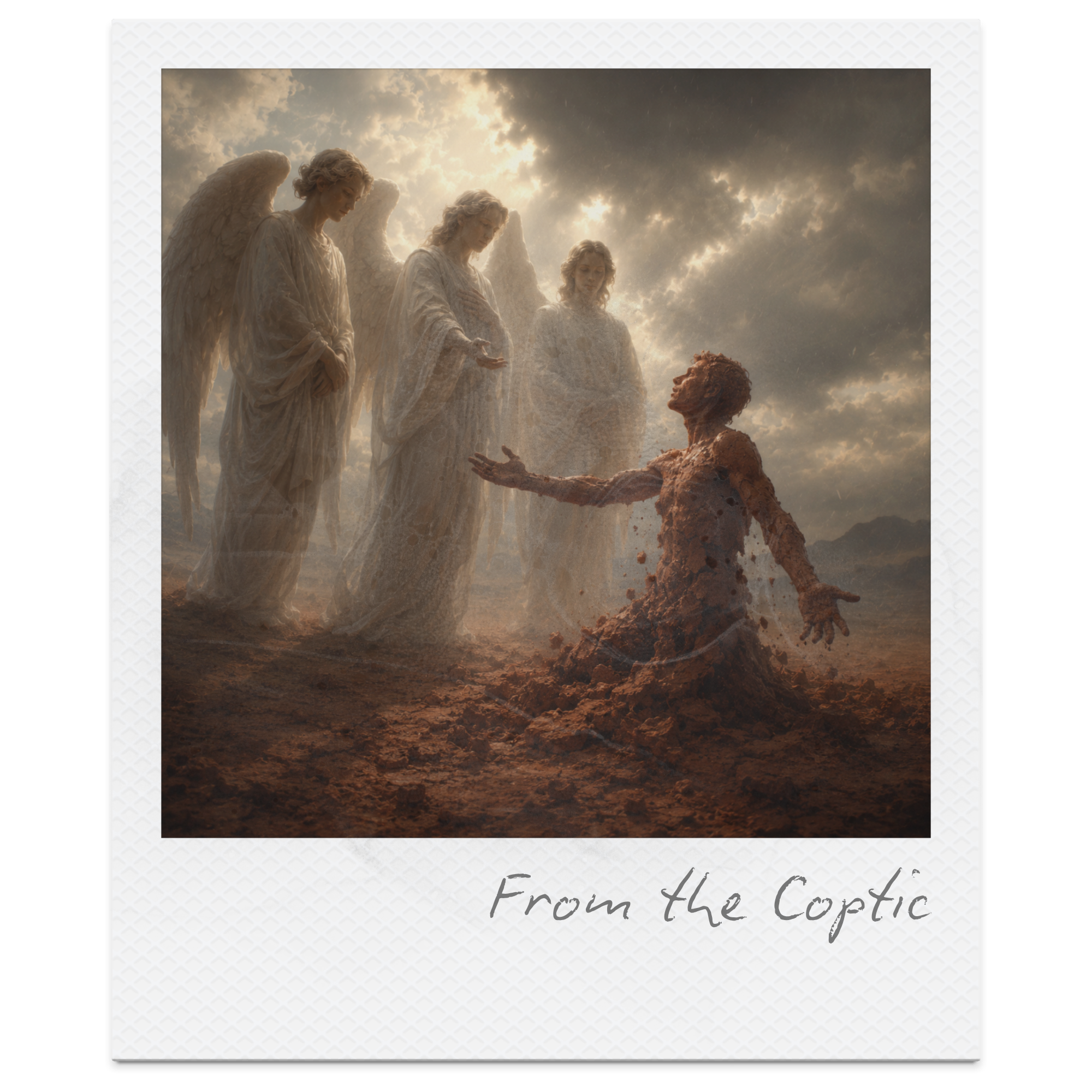
◆ From the Coptic – Stevie Smith – Both poems explore the relationship between life, death, and human existence. Smith presents mortality as the very reason life becomes meaningful, while Slessor depicts sleep as a temporary death followed by symbolic rebirth. Both poets challenge conventional fears surrounding mortality and suggest that endings and beginnings are fundamentally interconnected.
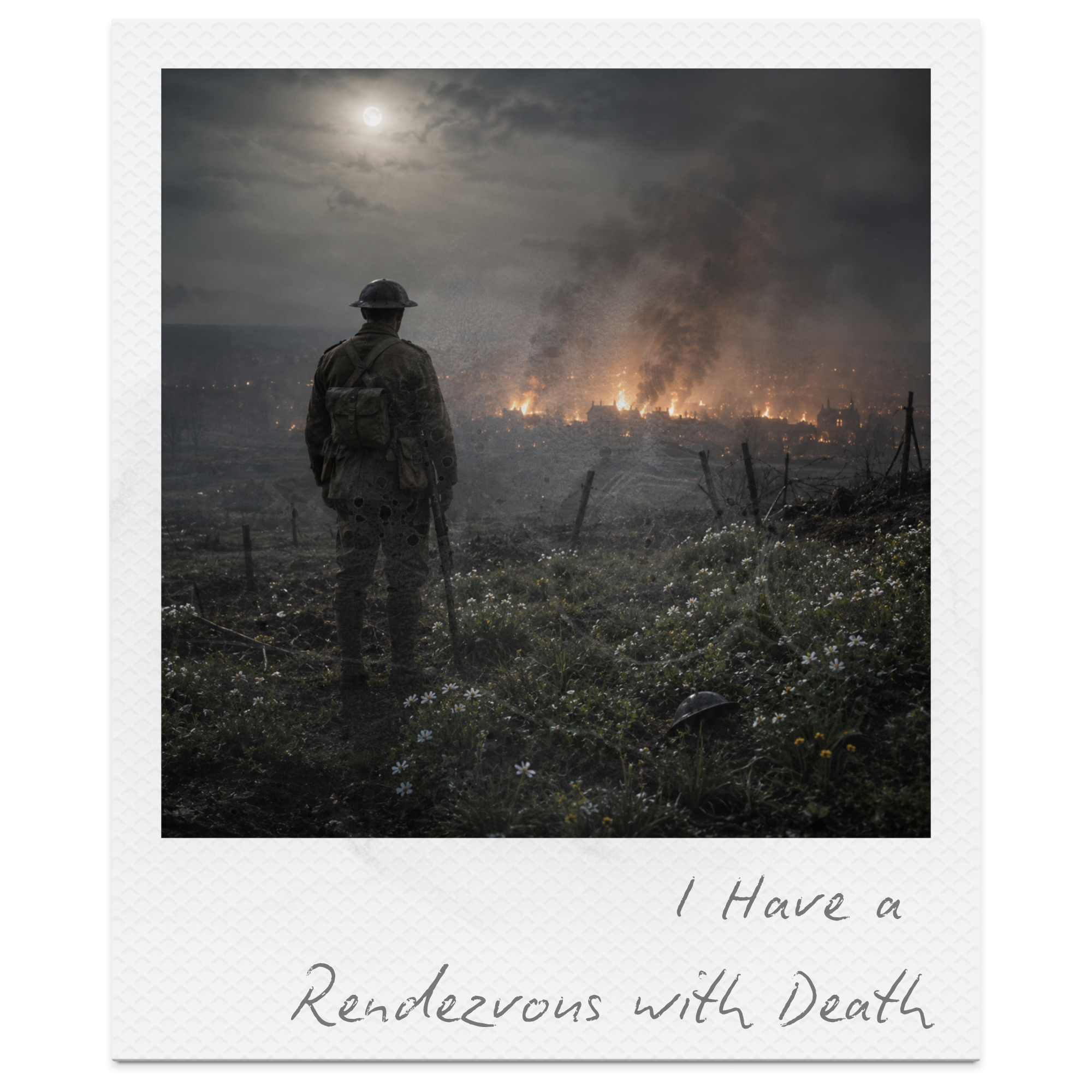
◆I Have a Rendezvous with Death – Alan Seeger – Both poems engage directly with death, but they approach it in very different ways. Seeger presents death as an external force that must eventually be confronted, whereas Slessor internalises the experience through the recurring cycle of sleep and awakening. Both poems nevertheless treat death with a degree of acceptance rather than simple fear.
◆ The Exequy – Henry King – King explores grief, mortality, and the hope of reunion beyond death, while Slessor focuses on the cyclical movement between symbolic death and renewal. Both poems reflect on the relationship between human mortality and forms of continuation that exist beyond ordinary life, although King's vision is explicitly spiritual whereas Slessor's remains more symbolic and ambiguous.
◆ Old Man & Very Old Man – James Henry – Both poems examine the human body and the inevitability of physical existence. Henry focuses on ageing and bodily decline, while Slessor explores the body's rhythms through blood, heartbeat, flesh, gestation, and birth. Together, the poems encourage readers to consider how physical experience shapes human identity and understanding.
◆ Homecoming – Lenrie Peters – Both poems explore journeys of return and transformation. Peters examines identity, belonging, and the complexities of returning to a familiar place, while Slessor presents sleep as a cyclical return to a pre-conscious state. In both poems, the idea of returning is complicated rather than comforting, involving change as much as continuity.
Exam-Ready Insight
Strong AS Level responses to Sleep move beyond describing the poem as a reflection on rest or dreaming and instead explore how Kenneth Slessor transforms sleep into a complex symbolic experience that combines death, rebirth, surrender, the unconscious, and human vulnerability. Perceptive essays analyse how Slessor uses extended metaphor, personification, bodily imagery, and structural contrast to blur the boundaries between opposing states, creating a poem that is simultaneously comforting and unsettling.
Strong responses typically:
◆ Explore how Sleep is personified as a speaking presence with its own body, emotions, and authority
◆ Analyse the poem's extended metaphor linking sleep with death, gestation, and rebirth
◆ Examine the significance of water imagery, particularly the estuary and waves, as symbols of transition and transformation
◆ Discuss how the poem presents sleep as both protective and consuming
◆ Analyse the paradoxical imagery of "body and no-body, flesh and no-flesh"
◆ Explore the importance of womb imagery, including the belly, blood, heartbeat, and enclosure
◆ Examine how the poem blurs distinctions between life and death, birth and burial, and self and other
◆ Analyse the significance of the final childbirth imagery, particularly "remorseless forceps" and "harsh birth"
◆ Track the structural movement from surrender to immersion to awakening
◆ Explore how rhythm, sound patterns, and enjambment contribute to the poem's hypnotic atmosphere
◆ Use short, embedded quotations naturally to support interpretation
◆ Move beyond identifying techniques to explain how they contribute to the poem's larger exploration of identity, mortality, and renewal
The strongest responses often focus on the poem's central paradox: that sleep resembles both death and protection, while awakening itself is presented as a painful and disruptive form of rebirth. Rather than treating these contradictions as problems to be solved, sophisticated essays explore how Slessor deliberately allows multiple meanings to coexist.
Example Thesis Statement
In Sleep, Kenneth Slessor presents unconsciousness as a paradoxical state that combines death, protection, and renewal, using personification, extended metaphor, and bodily imagery to suggest that surrendering the self is both unsettling and essential to human existence.
Model Analytical Paragraph
Slessor presents sleep as a state that simultaneously resembles death and protection through his use of extended metaphor and bodily imagery. The speaker promises to "carry" and "ferry" the listener "to burial mysteriously," immediately linking sleep with mortality while avoiding overtly frightening language. The adverb "mysteriously" softens the image of burial, suggesting that sleep represents a natural and recurring encounter with death rather than a final ending. However, the poem quickly complicates this interpretation through imagery of enclosure and nurture. Sleep describes its "huge cave" and "belly," transforming itself into a maternal presence that protects and contains the sleeper. This womb-like imagery is reinforced by references to blood, heartbeat, and flesh, creating the impression that sleep allows a temporary return to a pre-conscious state of safety and dependence. Yet this protection comes at the cost of individuality, as the sleeper becomes "dissolved and bedded" within Sleep's body. Slessor therefore presents sleep as both comforting and unsettling, suggesting that the desire for security is inseparable from the temporary surrender of identity. This tension reaches its climax in the final stanza, where awakening becomes a "harsh birth," completing the poem's cyclical movement from symbolic death to symbolic rebirth.
Teaching Ideas for Sleep
Sleep works particularly well for advanced literary discussion because its apparently simple subject conceals complex questions about mortality, identity, the unconscious, rebirth, and the nature of human existence. The poem encourages students to move beyond literal interpretations of sleep and instead explore how Slessor uses symbolism, ambiguity, and extended metaphor to blur the boundaries between life and death, safety and vulnerability, and consciousness and oblivion.
1. Exploring Sleep as a Symbol
This activity encourages students to investigate the multiple symbolic meanings that operate simultaneously throughout the poem.
◆ What does Sleep represent beyond ordinary rest?
◆ How does the meaning of Sleep change as the poem progresses?
◆ Is Sleep best understood as a symbol of death, the unconscious, the womb, or something else entirely?
2. Close Analysis Workshop: Extended Metaphor and Ambiguity
Students explore how Slessor develops several interconnected metaphors simultaneously throughout the poem.
◆ How does Slessor connect sleep with burial and death?
◆ Where does the poem introduce imagery associated with pregnancy and childbirth?
◆ Why might Slessor deliberately avoid choosing one clear symbolic interpretation?
3. Comparative Anthology Discussion: Mortality and Renewal
This discussion encourages students to compare how different anthology poets present death, transformation, and human existence.
◆ Compare Slessor's treatment of mortality with From the Coptic or I Have a Rendezvous with Death.
◆ Which anthology poems present death as frightening, and which present it as natural or inevitable?
◆ How do different poets explore the relationship between endings and beginnings?
4. Building Sophisticated Interpretations and Thesis Statements
This activity helps students move beyond descriptive analysis and develop conceptual literary arguments.
◆ Write a thesis statement exploring how Slessor presents sleep as a form of symbolic death.
◆ Develop a thesis focusing on the relationship between surrender and identity.
◆ Create a comparative thesis linking Sleep with another anthology poem that explores mortality or transformation.
5. The Unconscious and Modernist Poetry
Students examine how the poem reflects Modernist interests in dreams, psychology, and hidden states of consciousness.
◆ How does the poem move away from rational or logical explanations of experience?
◆ Why might Modernist writers have been interested in dreams and unconscious states?
◆ How does Slessor create a sense of mystery throughout the poem?
6. Womb, Birth, and Rebirth Imagery
Students focus specifically on the poem's recurring imagery of gestation and childbirth.
◆ How does the imagery of the "belly," blood, and heartbeat shape the reader's understanding of Sleep?
◆ Why does Slessor present awakening as "harsh birth" rather than liberation?
◆ How does the final stanza change the way readers interpret the earlier imagery?
7. Unseen Poetry Preparation: Symbolism and Multiple Meanings
This activity helps students prepare for unseen poetry analysis by examining how poets construct layered symbolic systems.
◆ Which symbols recur throughout the poem?
◆ How does Slessor allow symbols to carry multiple meanings simultaneously?
◆ Why is ambiguity often more powerful than a single fixed interpretation?
8. Debate Activity: Is Sleep a Refuge or a Threat?
Students use evidence from across the poem to debate the nature of Sleep itself.
◆ Is Sleep ultimately presented as protective or destructive?
◆ Does the poem encourage readers to welcome surrender or fear it?
◆ Is awakening presented positively or negatively?
This discussion works particularly well because students often arrive at different conclusions, encouraging close engagement with the poem's language and symbolism while reinforcing the importance of supporting interpretations with textual evidence.
Go Deeper into Sleep
If Sleep interests you, these poems and texts explore similar ideas surrounding mortality, dreams, the unconscious, identity, transformation, and the boundaries between life and death. Each offers a different perspective on states of transition and the mysteries of human consciousness.
◆ Because I could not stop for Death by Emily Dickinson – Like Slessor, Dickinson personifies an abstract force and presents death as a journey rather than a sudden ending. Both poems challenge conventional fears surrounding mortality and explore transitions between different states of existence.
◆ Ode to a Nightingale by John Keats – Keats reflects on mortality, escape, imagination, and the desire to move beyond the limitations of ordinary consciousness. Like Sleep, the poem blurs the boundaries between reality, dream, and symbolic transcendence.
◆ The Waste Land by T. S. Eliot – Eliot's Modernist masterpiece repeatedly explores fragmentation, spiritual uncertainty, death, renewal, and cyclical patterns of destruction and rebirth. Both poets are interested in states of transition and the instability of identity.
◆ The Interpretation of Dreams by Sigmund Freud – Although not a poem, Freud's influential work provides a useful context for understanding early twentieth-century fascination with dreams, unconscious processes, and hidden aspects of the self. Many of the psychological concerns explored in Sleep resonate strongly with Freudian ideas.
◆ The Guest House by Rumi – This philosophical poem explores acceptance, surrender, and openness to all forms of experience. Like Slessor's poem, it suggests that transformation often requires relinquishing control and embracing forces larger than the individual self.
Final Thoughts
Kenneth Slessor's Sleep transforms one of the most familiar human experiences into a profound exploration of mortality, identity, renewal, and the mysteries of consciousness. Through its rich symbolism and sustained ambiguity, the poem challenges readers to reconsider the relationship between sleep and death, presenting unconsciousness not simply as rest but as a temporary surrender of the self that makes renewal possible.
What makes the poem particularly compelling is its refusal to separate opposing ideas. Sleep is simultaneously protective and consuming, maternal and death-like, comforting and unsettling. By blurring the boundaries between womb and tomb, birth and burial, Slessor creates a symbolic landscape in which transformation becomes the defining feature of existence.
The poem's powerful conclusion leaves readers with one of its most provocative ideas: that awakening itself may be a form of "harsh birth." Rather than treating life and consciousness as uncomplicated gifts, Slessor acknowledges the vulnerability, struggle, and disruption that accompany existence. Yet the poem ultimately presents these cycles of surrender and renewal as an essential part of what it means to be human.
Sleep offers a rich opportunity to explore symbolism, personification, ambiguity, and extended metaphor while engaging with some of literature's most enduring questions about life, death, and identity. Its combination of lyrical beauty and philosophical complexity makes it one of the anthology's most rewarding poems for close analysis.
For more anthology analysis and comparison material, explore the Songs of Ourselves Volume 2 Hub. For wider poetry, prose, and drama resources, visit the Literature Library.
Choose Your Next Text