Song by Alun Lewis: Summary, Themes & Analysis
Alun Lewis's Song is a haunting exploration of grief, absence, memory, and the slow emotional erosion caused by loss. Written during the Second World War, the poem follows a speaker mourning a lover lost at sea, tracing how bereavement develops from immediate shock into a profound crisis of identity and selfhood. Through recurring sea imagery, symbolism, repetition, and shifting emotional perspectives, Lewis presents grief not as a single moment of suffering but as an ongoing process that reshapes the way the speaker experiences both the world and herself. As with many poems in the Songs of Ourselves Volume 2 Hub and across the Literature Library, the poem explores how love persists beyond physical absence, while questioning whether memory offers comfort, preservation, or a different form of loss altogether.

Context and Literary Background of Song
Alun Lewis was a Welsh poet and soldier whose writing was profoundly shaped by the experiences and uncertainties of the Second World War. Unlike many war poets who focus directly on combat, Lewis often explores the emotional consequences of conflict, particularly separation, longing, loneliness, and loss. His work is characterised by its psychological depth and its sensitivity to the ways war affects both those who leave and those who remain behind.
Song reflects this concern with the personal cost of war. Although the poem centres on the apparent loss of a sailor at sea, its primary focus is not the event itself but the experience of surviving it. Lewis explores how grief unfolds over time, tracing the speaker's movement from shock and despair towards a more complex state in which memory, absence, and identity become increasingly entangled. The poem's emphasis on emotional endurance rather than physical conflict distinguishes it from more conventional war poetry.
The poem also draws upon a long literary tradition of sea elegies and maritime loss. The sea functions not only as a literal setting but also as a symbol of distance, uncertainty, and the unknowable nature of death. Unlike traditional elegies that often move towards consolation or acceptance, Song offers no clear resolution. Instead, Lewis presents grief as an ongoing process that gradually reshapes the speaker's sense of self, creating a powerful meditation on love, absence, and the enduring psychological effects of loss.
Song: At a Glance
◆ Form: A lyrical elegy structured around seven stanzas that trace the gradual progression of grief over time.
◆ Tone and emotional movement: Moves from shock and numbness to despair, longing, resignation, and profound emotional exhaustion.
◆ Central tensions: Presence versus absence; memory versus reality; love versus loss; survival versus self-erasure.
◆ Core concerns: Grief, mourning, separation, war, memory, emotional endurance, identity, and the lasting effects of loss.
◆ Dominant imagery: The sea, waves, storms, ships, ghosts, sleep, seasons, coral reefs, and the natural world.
◆ Stylistic features: Repetition, maritime symbolism, cyclical structure, lyrical language, personification, elegiac tone, and shifting temporal perspectives.
◆ Key themes: Grief and bereavement; love and absence; memory and longing; war and separation; identity and self-loss; mortality and endurance.
◆ One-sentence interpretation: Lewis presents grief as a gradual and transformative force that extends beyond the death of a loved one, slowly reshaping the survivor's relationship with memory, identity, and the passage of time.
Quick Summary of Song
Song follows a speaker mourning a lover who has been lost at sea. The poem traces her grief across several months, beginning with feelings of numbness, emotional paralysis, and shock before moving into deeper despair, longing, and isolation. As time passes, she imagines hearing his voice and reconstructs the circumstances of his final voyage, desperately attempting to maintain a connection with the man she has lost.
As the poem develops, the focus gradually shifts from the lost lover to the speaker herself and the lasting psychological effects of bereavement. Recurring sea imagery, natural symbolism, and references to the changing seasons emphasise both the persistence of memory and the indifferent continuation of the natural world. By the final stanza, grief has become deeply internalised, leaving the speaker trapped between memory and reality, reflecting on the slow erosion of her own identity and the lingering presence of the dead within the lives of those who survive them.
Title, Form, Structure and Metre in Song
The formal features of Song are closely connected to its exploration of grief, absence, memory, and emotional endurance. Lewis combines a highly controlled structure with increasingly intense emotional content, creating a tension between formal order and psychological distress. The poem's carefully organised stanzas, recurring rhyme patterns, and lyrical qualities reinforce its status as both a lament and an elegy, while mirroring the speaker's gradual descent into prolonged mourning.
The Significance of the Title
The title Song initially appears simple and even reassuring. Traditionally, songs are associated with love, celebration, memory, and shared emotional experience. Lewis deliberately complicates these expectations by transforming the poem into an elegy for a lost lover.
The title is significant because it suggests an attempt to preserve memory through language. Just as songs can be repeated and remembered long after their creation, the speaker repeatedly revisits the memory of her absent lover. The title therefore reflects one of the poem's central concerns: the struggle to keep the dead alive through remembrance.
Form and Elegiac Tradition
The poem functions as a lyrical elegy, combining personal grief with sustained reflection on loss and absence. Unlike many traditional elegies, however, Song offers little movement towards consolation or acceptance. Instead, the speaker's grief deepens and becomes increasingly internalised as the poem progresses.
Lewis focuses not on the moment of death itself but on the psychological experience of surviving loss. As a result, the poem becomes less concerned with the dead lover than with the emotional consequences of mourning.
Seven Quintains and the Structure of Grief
The poem is divided into seven five-line stanzas (quintains). This regular structure creates a sense of stability and control that contrasts sharply with the speaker's emotional suffering.
The first four stanzas are organised around a clear chronological framework:
◆ The first month
◆ The second month
◆ The third month
◆ The fourth month
This progression initially suggests that grief can be measured and tracked through time. However, Lewis gradually undermines this expectation. Although the months pass, the speaker does not move towards recovery. Instead, her mourning becomes more deeply embedded within her sense of self.
The final three stanzas abandon the month-by-month structure and become increasingly reflective and symbolic. This shift is significant because it suggests that grief has ceased to be an event and has instead become a permanent psychological condition.
Rhyme Scheme and Sound Patterns
Most of the poem's stanzas work broadly within an ABCBB framework, although Lewis frequently introduces slant rhymes, partial rhymes, and subtle variations.
For example, the second stanza follows:
◆ sunk (A)
◆ despair (B)
◆ grave (C)
◆ there (B)
◆ care (B)
Similarly, the third stanza follows:
◆ going (A)
◆ say (B)
◆ slightly (C)
◆ day (B)
◆ away (B)
The fourth stanza continues this pattern:
◆ waves (A)
◆ sea (B)
◆ voyage (C)
◆ grievously (B)
◆ me (B)
Rather than relying on perfect rhyme throughout, Lewis often uses approximate sound relationships. Words such as "grievously" and "me" do not create a neat or exact rhyme, yet they remain aurally connected. These imperfect echoes are significant because they mirror the incomplete and unresolved nature of grief itself.
The poem's recurring BB endings frequently draw attention to emotionally important words such as care, away, me, rests, grief, and dead. As a result, the rhyme scheme repeatedly directs readers towards the poem's central concerns of loss, absence, and mortality.
Rhythm and Metre
Lewis does not employ a rigid metrical pattern throughout the poem. Instead, the rhythm remains flexible and conversational, often reflecting the natural movement of memory and thought.
Many lines contain a predominantly iambic movement, creating a lyrical quality appropriate to the title. However, Lewis frequently varies stress patterns and line lengths, preventing the poem from becoming overly predictable or mechanical.
This flexibility allows the speaker's emotional state to shape the rhythm of the poem. Moments of reflection often feel measured and controlled, while moments of grief and longing create a slower, heavier movement. The result is a voice that feels both intimate and psychologically authentic.
Repetition and Cyclical Mourning
Repetition plays a crucial structural role throughout the poem. The recurring references to passing months create a sense of progression while simultaneously highlighting emotional stagnation.
The repeated phrase "The seed, the seed of love" is particularly significant. The doubling of the noun creates emphasis and suggests obsessive reflection. Throughout the poem, repetition mirrors the way grief continually returns to the same memories and emotions despite the passage of time.
Enjambment and Emotional Continuity
Lewis frequently employs enjambment, allowing thoughts and images to flow across line endings. This technique reflects the ongoing nature of grief, suggesting that mourning cannot easily be contained within neat boundaries.
The poem's movement often feels fluid and continuous, particularly in passages describing the sea, memory, and the lover's imagined voice. This flowing quality mirrors both the movement of water and the speaker's inability to escape her thoughts.
Structural Progression and Psychological Decline
Perhaps the poem's most striking structural feature is its gradual inward movement. The opening stanzas focus on external events: the lover's absence, the passing months, and imagined reports from the lost voyage. As the poem develops, attention shifts increasingly towards the speaker's internal experience.
By the final stanza, the lost lover has almost disappeared from focus altogether. Instead, Lewis concentrates on the effects of grief upon the survivor. The poem concludes with the devastating phrase "The gradual self-effacement of the dead," suggesting that loss erodes not only memory but also identity itself.
Through its controlled quintain structure, recurring rhyme patterns, flexible rhythms, and gradual psychological progression, Song transforms personal bereavement into a profound exploration of memory, mourning, and the enduring consequences of love and loss.
Voice, Perspective and Emotional Conflict in Song
The voice of Song is one of the poem's most striking and significant features. Rather than focusing on the lost sailor himself, Lewis adopts the perspective of a woman mourning a lover who has disappeared at sea. This decision shifts attention away from the moment of death and towards the experience of survival, allowing the poem to explore the emotional consequences of loss rather than the event itself. As the poem progresses, the speaker's voice becomes increasingly introspective, revealing how prolonged grief reshapes memory, identity, and the relationship between the living and the dead.
A Voice Shaped by Absence
The speaker's voice is dominated by absence, waiting, and remembrance. Although the lost lover remains physically absent throughout the poem, he continues to occupy the speaker's thoughts and emotional life. The poem repeatedly emphasises what is missing rather than what is present, creating a voice characterised by longing and incompleteness.
This focus on absence is evident from the opening stanza, where the speaker recalls that during "The first month of his absence" she was "numb and sick." The lover's disappearance creates a void that affects every aspect of her existence. Rather than describing dramatic scenes of mourning, Lewis presents grief as a persistent emotional condition that infiltrates everyday life.
Writing Beyond First-Hand Experience
One of the poem's most fascinating features is Lewis's choice of perspective. Lewis wrote the poem after witnessing the aftermath of a submarine attack near the Cape of Good Hope, where dead bodies were seen floating in the sea. Yet rather than writing from the perspective of a sailor, survivor, or eyewitness, he imagines the experience of someone left behind.
This artistic choice broadens the poem's emotional scope. The focus shifts away from the physical reality of death and towards the psychological consequences of loss. By writing through the voice of a grieving lover, Lewis explores a form of suffering that is often less visible than the tragedy itself. The poem therefore suggests that war and disaster continue long after the immediate event has ended, living on within the memories and emotional lives of those who survive.
A Female Voice of Mourning
Although Lewis was a male poet and soldier, he creates a convincing and emotionally complex female speaker. The poem never explicitly identifies her relationship to the dead man, yet the intimacy of her reflections suggests a deep emotional bond.
This perspective is significant because it offers an alternative viewpoint to much traditional war poetry. Instead of focusing on soldiers, battles, or acts of heroism, Lewis explores the experiences of those who must endure separation, uncertainty, and grief. The poem therefore expands our understanding of the human cost of conflict, demonstrating that loss extends beyond the battlefield itself.
Memory, Imagination, and the Presence of the Dead
As the poem develops, the speaker increasingly relies upon memory and imagination to maintain her connection with the absent lover. During the third stanza, she imagines hearing him explain that their course had "deflected slightly", while in the fourth stanza she imagines him calling "Beloved, do not think of me."
These imagined conversations blur the boundary between memory and reality. The speaker is not simply remembering the dead man but actively recreating him within her own mind. This ambiguity creates a haunting atmosphere throughout the poem. Readers are left uncertain whether these moments represent genuine memories, wish fulfilment, or the psychological effects of grief itself.
Emotional Conflict and Psychological Tension
The speaker's voice reveals a series of emotional contradictions. She wishes to preserve her lover's memory, yet this attachment prevents her from moving forward. She seeks closeness with the dead, yet this desire deepens her suffering.
This tension is particularly evident when she declares that "I'll not stir, so he sleeps well." On the surface, the statement appears loving and selfless. However, it also suggests emotional paralysis. The speaker sacrifices her own ability to change or heal in order to maintain her connection to the dead. Lewis therefore presents grief as both an act of devotion and a source of self-destruction.
From Mourning to Self-Effacement
One of the most significant developments in the poem occurs when the focus gradually shifts away from the absent lover and towards the speaker herself. The early stanzas centre on his disappearance, his voyage, and his imagined words. By contrast, the final stanza is dominated by reflections on "the drag and dullness of my Self."
This shift suggests that grief has become internalised. The dead lover remains absent, but mourning has become a permanent presence within the speaker's consciousness. Her identity is increasingly shaped by loss, exhaustion, and emotional stagnation.
The poem culminates in the striking phrase "the gradual self-effacement of the dead." This conclusion is deliberately ambiguous. On one level, it suggests the gradual fading of the dead from memory. On another, it implies that prolonged mourning may cause the living to efface themselves alongside the dead. Lewis leaves readers questioning whether memory preserves identity or slowly consumes it.
An Intimate Yet Universal Voice
Although the speaker's experience is highly personal, Lewis's language allows the poem to transcend its specific circumstances. The voice becomes representative of anyone who has experienced profound absence, separation, or bereavement.
As a result, Song functions not only as a lament for a lost lover but also as a broader exploration of how grief, memory, and love continue to shape the lives of those who survive loss. Through its intimate perspective and emotional honesty, the poem transforms a private sorrow into a universal reflection on mourning and endurance.
Stanza-by-Stanza Analysis of Song
A close reading of Song reveals how Lewis gradually transforms a personal loss into a profound exploration of grief, memory, absence, and identity. The poem's seven stanzas trace the emotional progression of mourning, moving from the immediate shock of separation to a more complex psychological state in which the boundaries between the living and the dead become increasingly blurred. Through recurring sea imagery, repetition, symbolism, and shifts in perspective, Lewis demonstrates how grief evolves over time, affecting not only how the speaker remembers the dead but also how she understands herself.
Stanza 1: Shock, Emotional Paralysis, and the Seed of Loss
The opening stanza immediately establishes the speaker's profound sense of grief, disorientation, and emotional paralysis following her lover's disappearance. Lewis begins with the phrase "The first month of his absence", introducing the chronological framework that will shape much of the poem while emphasising that mourning unfolds over time rather than occurring as a single emotional event. The focus on the first month suggests that the speaker is attempting to measure and understand her grief, yet the emotions she describes remain overwhelming and difficult to control.
The description of being "numb and sick" combines emotional and physical suffering. Rather than presenting grief as an abstract feeling, Lewis portrays it as something that affects the entire body. The blunt monosyllables create a stark simplicity that reflects the speaker's inability to articulate anything more complex in the immediate aftermath of loss.
Particularly striking is the line "Life did not turn or kick." The verb "kick" evokes movement, vitality, and even the image of an unborn child stirring in the womb. This creates an important contrast between life and emotional stagnation. The world continues to exist, yet for the speaker all growth, progress, and animation appear to have ceased. The line suggests that grief has disrupted her relationship with time itself, leaving her trapped in a state of emotional suspension.
The reference to the lover's "promise" introduces an additional layer of ambiguity. The poem never explains precisely what this promise involved, allowing readers to interpret it as a promise of return, fidelity, future happiness, or shared life together. Its vagueness makes the loss feel universal while also emphasising how grief often centres upon unrealised futures as much as remembered pasts.
The stanza concludes with the repeated phrase "The seed, the seed of love was sick." This repetition is significant because it slows the rhythm and draws attention to the image itself. Traditionally, a seed symbolises growth, fertility, hope, and future possibility. By describing the seed of love as "sick," Lewis suggests that the relationship's future has been damaged before it could fully flourish. The image also foreshadows later natural symbolism throughout the poem, linking personal grief to wider cycles of growth, decay, and loss.
As an opening stanza, this section establishes many of the poem's central concerns: love, absence, stagnation, and the gradual transformation of grief into something that affects every aspect of the speaker's emotional world.
Stanza 2: Despair, Isolation, and the Presence of the Dead
The second stanza marks a deepening of the speaker's grief as the initial shock of loss develops into sustained despair and psychological suffering. The movement from the first month to the second month suggests the passage of time, yet there is little sense of healing or recovery. Instead, the speaker appears increasingly consumed by her mourning, emphasising one of the poem's central ideas: grief does not diminish simply because time passes.
Lewis immediately introduces imagery of darkness when the speaker describes how her eyes were sunk "In the darkness of despair." The metaphorical darkness reflects both emotional suffering and an inability to see a future beyond loss. The verb "sunk" is particularly significant because it echoes the maritime setting of the poem. Just as the lover has disappeared beneath the sea, the speaker herself seems to be sinking beneath the weight of grief. This subtle parallel begins to connect the physical loss of the sailor with the psychological decline of the survivor.
The image of the bed being "like a grave" is one of the most striking moments in the poem. A bed would normally symbolise intimacy, comfort, love, and shared companionship. By transforming it into a grave, Lewis demonstrates how grief has corrupted the spaces that once brought happiness. The simile also blurs the distinction between life and death, suggesting that the speaker's emotional world has become dominated by mortality.
This idea develops further when the speaker imagines that "his ghost was lying there." The appearance of the ghost does not necessarily imply a supernatural presence. Instead, it reflects the way memory continues to inhabit familiar spaces after loss. The dead lover remains absent physically, yet psychologically he remains present. Lewis therefore presents grief as a condition in which the dead continue to exert influence over the living.
The stanza concludes with the declaration that "my heart was sick with care." This phrase returns to the language of sickness established in the first stanza, reinforcing the idea that grief affects both mind and body. The word "care" is deliberately ambiguous. It suggests both loving devotion and emotional burden, implying that the speaker's love for the absent sailor has become inseparable from her suffering.
Through images of darkness, sinking, graves, ghosts, and sickness, Lewis intensifies the emotional atmosphere of the poem. The speaker is no longer simply mourning an absence; she is beginning to live alongside the psychological presence of the dead, foreshadowing the increasingly blurred boundaries between memory and reality that emerge in later stanzas.
Stanza 3: Memory, Imagination, and False Hope
By the third stanza, grief has begun to alter the speaker's perception of reality. The clear physical and emotional suffering of the previous stanzas gives way to something more uncertain as memory, imagination, and longing become increasingly intertwined. The phrase "The third month of his going" continues the poem's chronological structure, yet the focus now shifts away from the speaker's immediate emotional state and towards her attempts to reconstruct the fate of her absent lover.
The speaker admits that "I thought I heard him say", introducing an important moment of ambiguity. The phrase immediately raises questions about reliability and perception. Lewis does not suggest that the sailor has literally returned; instead, the wording implies uncertainty, revealing how grief can create imagined conversations and lingering psychological presences. The speaker's longing becomes so powerful that she momentarily believes she can hear the voice of the dead.
The imagined message itself is surprisingly mundane. Rather than delivering a dramatic farewell or declaration of love, the sailor explains that "Our course deflected slightly / On the thirty-second day." This detail is significant because it introduces the language of navigation and maritime travel. The understated explanation emphasises the randomness of tragedy. The disaster is not presented as the result of heroism, villainy, or destiny, but as the consequence of a small deviation in course. Lewis therefore highlights the fragility of human lives and the unpredictable nature of loss.
The reference to the "thirty-second day" also creates an illusion of precision. The speaker appears desperate for facts and explanations that might make sense of what has happened. Yet the information ultimately proves incomplete and unsatisfactory. The imagined voice offers the possibility of understanding, only for that possibility to be immediately removed.
This frustration is captured in the final line, where "The tempest blew his words away." The tempest functions on both a literal and symbolic level. Literally, it evokes the storm that may have contributed to the sailor's death. Symbolically, it represents the overwhelming force of grief itself, which prevents the speaker from achieving clarity or closure. Just as the storm destroys the sailor's words, grief continually disrupts the speaker's attempts to understand and process her loss.
The stanza therefore marks an important turning point in the poem. The lover is no longer simply absent; he begins to reappear through memory and imagination. However, every attempt at communication remains incomplete. Lewis presents grief as a condition in which the mourner continually searches for answers, yet those answers remain frustratingly beyond reach.
Stanza 4: The Reality of Loss and the Voice from the Sea
The fourth stanza marks an important shift in the poem. While the previous stanza focused on uncertainty and imagined fragments of communication, this section moves closer to an acceptance of the sailor's fate. For the first time, the speaker directly acknowledges that "he was lost among the waves," replacing speculation with a more explicit recognition of death. However, Lewis immediately complicates this apparent acceptance by allowing the dead lover's voice to return once again.
The opening image of being "lost among the waves" is deliberately ambiguous. On a literal level, it describes the sailor's disappearance at sea. Symbolically, however, the waves suggest forces larger than individual human lives. The sea throughout the poem functions as a vast and indifferent presence that absorbs both the dead and the living's attempts to understand loss. The sailor is not simply dead; he has been swallowed by something immeasurable and unknowable.
The description of how "His ship rolled helpless in the sea" reinforces this sense of human vulnerability. The adjective "helpless" is particularly significant because it strips away any romantic notions of control or heroism. Unlike traditional narratives of maritime adventure, Lewis presents the ship as powerless before natural forces. This reflects one of the poem's recurring concerns: the fragility of human plans and promises in the face of circumstances beyond our control.
Interestingly, Lewis refers to "The fourth month of his voyage" rather than the fourth month of his absence. This subtle shift in perspective momentarily places readers within the sailor's imagined experience rather than the speaker's. The dead lover seems almost to continue existing within her imagination, suggesting that grief has blurred the boundaries between the living and the dead.
The imagined voice returns in the final two lines as the sailor "shouted grievously": "Beloved, do not think of me." This is one of the poem's most poignant moments because the request is fundamentally impossible. The entire poem exists because the speaker cannot stop thinking about him. The command therefore highlights the central tension of mourning: the dead may be gone, yet memory refuses to release them.
The adverb "grievously" carries a double significance. It suggests both physical distress and emotional sorrow, linking the sailor's imagined voice to the wider atmosphere of grief that permeates the poem. At the same time, the word echoes the speaker's own suffering, creating a sense that the dead and the living remain emotionally connected despite their separation.
The stanza therefore combines acceptance and denial, reality and imagination. The speaker acknowledges that her lover has been lost, yet she continues to hear him speak. Lewis presents grief as a state in which understanding and longing coexist, preventing any simple or complete resolution.
Stanza 5: Nature's Indifference and the Lover's Resting Place
The fifth stanza marks a significant shift away from the poem's chronological account of grief and towards a more symbolic exploration of loss. Having imagined the circumstances of the sailor's disappearance, the speaker now turns her attention to the natural world that surrounds his final resting place. The stanza is rich in natural imagery, yet these images provide little comfort. Instead, Lewis uses them to emphasise the vastness of the sea and the indifference of nature to human suffering.
The opening image of "The flying fish like kingfishers" immediately introduces a comparison between marine and bird life. The simile creates a moment of beauty and movement, reflecting the vitality of the natural world. However, this vitality stands in stark contrast to the sailor's death. Nature continues its cycles of life and motion regardless of individual tragedy, highlighting the speaker's isolation within her grief.
Lewis continues this pattern through the image of fish that "Skim the sea's bewildered crests." The adjective "bewildered" is particularly intriguing because it personifies the sea. The description may reflect the speaker's own emotional state, projecting confusion and disorientation onto the landscape itself. This moment demonstrates how grief influences perception, causing the external world to mirror internal suffering.
The image of "The whales blow steaming fountains" further reinforces the idea of nature's ongoing activity. Whales continue to surface, breathe, and move through the ocean, entirely unaffected by the human loss that occupies the speaker's thoughts. The grandeur of the whales also emphasises the scale of the natural world compared to the fragility of individual human lives.
Particularly poignant is the observation that "The seagulls have no nests." Nests traditionally symbolise home, security, belonging, and family life. Their absence creates a subtle sense of displacement and rootlessness. This image reflects not only the sailor's lack of a permanent resting place but also the speaker's own emotional homelessness following his loss. The world no longer possesses the stability it once offered.
The stanza culminates in the haunting phrase "Where my lover sways and rests." The juxtaposition of "sways" and "rests" creates a powerful tension. The word "rests" suggests peace, stillness, and perhaps even acceptance. However, "sways" implies continuous movement, preventing any image of complete tranquillity. The lover is simultaneously at rest and in motion, suspended within the shifting sea. This ambiguity mirrors the speaker's inability to achieve closure. The dead man occupies an uncertain space between presence and absence, peace and disturbance, memory and reality.
For the first time in the poem, Lewis fully integrates the lost lover into the natural world. Yet rather than providing consolation, these images reinforce the enormity of the speaker's loss. Nature continues to flourish and move around him, while she remains emotionally fixed upon his absence. The stanza therefore deepens the poem's exploration of grief by highlighting the contrast between personal suffering and the indifferent continuity of the natural world.
Stanza 6: Love, Memory, and the Growth of Eternal Grief
The sixth stanza shifts away from the descriptive imagery of the sea and enters a more philosophical reflection on love, mortality, and the lasting consequences of loss. Having imagined her lover's resting place beneath the ocean, the speaker now reflects on the relationship itself and the burden of continuing to live after his death. The stanza marks an important transition in the poem, as grief becomes less concerned with the event of loss and more concerned with its permanence.
The opening declaration, "We never thought to buy and sell / This life that blooms or withers in the leaf," introduces the language of value and exchange. The phrase "buy and sell" suggests commerce, bargaining, or transaction, implying that life and love should never be measured according to profit or loss. The speaker reflects on the fragility of existence, recognising that human life follows the same natural cycle as a leaf that may either "bloom" or "wither." This image expands the poem's recurring use of nature symbolism, connecting individual grief to wider patterns of growth and decay.
The contrast between "blooms" and "withers" is particularly significant. Throughout the poem, Lewis repeatedly juxtaposes life and death, growth and decline. Here, he suggests that mortality is inseparable from life itself. The image echoes the earlier "seed of love" from the first stanza, creating a structural link between the beginning of the poem and this later reflection on impermanence.
The speaker's declaration "I'll not stir, so he sleeps well" is one of the poem's most revealing moments. On one level, it appears as an act of devotion. The speaker remains still out of respect for the dead, as though any movement might disturb his rest. However, the line also suggests emotional paralysis. She refuses to move forward with her own life because doing so might feel like a betrayal of the relationship. Lewis therefore presents grief as both an expression of love and a force that can prevent renewal.
The imagery then shifts dramatically beneath the sea. The phrase "cell by cell the coral reef / Builds an eternity of grief" is among the poem's most powerful and unsettling images. Coral reefs are formed through the slow accumulation of countless tiny organisms over long periods of time. By comparing grief to this process, Lewis suggests that mourning is not a single emotion but something that gradually accumulates and solidifies over time.
The phrase "cell by cell" emphasises patience, repetition, and inevitability. Just as the reef slowly grows beneath the water, grief quietly expands within the speaker's consciousness. The image is particularly effective because coral reefs are both beautiful and associated with death, often forming around the remains of marine life. This duality reflects the poem's wider exploration of how love and loss become inseparable.
The final phrase, "an eternity of grief," introduces a sense of permanence that has not appeared previously in the poem. Earlier stanzas measured loss through months, suggesting that time might eventually bring change. Here, however, grief is presented as something that transcends ordinary time altogether. The speaker no longer imagines recovery or closure. Instead, mourning has become a lasting structure within her emotional world, as enduring and immovable as the reef itself.
This stanza therefore deepens the poem's exploration of memory and devotion while foreshadowing the psychological focus of the final stanza. Lewis presents grief not as something that fades but as something that gradually grows, reshaping the survivor's identity and relationship with the world.
Stanza 7: Identity, Emotional Erosion, and Self-Effacement
The final stanza abandons the external narrative of the sailor's disappearance and focuses entirely on the psychological consequences of grief. This shift is significant because it reveals that the poem is ultimately less concerned with the fate of the dead lover than with the effect his loss has had upon the survivor. Having moved through shock, despair, memory, and reflection, the speaker arrives at a devastating assessment of her own emotional state.
The opening exclamation, "But oh", immediately signals a change in tone. Throughout the poem, the speaker has attempted to understand and memorialise her lover's fate. Here, however, her attention turns inward. The phrase "the drag and dullness of my Self" conveys profound emotional exhaustion. The noun "drag" suggests weight, burden, and resistance, while "dullness" implies numbness and a loss of vitality. Significantly, Lewis capitalises "Self," drawing attention to the speaker's identity and suggesting that grief has become central to her understanding of who she is.
The following line, "The turning seasons wither in my head," develops one of the poem's most important ideas. Earlier stanzas used the passing months and natural cycles to measure time. Now, however, those cycles have lost their restorative power. Seasons traditionally symbolise renewal, growth, and change, yet here they "wither" rather than flourish. The image suggests that the natural processes which continue in the external world can no longer bring emotional healing. Grief has disrupted the speaker's relationship with time itself.
Lewis reinforces this sense of stagnation through the repetition of "All this slowness, all this hardness." The repeated structure emphasises the accumulation of suffering while creating a heavy, almost weary rhythm. "Slowness" suggests emotional paralysis and the inability to move forward, while "hardness" implies emotional numbness and a defensive response to prolonged pain. Together, the words reveal how grief has transformed from acute sorrow into a permanent psychological condition.
Particularly striking is the phrase "The nearness that is waiting in my bed." Earlier in the poem, the bed was described as being "like a grave" where the speaker imagined her lover's ghost lying beside her. Here, that image returns in a more ambiguous form. The word "nearness" suggests intimacy and presence, yet what is near remains undefined. It may refer to memory, loneliness, death, or the speaker's continuing attachment to the dead. The image demonstrates how the boundary between absence and presence has become increasingly blurred.
The poem concludes with one of its most complex and unsettling lines: "The gradual self-effacement of the dead." The phrase invites multiple interpretations. On one level, it suggests the inevitable fading of the dead from memory as time passes. Despite the speaker's efforts to preserve her lover through remembrance, his identity may gradually disappear. However, the line can also be read more disturbingly. Throughout the poem, it is the speaker's own sense of self that appears to be eroding. In this reading, grief causes the living to efface themselves alongside the dead, sacrificing their own identity to sustain the memory of what has been lost.
The adjective "gradual" is particularly important because it links the ending to the poem's broader structure. Just as grief has unfolded month by month, the erosion of identity occurs slowly rather than suddenly. There is no dramatic climax or moment of acceptance. Instead, Lewis presents mourning as a prolonged and ongoing process that quietly reshapes the survivor's relationship with memory, time, and selfhood.
As a conclusion, the stanza offers no consolation or resolution. Unlike many elegies, Song does not end with spiritual comfort or acceptance. Instead, Lewis leaves readers with a haunting meditation on the lasting psychological effects of bereavement, suggesting that love may survive death, but not without fundamentally altering the lives of those who remain behind.
Key Quotes and Analysis in Song
Lewis uses a range of powerful images, symbols, and recurring motifs throughout Song to explore grief, absence, memory, and the enduring impact of loss. The following quotations reveal how the speaker's mourning develops from immediate shock into a profound reflection on identity, mortality, and emotional endurance.
“The seed, the seed of love was sick.”
◆ Method: Repetition, symbolism, metaphor.
◆ Meaning: The repeated noun "seed" emphasises the relationship's potential for growth and future happiness.
◆ Purpose: Lewis presents love as something organic and living, capable of flourishing under normal circumstances.
◆ Impact: By describing the seed as "sick," he suggests that the lover's absence has damaged not only the relationship itself but also the future it represented.
◆ Link: Connects to love, loss, nature symbolism, and the destruction of future possibilities.
“My bed was like a grave”
◆ Method: Simile, death imagery.
◆ Meaning: The bed, traditionally associated with intimacy, comfort, and companionship, is transformed into a place associated with death.
◆ Purpose: Lewis demonstrates how grief alters the speaker's perception of familiar spaces.
◆ Impact: The image highlights the psychological intrusion of loss into everyday life.
◆ Link: Connects to grief, absence, mourning, and the blurring of life and death.
“His ghost was lying there”
◆ Method: Ghost imagery, symbolism, ambiguity.
◆ Meaning: The dead lover continues to occupy the speaker's thoughts despite his physical absence.
◆ Purpose: Lewis explores how memory allows the dead to remain emotionally present.
◆ Impact: The image creates a haunting atmosphere and blurs the boundary between reality and imagination.
◆ Link: Connects to memory, absence, and the enduring influence of the dead.
“Our course deflected slightly / On the thirty-second day”
◆ Method: Direct speech, maritime imagery, understatement.
◆ Meaning: The imagined explanation suggests that tragedy may result from seemingly minor changes or accidents.
◆ Purpose: Lewis highlights the randomness and fragility of human life.
◆ Impact: The understated language makes the disaster feel even more tragic because it appears so avoidable.
◆ Link: Connects to fate, chance, mortality, and the search for meaning after loss.
“The tempest blew his words away.”
◆ Method: Personification, symbolism, pathetic fallacy.
◆ Meaning: The storm destroys the speaker's attempt to understand what happened to her lover.
◆ Purpose: Lewis emphasises the impossibility of obtaining complete answers after loss.
◆ Impact: The image reinforces the frustration and uncertainty that characterise grief.
◆ Link: Connects to memory, absence, nature, and the limits of human understanding.
“Beloved, do not think of me.”
◆ Method: Direct speech, irony, emotional conflict.
◆ Meaning: The lover appears to encourage the speaker to let go of her attachment to him.
◆ Purpose: Lewis exposes the tension between remembrance and the need to move forward.
◆ Impact: The request is deeply ironic because the entire poem demonstrates that she cannot stop thinking about him.
◆ Link: Connects to love, memory, grief, and emotional attachment.
“Where my lover sways and rests.”
◆ Method: Juxtaposition, maritime imagery, ambiguity.
◆ Meaning: The lover is presented as both moving and resting simultaneously beneath the sea.
◆ Purpose: Lewis creates an uncertain image that resists simple ideas of peace or closure.
◆ Impact: The line reflects the speaker's inability to fully accept or understand death.
◆ Link: Connects to mortality, nature, memory, and unresolved grief.
“I’ll not stir, so he sleeps well”
◆ Method: First-person voice, symbolism, emotional conflict.
◆ Meaning: The speaker refuses to move forward emotionally in order to preserve her connection to the dead.
◆ Purpose: Lewis presents grief as an act of devotion as well as a source of paralysis.
◆ Impact: The line reveals how mourning can become self-sacrificial and restrictive.
◆ Link: Connects to love, memory, identity, and emotional stagnation.
“Cell by cell the coral reef / Builds an eternity of grief.”
◆ Method: Extended metaphor, natural symbolism, imagery.
◆ Meaning: Grief accumulates slowly and persistently, just as coral reefs are formed over long periods of time.
◆ Purpose: Lewis demonstrates that mourning develops gradually rather than disappearing with time.
◆ Impact: The image transforms grief into a physical structure that grows larger and more permanent.
◆ Link: Connects to time, memory, nature, and the permanence of loss.
“The gradual self-effacement of the dead.”
◆ Method: Ambiguity, abstract imagery, philosophical reflection.
◆ Meaning: The phrase may refer to the fading of the dead from memory or the erosion of the living through prolonged mourning.
◆ Purpose: Lewis leaves readers with a deliberately unresolved conclusion.
◆ Impact: The ambiguity encourages multiple interpretations and highlights the poem's psychological complexity.
◆ Link: Connects to identity, memory, grief, and the lasting consequences of bereavement.
Literary Techniques in Song
Lewis employs a wide range of literary techniques throughout Song to explore grief, absence, memory, and the enduring psychological effects of loss. His use of symbolism, repetition, natural imagery, and shifting perspectives allows him to present mourning as a gradual and transformative experience, revealing how the dead continue to shape the lives of those left behind.
Symbolism
Symbolism plays a central role throughout the poem. The seed of love symbolises hope, growth, and the future potential of the relationship, while its sickness reflects the damage caused by separation and loss. Similarly, the sea becomes a symbol of distance, death, uncertainty, and the unknowable nature of fate.
Later in the poem, the coral reef functions as an extended symbol for grief itself, slowly accumulating over time until it becomes a permanent structure within the speaker's emotional landscape.
Repetition
Lewis frequently uses repetition to reflect the cyclical nature of mourning. The phrase "The seed, the seed of love" draws attention to the image while suggesting the speaker's fixation on what has been lost.
The repeated references to passing months also reinforce the slow progression of grief. Although time continues to move forward, the speaker remains emotionally trapped within her loss.
Maritime Imagery
The poem is saturated with maritime imagery, including references to ships, waves, tempests, voyages, whales, coral reefs, and the sea itself.
These images establish the circumstances of the lover's disappearance while also creating a symbolic landscape through which Lewis explores uncertainty, separation, and mortality. The sea functions as both a physical setting and a metaphor for the vast emotional distance between the living and the dead.
Nature Imagery
Throughout the poem, Lewis repeatedly connects human experience to the natural world. Images of seeds, leaves, seasons, fish, birds, and coral reefs create a recurring pattern of growth and decay.
This natural imagery emphasises the inevitability of change and mortality while highlighting the contrast between nature's continuing cycles and the speaker's emotional stagnation.
Simile
Lewis uses simile to make the speaker's grief more immediate and tangible. The most striking example occurs when she describes how "my bed was like a grave."
This comparison transforms a place normally associated with intimacy and comfort into a symbol of death and loss. The simile demonstrates how profoundly grief has altered her perception of familiar spaces.
Metaphor
Metaphor is used throughout the poem to explore emotional states that are difficult to describe directly. The "seed of love" operates as an extended metaphor for the relationship itself, while the coral reef becomes a metaphor for the gradual accumulation of grief.
These metaphors allow Lewis to transform abstract emotions into vivid and memorable images.
Personification
Lewis frequently attributes human characteristics to elements of the natural world. The description of the sea's "bewildered crests" personifies the ocean, projecting the speaker's confusion and emotional uncertainty onto the landscape itself.
Similarly, the tempest that "blew his words away" appears almost to act deliberately, preventing communication and understanding.
Direct Speech
The use of direct speech creates some of the poem's most emotionally powerful moments. The imagined words "Our course deflected slightly" and "Beloved, do not think of me" give the absent lover a temporary voice within the poem.
These moments blur the boundary between memory and imagination, highlighting the speaker's desire to maintain a connection with the dead.
Enjambment
Lewis frequently employs enjambment, allowing ideas and emotions to flow across line endings without grammatical interruption.
This technique mirrors both the movement of the sea and the continuous nature of grief. Thoughts spill forward from one line to the next, reflecting the speaker's inability to contain or neatly resolve her emotions.
End-Stopping
Alongside enjambment, Lewis uses end-stopped lines to create moments of emphasis and reflection. These pauses often occur after significant statements about loss, memory, or death, forcing readers to linger on important ideas before moving forward.
The contrast between flowing enjambment and abrupt end-stopping reflects the tension between emotional movement and emotional stagnation.
Alliteration
Lewis occasionally uses alliteration to reinforce the musical qualities suggested by the poem's title. Phrases such as "cell by cell" create rhythmic emphasis while drawing attention to the slow, cumulative nature of grief.
The repetition of consonant sounds also contributes to the poem's lyrical and elegiac tone.
Assonance and Internal Sound Patterning
The poem's subtle use of repeated vowel sounds helps create its song-like quality. Lewis frequently links key words through sound rather than strict rhyme, producing echoes that reinforce emotional connections between ideas.
These sound patterns contribute to the poem's reflective atmosphere and support its exploration of memory and recurrence.
Juxtaposition
One of the poem's most important techniques is juxtaposition. Lewis repeatedly places images of life beside images of death, and images of growth beside images of decay.
For example, the blooming and withering leaf, the moving and resting lover, and the turning seasons that nevertheless wither in the speaker's mind all highlight the tension between renewal and loss. These contrasts reinforce the poem's central concern with the coexistence of love and mortality.
Ambiguity
The poem's final line, "The gradual self-effacement of the dead," exemplifies Lewis's use of ambiguity. Readers are left uncertain whether the dead are fading from memory or whether the living are gradually losing themselves through mourning.
This uncertainty prevents the poem from offering a simple resolution and encourages multiple interpretations of its conclusion.
Elegiac Tone
Perhaps most importantly, Lewis sustains an elegiac tone throughout the poem. The reflective voice, focus on loss, recurring memories, and absence of easy consolation all contribute to a sustained atmosphere of mourning.
Rather than presenting grief as something that can be overcome, Lewis portrays it as an enduring emotional condition that continues to shape identity long after the initial loss has occurred.
Symbolism in Song
Symbolism is central to Lewis's exploration of grief, memory, absence, and identity. Throughout the poem, recurring symbols from the natural and maritime worlds help transform a personal experience of loss into a broader meditation on mortality and emotional endurance. Many of these symbols evolve as the poem progresses, reflecting the speaker's changing relationship with her lover's death.
The Seed of Love
The image of "The seed, the seed of love" symbolises the relationship itself and the future it once promised. Seeds are traditionally associated with growth, fertility, renewal, and potential. They contain the possibility of future life and development.
However, Lewis immediately complicates this symbolism by describing the seed as "sick." Rather than flourishing, the relationship's future has been damaged by absence and loss. The image suggests that grief affects not only memories of the past but also the future that might have existed.
The Sea
The sea functions as one of the poem's most important symbols. On a literal level, it is the place where the lover disappears and presumably dies. Symbolically, however, it represents distance, uncertainty, fate, and the unknowable nature of death.
Throughout the poem, the sea remains vast, mysterious, and beyond human control. It separates the speaker from the lover while simultaneously becoming his final resting place. As a result, the sea symbolises both physical and emotional separation.
The Ship and Voyage
The lover's ship and voyage symbolise the unpredictability of human life. Journeys traditionally suggest movement towards a destination, progress, or discovery. In Song, however, the voyage becomes a journey towards loss and disappearance.
The ship's helplessness in the face of the sea reflects the vulnerability of human beings to forces beyond their control. Lewis uses the voyage to emphasise the fragility of plans, promises, and expectations.
The Ghost
The image of the lover's ghost symbolises the persistence of memory after death. The ghost may not represent a literal supernatural presence but rather the way the dead continue to inhabit the minds and emotions of those who survive them.
The symbol highlights one of the poem's central ideas: absence does not necessarily mean disappearance. Although the lover is physically gone, he remains psychologically present.
The Bed
The speaker's bed functions as a powerful symbol of both intimacy and loss. Traditionally associated with love, companionship, comfort, and security, it becomes transformed into something resembling a grave.
This symbolic transformation reflects the extent to which grief has altered the speaker's world. What once represented closeness and affection now serves as a reminder of death and absence.
The Tempest
The tempest symbolises forces that cannot be controlled or understood. On a literal level, it may refer to the storm that contributed to the sailor's death. More broadly, it represents the overwhelming power of grief and the impossibility of obtaining complete answers about loss.
By blowing away the lover's words, the tempest becomes a symbol of uncertainty and the limits of human understanding.
Birds and Marine Life
The flying fish, kingfishers, whales, and seagulls symbolise the continuity of the natural world. While the speaker remains trapped in mourning, nature continues its cycles of movement, survival, and renewal.
This symbolism creates an important contrast between personal suffering and the indifference of nature. The natural world continues regardless of individual loss, emphasising the speaker's sense of isolation.
The Leaf
The image of the leaf symbolises the fragility and transience of human life. The contrast between life that "blooms" and life that "withers" reflects the inevitability of mortality.
The leaf also extends the poem's recurring pattern of natural symbolism, linking human existence to wider cycles of growth and decline.
The Coral Reef
The coral reef is one of the poem's most powerful symbols. Formed gradually over long periods of time, it represents the slow accumulation of grief within the speaker's emotional life.
The phrase "cell by cell" emphasises that mourning develops incrementally rather than disappearing with time. The reef transforms grief into something physical, permanent, and enduring. Just as coral builds layer upon layer beneath the sea, sorrow gradually reshapes the speaker's inner world.
The Turning Seasons
The turning seasons traditionally symbolise renewal, change, and the cyclical nature of life. In many poems, seasonal change offers hope that suffering will eventually pass.
Lewis deliberately subverts this symbolism. Although the seasons continue to turn, they "wither" in the speaker's head. The natural cycle of renewal has lost its restorative power, reflecting the extent to which grief has disrupted her relationship with time and change.
Self-Effacement
The poem's final image of "self-effacement" functions as a symbol of psychological erosion. It suggests a gradual fading or disappearance, raising questions about what grief ultimately does to memory and identity.
The symbol remains deliberately ambiguous. It may refer to the dead gradually fading from remembrance, or it may suggest that the living slowly lose parts of themselves through prolonged mourning. This uncertainty contributes to the haunting and unresolved nature of the poem's conclusion.
Through these interconnected symbols, Lewis transforms a personal story of bereavement into a profound exploration of love, loss, memory, mortality, and the lasting emotional consequences of grief.
Meaning and Impact of Song
At its heart, Song explores the enduring psychological effects of grief and the ways in which loss continues to shape the lives of those who survive. Although the poem begins with the disappearance of a lover at sea, Lewis is ultimately less concerned with the event itself than with the emotional consequences that follow. Through the speaker's gradual movement from shock and despair to reflection and self-examination, the poem becomes a powerful meditation on memory, absence, love, and identity.
One of the poem's central ideas is that grief does not follow a simple or predictable path. The chronological structure initially suggests that mourning can be measured and understood through the passage of time. However, as the poem develops, it becomes clear that the passing months bring neither closure nor recovery. Instead, grief becomes increasingly internalised, transforming from an emotional response into a permanent condition that shapes the speaker's perception of herself and the world around her.
Lewis also explores the complex relationship between memory and absence. Although the lover is physically gone, he remains emotionally present throughout the poem. The speaker imagines hearing his voice, seeing his ghost, and reconstructing his final journey. These moments suggest that memory can preserve the dead, but they also reveal how remembrance may prevent emotional movement. The poem repeatedly questions whether holding on to the dead offers comfort or prolongs suffering.
Another important aspect of the poem is its portrayal of the natural world. Images of seeds, leaves, birds, whales, coral reefs, and turning seasons create a constant reminder that life continues beyond individual loss. However, rather than offering consolation, these natural cycles often highlight the speaker's emotional stagnation. Nature continues to grow, move, and change, while she remains trapped within her grief. This contrast reinforces the isolation and loneliness that characterise her mourning.
The poem also challenges conventional ideas about death and remembrance. Many elegies move towards acceptance, spiritual comfort, or reconciliation. Song offers no such resolution. Instead, Lewis presents grief as an ongoing process that continues to evolve long after the initial loss. The speaker's suffering becomes increasingly bound to her identity, culminating in the unsettling concept of "self-effacement." This suggests that prolonged mourning can erode a person's sense of self, raising questions about the emotional cost of remaining devoted to the dead.
The final line is particularly significant because it resists a single interpretation. The phrase "The gradual self-effacement of the dead" may refer to the fading of the dead from memory over time. Alternatively, it may suggest that the living gradually efface themselves through their attachment to the dead. Lewis deliberately leaves this ambiguity unresolved, encouraging readers to reflect on the complex relationship between love, remembrance, and identity.
The impact of Song lies in its emotional honesty and psychological depth. Rather than presenting grief as a temporary stage that can be overcome, Lewis portrays it as a transformative force that reshapes the survivor's inner world. The poem's combination of intimate personal emotion, rich natural symbolism, and haunting ambiguity creates a powerful exploration of what it means to live with loss.
Ultimately, Song suggests that love survives death, but not without consequences. Memory preserves the absent lover, yet it also binds the speaker to her grief. Through this tension, Lewis creates a moving and deeply human reflection on mourning, demonstrating how loss continues to influence the living long after the dead have gone.
Themes in Song
Through its exploration of loss, memory, and emotional endurance, Song examines several interconnected themes. Lewis presents grief not as a temporary emotional response but as a transformative force that shapes identity, alters perception, and influences the way the living continue after loss.
Grief and Bereavement
The dominant theme of the poem is grief and the long process of bereavement. Lewis traces the speaker's mourning across several months, showing how her suffering evolves rather than diminishes over time. The poem moves from the physical and emotional shock of being "numb and sick" to the deeper psychological consequences explored in the final stanza.
Importantly, Lewis rejects the idea that grief follows a straightforward path towards recovery. Instead, mourning becomes increasingly internalised, suggesting that loss permanently alters the lives of those who survive.
Love and Absence
The poem explores how love continues to exist despite physical absence. Although the speaker's lover is lost at sea, he remains emotionally present throughout the poem through memory, imagination, and longing.
The repeated references to the absent sailor demonstrate that love does not disappear with death. At the same time, Lewis reveals the painful consequences of maintaining such a connection. The speaker's devotion becomes inseparable from her suffering, highlighting the complex relationship between love and loss.
Memory and Longing
Throughout the poem, memory functions as both a source of comfort and a source of pain. The speaker repeatedly reconstructs her lover through imagined conversations, recollections, and symbolic images.
Her belief that she hears him say "Our course deflected slightly" and later "Beloved, do not think of me" demonstrates how memory and imagination become intertwined. Lewis suggests that longing can keep the dead emotionally present, but it can also prevent the mourner from fully engaging with the present.
War and Separation
Although Song never directly describes battle or military conflict, the poem is deeply shaped by the realities of war and enforced separation. Lewis wrote during the Second World War and was influenced by witnessing the aftermath of maritime tragedy.
Rather than focusing on combat itself, the poem examines the emotional consequences of conflict for those left behind. By adopting the perspective of a grieving lover, Lewis broadens the scope of war poetry, reminding readers that war affects not only those who die but also those who must continue living with absence and uncertainty.
Identity and Self-Loss
As the poem progresses, the focus gradually shifts away from the dead sailor and towards the speaker's changing sense of self. This development culminates in references to "the drag and dullness of my Self" and the poem's haunting final line.
Lewis suggests that prolonged grief can erode identity, causing individuals to define themselves through loss rather than through their own independent existence. The poem therefore explores how mourning reshapes not only memory but also the mourner's understanding of who they are.
Mortality and Endurance
The poem repeatedly confronts the reality of mortality. Images of withering leaves, graves, ghosts, and the sea all remind readers of life's fragility and impermanence.
At the same time, Lewis explores forms of endurance that survive death. Love endures through memory. Grief endures through time. The coral reef symbolises the gradual accumulation of sorrow, while the recurring presence of the dead lover demonstrates how emotional bonds continue beyond physical death.
Ultimately, the poem suggests that mortality may end a life, but it does not end the emotional impact that life has upon others. Through memory, love, and grief, the dead continue to shape the living long after they have gone.
Alternative Interpretations of Song
Although Song can be read as a straightforward elegy about a woman mourning a lover lost at sea, Lewis's imagery, symbolism, and ambiguity invite a range of alternative interpretations. The poem's psychological depth allows readers to explore questions about memory, identity, mourning, and the lasting effects of trauma.
Psychological Interpretation: grief as a form of haunting
From a psychological perspective, the poem can be interpreted as an exploration of how grief alters perception and consciousness. The speaker repeatedly imagines hearing the dead lover's voice and sensing his presence within familiar spaces.
References to "his ghost was lying there" and the imagined conversations may not indicate supernatural events but rather the ways in which bereavement causes the dead to remain psychologically present. Under this interpretation, the poem examines how the mind attempts to preserve emotional attachments even after physical separation has become permanent.
Memory Interpretation: preserving the dead through remembrance
Another interpretation views the poem as an exploration of memory's power to resist death. The speaker continually reconstructs the lost sailor through recollections, imagined speech, and symbolic imagery.
The poem suggests that memory allows loved ones to survive beyond death, creating an emotional form of immortality. However, Lewis also highlights the costs of this process, as remembrance becomes increasingly difficult to separate from suffering.
Trauma Interpretation: the long aftermath of loss
The poem can also be interpreted as a study of trauma and its enduring effects. The speaker remains emotionally trapped within the event of loss despite the passing months.
The recurring references to sickness, darkness, paralysis, and emotional stagnation suggest that grief has become a persistent psychological condition. Under this reading, the poem explores how traumatic experiences continue to shape identity long after the original event has passed.
War Interpretation: the hidden victims of conflict
Although the poem never directly depicts combat, it can be read as a commentary on the wider consequences of war. Lewis shifts attention away from military action and towards the experiences of those left behind.
This interpretation emphasises the speaker as one of war's overlooked casualties. The poem therefore broadens traditional war poetry by showing how conflict affects families, lovers, and survivors as profoundly as it affects those who die.
Feminist Interpretation: the silenced experience of waiting
A feminist reading might focus on Lewis's decision to write through the voice of a grieving woman. While many war poems concentrate on male experiences of combat and heroism, Song explores the emotional labour of waiting, mourning, and survival.
The speaker occupies a traditionally passive role, yet her emotional experience becomes the true focus of the poem. Under this interpretation, Lewis draws attention to forms of suffering that are often overlooked within narratives of war and sacrifice.
Existential Interpretation: confronting human fragility
The poem can also be read as an existential meditation on mortality and the search for meaning. The imagined explanation that the ship's course "deflected slightly" suggests that life may be shaped by chance rather than purpose.
The sea, storms, and natural world appear indifferent to human suffering, emphasising the vulnerability of individuals within a vast and unpredictable universe. From this perspective, the poem explores humanity's struggle to find meaning in loss and mortality.
Identity Interpretation: the erosion of self
The final stanza supports an interpretation centred on identity and selfhood. As the poem progresses, the speaker becomes increasingly defined by her grief.
The phrase "the drag and dullness of my Self" suggests that mourning has become central to her identity, while the final image of "the gradual self-effacement of the dead" raises questions about whether prolonged attachment to the dead causes the living to lose themselves as well.
Ambiguous Ending Interpretation: who is being effaced?
The final line invites perhaps the poem's most intriguing interpretation. At first glance, "the gradual self-effacement of the dead" appears to refer to the dead fading from memory as time passes.
However, the poem's focus on the speaker's emotional decline suggests another possibility. The living woman may be the one gradually effacing herself through her inability to move beyond loss. Lewis deliberately leaves this ambiguity unresolved, ensuring that the poem ends with uncertainty rather than consolation.
This complexity is one of the reasons Song remains such a powerful exploration of grief. Rather than offering a single meaning, Lewis creates a poem that continues to generate new interpretations, reflecting the complexity of love, memory, and mourning itself.
Comparisons with Other Songs of Ourselves Poems
Although Song is a deeply personal elegy, it shares important thematic concerns with several other poems in Songs of Ourselves Volume 2. Lewis's exploration of grief, absence, memory, and mortality can be compared with poems that examine loss, separation, emotional endurance, and the relationship between the living and the dead.
◆ The Exequy – Henry King – Both poems explore the devastating impact of losing a loved one and the persistence of emotional attachment after death. While King finds comfort in the possibility of spiritual reunion, Lewis offers a far more uncertain and psychologically complex portrayal of grief.
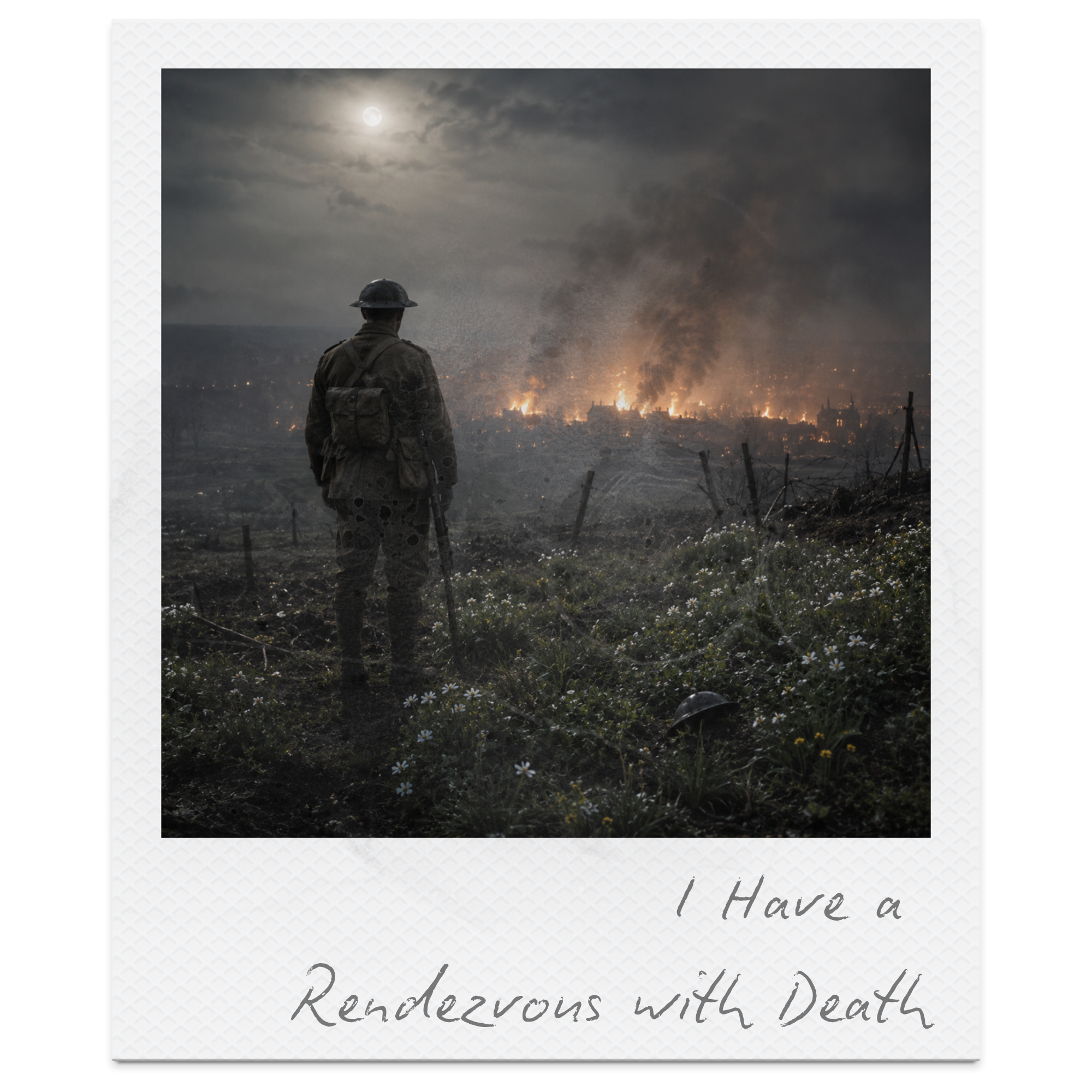
◆I Have a Rendezvous with Death – Alan Seeger – Both poems are concerned with death and separation, yet they approach these ideas from different perspectives. Seeger focuses on the individual facing death, whereas Lewis explores the emotional consequences for the person left behind.
◆ Homecoming – Lenrie Peters– Both poems examine the relationship between memory, identity, and emotional displacement. However, while Peters explores alienation through physical return, Lewis focuses on the psychological effects of absence and bereavement.
◆ I Years had been from Home – Emily Dickinson – Both poems explore how time and separation transform a person's relationship with memory and belonging. Dickinson examines estrangement from home, while Lewis examines estrangement created by loss and mourning.
◆ The Dead Knight – John Masefield – Both poems focus on death and remembrance, yet Masefield presents a more traditional memorialisation of the dead, whereas Lewis concentrates on the continuing emotional burden carried by the living.
◆ The Song of the Shirt – Thomas Hood – Although very different in subject matter, both poems examine prolonged suffering and endurance. Hood focuses on physical hardship and social injustice, while Lewis explores emotional suffering and psychological endurance.
◆ The Migrant – A L Hendriks – Both poems explore separation and the emotional consequences of displacement. In Hendriks's poem, separation is caused by migration and social forces, whereas in Lewis's poem it results from death and bereavement.
◆ Old Man & Very Old Man – James Henry – Both poems reflect on ageing, mortality, and human vulnerability. However, Lewis focuses on the effects of death upon survivors, while Henry explores the physical realities of growing old.
◆ Sleep – Kenneth Slessor – Both poems use rich imagery and symbolic language to explore states that exist between life and death. Slessor's poem presents sleep as mysterious and transformative, while Lewis examines grief as a state in which the dead continue to inhabit the lives of the living.
◆ Amoretti, Sonnet 86 – Edmund Spenser – Both poems are fundamentally concerned with love, but they present very different visions of it. Spenser celebrates enduring affection and devotion, while Lewis explores how love persists after loss and becomes intertwined with grief.
Exam-Ready Insight: Analysing Song
Song rewards students who move beyond simply describing the speaker's sadness and instead explore how Lewis presents grief as a gradual psychological transformation. Strong responses typically focus on the poem's movement from external loss to internal suffering, analysing how structure, voice, symbolism, and imagery reveal the lasting impact of bereavement. The strongest essays recognise that the poem becomes increasingly concerned not with the dead sailor himself but with the emotional consequences of surviving him.
What Strong Responses Typically Do
◆ Explore how Lewis gradually shifts attention away from the dead sailor and towards the psychological effects of grief on the survivor.
◆ Analyse how the poem's seven-stanza structure mirrors the slow progression of mourning over time.
◆ Examine Lewis's decision to write from the perspective of a grieving woman rather than from the perspective of a sailor, survivor, or eyewitness.
◆ Discuss how maritime imagery functions both literally and symbolically throughout the poem.
◆ Explore the relationship between memory, imagination, and the continuing presence of the dead.
◆ Analyse how natural symbols such as the seed, leaf, seasons, and coral reef contribute to the poem's exploration of loss.
◆ Consider how the poem presents grief as both an expression of love and a force that can prevent emotional recovery.
◆ Explore the ambiguity of the final line and evaluate its possible meanings.
A Strong Thesis
Lewis presents grief as a gradual process of psychological transformation, showing how the death of a loved one affects not only memory and emotion but also the survivor's sense of identity. Through maritime symbolism, natural imagery, and a voice increasingly shaped by absence, the poem suggests that while love may endure beyond death, prolonged mourning can blur the boundaries between the living and the dead, leaving the survivor trapped between remembrance and self-loss.
A Model Analytical Paragraph
Lewis gradually shifts the poem's focus away from the dead sailor and towards the emotional consequences of surviving loss. While the opening stanzas concentrate on the lover's absence and imagined fate, the final stanza becomes increasingly concerned with the speaker herself, particularly in the phrase "the drag and dullness of my Self." The capitalisation of "Self" draws attention to identity as a central concern, suggesting that grief has become inseparable from the speaker's understanding of who she is. This development culminates in the ambiguous phrase "the gradual self-effacement of the dead," which may refer both to the fading of the dead from memory and to the erosion of the living through prolonged mourning. By ending the poem with this uncertainty, Lewis suggests that grief is not simply an emotional response to loss but a force capable of reshaping the survivor's entire sense of self.
Teaching Ideas for Song
Song offers excellent opportunities to explore grief, memory, voice, war, and identity. Its accessible narrative surface combined with its psychological complexity makes it particularly effective for developing students' analytical confidence while encouraging deeper discussion about perspective, symbolism, and interpretation.
1. Tracking the Progression of Grief
Ask students to create a visual timeline of the poem, tracing the speaker's emotional development across all seven stanzas. Students should identify key words, images, and symbols associated with each stage of mourning before discussing how Lewis presents grief as an evolving process rather than a single emotional state.
Follow-up discussion questions:
◆ How does the speaker's understanding of loss change across the poem?
◆ At what point does grief become more psychological than emotional?
◆ Does the poem suggest that healing is possible?
This activity helps students connect structure to meaning while encouraging them to view the poem as a complete emotional journey.
2. Voice and Perspective Investigation
Divide students into small groups and ask them to explore why Lewis chose to write from the perspective of a grieving woman rather than from the perspective of the sailor or an eyewitness to the tragedy.
Students could consider:
◆ How would the poem change if the sailor narrated it?
◆ Why might Lewis have chosen to focus on the survivor rather than the victim?
◆ What does this perspective reveal about the wider impact of war and loss?
Groups should present their interpretations before discussing how the chosen voice shapes readers' emotional responses and understanding of the poem's themes.
3. Symbolism Investigation
Assign pairs or small groups one of the poem's major symbols:
◆ The seed
◆ The sea
◆ The ghost
◆ The bed
◆ The coral reef
◆ The turning seasons
Students should locate all references connected to their symbol and explain how its meaning develops throughout the poem.
As an extension task, students can explore how the symbols work together to create a larger message about grief, memory, and identity.
4. Exploring the Final Line
The poem's conclusion provides an excellent opportunity for higher-level discussion. Ask students to focus on the phrase "the gradual self-effacement of the dead."
Students should gather evidence supporting two possible interpretations:
◆ The dead gradually fade from memory.
◆ The living gradually lose themselves through attachment to the dead.
Once students have developed arguments for both sides, hold a class discussion exploring which interpretation they find most convincing and why.
This activity helps students engage with ambiguity, evaluate alternative interpretations, and develop more sophisticated analytical responses.
Go Deeper into Song
Song sits within a rich tradition of poetry exploring grief, mourning, memory, and the emotional consequences of loss. If you enjoyed Lewis's exploration of bereavement and emotional endurance, these poems offer fascinating points of comparison.
◆ Funeral Blues – W. H. Auden – Like Song, Auden's poem explores the devastating impact of losing a loved one. Both speakers struggle to imagine a future after bereavement, while Auden's declaration that "nothing now can ever come to any good" mirrors Lewis's presentation of grief as a force that reshapes an individual's entire world.
◆ One Art – Elizabeth Bishop – Bishop examines loss through a very different lens, presenting absence as something people attempt to master and endure. Comparing Bishop's controlled, restrained voice with Lewis's deeply emotional speaker creates an interesting discussion about different responses to grief and mourning.
◆ Remember – Christina Rossetti – Rossetti explores memory, death, and the relationship between the living and the dead. Like Lewis, she asks whether remembering the dead is always beneficial, making this poem particularly useful when considering the tension between remembrance and emotional recovery.
◆ Do Not Go Gentle into That Good Night – Dylan Thomas – Thomas confronts mortality from a contrasting perspective, urging resistance in the face of death. While Lewis focuses on the emotional consequences for those left behind, both poems explore humanity's struggle to come to terms with mortality.
Final Thoughts
Alun Lewis's Song is far more than a poem about a sailor lost at sea. Through its intimate voice, rich symbolism, and gradual emotional progression, the poem becomes a powerful exploration of grief, memory, and the lasting impact of absence. Lewis demonstrates that loss does not end with death itself; instead, it continues to shape the thoughts, emotions, and identities of those who remain behind.
What makes the poem particularly moving is its refusal to offer easy consolation. Rather than presenting grief as something that can simply be overcome, Lewis portrays mourning as an ongoing process that evolves over time. The speaker's journey from shock and despair to reflection and self-examination reveals how love and loss become inseparably intertwined.
Ultimately, Song suggests that remembering the dead is both an act of devotion and a source of suffering. Through its haunting imagery and ambiguous conclusion, the poem leaves readers reflecting on the complex relationship between love, memory, and selfhood, raising difficult questions about what it means to carry loss into the future.
Choose Your Next Text