The Dragon by Ray Bradbury: Summary, Themes, Meaning & Analysis
Ray Bradbury's The Dragon is a haunting work of science fiction that blends fantasy, historical fiction, and speculative fiction to explore the nature of fear, perception, and time. Set on a desolate moor where two medieval knights wait to confront a terrifying beast, the story gradually transforms from a tale of heroic adventure into a profound meditation on how human beings interpret the unknown. Through vivid imagery, symbolic setting, and a masterfully constructed twist ending, Bradbury challenges readers to question the reliability of perspective and the assumptions that shape reality.
Beyond its memorable ending, The Dragon examines enduring ideas about progress, technology, myth-making, and the limits of human understanding. Bradbury demonstrates how every generation explains unfamiliar experiences through the beliefs and knowledge available to it, suggesting that monsters are often created by misunderstanding rather than malice. Whether studied as a classic work of science fiction, an exploration of narrative perspective, or an example of Bradbury's philosophical storytelling, The Dragon remains one of his most thought-provoking short stories. You can discover more of Bradbury's remarkable fiction in our Ray Bradbury Hub, or explore analyses of classic literature from across genres in our Literature Library.

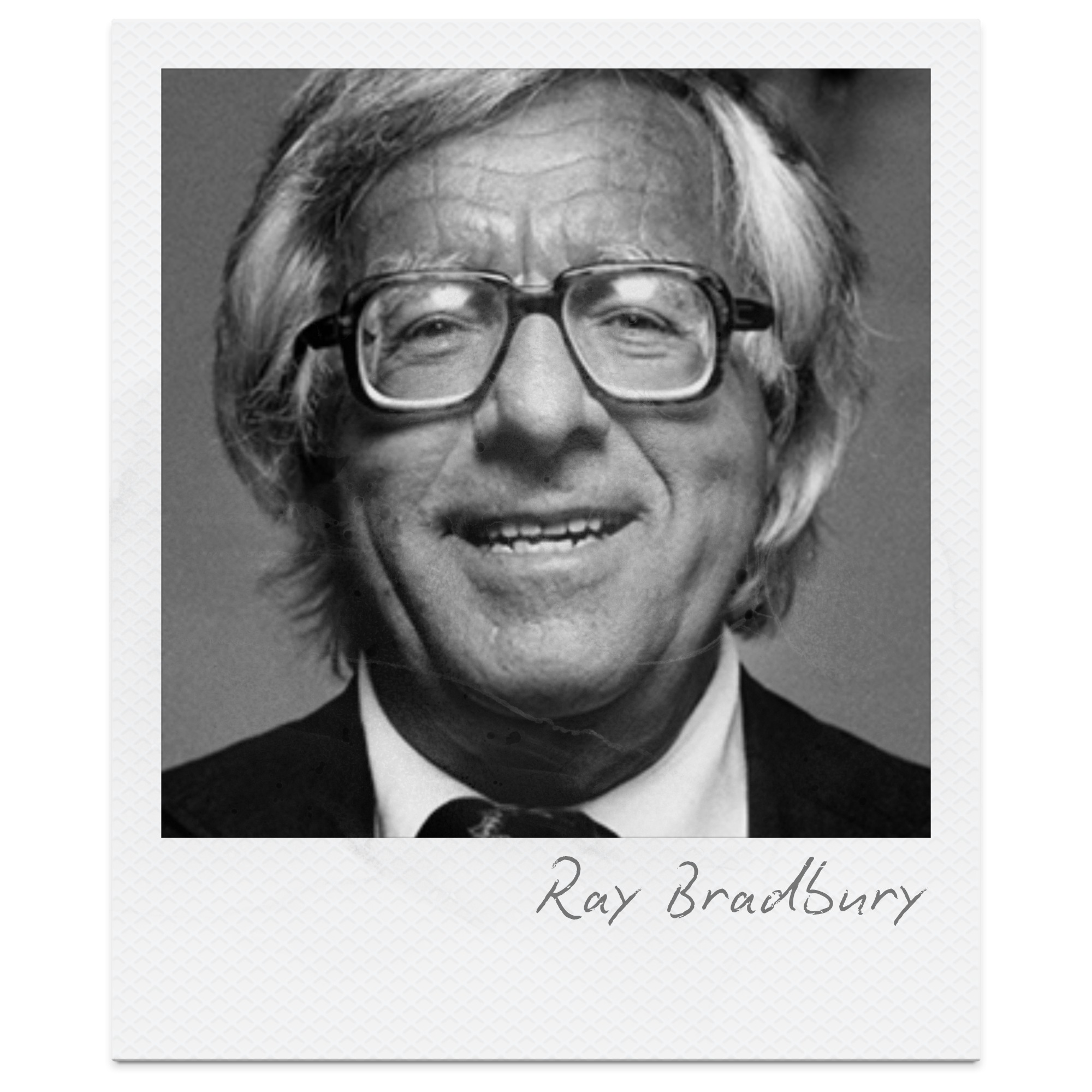
Context of The Dragon
Published in 1955 in Bradbury's collection R Is for Rocket, The Dragon reflects many of the concerns that shaped his mid-century science fiction. Writing during the early years of the Cold War, a period defined by rapid technological change and growing anxiety about humanity's future, Bradbury frequently questioned whether scientific progress necessarily led to greater understanding. Unlike many writers of the era who celebrated technological achievement, he was more interested in its psychological and philosophical consequences. The Dragon captures this approach perfectly, using the imagery of medieval fantasy to tell a story that ultimately challenges assumptions about technology, progress, and human perception. Like much of Bradbury's work, the story blends genres, drawing on fantasy, science fiction, and elements of myth to create a narrative that feels timeless rather than tied to a single historical moment.
The story also reflects Bradbury's enduring fascination with perspective and the way people construct meaning from limited knowledge. Throughout his fiction, unfamiliar experiences are often interpreted through existing beliefs, revealing as much about human nature as the events themselves. In The Dragon, the knights' terrifying monster is shaped entirely by their medieval understanding of the world, while the final revelation forces readers to reconsider everything they have previously accepted as reality. Rather than simply delivering a clever twist, Bradbury explores how fear, belief, and context determine what people perceive to be true. This concern with the limits of human understanding connects The Dragon to many of Bradbury's greatest stories, making it an excellent example of his ability to combine imaginative storytelling with profound philosophical questions about knowledge, history, and the nature of reality. If you would like to read more about the background and context of Bradbury’s work, then read our Ray Bradbury Context Post.
The Dragon at a Glance
Form: Short story; science fiction; speculative fiction with fantasy elements
Mood: Ominous, mysterious, suspenseful, atmospheric, unsettling
Central tension: Two medieval knights prepare to confront a terrifying dragon, unaware that the monster they seek exists only because of their limited understanding of the world.
Core themes: Perception, fear, time, reality and illusion, technology, myth-making, knowledge and ignorance, progress, human perspective
One-sentence meaning: Bradbury suggests that people interpret the unknown through the limits of their own knowledge, revealing that truth often depends as much on perspective as on reality itself.
Quick Summary of The Dragon
Two medieval knights wait on a lonely, windswept moor to confront a terrifying dragon that is said to prey upon travellers between towns. As they sit beside their small fire, one knight speaks fearfully of the creature's fiery eyes, thunderous roar, and destructive power, while the other insists they must remain vigilant and destroy the beast before it claims more victims. The bleak landscape and growing darkness create an atmosphere of mounting suspense as they prepare for the encounter.
As the night deepens, the knights become increasingly aware of the strange nature of the moor, where time itself seems uncertain and reality feels distorted. Eventually, they hear the dragon approaching through the darkness with an overwhelming roar and blazing light. Mounting their horses and lowering their visors, they charge towards the creature with their lances, determined to defeat the monstrous beast despite knowing the danger they face.
In the final moments, the dragon rushes towards the knights with incredible speed and overwhelming force, crushing both men as it continues on its path. Bradbury then reveals that the dragon is actually a steam train, whose startled crew briefly discuss striking what appeared to be "a knight in armor" before continuing their journey through the night. The story ends with the train disappearing into the darkness, transforming the entire narrative into a striking exploration of perspective, time, and the limits of human understanding.
Title of The Dragon
Ray Bradbury's titles rarely function as simple descriptions of the stories they introduce. Instead, they establish atmosphere, shape expectations, and quietly prepare readers for deeper symbolic meanings. The Dragon immediately evokes images of myth, medieval legend, and heroic conflict, leading readers to anticipate a traditional tale of knights battling a monstrous beast. As the narrative unfolds, however, Bradbury steadily challenges these expectations, transforming the title into a meditation on perspective, fear, and the way human beings interpret the unknown. By the story's conclusion, the dragon proves to be both exactly what the characters believe it is and something entirely different, making the title central to Bradbury's exploration of reality itself.
At first, the title encourages readers to approach the story as a familiar fantasy narrative. The knights describe the dragon in language drawn directly from medieval folklore, claiming that "his eyes are fire," his breath is "a white gas," and that he "runs with sulfur and thunder." These vivid descriptions reinforce expectations of a supernatural creature whose destructive power has become legendary. Bradbury deliberately immerses readers in this mythic worldview, allowing the title to strengthen the illusion that the story belongs firmly within the tradition of dragon legends.
As the story progresses, however, the meaning of the title begins to shift. The dragon is never presented from an objective perspective; instead, every description is filtered through the terrified understanding of the two knights. Its "amber eye," thunderous roar, blinding fire, and overwhelming speed all accurately describe what they witness, yet readers eventually realise these details also describe a steam train seen through medieval eyes. Bradbury therefore transforms the dragon into a symbol of the unknown itself, demonstrating that people explain unfamiliar experiences using the beliefs and language available to them.
There is also profound irony within the title. Readers expect the dragon to be a mythical monster, yet the final revelation exposes it as an entirely ordinary piece of nineteenth-century technology. At the same time, the train crew briefly believes they have struck "a knight in armor," creating a symmetrical misunderstanding between two different eras. Neither group fully understands what they have encountered, suggesting that ignorance is not confined to one historical period. Bradbury's irony therefore extends beyond the twist ending, revealing how every civilisation is limited by its own perspective.
Ultimately, The Dragon becomes a symbol of fear, misunderstanding, and the limits of human knowledge. The title no longer refers simply to a monster but to the stories people create when confronted with experiences they cannot explain. By allowing the dragon to exist simultaneously as myth and machine, Bradbury reminds readers that reality often depends upon perspective, making the title one of the most memorable and intellectually satisfying in his body of work.
Structure of The Dragon
Bradbury carefully structures The Dragon to manipulate readers' expectations before delivering one of his most memorable twist endings. The narrative appears to follow the familiar pattern of a medieval dragon-slaying tale, but each stage subtly plants clues that the reality is more complex than it first appears. Through withheld information, shifting atmosphere, and a dramatic reversal of perspective, Bradbury demonstrates how structure itself becomes essential to the story's exploration of perception, fear, and the nature of reality.
Opening (Exposition)
The story opens on a bleak, windswept moor, where two weary knights sit beside a small fire waiting for the dragon to appear. Bradbury immediately establishes an atmosphere of isolation and unease, describing a landscape where "only the night moved" and life itself appears to have vanished. Rather than beginning with action, he creates suspense through stillness, encouraging readers to accept the medieval setting and the existence of the dragon without question. The exposition firmly positions the narrative within the conventions of fantasy, making the eventual revelation far more surprising.
Rising Action
The rising action develops almost entirely through the knights' conversation. As they discuss the dragon's terrifying reputation, Bradbury gradually increases the tension by allowing readers to imagine the creature long before it appears. Descriptions of its "eyes are fire," its thunderous roar, and its destructive power create anticipation while the strange qualities of the moor—where "there was no year or hour at all"—quietly introduce uncertainty about time and reality. These unsettling details foreshadow the story's conclusion without revealing the truth outright. The suspense therefore grows through withheld information rather than physical conflict.
Turning Point / Climax
The climax arrives when the dragon finally emerges from the darkness. Bradbury dramatically accelerates the pace as the knights lower their visors, charge with their lances, and confront the blazing monster head-on. Every detail—the "monstrous amber eye," the deafening roar, the fire, smoke, and overwhelming speed—appears to confirm the existence of a dragon. Yet these descriptions are carefully chosen because they also accurately describe a steam locomotive. The climax therefore functions on two levels simultaneously, allowing readers to experience the terror exactly as the knights perceive it while unknowingly observing a completely different reality.
Falling Action
Rather than slowing the pace after the collision, Bradbury immediately shifts perspective. The sudden appearance of unfamiliar voices discussing "a knight in armor" forces readers to reassess everything that has happened. This abrupt structural transition transforms what seemed to be a straightforward fantasy into speculative fiction, revealing that the previous narrative has been shaped entirely by limited perspective. The revelation arrives quickly, creating a powerful moment of intellectual shock as readers reconstruct the story in their minds.
Ending (Resolution)
The resolution is deliberately brief yet deeply unsettling. The train continues its journey into the darkness while the crew casually decides not to stop, leaving the deaths of the knights unexplained from their perspective. Neither group fully understands what has occurred, creating a striking example of structural irony in which both the medieval knights and the modern railway workers misinterpret each other. The story ends without resolving this paradox, leaving readers to reflect on the limits of human knowledge and the possibility that every civilisation may misunderstand realities beyond its own experience. Structurally, Bradbury transforms a simple monster story into a philosophical exploration of perspective, ensuring that the final revelation reshapes the meaning of every preceding scene.
Setting of The Dragon
In The Dragon, setting is far more than the backdrop for the action. Bradbury transforms the landscape into a symbolic space where time, history, and reality appear to dissolve, creating an atmosphere of profound uncertainty. The bleak environment reflects the characters' fear while also concealing the story's central mystery, demonstrating that setting can shape not only mood but also perception itself. Throughout the narrative, the landscape blurs the boundaries between myth and technology, making readers question whether they are witnessing a medieval legend or something far stranger.
The Moor
The moor dominates the story as a place of isolation and timelessness. Bradbury describes how "only the night moved," while the empty landscape is stripped of birds, life, and movement, creating an overwhelming sense of desolation. This lifeless environment immediately establishes an atmosphere of unease, suggesting that the knights have entered a place removed from ordinary human existence. The vast emptiness also reflects their vulnerability, making the approaching dragon feel even more terrifying because there is nowhere to hide or escape. Rather than functioning as a realistic location, the moor becomes a symbolic landscape where the normal rules of the world no longer seem to apply.
The Wilderness
The surrounding wilderness reinforces the story's atmosphere of fear and uncertainty. The knights repeatedly describe it as "this desolation" and "no man's place," presenting it as a space beyond civilisation where familiar certainties disappear. Bradbury fills the landscape with violent natural imagery as storms, darkness, frost, and strange winds continually reshape the environment. These shifting conditions create a sense of instability, reflecting how easily perception can become distorted when people are confronted with the unknown. The wilderness therefore symbolises humanity's limited understanding of forces beyond its control.
The Timeless Landscape
Perhaps the story's most significant setting is not a physical place but a distortion of time itself. One knight observes that "on this moor is no Time, is only Forever," while later the narrator describes a place where "there was no year or hour at all." These striking descriptions suggest that the landscape exists outside conventional history, allowing two different eras to occupy the same space simultaneously. Bradbury transforms the setting into a meeting point between past and future, using the environment itself to foreshadow the final revelation. The blurred boundaries between centuries demonstrate that the true conflict is not simply between man and dragon but between different ways of understanding reality.
The Darkness
Darkness functions as one of the story's most powerful symbolic settings. Throughout the narrative, the dragon remains partially concealed by mist, shadow, and distance, ensuring that neither the knights nor the readers ever gain a completely objective view of the creature. Bradbury repeatedly surrounds the action with "fog inside of a mist inside of a darkness," layering visual uncertainty until perception itself becomes unreliable. This concealment is essential to the story's meaning because the dragon only exists as a dragon while it cannot be seen clearly. The darkness therefore symbolises the limitations of human knowledge, suggesting that fear often flourishes where understanding is incomplete.
The Railway
The railway is revealed only in the story's closing moments, yet it retrospectively transforms every previous setting. What appeared to be a mythical landscape is suddenly understood as an ordinary railway cutting crossed by a nineteenth-century steam train. However, Bradbury deliberately avoids presenting this setting as completely familiar. The train disappears into the night, leaving behind "black smoke and steam" that dissolve into the cold air, preserving the story's atmosphere of mystery even after the twist. Rather than replacing fantasy with realism, the railway becomes another symbolic landscape where technology appears as incomprehensible and terrifying as any legendary monster. Through this final setting, Bradbury suggests that perspective determines whether people see progress, danger, or myth, making the landscape itself central to the story's exploration of fear, history, and human understanding.
Narrative Voice in The Dragon
Bradbury uses the narrative voice to immerse readers completely within the knights' understanding of the world while carefully concealing the story's true reality. Although The Dragon is written in third-person narration, the perspective remains closely aligned with the medieval characters, ensuring that readers experience the mysterious creature exactly as they do. This limited viewpoint allows Bradbury to manipulate both expectation and interpretation, demonstrating that perspective shapes reality as powerfully as the events themselves. The narrative voice is therefore essential to the story's famous twist, encouraging readers to question not only what they see but how they come to understand it.
The story employs a close third-person perspective, following the thoughts, fears, and conversations of the two knights without ever stepping outside their worldview. Readers learn about the dragon only through their descriptions, hearing that "his eyes are fire," his breath is "a white gas," and that he "runs with sulfur and thunder." Because the narrator never contradicts these beliefs or provides objective explanation, readers naturally accept the knights' interpretation of events. Bradbury deliberately limits the available information, making the characters' understanding become the readers' understanding until the final revelation overturns both simultaneously.
The tone of the narrative is intensely atmospheric and increasingly foreboding. Bradbury's lyrical descriptions of the empty moor, shifting darkness, and unnatural weather create a dreamlike quality in which reality appears unstable. Phrases such as "only the night moved" and "there was no year or hour at all" establish an almost mythic atmosphere, encouraging readers to suspend disbelief and enter a world governed by legend rather than logic. This poetic style also reflects the knights' emotional state, blurring the distinction between the physical landscape and their growing fear.
Bradbury also positions readers to sympathise with the knights rather than view them as naïve or mistaken. Their fear is presented as entirely rational within the limits of their knowledge, and their courage in confronting the dragon is portrayed with dignity rather than irony. Even when readers discover that the creature is a steam train, the narrative never ridicules the knights' misunderstanding. Instead, Bradbury suggests that anyone confronted with an incomprehensible phenomenon would attempt to explain it using familiar beliefs. This compassionate narrative voice transforms the story from a clever twist into a reflection on the universal limitations of human perception.
The ending introduces a subtle but significant shift in narrative distance. For the first time, readers briefly leave the knights' perspective and hear the train crew discussing how they have struck "a knight in armor." This sudden change is deliberately understated, avoiding dramatic explanation and allowing the revelation to emerge naturally through dialogue. Importantly, the railway workers are no more knowledgeable than the knights; they too fail to understand what they have encountered. By ending with two groups who misunderstand one another, Bradbury creates profound dramatic irony, leaving readers with the unsettling recognition that every perspective may be incomplete. The restrained narrative voice ensures that the story's final impact lies not simply in surprise but in its lasting challenge to assumptions about truth, knowledge, and reality.
The Purpose and Impact of The Dragon
Bradbury uses The Dragon to challenge the way people understand the unknown, suggesting that reality is often shaped as much by perspective as by objective truth. Although the story initially appears to celebrate the familiar struggle between heroic knights and a mythical beast, it gradually reveals that fear and limited knowledge can transform ordinary experiences into terrifying legends. Rather than simply delivering an unexpected twist, Bradbury encourages readers to question how assumptions, culture, and historical context influence what people believe they see. The story ultimately becomes a warning against the certainty that our own understanding of the world is complete.
One of Bradbury's central purposes is to demonstrate how fear creates myths. The knights never see the dragon clearly; instead, they interpret distant lights, thunderous sounds, smoke, and speed through the language of medieval folklore. Everything they describe is technically accurate, yet every conclusion they draw is mistaken. Bradbury suggests that when people encounter experiences beyond their understanding, they naturally explain them using familiar beliefs. The story therefore explores not ignorance as foolishness, but as an inevitable consequence of viewing the world through limited knowledge.
The story also invites readers to reflect on the relationship between technology and human perception. The steam train itself is neither evil nor magical, yet to the knights it appears as an unstoppable monster capable of breathing fire and destroying everything in its path. Bradbury deliberately avoids presenting technology as either heroic or threatening, instead showing that its meaning depends entirely upon the observer. This ambiguity encourages readers to consider how every generation reacts to unfamiliar innovations and whether modern society may misunderstand its own technological changes just as completely.
Emotionally, The Dragon creates a profound sense of tragic irony. Readers sympathise with the knights throughout the story, admiring their courage as they prepare to face certain death. When the final revelation arrives, that sympathy does not disappear but deepens. The knights die believing they have confronted a legendary beast, while the train crew briefly assumes they have struck an ordinary obstacle before continuing their journey. Neither side understands what has happened, making the tragedy arise not from cruelty but from mutual misunderstanding. Bradbury therefore transforms a dramatic twist into a deeply human reflection on the limits of communication and knowledge.
The ending lingers because Bradbury refuses to resolve the paradox he has created. The train disappears into the darkness, leaving both worlds to continue unchanged, and readers are left reconsidering every scene that came before. Rather than offering certainty, the story closes with unsettling questions about truth, history, and reality itself. Bradbury's greatest achievement is that the final twist does more than surprise—it permanently changes how readers interpret the narrative, ensuring that The Dragon remains a powerful meditation on perspective, fear, and humanity's enduring struggle to understand the unknown.
Characters in The Dragon
Bradbury's characters function less as fully developed individuals than as symbolic embodiments of different ways of understanding the world. Rather than focusing on detailed personal histories, he uses the two knights and the train crew to explore fear, perception, knowledge, and the limits of human understanding. Every character believes they are interpreting reality accurately, yet each is constrained by the assumptions of their own time, reinforcing Bradbury's central message that truth is often shaped by perspective.
The First Knight
The first knight represents duty, courage, and unwavering belief in the values of his world. From the beginning, he remains focused on the mission, silencing his companion's complaints with the reminder that "It's death, not sleep, we're after." His determination reflects the traditional image of the heroic dragon-slayer, willing to sacrifice himself to protect others from danger. Bradbury presents him as disciplined and practical, reinforcing the ideals of medieval chivalry even as the story quietly questions the reality upon which those ideals depend.
Although the knight's understanding of the dragon proves mistaken, Bradbury never portrays him as foolish. His belief is entirely reasonable within the limits of his experience. The blazing light, deafening roar, and overwhelming force of the approaching train genuinely resemble the mythical creature he expects to encounter. By allowing readers to sympathise with his bravery rather than mock his misunderstanding, Bradbury suggests that human beings inevitably interpret unfamiliar experiences through existing beliefs. The first knight therefore symbolises both the nobility and the limitations of human certainty.
The Second Knight
The second knight acts as the story's philosophical voice, repeatedly questioning both the dragon and the strange nature of the landscape itself. His observation that "on this moor is no Time, is only Forever" introduces one of the narrative's most important ideas, suggesting that reality is more complex than either knight fully understands. Unlike his companion, he senses that the moor exists outside ordinary history, even though he cannot explain why. His intuition allows Bradbury to foreshadow the twist without revealing it outright.
At the same time, the second knight embodies the psychological effects of fear. His vivid description of the dragon's fiery eyes, poisonous breath, and thunderous passage demonstrates how stories and legends grow stronger through imagination. Yet his fear never overwhelms his courage. Despite believing that "we'll die well dressed," he still arms himself and rides into battle. Bradbury therefore presents him as a tragic figure whose greatest weakness is not cowardice but the inability to perceive a reality beyond the limits of his historical worldview.
The Dragon
Although eventually revealed to be a steam train, the dragon functions throughout most of the story as a symbolic character rather than a simple object. To the knights, it represents chaos, destruction, and an incomprehensible force that lies beyond human control. Its "monstrous amber eye," blazing fire, and terrible roar transform an ordinary machine into a mythical creature, demonstrating how perception creates meaning. Bradbury deliberately allows the dragon to exist simultaneously as both monster and technology, making it a powerful symbol of the unknown itself.
The dragon also serves as a reminder that fear often arises from misunderstanding rather than genuine evil. The train possesses no malicious intent; it simply continues along its track, unaware of the knights waiting in its path. This contrast transforms the dragon from an enemy into a reflection of humanity's limited understanding, reinforcing Bradbury's warning that people often create monsters from experiences they cannot explain.
The Train Crew
The train crew appear only briefly, yet they play a crucial symbolic role in the story's conclusion. Their casual conversation about hitting "a knight in armor" mirrors the knights' belief that they have encountered a dragon, creating a striking structural symmetry. Just as the medieval characters misinterpret the train, the railway workers fail to comprehend the significance of what they have struck. Bradbury deliberately avoids portraying the crew as more enlightened simply because they belong to a later historical period.
This parallel reveals one of the story's most profound ideas: knowledge is always limited by perspective. The railway workers possess greater technological understanding than the knights, but they remain just as incapable of fully explaining the encounter. In this way, Bradbury suggests that every generation believes it understands reality while remaining blind to truths beyond its own experience. The train crew therefore become symbolic of modern civilisation itself, reminding readers that progress does not eliminate mystery but merely changes the way it is interpreted.
Key Themes in The Dragon
Bradbury uses The Dragon to explore how human perception shapes reality. Although the story appears to be a traditional tale of knights confronting a mythical beast, it gradually becomes a philosophical exploration of fear, knowledge, technology, and the limitations of human understanding. Through carefully controlled perspective, vivid imagery, and a remarkable twist ending, Bradbury demonstrates that what people believe to be true is often determined by the historical, cultural, and intellectual world in which they live.
Perception
The story's central theme is perception and the idea that reality depends upon how it is interpreted. Everything the knights describe about the dragon is technically accurate—its "eyes are fire," it "runs with sulfur and thunder," and it breathes "a white gas"—yet they completely misunderstand what they are seeing. Bradbury deliberately presents the approaching train entirely through the knights' perspective, encouraging readers to share their assumptions until the final revelation overturns them. By forcing readers to reinterpret every previous event, Bradbury suggests that perception is never entirely objective but is always shaped by experience, belief, and expectation.
Fear
Bradbury presents fear as a powerful force that transforms uncertainty into certainty. The knights never question whether the dragon exists because centuries of stories have already defined how they understand the unknown. Their descriptions grow increasingly dramatic, portraying the creature as capable of destroying walls, driving animals insane, and bringing catastrophe wherever it travels. Through this escalating mythology, Bradbury illustrates how fear expands beyond observable facts, encouraging people to create explanations that feel emotionally convincing even when they are incomplete. The story therefore suggests that fear often flourishes where knowledge is limited.
Time
Time functions as both a setting and a philosophical idea throughout the story. The second knight observes that "on this moor is no Time, is only Forever," while the narrator later describes a place where "there was no year or hour at all." These repeated references transform the landscape into a meeting point between different historical periods, allowing medieval knights and a nineteenth-century steam train to occupy the same space. Bradbury uses this impossible convergence to question whether time is as fixed as people assume, suggesting instead that history, memory, and experience may overlap in unexpected ways.
Reality and Illusion
The story continually blurs the boundary between reality and illusion. For most of the narrative, readers believe they are witnessing a medieval fantasy because every detail supports that interpretation. Only in the closing paragraphs does Bradbury reveal that the dragon is an ordinary train viewed through unfamiliar eyes. Importantly, the knights are not hallucinating; they genuinely experience something terrifying but interpret it incorrectly. Bradbury therefore suggests that illusion is not necessarily falsehood but reality viewed through incomplete understanding. The twist transforms the story into a meditation on how easily certainty can become misconception.
Technology
Rather than celebrating or condemning technology, Bradbury explores how it is perceived by those who cannot understand it. The steam train appears monstrous because its speed, smoke, fire, and overwhelming power lie completely outside the knights' experience. To them, technology becomes mythology. At the same time, the train crew briefly mistakes the knights for an inexplicable obstacle before continuing their journey, demonstrating that technological advancement does not guarantee complete understanding. Bradbury ultimately argues that every innovation appears mysterious when viewed without context.
Myth-Making
Bradbury explores how myths are created from genuine experiences that become distorted through storytelling and limited knowledge. The dragon legend is not entirely invented; it is the medieval explanation for the terrifying passage of the train across the moor. Over time, fragments of truth become embellished into stories of fire-breathing monsters and supernatural destruction. Bradbury suggests that myths often contain traces of reality, but those traces are reshaped by imagination, fear, and cultural belief until they become something entirely new.
Knowledge and Ignorance
The story repeatedly questions the relationship between knowledge and ignorance. Neither the knights nor the railway workers fully understand the encounter they experience. The medieval characters lack the knowledge to recognise a locomotive, while the train crew cannot explain why "a knight in armor" appeared on the tracks. Bradbury deliberately avoids presenting one era as intellectually superior to the other. Instead, he argues that every civilisation possesses knowledge while remaining ignorant of realities beyond its own experience. This balanced perspective transforms the story into a timeless reflection on the limits of human understanding.
Progress
Although the story contains a powerful image of industrial progress, Bradbury refuses to present it as unquestionably positive. The train symbolises technological advancement and the movement of civilisation, yet its immense power destroys the knights without either side understanding the encounter. This ambiguity suggests that progress is not inherently beneficial or destructive; its meaning depends upon perspective. Bradbury encourages readers to recognise that technological change often creates misunderstanding before it creates understanding, reminding us that innovation always reshapes the way people interpret the world.
Human Perspective
Ultimately, The Dragon argues that human perspective determines the way reality is understood. The knights see a dragon because medieval culture provides no other explanation, while the railway workers see only an inexplicable accident because they cannot imagine another possibility. Neither interpretation captures the complete truth. Bradbury therefore suggests that every generation views reality through its own assumptions, values, and knowledge. The story's lasting message is not that one perspective is correct and another is mistaken, but that genuine understanding requires recognising the limitations of our own viewpoint.
Symbolism in The Dragon
Bradbury uses symbolism throughout The Dragon to blur the boundaries between myth and reality, transforming ordinary objects and landscapes into reflections of fear, human perception, and the limits of knowledge. Rather than relying on traditional fantasy symbols, he allows each image to evolve as the story progresses, so that its meaning changes completely after the final revelation. In doing so, Bradbury demonstrates that symbols, like reality itself, depend upon the perspective of those interpreting them.
The Dragon
The dragon is the story's central symbol, representing the unknown and humanity's instinct to explain unfamiliar experiences through myth. To the knights, the creature embodies absolute terror, described as having "eyes are fire," breathing "a white gas," and running with "sulfur and thunder." Every description reflects genuine observation, yet the meaning attached to those observations is entirely shaped by medieval belief. After the final twist, the dragon becomes both a steam train and a symbol of how perception transforms reality. Bradbury deliberately allows it to exist simultaneously as monster and machine, illustrating that fear often arises not from what something truly is, but from what people believe it to be.
The Moor
The moor symbolises uncertainty and the boundaries between different realities. Described as a place where "there was no year or hour at all," it exists outside ordinary history, allowing separate periods of time to overlap. This timeless landscape becomes more than a physical setting; it represents the uncertainty that arises whenever familiar explanations begin to fail. By placing the encounter in a location detached from conventional reality, Bradbury suggests that moments of profound misunderstanding often occur at the edges of human knowledge, where certainty gives way to mystery.
Fire
Throughout the story, fire symbolises both destruction and misunderstanding. The dragon's blazing light initially appears to confirm the existence of a mythical beast, reinforcing the knights' fears and strengthening the legend surrounding the creature. Following the revelation, however, the same fire is recognised as the furnace and sparks of a locomotive. Bradbury therefore transforms fire into a symbol of interpretation, demonstrating that identical evidence can generate completely different meanings depending upon the observer's perspective. The image continually shifts between myth and technology, reinforcing the story's central exploration of perception.
Armour
The knights' armour symbolises humanity's desire for certainty and protection in the face of the unknown. Believing they are confronting a dragon, the men trust that their traditional weapons and armour will prepare them for battle. Yet these symbols of medieval strength prove entirely ineffective against industrial technology. Bradbury uses this contrast to illustrate that knowledge, like armour, is only effective when it corresponds to reality. The armour therefore becomes a tragic symbol of outdated assumptions, showing that courage alone cannot overcome experiences that lie beyond existing understanding.
The Train
The steam train symbolises progress, industrial power, and the relentless movement of history. Unlike the mythical dragon imagined by the knights, the train possesses no malicious intent; it simply follows its predetermined course through the night. Yet its overwhelming speed, smoke, noise, and fire make it appear supernatural to those who lack the knowledge to identify it. Bradbury therefore presents technology as neither heroic nor monstrous, but as something whose meaning depends entirely upon perspective. The train also symbolises the unstoppable advance of history, suggesting that human understanding often struggles to keep pace with change.
The Night
The persistent night symbolises ignorance and the limitations of human knowledge. From the opening line, where "only the night moved," darkness dominates the landscape, preventing both the characters and the readers from seeing events clearly. Bradbury repeatedly layers the setting with mist, shadow, rain, and obscured vision until perception itself becomes unreliable. Significantly, the story never moves into daylight; instead, the train disappears back into the darkness after the collision. The night therefore becomes a symbol of enduring mystery, suggesting that even after moments of revelation, complete understanding remains beyond humanity's reach.
Key Techniques in The Dragon
Bradbury combines language, imagery, and structural techniques to create a story that is both an atmospheric fantasy and a philosophical work of science fiction. Every technique contributes to the story's exploration of perception, fear, time, and human understanding, while preparing readers for the remarkable twist ending.
◆ Structural irony — Bradbury constructs the entire narrative so that readers interpret events exactly as the knights do before the final revelation forces a complete reassessment of the story. The twist changes the meaning of every earlier description, demonstrating how perspective shapes understanding.
◆ Limited third-person narration — By restricting the narrative to the knights' perspective, Bradbury prevents readers from recognising the dragon as a steam train until the closing paragraphs, reinforcing the theme of limited knowledge.
◆ Foreshadowing — Strange references to the moor existing where "there was no year or hour at all," alongside repeated hints that time behaves differently there, quietly prepare readers for the collision between two historical periods without revealing the ending.
◆ Symbolism — The dragon, moor, night, armour, and train all develop symbolic meanings, representing fear, misunderstanding, progress, and the limitations of human perception.
◆ Atmospheric imagery — Rich descriptions of darkness, mist, storms, frost, and empty landscapes create an overwhelming sense of isolation, immersing readers in a world where reality itself feels unstable.
◆ Pathetic fallacy — Bradbury mirrors the knights' growing anxiety through violent weather, cold winds, darkness, and thunder, allowing the natural world to reflect the emotional tension of the story.
◆ Juxtaposition — Medieval myth is placed alongside industrial technology, creating a striking contrast between two eras that ultimately proves to be an illusion created by perspective.
◆ Extended metaphor — The steam train functions as an extended metaphor for the unknown, illustrating how unfamiliar experiences become transformed into legends when people lack the knowledge to explain them.
◆ Sensory imagery — Bradbury appeals to sight, sound, and touch through blazing fire, roaring thunder, grinding metal, freezing winds, and blinding smoke, allowing readers to experience the dragon exactly as the knights perceive it.
◆ Dialogue — The knights' conversation gradually builds both suspense and character while revealing medieval beliefs about dragons, courage, and destiny. Their dialogue also embeds clues about time and reality that only become fully significant after the ending.
◆ Repetition — Repeated references to fire, thunder, darkness, and the dragon's terrifying approach intensify suspense while reinforcing the mythical image that dominates the characters' understanding.
◆ Vivid visual imagery — Descriptions such as the dragon's "monstrous amber eye," the "great falling pane of green glass," and "pink, yellow, orange sun-fire" create cinematic scenes that simultaneously describe both a mythical dragon and a steam locomotive, making the final revelation feel surprising yet completely earned.
Important Quotes from The Dragon
Bradbury's most significant quotations reveal the story's exploration of perception, fear, time, and the limits of human understanding. Many of the most memorable lines take on entirely new meanings after the final twist, rewarding readers who revisit the story with a fresh perspective.
Fear of the Unknown
"His eyes are fire. His breath a white gas; you can see him burn across the dark lands."
◆ Analysis: Bradbury introduces the dragon through vivid second-hand description rather than direct observation, allowing readers' imaginations to construct the monster before it appears. Every detail accurately describes a steam locomotive, yet the knights interpret these features through the language of medieval legend. This demonstrates how fear and limited knowledge transform reality into myth.
◆ Method: Vivid imagery; symbolism; foreshadowing.
◆ Effect: Readers initially accept the dragon as a mythical creature before later recognising that the description has always been truthful.
◆ Link to theme: Fear; myth-making; perception.
Time Beyond Human Understanding
"On this moor is no Time, is only Forever."
◆ Analysis: This enigmatic statement introduces the story's philosophical exploration of time long before the twist ending. The knight instinctively senses that the moor exists outside ordinary history, foreshadowing the impossible meeting between two different eras. Bradbury suggests that reality is far more mysterious than human beings can fully comprehend.
◆ Method: Paradox; symbolism; foreshadowing.
◆ Effect: Readers experience growing unease while sensing that the landscape operates according to unfamiliar rules.
◆ Link to theme: Time; reality and illusion; human perspective.
A World Outside Reality
"There was no year or hour at all."
◆ Analysis: Bradbury removes the story from ordinary chronology, transforming the moor into a symbolic space where different realities can coexist. The absence of measurable time prepares readers for the final revelation while reinforcing the story's dreamlike atmosphere.
◆ Method: Temporal distortion; symbolism; atmospheric description.
◆ Effect: The narrative feels timeless and unsettling, encouraging readers to question where—or even when—the story takes place.
◆ Link to theme: Time; reality and illusion; knowledge and ignorance.
Humanity's Search for Meaning
"Everything happens here."
◆ Analysis: The knight's remark captures his belief that the wilderness exists beyond rational explanation. Unable to understand the strange events around him, he accepts supernatural explanations as entirely reasonable. Bradbury demonstrates how people naturally create meaning from experiences that appear impossible.
◆ Method: Hyperbole; dialogue; understatement.
◆ Effect: Readers appreciate how completely the knights accept the supernatural, strengthening the later twist.
◆ Link to theme: Myth-making; fear; human perspective.
The Dragon Appears
"Its monstrous amber eye fed on them."
◆ Analysis: Bradbury deliberately describes the train's headlamp as a living eye, allowing readers to experience the approaching locomotive exactly as the knights do. The image is simultaneously accurate and misleading, perfectly illustrating how perspective shapes reality.
◆ Method: Personification; visual imagery; symbolism.
◆ Effect: The dragon appears vividly real, making the final revelation both surprising and convincing.
◆ Link to theme: Perception; reality and illusion; technology.
The Illusion of Heroism
"Mercy, mercy!"
◆ Analysis: The knights' desperate cry strips away romantic ideas of heroic combat. Faced with overwhelming force, courage alone cannot save them. Bradbury reminds readers that bravery does not guarantee understanding or survival when confronting something beyond human knowledge.
◆ Method: Repetition; exclamatory dialogue; pathos.
◆ Effect: Readers sympathise deeply with the knights, increasing the emotional impact of the ending.
◆ Link to theme: Fear; knowledge and ignorance; human perspective.
The Collision of Two Worlds
"The dragon hit."
◆ Analysis: This deceptively simple statement represents the literal collision between myth and technology. From the knights' perspective, they have been defeated by a dragon; from the readers' later perspective, they have been struck by a train. Bradbury compresses the story's central idea into one brutally direct sentence.
◆ Method: Short declarative sentence; ambiguity; dramatic irony.
◆ Effect: The violence feels immediate, while the later revelation transforms the meaning of the moment.
◆ Link to theme: Reality and illusion; technology; perception.
The Truth Revealed
"Just like I told you! ... A knight in armor, by the Lord Harry! We hit him!"
◆ Analysis: This sudden shift in dialogue completely transforms the narrative. Just as the knights misidentified the train as a dragon, the railway workers struggle to explain the impossible sight of medieval warriors on the tracks. Bradbury reveals that misunderstanding exists on both sides, preventing readers from viewing either era as intellectually superior.
◆ Method: Twist ending; dialogue; structural irony.
◆ Effect: Readers are forced to reinterpret the entire story, recognising that both groups are trapped by the limits of their own perspective.
◆ Link to theme: Human perspective; knowledge and ignorance; perception.
Choosing Not to Understand
"Did once; found nothing. Don't like to stop on this moor. I get the willies."
◆ Analysis: Even the train crew refuses to investigate the strange encounter fully. Their superstition mirrors the knights' belief in dragons, suggesting that modern people are no less vulnerable to unexplained fears than their medieval counterparts. Bradbury subtly challenges the assumption that technological progress eliminates irrational belief.
◆ Method: Parallelism; dialogue; irony.
◆ Effect: Readers recognise that ignorance is universal rather than historical.
◆ Link to theme: Knowledge and ignorance; fear; progress.
The Unstoppable Passage of History
"The night train, in fire and fury, shot through a gully... and vanished away over cold earth toward the north."
◆ Analysis: The closing image presents the train as an unstoppable force moving through history, leaving mystery rather than certainty behind it. Although readers now understand what the dragon truly is, Bradbury refuses to remove the atmosphere of wonder. The train disappears back into darkness, suggesting that every answer uncovers new questions about reality and human understanding.
◆ Method: Symbolism; dynamic imagery; cyclical ending.
◆ Effect: Readers are left reflecting on the story's philosophical implications long after the narrative ends.
◆ Link to theme: Progress; time; human perspective.
Alternative Interpretations of The Dragon
Bradbury's The Dragon supports a range of valid interpretations because its famous twist reshapes every aspect of the narrative. While the story can be read as a clever tale about mistaken identity, it also raises deeper questions about knowledge, history, technology, and the way human beings construct reality. These different perspectives reveal why the story remains one of Bradbury's most intellectually rewarding works.
Philosophical Interpretation: Reality depends upon perception
From a philosophical perspective, The Dragon argues that reality is never experienced objectively but is always filtered through human perception. The knights accurately describe everything they observe, yet their interpretation is entirely shaped by medieval knowledge and belief. Likewise, the train crew briefly misunderstands what they have encountered, proving that no generation possesses complete understanding. Bradbury suggests that truth is inseparable from perspective, encouraging readers to question the certainty of their own assumptions.
Historical Interpretation: Every civilisation is limited by its own knowledge
A historical reading emphasises the clash between different periods of human history. The medieval knights and the railway workers represent separate civilisations whose understanding of the world is shaped by the technologies and beliefs of their own eras. Neither group is portrayed as foolish; instead, Bradbury demonstrates that every age explains the unknown using the intellectual framework available to it. The story therefore becomes a reminder that modern societies may one day appear just as limited as those of the past.
Psychological Interpretation: Fear creates monsters
A psychological interpretation focuses on the relationship between fear and imagination. Before the dragon appears, the knights construct increasingly terrifying descriptions of the creature, allowing expectation and anxiety to shape their perception long before they encounter it. When the train finally arrives, they naturally interpret its overwhelming sights and sounds according to those fears. Bradbury suggests that the human mind often transforms uncertainty into something familiar, even if that familiarity takes the form of terrifying myths.
Technological Interpretation: Progress is misunderstood before it is understood
From a technological perspective, the steam train symbolises innovation arriving before society has developed the knowledge to interpret it correctly. To the knights, industrial technology appears supernatural because it lies completely beyond their experience. Bradbury neither celebrates nor condemns technological progress but instead explores the confusion it creates when it outpaces human understanding. The story suggests that every revolutionary invention initially appears mysterious, frightening, or even monstrous to those encountering it for the first time.
Mythological Interpretation: Legends often begin with real events
A mythological reading suggests that Bradbury is exploring how legends are created. The dragon is not entirely imaginary but a genuine phenomenon that medieval observers struggle to explain. Over time, isolated encounters become embellished into stories of fire-breathing monsters and heroic battles. Bradbury therefore blurs the distinction between history and folklore, proposing that myths may preserve fragments of truth even when their explanations are inaccurate. The story ultimately suggests that legends are humanity's attempt to give meaning to experiences that cannot yet be understood.
Why The Dragon Still Matters
Although The Dragon was published in 1955, its exploration of perception, technology, and human understanding feels strikingly modern. In an age shaped by artificial intelligence, social media, and rapidly evolving technology, Bradbury's central question remains deeply relevant: how do people respond when they encounter something they cannot fully understand? The story reminds readers that new ideas are often interpreted through existing beliefs, making misunderstanding an enduring part of human experience rather than simply a feature of the past.
The story also speaks to the modern problem of perspective. Today, people often experience the same event through radically different interpretations shaped by personal beliefs, cultural backgrounds, and online information. Just as the knights and the train crew construct entirely different explanations for the same encounter, Bradbury suggests that human beings rarely experience objective reality. Instead, they filter events through assumptions they may never question. This insight feels especially relevant in an era of misinformation, competing narratives, and increasingly polarised public debate.
The Dragon also continues to resonate because it explores humanity's relationship with technology. To the knights, the steam train appears supernatural because it exists beyond the limits of their knowledge. Modern readers may recognise a similar uncertainty surrounding emerging technologies such as artificial intelligence, autonomous systems, or advanced robotics, which can often appear mysterious or unsettling before they become familiar. Bradbury encourages readers to recognise that fear frequently arises not from technology itself but from the gap between innovation and understanding.
For students, The Dragon remains an outstanding classroom text because its famous twist rewards close reading while encouraging deeper discussion about reality, knowledge, and human perspective. The story demonstrates how structure, narrative voice, symbolism, and dramatic irony work together to shape interpretation, making it an excellent introduction to sophisticated literary analysis. More importantly, Bradbury leaves readers with a timeless reminder that every generation believes it understands the world completely, while remaining limited by the perspectives of its own age. That enduring insight ensures The Dragon continues to challenge, surprise, and resonate with readers decades after its publication.
Teaching Ideas for The Dragon
Bradbury's The Dragon is an excellent classroom text for exploring narrative perspective, structural irony, symbolism, and the importance of reader interpretation. Its famous twist ending encourages students to revisit earlier details, making it ideal for developing close analytical reading and conceptual essay writing.
1. Discussion Questions
These questions encourage students to move beyond the twist ending and explore Bradbury's wider ideas.
Does The Dragon suggest that people ever see reality objectively, or are all perspectives limited by experience?
Why does Bradbury make readers believe the knights' version of events before revealing the truth?
2. Model Paragraph Task (Analysis + Development)
Read the model paragraph before identifying the exam questions it could answer and evaluating the qualities of a top-band response.
Model paragraph
Bradbury uses the dragon as a symbol of the unknown, demonstrating how human perception shapes reality. Throughout the story, the knights describe the creature as having "eyes are fire" and breathing "a white gas," details that accurately describe the approaching steam train while simultaneously reinforcing the medieval belief that they are confronting a mythical monster. This structural irony positions readers to share the knights' misunderstanding until the final revelation forces a complete reinterpretation of the narrative. By revealing that both the knights and the railway workers misinterpret one another, Bradbury suggests that every generation is limited by its own perspective, making the dragon a symbol not simply of fear but of the boundaries of human knowledge.
Students identify 2–3 essay questions this paragraph could answer.
Success criteria
Develops a clear conceptual argument.
Integrates quotations naturally.
Explains how Bradbury's methods create meaning before linking to his wider message.
Development task
Rewrite the paragraph by introducing an alternative interpretation of the dragon or strengthening the final discussion of human perspective and knowledge.
3. Essay Angles
These essay titles encourage conceptual rather than descriptive responses.
How does Bradbury use setting to create uncertainty and suspense?
To what extent is The Dragon a story about technology rather than mythology?
How does Bradbury explore the relationship between knowledge and ignorance?
4. Symbolism Focus
Track the symbolism of the dragon throughout the story and explain how its meaning develops.
Identify every description of the dragon before the ending.
Explain how each description changes meaning after the final revelation.
Compare the dragon with one other symbol, such as the moor or the night.
Write a paragraph explaining why Bradbury never directly describes the train until the closing scene.
5. Creative Writing Extension
Write a short story in which two characters from completely different periods of history encounter the same event but interpret it in entirely different ways. Explore how their beliefs, knowledge, and experiences shape what they think they have witnessed.
If you're looking for creative writing prompts and resources across a wide range of genres, tropes, and themes, explore the Creative Writing Archive.
Go Deeper into The Dragon
If you enjoyed The Dragon, there are many other stories that explore perception, reality, technology, and the fragile boundary between myth and truth. For more recommendations, explore our guides to Best Bradbury for the Classroom and Using Black Mirror to Teach Bradbury, where you'll find texts that challenge assumptions and reward close reading through surprising twists and philosophical ideas.
◆ A Sound of Thunder by Ray Bradbury — Explores time, causality, and how a single moment can reshape reality, encouraging readers to question the stability of history itself.
◆ The Pedestrian by Ray Bradbury — Examines technology, conformity, and the dangers of accepting society's assumptions without question, much like The Dragon questions accepted versions of reality.
◆ The Signal-Man by Charles Dickens — Uses a railway setting, mystery, and the supernatural to blur the boundaries between reality and imagination, inviting readers to question whether fear reveals truth or creates it.
◆ An Occurrence at Owl Creek Bridge by Ambrose Bierce — A masterclass in unreliable perception and narrative perspective, challenging readers to distinguish between reality and illusion through a remarkable twist ending.
◆ The Hitchhiker by Lucille Fletcher — Explores paranoia, perception, and psychological uncertainty, demonstrating how reality can become increasingly difficult to interpret.
◆ The Twilight Zone (selected episodes) by Rod Serling — Like Bradbury's story, many episodes combine ordinary situations with speculative twists that challenge assumptions about time, identity, and human perception.
Together, these texts show how the most memorable speculative fiction often asks readers not what they are seeing, but whether they can truly trust the way they see it.
Final Thoughts
The Dragon is one of Ray Bradbury's most ingenious and enduring short stories, combining the atmosphere of fantasy with the philosophical depth of science fiction. Through its unforgettable twist, Bradbury explores perception, fear, time, and the limits of human knowledge, demonstrating that reality is often shaped by the stories people tell to explain what they cannot understand. Rather than relying on the surprise ending alone, the story rewards careful rereading, revealing how every image, symbol, and conversation quietly prepares readers for its remarkable conclusion. Bradbury ultimately reminds us that the greatest mysteries are not always found in the world around us, but in the assumptions through which we choose to interpret it.
More than seventy years after its publication, The Dragon continues to captivate readers because its central ideas remain profoundly relevant. Whether considered alongside debates about technology, artificial intelligence, misinformation, or the ways different cultures interpret the same events, Bradbury's story encourages us to question the certainty of our own perspectives. If you'd like to explore more of Bradbury's remarkable fiction, visit the Ray Bradbury Hub, or browse our wider Literature Library.
Choose Your Next Text