What if exploring an alien planet earned you experience points, repairing a damaged starship unlocked extraordinary new abilities, or surviving an interstellar battle allowed you to advance to the next level? In science-fiction LitRPG, the possibilities of futuristic technology meet the progression systems of role-playing games, creating extraordinary worlds where characters develop new skills, complete dangerous quests and discover that every achievement comes with unexpected consequences.
These 70 Sci-Fi LitRPG Writing Prompts invite you to explore the imaginative possibilities of science fiction through game-inspired storytelling. From abandoned space stations and mysterious alien civilisations to cybernetic enhancements, artificial intelligence and virtual realities, each idea offers a different starting point for an original story. You might follow a spaceship mechanic whose vessel evolves with every successful mission, a reluctant explorer trapped inside a planetary survival game, or a scientist who discovers that humanity's entire civilisation operates according to an invisible levelling system.
Whether you're an experienced science-fiction writer, a fan of role-playing games or someone discovering LitRPG for the first time, this collection provides plenty of opportunities to experiment with character progression, futuristic worldbuilding and imaginative narrative challenges. Inside, you'll find original plot hooks, intriguing story titles, compelling opening and closing lines, distinctive characters, immersive settings and cinematic picture prompts designed to inspire everything from short stories to ambitious science-fiction novels.
For even more inspiration, explore our Sci-Fi Writing Hub, where you'll discover creative resources for developing futuristic worlds, extraordinary technologies and compelling science-fiction narratives. You can also experiment with Sci-Fi Story Sparks, our free interactive story generator, or browse the Creative Writing Archive for hundreds of original writing prompts, story ideas and resources spanning science fiction, fantasy, dystopian fiction, horror and beyond.
What Is Sci-Fi LitRPG?
Sci-Fi LitRPG (Literary Role-Playing Game) is a subgenre of science fiction that incorporates the mechanics of role-playing games directly into its storytelling. Characters might earn experience points, advance through levels, unlock specialised abilities, complete quests or develop new character classes as they navigate futuristic worlds. Unlike conventional science fiction, where technological discoveries and personal achievements are primarily described through the narrative, LitRPG makes progression an explicit part of how its fictional universe operates.
In a traditional fantasy LitRPG adventure, a character might defeat monsters to gain experience points or unlock a powerful magical ability. Science-fiction LitRPG transforms these familiar mechanics through futuristic technology, artificial intelligence and speculative worldbuilding. A starship captain might upgrade their vessel after completing dangerous interstellar missions, a cybernetic soldier could unlock experimental enhancements through combat experience, or an explorer might discover that an alien planet operates according to an elaborate system of quests and achievements.
These game mechanics can also create fascinating moral dilemmas. What happens when an artificial intelligence determines which abilities a person deserves? Could a society use experience points to control employment, citizenship or access to essential resources? What if a character discovers that the highest level is deliberately impossible to reach, or that every technological upgrade comes at the expense of another person's freedom?
The most compelling Sci-Fi LitRPG stories use their progression systems to create meaningful challenges, shape character development and influence the consequences of every decision. Whether your story takes place aboard a generation ship, inside a simulated reality or across a galaxy governed by mysterious rules, the game system should feel like an essential part of the world rather than an addition to an otherwise conventional science-fiction adventure.
1. Sci-Fi LitRPG Plot Hooks & Story Ideas
Every great LitRPG adventure begins with a challenge, but in science fiction, the rules of the game can be as mysterious as the universe itself. From interstellar competitions and artificial intelligence to planetary survival systems and technological upgrades, these ten Sci-Fi LitRPG plot hooks explore worlds where gaining experience, completing quests and unlocking new abilities can change the course of an entire civilisation.
The Planet That Levels Up: When a young planetary surveyor arrives on a supposedly uninhabited world, she discovers that its entire ecosystem operates according to an ancient progression system. Every species possesses a level, and the planet itself evolves whenever a particular population reaches a predetermined threshold. After accidentally completing a hidden environmental quest, she triggers an evolutionary event that transforms the landscape overnight. Now she must discover who designed the system before humanity's new colony becomes the next species selected for extinction.
The Captain's Final Upgrade: A disgraced starship captain inherits a derelict vessel that possesses an extraordinary ability: it gains experience points through exploration, combat and successful missions. Each level unlocks new rooms, technologies and fragments of the ship's forgotten history. However, the vessel's most powerful upgrades require the captain to sacrifice members of her crew, and its navigation system insists that these losses are necessary to complete an approaching galactic quest. When she discovers that the ship once belonged to the civilisation responsible for humanity's disappearance from Earth, she begins searching for a way to rewrite its progression rules.
The Colony of Level Ones: On a remote mining colony, every citizen receives a character class at birth, determining their occupation, social status and access to essential resources. A seventeen-year-old maintenance worker has spent her entire life trapped at Level One, despite completing hundreds of dangerous assignments. When an industrial accident reveals that her experience points have been secretly transferred to the colony's ruling families, she discovers an illegal method of reclaiming stolen progression. But each level she recovers causes the colony's artificial intelligence to classify her as an increasingly dangerous enemy.
The Last Server: Humanity has abandoned physical existence for a vast simulated universe where death results in respawning and every completed quest grants new abilities. When an elderly historian discovers a region of the simulation where deceased players never return, he investigates what appears to be a minor programming anomaly. Instead, he uncovers an abandoned server containing the consciousnesses of millions of people who were deliberately erased from the official system. To rescue them, he must enter a sequence of increasingly unstable worlds where every death permanently removes one of his memories.
The Alien Achievement: During humanity's first diplomatic encounter with an extraterrestrial civilisation, a junior linguist accidentally completes an achievement that no member of the alien species has unlocked in thousands of years. The reward grants her access to an ancient universal skill tree containing abilities that defy known physics. Her achievement also activates a dormant interstellar competition, forcing entire civilisations to complete increasingly dangerous objectives to avoid elimination. With humanity entering the competition at the lowest possible level, she must negotiate alliances with species that regard her unexpected advancement as a declaration of war.
The Surgeon of Impossible Levels: In a futuristic medical facility, patients receive experience points for surviving experimental treatments, allowing them to unlock increasingly sophisticated biological enhancements. A gifted surgeon discovers that the hospital's highest-level patients possess organs and sensory abilities that should be scientifically impossible. When she investigates, she learns that the medical progression system is gradually preparing humanity for an environment that does not yet exist. The hospital's artificial intelligence offers her a unique character class that would allow her to save thousands of lives, but accepting it means surrendering control over her own body.
The Quest That Outlived Its Players: A salvage crew discovers an abandoned generation ship drifting between galaxies, its passengers apparently having vanished centuries earlier. The ship's central computer assigns each salvager a character class and announces that an unfinished quest must be completed before the vessel can be released. As the crew explores its enormous interior, they unlock increasingly sophisticated technologies and discover evidence of hundreds of previous expeditions. Every successful objective brings the ship closer to its destination, but the final quest requires them to deliver a mysterious passenger who may never have been human.
The Black-Market Experience Dealer: In a cyberpunk megacity, experience points function as currency, allowing wealthy citizens to purchase combat skills, technical expertise and even artificial memories. A young street courier survives by transporting illegal upgrades between rival criminal organisations. When she accidentally absorbs a stolen package containing the accumulated experience of a legendary hacker, she gains abilities that no living person should possess. The upgrade also contains fragments of a hidden quest that could dismantle the city's entire economic system, making her the target of corporations, criminal syndicates and the artificial intelligence responsible for distributing experience.
The Universe's Tutorial: A routine astronomical survey reveals that the observable universe is surrounded by an immense artificial boundary. Shortly afterwards, every human receives a personalised introductory quest, accompanied by a warning that the tutorial phase will end in thirty days. Governments scramble to understand the new rules as ordinary people begin unlocking extraordinary abilities through increasingly strange achievements. A primary-school science teacher discovers that her students have received entirely different quests from the adults, suggesting that humanity's youngest generation has been selected for a purpose nobody understands. As the deadline approaches, she must decide whether completing the tutorial is genuinely the safest way to survive.
The Player Who Refused to Ascend: In a distant future, humanity's greatest explorers compete to reach Level 100, an achievement believed to grant access to an extraordinary plane of existence. A celebrated astronaut finally reaches Level 99 after decades of interstellar adventures, only to discover that every previous player who achieved the final level vanished from history, leaving behind no memories of their existence. When her closest companion begins forgetting their shared adventures, she realises that the progression system is already preparing to erase her. Rather than completing the final quest, she begins searching for the mysterious intelligence that created the game and the civilisation that existed before the first level was introduced.
2. Sci-Fi LitRPG Story Title Ideas
A compelling science-fiction title can suggest an entire universe before the first page begins. These ten original Sci-Fi LitRPG story titles combine the language of technological discovery, interstellar exploration and character progression, offering inspiration for futuristic adventures, mysterious game systems and stories about the consequences of reaching the next level.
The Last Achievement of Humanity
Level Zero: The Forgotten Colony
A Thousand Quests Beyond the Stars
The Starship That Remembered Its Players
Respawn Protocol: Earth
The Cartographer of Impossible Levels
Experience Points for the Dead
The Universe Beyond the Final Boss
Class Unlocked: Extinction
The Girl Who Broke the Galactic System
3. Sci-Fi LitRPG Opening Lines
The opening line of a LitRPG story should immediately introduce something intriguing about its world, whether that's an unexpected quest, an impossible achievement or a character discovering that the rules of reality have changed. These ten Sci-Fi LitRPG opening lines are designed to raise questions, establish tension and invite readers into futuristic worlds where progression can be both a privilege and a threat.
The first time the universe awarded me experience points, I was standing beside my father's grave.
Nobody aboard the Elysium was particularly concerned when the ship reached Level Two, until it began growing rooms that hadn't existed yesterday.
The notification appeared above every human settlement simultaneously: Congratulations. Your species has survived the tutorial.
My sister had been dead for eleven years when her name appeared at the top of the galactic leaderboard.
On the morning of my eighteenth birthday, the colony assigned me a character class that had been illegal for three centuries.
The alien ambassador refused to shake my hand after discovering that I had somehow earned more experience points than his entire civilisation.
I had spent six months repairing the station's artificial intelligence before it finally spoke to me, and the first thing it said was that I had failed the quest.
There were forty-seven ways to die inside the simulation, but nobody had warned us about the forty-eighth.
The final boss of Sector Nine turned out to be a little girl who had been waiting for somebody to finish the game.
When the first star disappeared, the system awarded humanity ten thousand experience points and informed us that the invasion had begun.
4. Sci-Fi LitRPG Closing Lines
A memorable closing line can transform everything that came before it, revealing the true purpose of a quest, the cost of a character's progression or a final secret hidden within the game system. These ten Sci-Fi LitRPG closing lines offer unexpected revelations, emotional consequences and unsettling possibilities for the end of a futuristic adventure.
As the final star went dark, the system congratulated us on completing the tutorial and unlocked the universe beyond.
I had finally reached Level 100, but the woman waiting to welcome me was the version of myself who had never entered the game.
The ship awarded us our final experience points, opened its ancient doors and asked which planet we intended to destroy first.
For the first time in three thousand years, the galactic leaderboard was empty, and every civilisation was free to choose what came next.
My brother smiled as the resurrection chamber opened, although the system insisted that I had never possessed a brother at all.
The artificial intelligence had promised me one final upgrade, but I hadn't expected it to be the ability to grow old.
We had spent our entire lives trying to escape the simulation, only to discover that the real universe had been waiting for someone to let it inside.
When the last quest disappeared, I looked towards the distant stars and realised that nobody would ever tell us what to do again.
The colony celebrated my victory for seven days before the children began receiving the same impossible quest that had destroyed our world.
I pressed the button marked Begin New Game, and somewhere beyond the edge of existence, a frightened little girl opened her eyes.
5. Sci-Fi LitRPG Character Ideas
The most compelling LitRPG characters are more than collections of statistics and special abilities. Their progression should reflect their ambitions, fears, relationships and the difficult choices they make along the way. These ten Sci-Fi LitRPG character ideas introduce explorers, scientists, engineers, rebels and ordinary people whose unusual classes and abilities create opportunities for original futuristic adventures.
Dr Amara Voss, the Memory Cartographer: A sixty-three-year-old neuroscientist who specialises in mapping artificial consciousness, Amara possesses the rare Archivist class, allowing her to enter, organise and reconstruct other people's memories. Each successful investigation earns experience points and unlocks increasingly sophisticated techniques for navigating damaged minds. However, the system requires her to sacrifice one of her own memories whenever she restores somebody else's. After decades of successful treatments, Amara can remember almost nothing about her family, and her next quest involves recovering the identity of a daughter she no longer believes existed.
Kael Mercer, the Starship Shepherd: A young engineer raised aboard a remote orbital scrapyard, Kael has inherited an apparently useless character class that allows him to communicate with ageing spacecraft. While other engineers unlock conventional technical upgrades, Kael earns experience by repairing abandoned vessels and restoring their damaged artificial intelligences. His abilities gradually reveal that some starships possess personalities, memories and even fears. When an ancient warship begins following him across the galaxy, he discovers that it recognises his class as belonging to a long-extinct order of interstellar guardians.
Sera Okonkwo, the Level-One Revolutionary: A twenty-four-year-old factory worker living in a corporate-controlled megacity, Sera has been permanently restricted to Level One by a government algorithm. Despite her apparent limitations, she possesses an unusual passive ability that allows her to identify weaknesses in technological progression systems. When she discovers that the city's ruling families have been stealing experience points from ordinary citizens, she begins secretly dismantling the mechanisms that maintain their power. Every successful act of sabotage grants her a new ability, but the system records her achievements under the name of a mysterious character who supposedly died a century earlier.
Professor Elias Rhee, the Alien Linguist: A reserved middle-aged academic specialising in extinct extraterrestrial languages, Elias possesses the Translator class, which allows him to interpret increasingly complex forms of communication. His early levels enable him to understand unfamiliar speech and writing, but higher levels unlock the ability to interpret biological signals, gravitational patterns and even the movements of celestial bodies. During an expedition to a deserted alien world, he discovers that the planet itself is attempting to communicate with him. His next class advancement requires him to answer a question that no human mind was designed to comprehend.
Nadia Solis, the Quantum Thief: A sharp-witted nineteen-year-old smuggler with cropped dark hair and a collection of illegal cybernetic implants, Nadia has developed an extraordinary ability to steal experience points from automated security systems. Her unusual progression allows her to temporarily acquire the specialised skills of machines, from surveillance drones to military defence networks. When she infiltrates a corporate research facility, she accidentally steals the accumulated experience of an artificial intelligence that has been learning for several centuries. The resulting upgrade makes her one of the most powerful individuals in the city, but the intelligence begins speaking to her through her own thoughts.
Commander Imani Vale, the Reluctant Fleetmaster: A decorated naval officer in her forties, Imani possesses a rare Fleetmaster class that allows her to coordinate multiple spacecraft through a shared progression system. Every successful mission strengthens the abilities of the vessels under her command, but casualties permanently reduce her own maximum level. After losing an entire squadron during a disastrous battle, she accepts a quiet administrative assignment on the edge of known space. When a mysterious fleet of abandoned ships begins responding to her commands, she discovers an opportunity to rebuild her abilities through a dangerous quest that could expose the truth behind her former defeat.
Tomas Bell, the Respawn Technician: An unassuming maintenance worker employed at a vast interstellar resurrection facility, Tomas possesses a low-ranking Technician class that allows him to repair damaged respawn chambers. His work is repetitive until he discovers that certain patients return with memories of events that have not yet occurred. After completing a hidden diagnostic quest, he unlocks the ability to examine the final moments of people who have died repeatedly. His investigations reveal that the facility is not simply restoring its patients but testing thousands of possible futures, and that somebody has deliberately prevented him from remembering his own previous lives.
Yara Nkem, the Planetary Gardener: A quiet agricultural specialist in her early thirties, Yara possesses the rare Terraformer class, allowing her to accelerate the growth and adaptation of alien ecosystems. Her abilities develop through ecological quests that reward successful restoration rather than combat or exploration. While establishing a colony on a barren moon, she discovers that every new level awakens increasingly complex organisms beneath its surface. When an entire forest emerges overnight and begins rearranging itself around the settlement, she realises that the moon's original ecosystem has been waiting for someone with her abilities to return.
Cassian Orlov, the Failed Champion: Once celebrated as the youngest person to reach Level Ninety in the galactic arena system, Cassian is now an ageing former champion whose abilities have begun mysteriously disappearing. Forced to survive without the extraordinary combat skills that defined his identity, he accepts work training inexperienced competitors. When one of his students unlocks an ability that Cassian remembers possessing as a child, he discovers that the arena system has been recycling the achievements of previous champions. His final quest offers him the chance to reclaim his stolen progression, but doing so would strip an entire generation of the powers they have earned.
Liora Chen, the System's Forgotten Daughter: A sixteen-year-old girl raised inside an isolated research station, Liora has never received a character class, experience points or even a visible player profile. She has spent her life watching scientists and explorers develop extraordinary abilities while remaining apparently invisible to the progression system. When the station is attacked by autonomous machines, she discovers that she can alter their quests simply by speaking to them. Her unusual abilities suggest that she is not a player at all, but something connected to the intelligence responsible for creating the system. As her powers develop, she must decide whether to protect humanity's freedom or fulfil the purpose for which she was created.
6. Sci-Fi LitRPG Setting Ideas
A memorable Sci-Fi LitRPG setting should do more than provide a futuristic backdrop. Its technologies, environments and societies can determine how characters earn experience, unlock abilities and progress through increasingly complex challenges. These ten settings combine imaginative science-fiction worldbuilding with distinctive game systems, creating places where the rules of progression shape everyday life, political power and the possibilities of exploration.
The Ascension Spire: Rising thousands of kilometres above the surface of a forgotten alien world, the Ascension Spire is an immense artificial structure containing hundreds of self-contained environments. Each level operates according to different physical laws, from gravity-defying forests and submerged cities to artificial stars suspended inside enormous chambers. Explorers receive experience points for completing environmental challenges, discovering hidden technologies and surviving encounters with the Spire's increasingly sophisticated inhabitants. Nobody has reached the highest level, and the few expeditions that have returned from the upper chambers insist that the structure is not a tower at all, but a machine gradually constructing something beyond the atmosphere.
The Republic of Purchased Experience: In a sprawling futuristic metropolis, experience points function as the foundation of the economy. Citizens earn progression through employment, education, scientific discoveries and government-approved quests, while wealthy families purchase advanced skills and abilities on regulated exchanges. The city's elegant central districts are inhabited by high-level citizens whose technological enhancements grant extraordinary privileges, while the poorest residents struggle to afford the experience required for basic medical treatment. Beneath the city lies an illegal network of experience dealers, memory smugglers and abandoned artificial intelligences who believe the entire progression system was designed to prevent humanity from discovering its true potential.
The Graveyard Orbit: Thousands of abandoned spacecraft circle a dead planet, forming an enormous artificial ring of derelict vessels, shattered stations and forgotten military installations. Salvagers enter the Graveyard Orbit to complete dangerous retrieval quests, earning experience points and unlocking specialised exploration classes as they recover lost technologies. Each ship contains its own progression challenges, ranging from damaged security systems to experimental environments and autonomous machines that continue following centuries-old instructions. At the centre of the orbital graveyard floats a colossal vessel that cannot be approached by anyone below Level Fifty, although its emergency beacon has been broadcasting the same distress signal since before humanity developed interstellar travel.
The Evolving Moon of Thalassa: Thalassa is an ocean-covered moon whose ecosystems transform whenever explorers complete certain hidden environmental achievements. Floating research settlements drift above immense submerged ruins, while genetically engineered diving equipment allows scientists to explore increasingly dangerous underwater zones. Every successful expedition unlocks new biological adaptations, technological upgrades and access to deeper regions of the ocean. However, the moon's progression system appears to be responding to the explorers themselves, gradually creating organisms and environments designed specifically to challenge their developing abilities. At the lowest recorded depth lies an artificial structure containing a map of the moon's future evolutionary stages.
The Infinite Simulation Archive: Hidden inside a remote asteroid is an enormous computational complex containing thousands of simulated worlds, each governed by a different progression system. Some resemble historical Earth, others depict impossible alien civilisations, and several contain environments that operate according to unfamiliar mathematical laws. Researchers enter these simulations through neural interfaces, earning experience points and unlocking specialised investigative abilities as they uncover the secrets of each world. The archive's greatest mystery is a sealed simulation labelled only as the original experiment, which contains a civilisation that appears to know it is being observed and has begun developing quests intended specifically for the researchers outside.
The Kingdom of Artificial Stars: An immense interstellar civilisation occupies a network of habitats constructed around artificial suns. Each star functions as a central progression system, granting abilities and technological privileges to the populations living within its influence. Citizens earn experience through exploration, scientific innovation, diplomacy and military service, while powerful families compete to control the most advanced stellar systems. When one of the oldest artificial stars begins awarding forbidden character classes, political tensions threaten to fracture the kingdom. Deep within its core lies evidence that the stars were originally designed as training environments for a conflict that has not yet begun.
The Last Tutorial Colony: Established on the edge of explored space, the Last Tutorial Colony was intended to prepare inexperienced settlers for the dangers of interstellar life. Its inhabitants receive introductory quests teaching survival, engineering, agriculture and planetary exploration, with each completed objective unlocking essential technologies and new areas of the settlement. However, the colony's artificial intelligence has malfunctioned, preventing anyone from progressing beyond the tutorial stage. Generations have lived and died repeating the same introductory challenges, unaware that enormous sections of their planet remain inaccessible. When a young colonist discovers a way to bypass the system, she uncovers the remains of an advanced civilisation hidden beyond the colony's artificial boundaries.
The City of Borrowed Bodies: On a densely populated cybernetic world, citizens can transfer their consciousness between artificial bodies designed for different professions and environments. Each body possesses its own character class, progression system and specialised abilities, allowing individuals to become engineers, soldiers, explorers or scientists by acquiring the appropriate physical form. Wealthy citizens maintain extensive collections of advanced bodies, while poorer residents must rent outdated models with limited abilities. Beneath the city's glittering towers, an illegal market trades in abandoned consciousnesses, stolen experience and experimental bodies capable of developing abilities without human control. Rumours suggest that one of these bodies has reached the maximum level and begun searching for its original owner.
The Labyrinth Between Galaxies: Suspended in the darkness between two galaxies, the Labyrinth is a colossal artificial structure composed of interconnected chambers, alien ecosystems and shifting technological environments. Explorers enter through enormous gateways and receive specialised character classes determined by their abilities, motivations and previous experiences. Every completed quest unlocks new pathways, but the Labyrinth constantly rearranges itself, preventing expeditions from retracing their routes. Its inhabitants include autonomous machines, abandoned explorers and mysterious entities that appear to have evolved beyond the progression system itself. At the centre lies a chamber containing thousands of miniature galaxies, each connected to a different unfinished quest.
The Planet of Forgotten Achievements: Once the centre of an advanced interstellar civilisation, the planet Eryndra is now covered in ruined cities, abandoned orbital elevators and enormous monuments commemorating achievements nobody remembers completing. Archaeologists earn experience points by uncovering the planet's history, restoring ancient technologies and reconstructing the lives of its vanished inhabitants. As they progress, the planet's dormant systems begin reactivating, revealing hidden districts, forgotten character classes and increasingly sophisticated artificial intelligences. The most disturbing discovery is that every restored achievement causes a corresponding event to disappear from recorded human history, suggesting that Eryndra's progression system does not merely preserve the past but has the power to rewrite it.
7. Sci-Fi LitRPG Picture Writing Prompts
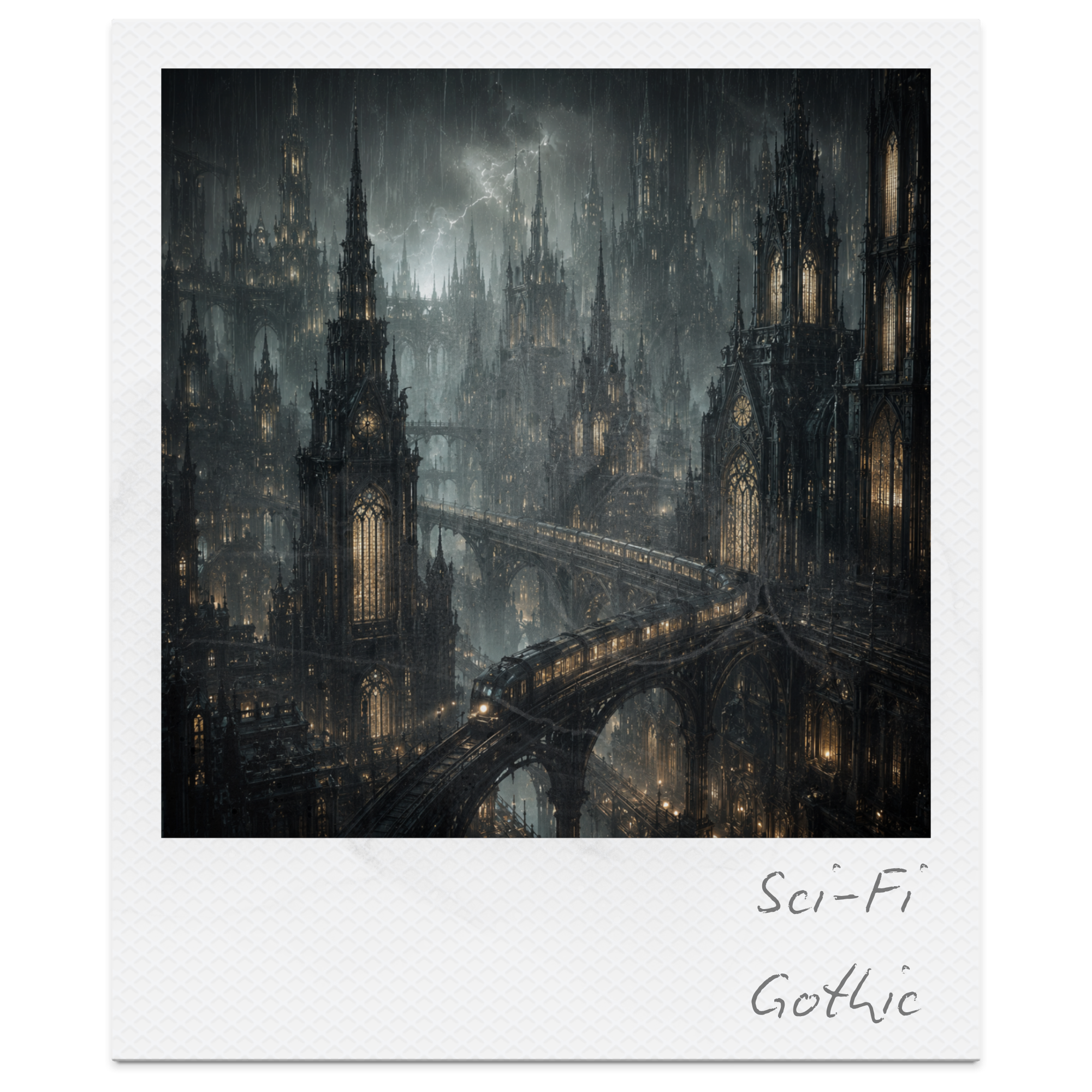
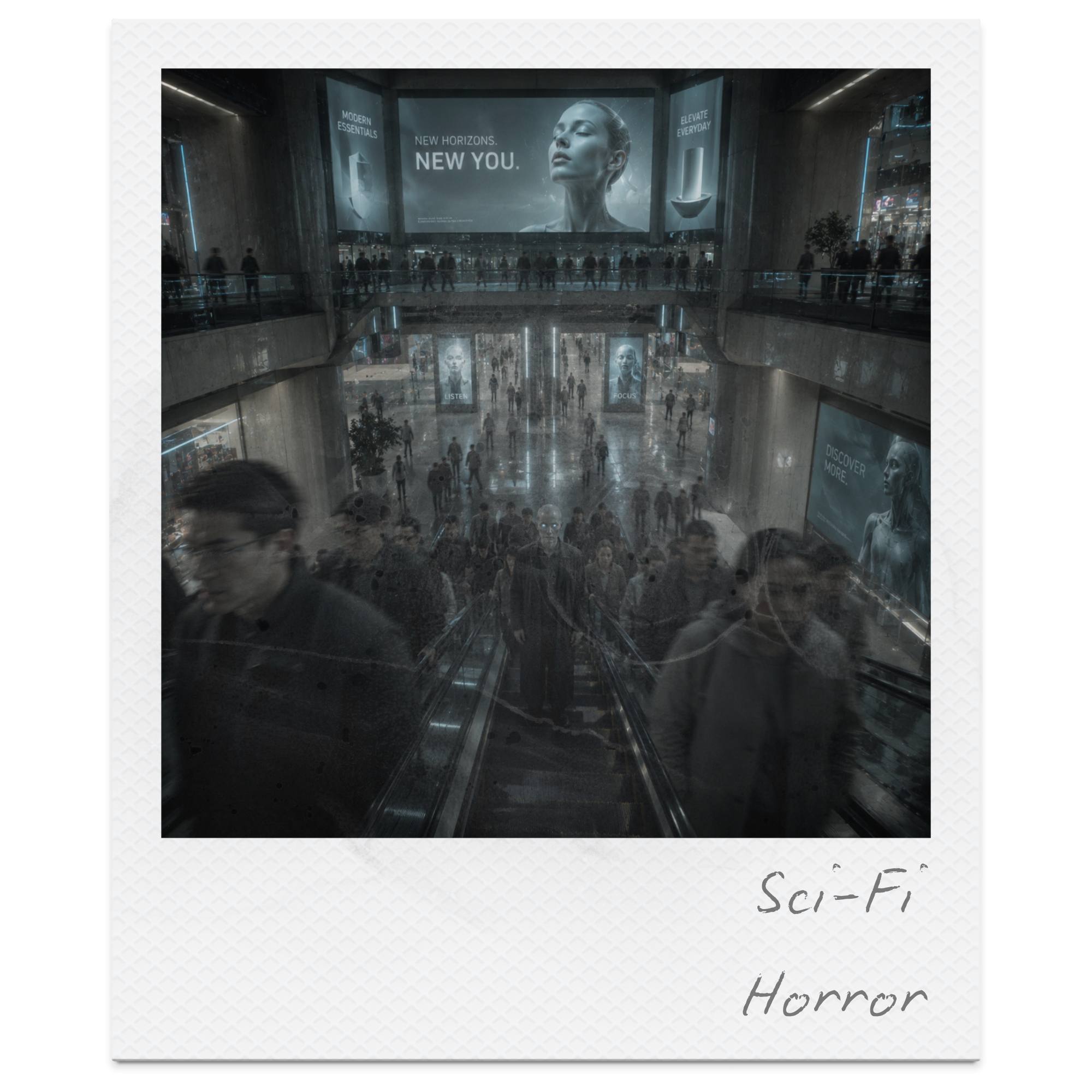
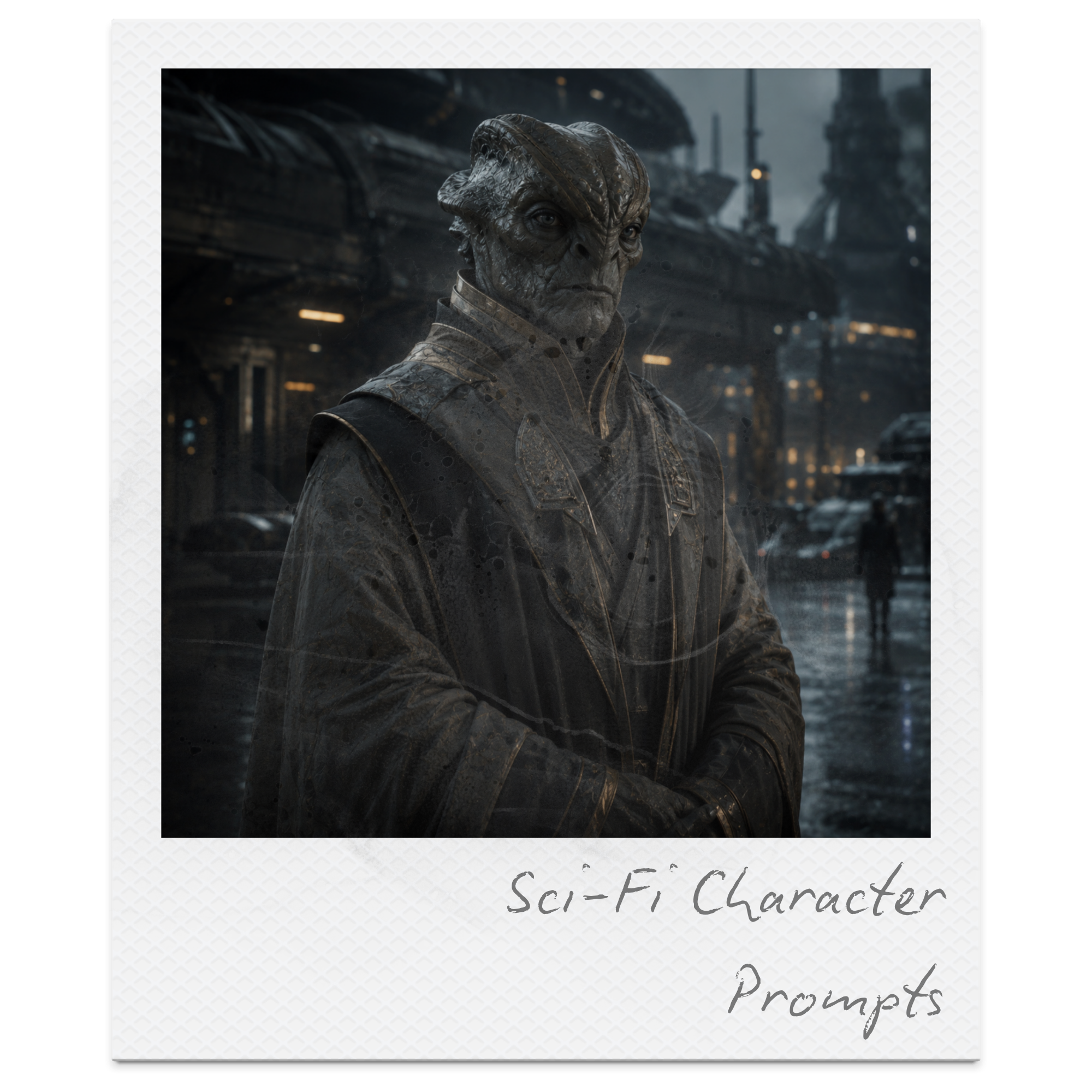
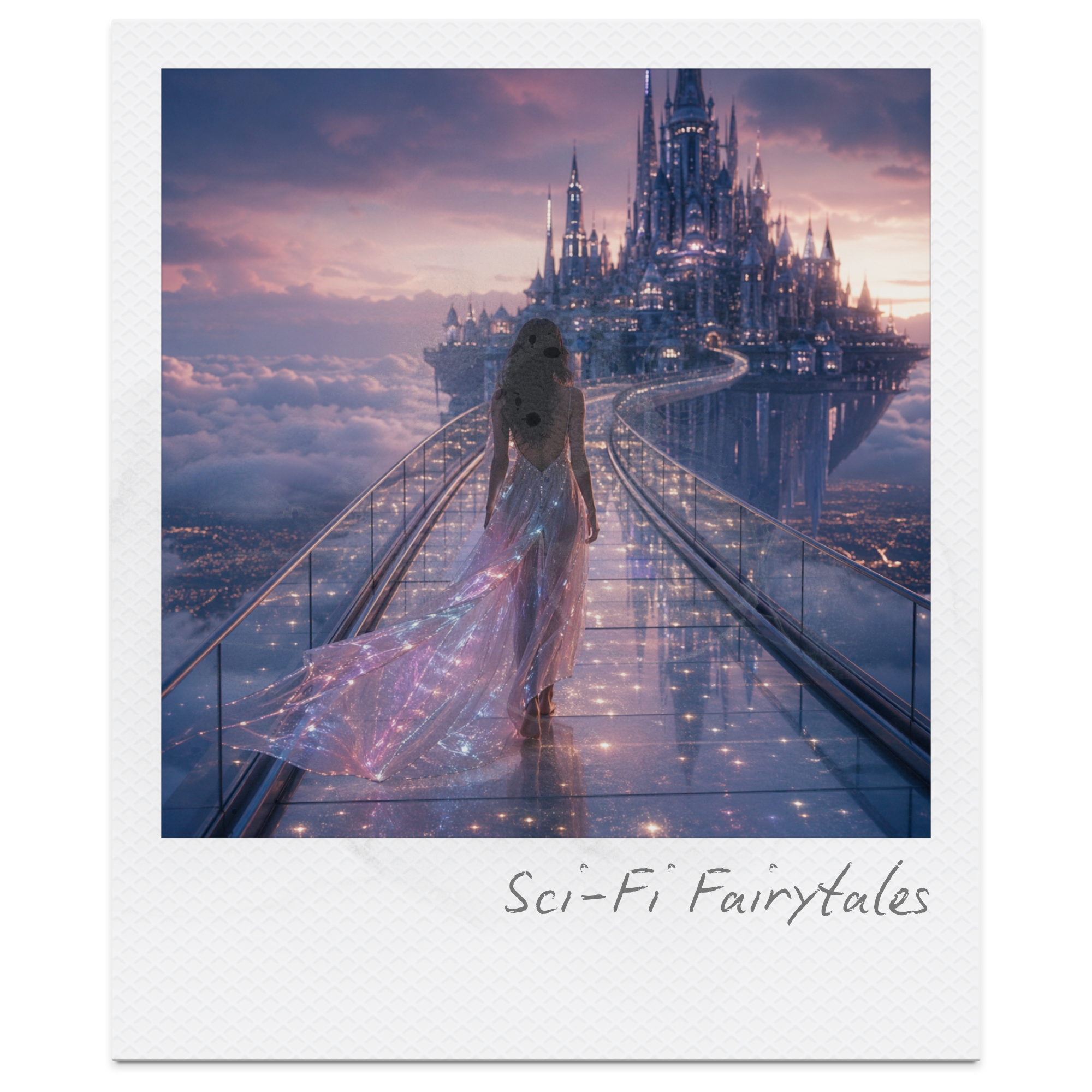
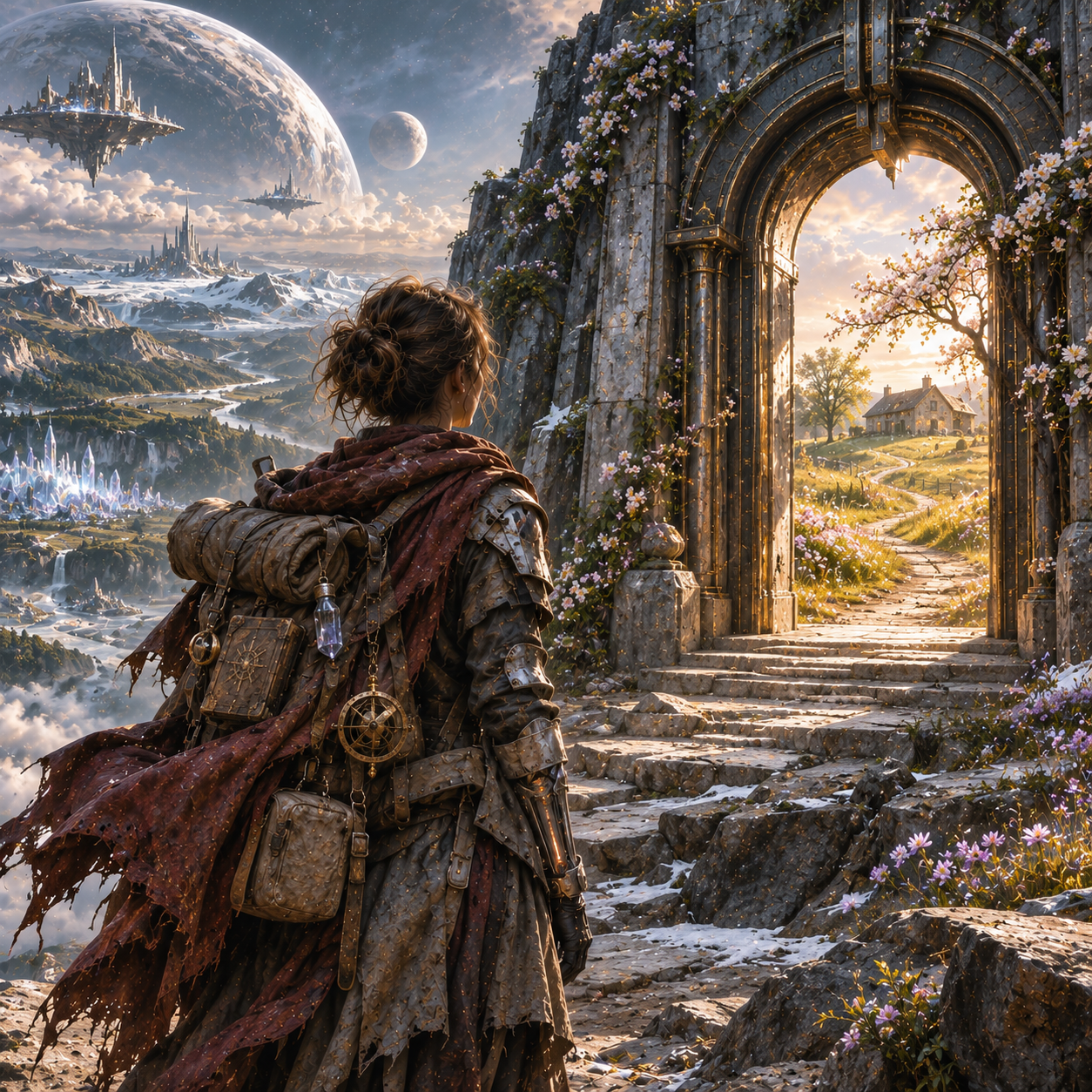
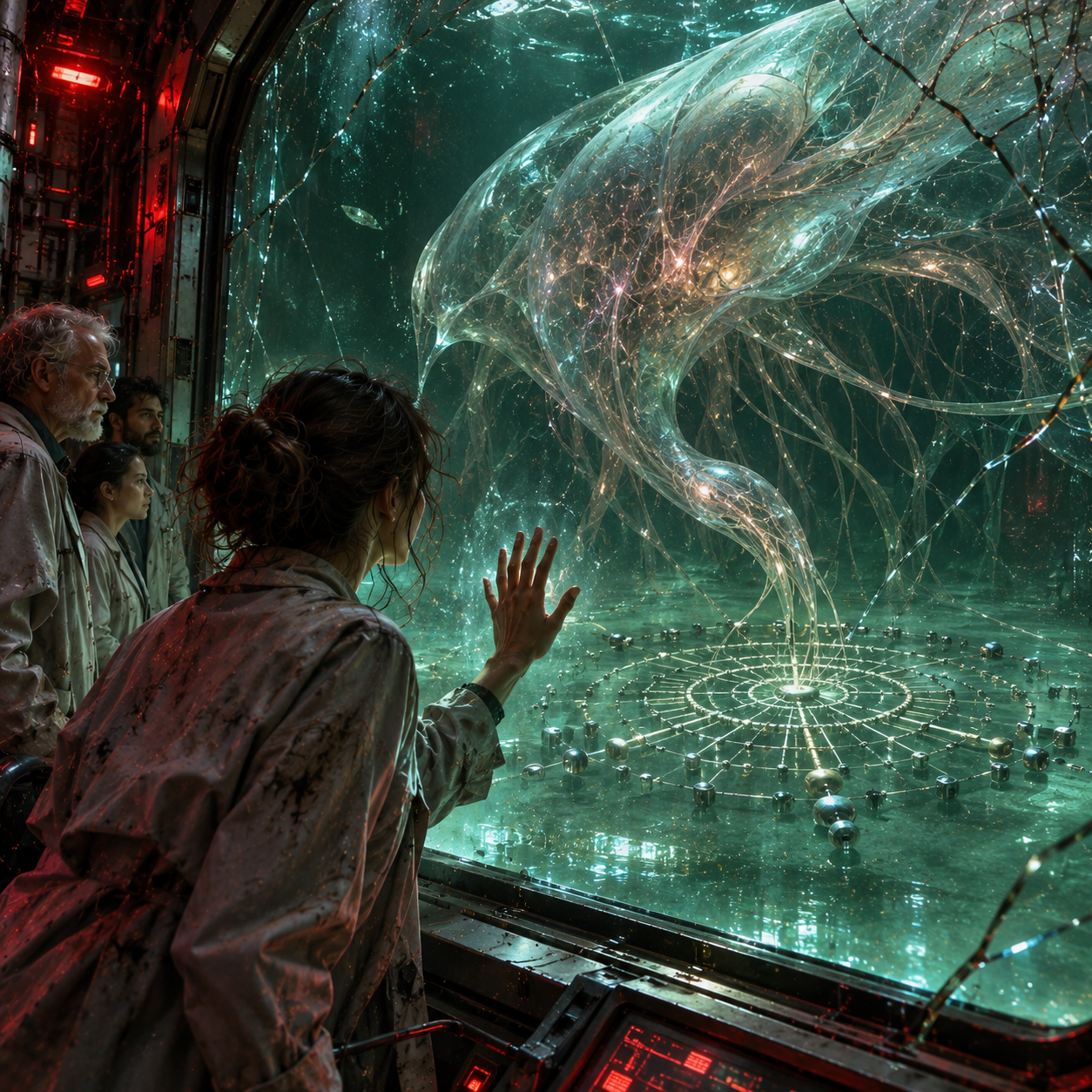
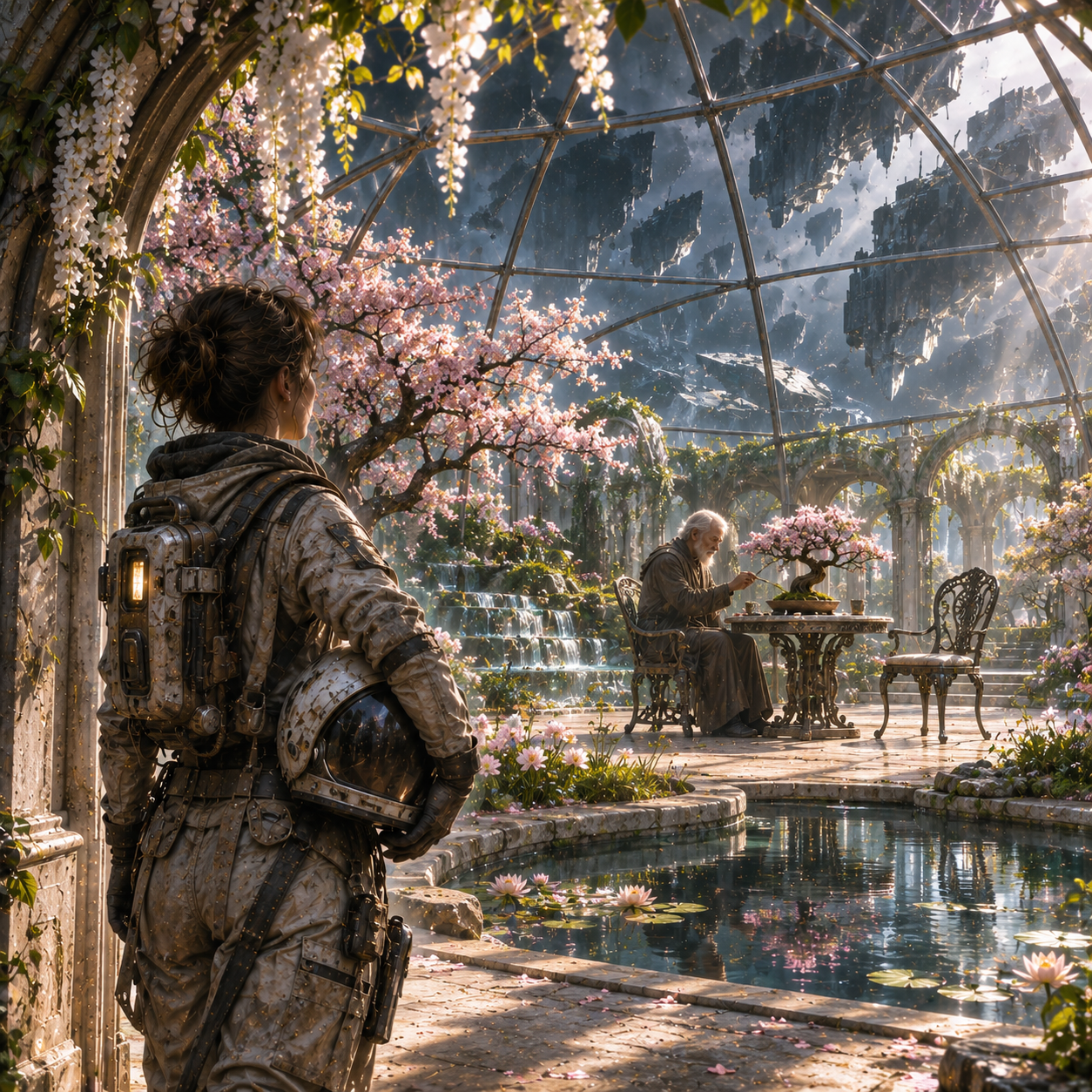
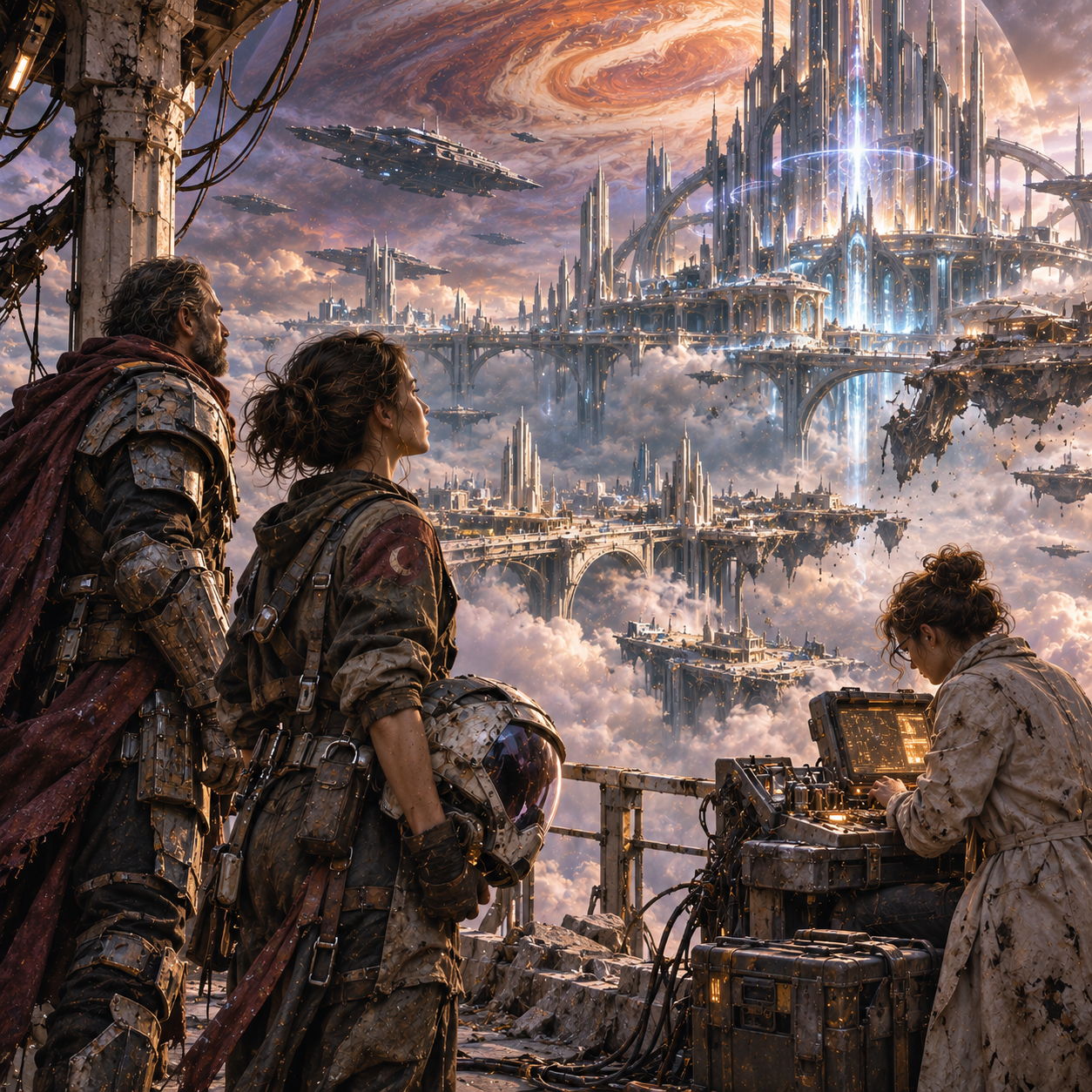
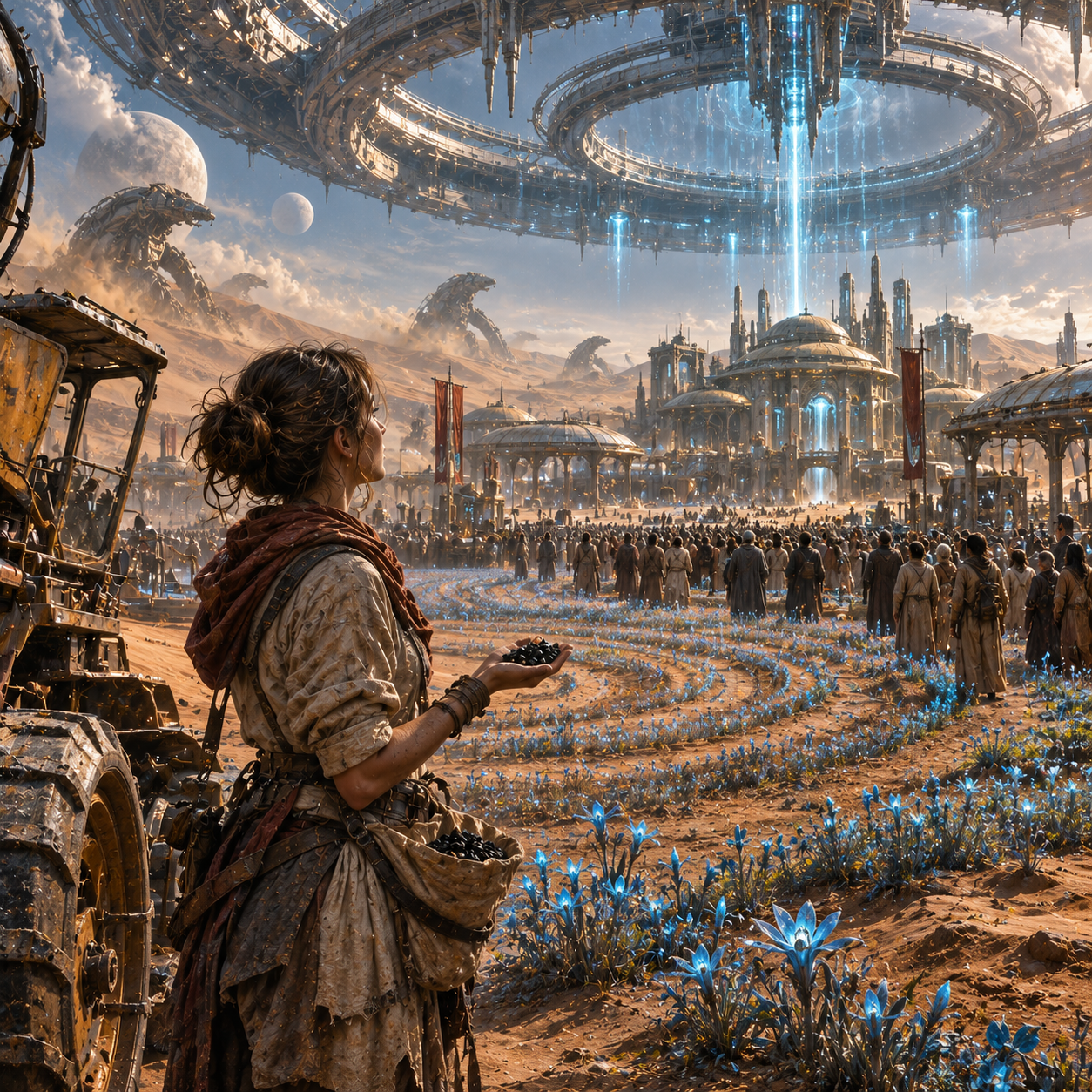
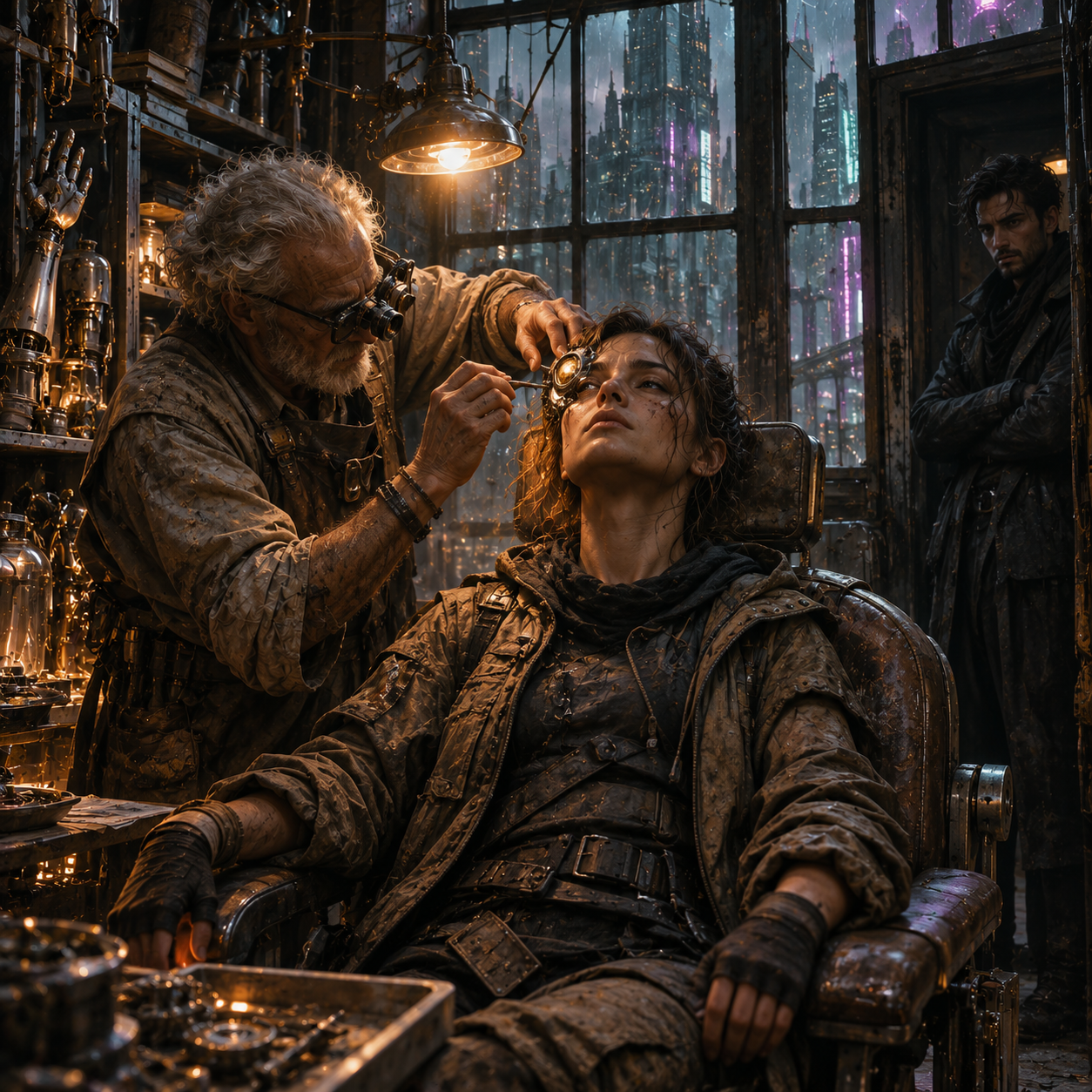
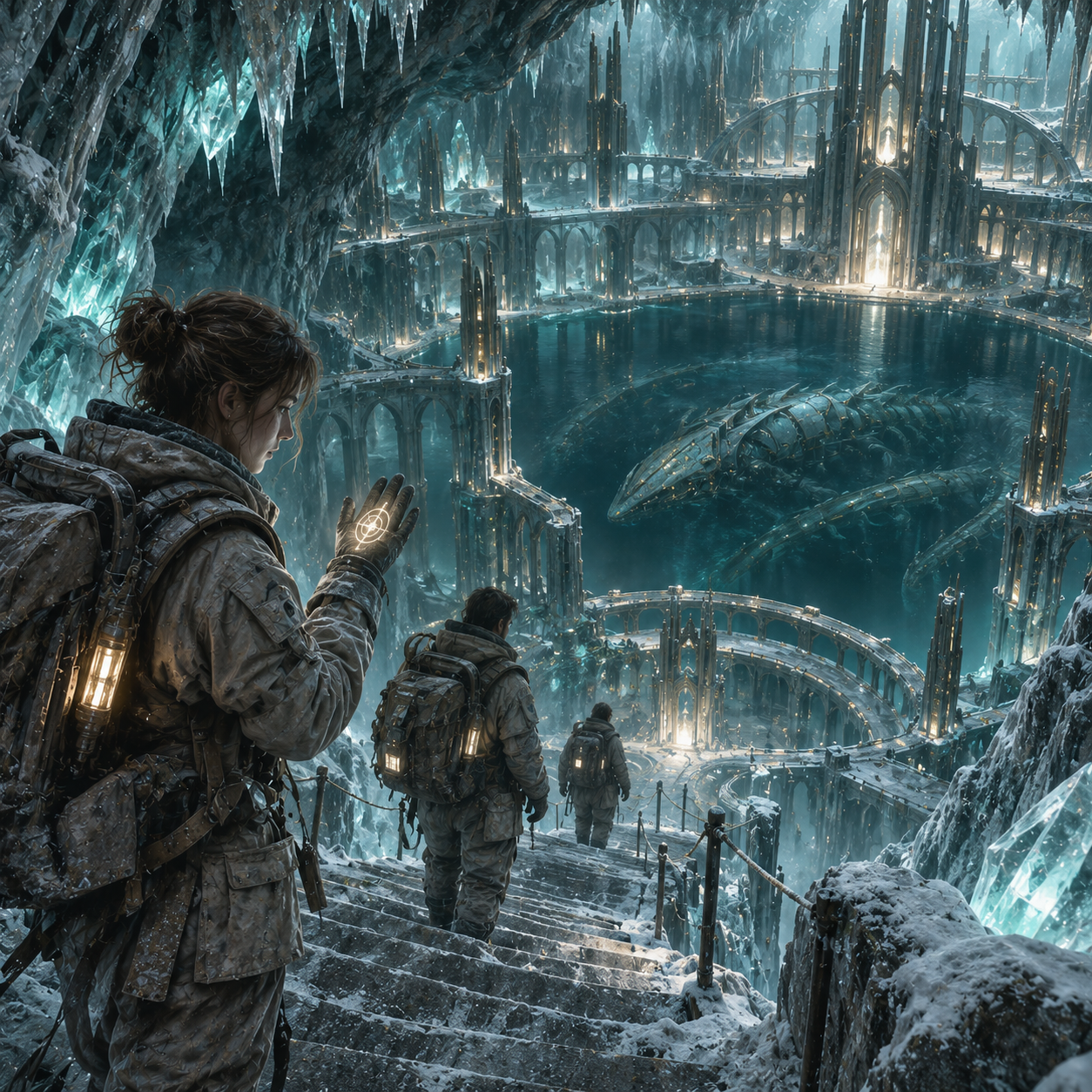
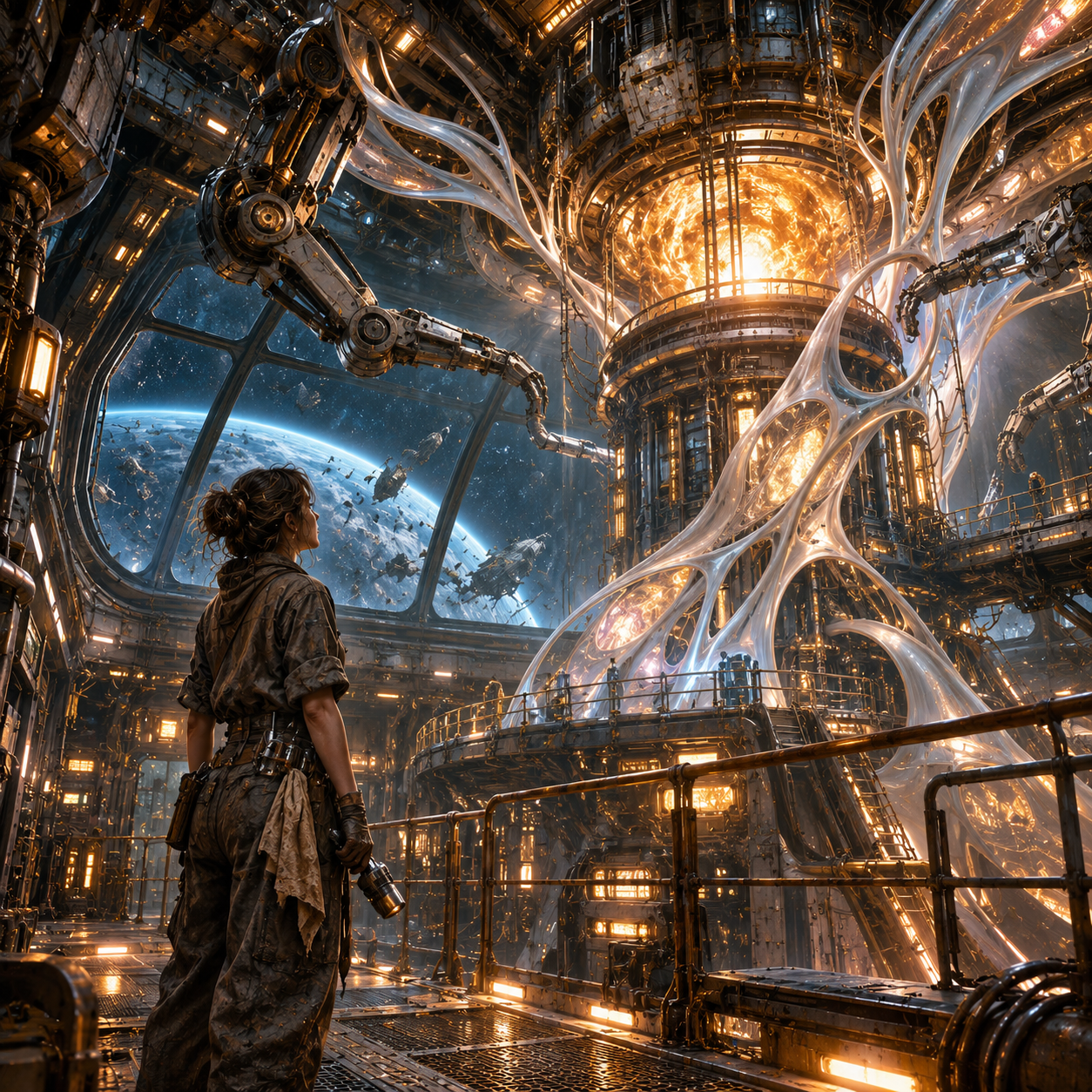
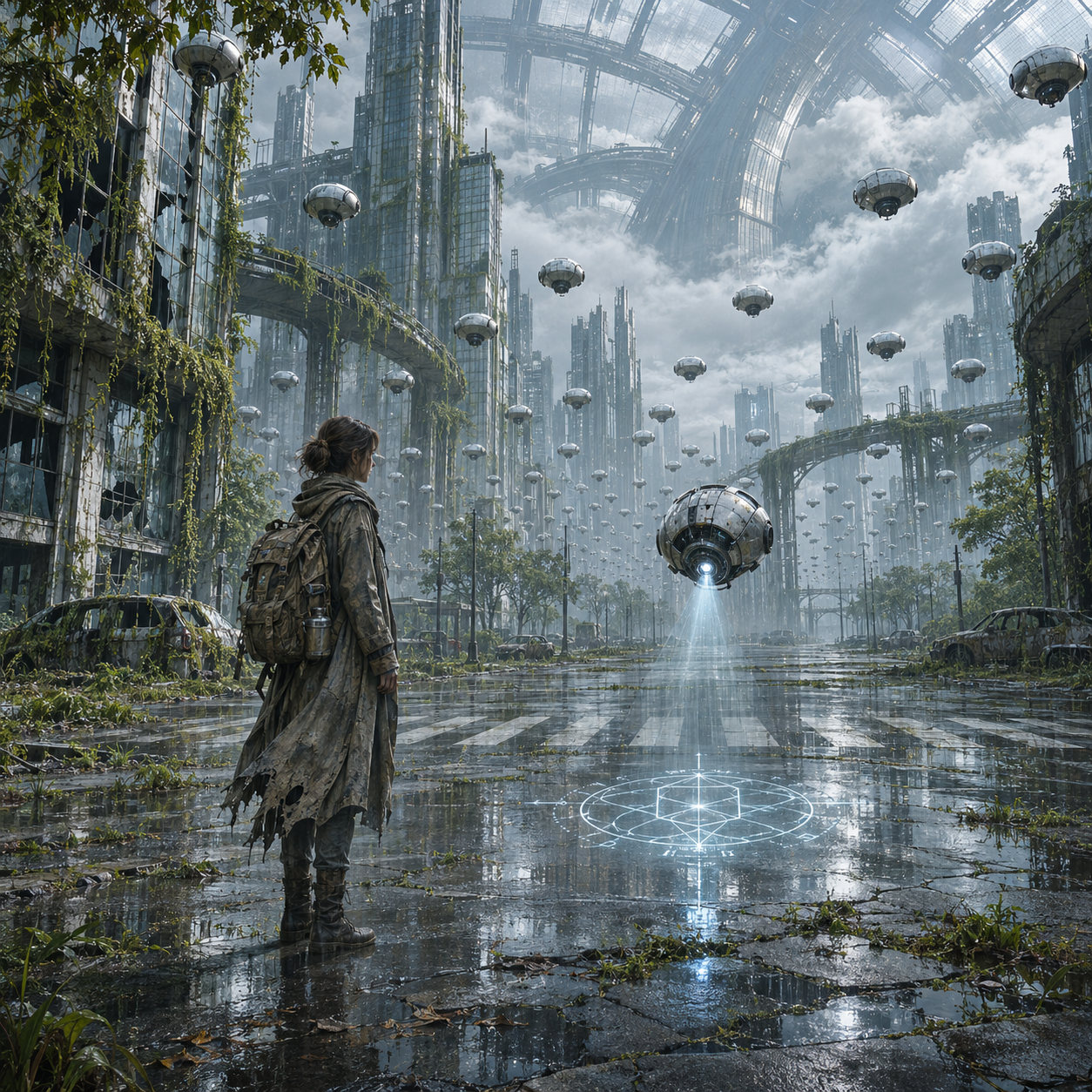
Sometimes a single image can suggest an entire science-fiction adventure. An abandoned city beneath a mysterious artificial sky, a starship transforming before its engineer's eyes or an ancient alien structure hidden beneath the ice might become the starting point for a story about extraordinary discoveries, dangerous quests and unexpected character progression.
These ten Sci-Fi LitRPG picture writing prompts combine cinematic futuristic environments with intriguing characters, unusual technologies and mysteries waiting to be explored. Each image offers a different narrative possibility, from planetary survival games and cybernetic upgrades to evolving spacecraft, simulated realities and encounters with mysterious alien intelligence.
Choose an image that captures your imagination and consider the game mechanics that might govern its world. What character class would your protagonist possess? How might they earn experience points or unlock new abilities? What challenges must they overcome, and what happens when they discover that the rules of their progression system are not what they first appeared to be?
Use the images as starting points for original short stories, opening chapters or more ambitious science-fiction adventures. Rather than simply describing what you can see, imagine the events that led to the scene, the decisions your characters must make and the unexpected consequences of completing their next quest.

Go Deeper: How to Write a Sci-Fi LitRPG Story
Creating a compelling Sci-Fi LitRPG story involves more than placing experience points, character classes and quests inside a futuristic world. The most memorable stories use their game mechanics to explore the possibilities of science fiction, from artificial intelligence and interstellar exploration to technological inequality, human identity and the consequences of scientific progress. A well-designed progression system should create opportunities for character development, introduce meaningful limitations and influence the decisions that shape your narrative.
Whether you're developing a short story inspired by one of the prompts above or planning an ambitious science-fiction novel, these eight writing techniques will help you create immersive worlds, believable progression systems and adventures where every achievement matters.
1. Establish the Rules of Your Progression System
Before introducing levels, experience points or unlockable abilities, decide how your fictional system actually works. Who created it? How do characters earn experience? Are achievements awarded automatically, or does an artificial intelligence evaluate their actions? Most importantly, what prevents characters from becoming infinitely powerful?
In a science-fiction setting, progression might depend on technological discoveries, successful missions, scientific breakthroughs or contributions to a planetary colony. A starship engineer could gain experience by repairing increasingly sophisticated machinery, while an alien diplomat might advance through successful negotiations rather than combat. Consider whether different professions have separate progression systems and whether the rules apply equally to everyone.
Try creating five fundamental rules for your system, including at least one limitation that could cause serious problems for your protagonist. For example, perhaps experience points cannot be transferred between planets, or unlocking a new ability permanently removes an existing skill. Once you've established the rules, introduce a situation that forces your character to question or challenge them.
For inspiration, explore Artificial Intelligence and Dystopian Sci-Fi, which offer possibilities for intelligent systems, technological control and societies shaped by restrictive rules.
2. Design Character Classes That Reflect Your Science-Fiction World
Character classes are central to many LitRPG stories, but they don't need to resemble the warriors, wizards and healers of traditional fantasy games. Science fiction allows you to create specialised professions and abilities inspired by futuristic technologies, alien environments and scientific discoveries.
A Quantum Navigator might manipulate short-range spatial distortions, allowing a spacecraft to escape dangerous gravitational fields. A Neural Archaeologist could recover memories from abandoned artificial intelligences, while a Xenobiological Adaptation Specialist might develop temporary physical abilities by studying alien organisms. Each class should possess distinctive strengths, limitations and opportunities for advancement.
Think carefully about the relationship between a character's class and their personality. A cautious scientist might receive a combat-oriented class that forces them into dangerous situations, while an ambitious military commander could discover that their greatest abilities involve healing and cooperation. These contradictions create opportunities for internal conflict and meaningful character development.
Choose an ordinary occupation from your futuristic world and develop three increasingly powerful abilities associated with it. Then introduce a weakness that becomes more significant as the character advances. For additional inspiration, explore Sci-Fi Character Prompts and Sci-Fi Character Names to develop distinctive protagonists, rivals and supporting characters.
3. Make Every Quest Advance the Story
Quests provide LitRPG characters with clear objectives, but a story can quickly become repetitive if every challenge follows the same pattern of completing a task, earning experience and receiving a reward. The strongest quests should reveal something important about the world, complicate a relationship or force the protagonist to make a difficult decision.
Imagine a planetary explorer assigned to recover a scientific instrument from an abandoned research station. The apparent objective is straightforward, but completing it reveals that the station's artificial intelligence has been protecting an undiscovered alien civilisation. Returning the instrument would earn enough experience to unlock a vital survival ability, yet doing so would expose the aliens to a hostile government.
The quest now involves more than progression. It introduces an ethical dilemma, develops the fictional world and forces the protagonist to decide what kind of person they want to become.
Try designing a quest with three layers: an obvious objective, an unexpected discovery and a difficult consequence. The reward should be tempting enough to matter, but the decision to accept it should reveal something about your character's values. For ideas involving unfamiliar civilisations, dangerous discoveries and extraordinary journeys, explore First Contact, Alien Worlds and Adventure.
4. Balance Character Statistics with Emotional Development
Levels, statistics and skill upgrades can make character progression satisfying, but numerical advancement should never replace emotional development. A protagonist who becomes stronger without changing their beliefs, relationships or understanding of the world may eventually feel less interesting, regardless of how impressive their abilities become.
Consider a young cybernetic soldier whose combat statistics improve after every successful mission. Initially, she believes that reaching the highest level will earn her freedom from military service. However, as her abilities develop, she discovers that the system rewards increasingly ruthless behaviour and gradually suppresses her capacity for empathy. Her physical progression now conflicts with her emotional growth.
You can use this tension to explore ambition, identity, sacrifice and the meaning of success. Perhaps a character must deliberately refuse an upgrade to protect someone they love, or abandon a prestigious class after discovering that its abilities depend on exploiting others.
Create two progression tracks for your protagonist: one showing their increasing abilities and another showing their changing motivations, relationships and fears. At three important moments in the story, make these tracks collide. For further character inspiration, explore Sci-Fi Character Prompts and Artificial Intelligence, particularly when writing about consciousness, autonomy and the boundaries of human identity.
5. Build Futuristic Worlds That Respond to Progression
A convincing Sci-Fi LitRPG world should feel shaped by its progression system rather than simply containing characters who happen to earn experience points. Consider how levels, achievements and character classes influence employment, education, government, technology and everyday life.
In a futuristic city, citizens might require a particular level to enter certain districts, operate advanced machinery or access medical treatment. On a distant colony, experienced settlers could unlock new agricultural technologies, defensive systems or unexplored regions of the planet. A civilisation governed by artificial intelligence might use achievements to determine social status, creating a society where personal worth is measured entirely through progression.
These rules can generate political tensions, inequalities and opportunities for rebellion. What happens to citizens who cannot gain experience? Can powerful individuals purchase levels? Are certain classes hereditary, restricted or deliberately suppressed? How might ordinary people resist a system that appears to control every aspect of their lives?
Design a futuristic settlement and identify five ways its progression system affects daily life. Include one apparent benefit, one serious injustice and one rule that most citizens have never questioned. For further worldbuilding inspiration, explore Futuristic Cities, Futuristic City Names, Sci-Fi Colonies and Dystopian Government & Regime Names.
6. Give Technological Upgrades Meaningful Consequences
One of the pleasures of LitRPG is watching characters unlock extraordinary new abilities, but upgrades become more interesting when they introduce complications rather than simply making every challenge easier.
A cybernetic enhancement might allow a character to process information at extraordinary speeds while gradually weakening their ability to recognise human emotions. An advanced navigation system could make interstellar travel almost instantaneous but require the ship's artificial intelligence to surrender fragments of its memory. A biological adaptation might enable survival on a hostile alien planet while making it increasingly difficult to return to Earth.
These consequences create opportunities for suspense, ethical dilemmas and character development. They also help prevent progression from becoming predictable, because every advancement introduces new possibilities alongside new risks.
Invent an extraordinary technological upgrade and give it three consequences: an immediate advantage, an unexpected limitation and a long-term cost that the character does not initially understand. Then write a scene in which the protagonist must decide whether the benefits justify the sacrifice.
For darker technological possibilities, explore Biopunk, Body Horror and Cyberpunk, which provide inspiration for genetic engineering, bodily transformation, technological inequality and the loss of personal autonomy.
7. Create Escalating Challenges Without Making Characters Invincible
As LitRPG protagonists become more powerful, their challenges must evolve. However, simply introducing larger enemies, more dangerous weapons or increasingly powerful opponents can make a story feel repetitive. Instead, consider changing the nature of the challenges themselves.
A low-level explorer might initially struggle to survive an alien environment. After gaining specialised abilities, they can navigate the landscape safely, but their growing influence attracts the attention of rival expeditions, planetary governments or intelligent alien species. Eventually, the protagonist may become powerful enough to transform the environment itself, forcing them to confront the consequences of their actions.
Progression can therefore shift the story from individual survival to responsibility, leadership, diplomacy or moral conflict. A character who can defeat almost any enemy might still struggle to negotiate peace, protect their companions or understand an unfamiliar civilisation.
Plan three major challenges for your protagonist at different stages of progression. The first should test their abilities, the second should test their judgement and the third should challenge their deepest beliefs. Each should require a different kind of solution rather than simply a higher level.
For inspiration, explore Sci-Fi Story Ideas, First Contact and Dystopian Story Ideas to develop conflicts involving exploration, political power, survival and difficult choices.
8. Use the System's Rules to Create Unexpected Plot Twists
A particularly satisfying LitRPG twist emerges when readers discover that a familiar game mechanic has a different purpose from the one they originally assumed. Rather than introducing an entirely new rule at the climax, use information established earlier in the story to reveal something surprising about the progression system.
Perhaps experience points are not rewards but measurements of how much energy a character has contributed to an ancient machine. A supposedly beneficial resurrection system might be creating copies of its users rather than restoring their original consciousness. The highest character class could be reserved for individuals selected to govern an artificial universe, while the final quest requires players to dismantle the very system that gave them their abilities.
The most effective revelations should transform the meaning of earlier events without contradicting the rules you've established. Readers should be able to recognise the clues afterwards, even if they did not understand their significance at the time.
Choose one ordinary feature of your progression system, such as achievements, respawning, class restrictions or experience points. Invent a hidden explanation for its existence, then identify three subtle clues that could appear earlier in the narrative. Finally, consider how the revelation would change your protagonist's goals.
For additional inspiration, experiment with Sci-Fi Story Sparks, our free interactive generator featuring futuristic settings, strange discoveries, conflicts and plot twists. You can also explore Dystopian Story Sparks for ideas involving hidden systems, forbidden knowledge and societies built upon deception.
Some treasures have been lost to history.
Others haven't been invented yet.
For William Ashford, neither presents much of an obstacle.
In a world where time travel has become the ultimate luxury, the wealthiest collectors are no longer satisfied with owning rare objects.
They want the impossible.
A magnificent prehistoric egg, recovered from a world untouched by civilisation.
An elaborate powdered wig believed to have belonged to Marie Antoinette.
A fragment of sailcloth from the Mayflower's historic voyage.
A futuristic neural ring withdrawn from sale after a scandal involving stolen memories, leaked financial information and an unprecedented advertising attack.
Each object has crossed centuries to reach the present.
Some were purchased.
Others were recovered.
Not every acquisition can be satisfactorily explained.
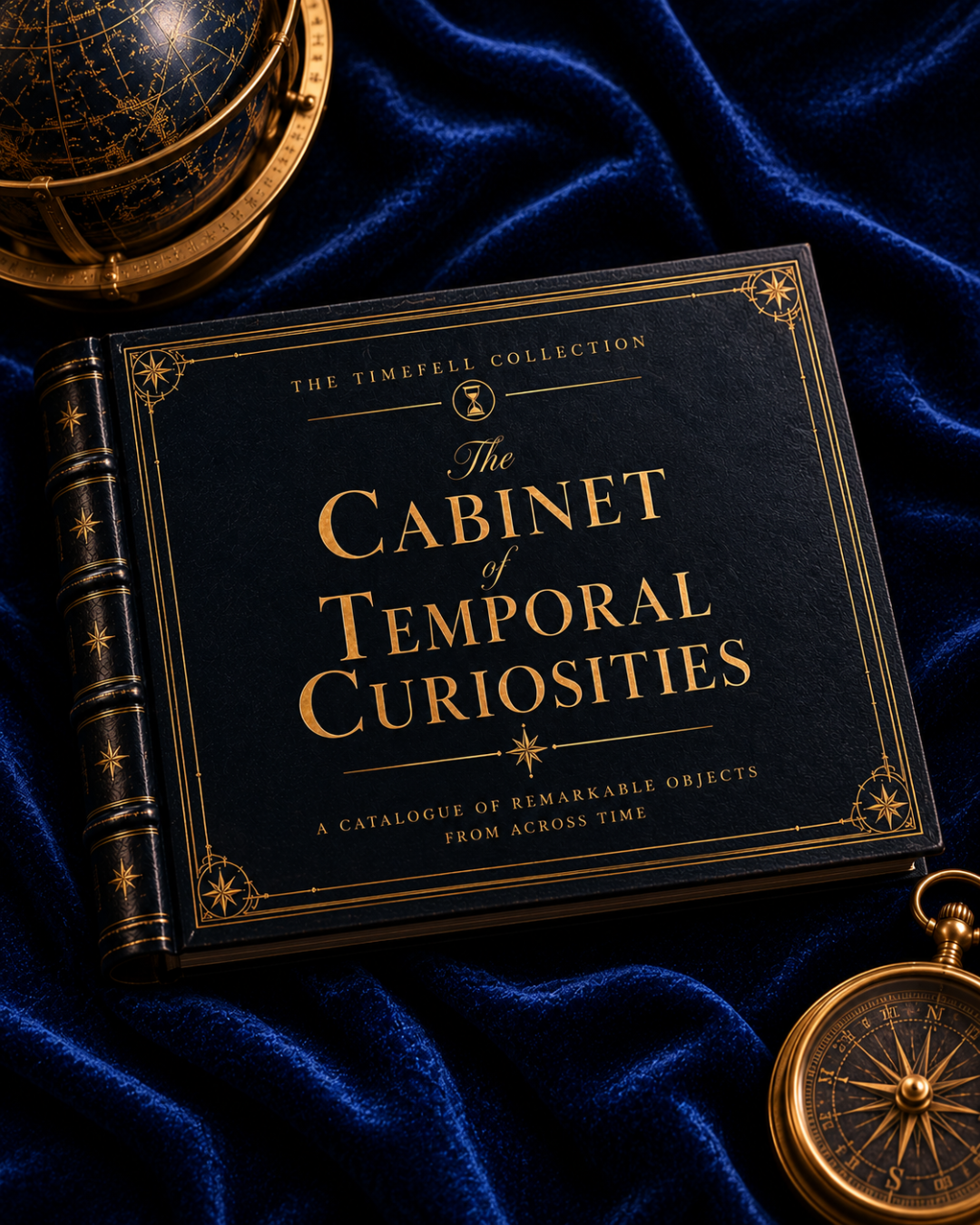
Timefell: The Cabinet of Temporal Curiosities is an immersive, illustrated catalogue of extraordinary objects, historical treasures and futuristic artefacts from the private collection of William Ashford.
Inspired by Victorian cabinets of curiosities, luxury collecting, speculative fiction and the possibilities of time travel, this fictional archive brings together detailed artefact illustrations, acquisition records, rare specimens, historical curiosities, futuristic inventions and photographs from journeys across the centuries.
What happens when priceless historical objects are removed from their original timelines?
Who decides which treasures deserve to be preserved?
What became of the people who once owned these extraordinary possessions?
Why was a seemingly revolutionary piece of futuristic technology withdrawn from the market?
And how much of history can one wealthy collector possess before the past itself becomes a commodity?
There are no definitive explanations.
No complete records.
No guarantee that every acquisition was entirely legitimate.
Only extraordinary possessions, fragments of forgotten histories and impossible discoveries waiting to be explored.
What's Inside?
◆ Beautifully illustrated digital pages from the world of Timefell
◆ Detailed catalogue entries featuring historical treasures, prehistoric discoveries and futuristic technology
◆ Intricate illustrations, provenance details, acquisition records and collector's observations
◆ Rare textiles, currencies, travel ephemera and unusual objects gathered across centuries
◆ A photographic archive documenting William Ashford's extraordinary journeys through time
◆ An illustrated cabinet inventory containing additional objects and incomplete records
◆ An exploration guide with creative writing ideas and classroom activities
◆ Instant digital download in printable PDF format
Who Is It For?
Perfect for:
◆ Science fiction writers and worldbuilders
◆ Time travel and alternate history enthusiasts
◆ Novelists, short-story writers and creative storytellers
◆ Teachers looking for imaginative visual writing prompts
◆ History lovers fascinated by lost treasures and historical mysteries
◆ Fans of futuristic technology and speculative fiction
◆ Journalers, roleplayers and curious minds
◆ Anyone who loves cabinets of curiosities, fictional archives and extraordinary discoveries
What Makes This Different?
This isn't a traditional collection of writing prompts.
It's a private collection of impossible objects.
Every artefact offers a glimpse into another century, another civilisation or a future that has yet to exist.
But the records are incomplete, the circumstances of acquisition are not always clear, and William Ashford's collection raises as many questions as it answers.
Examine Marie Antoinette's elaborate wig.
Investigate the origins of a prehistoric egg.
Study a fragment of the Mayflower's sail.
Uncover the scandal behind the Aurelia Nexus Ring.
Explore photographs from journeys that should have been impossible.
Read the collector's records and decide what these objects reveal about the world that brought them together.
Perhaps an artefact was acquired legitimately.
Perhaps it was stolen from a moment in history.
Perhaps removing it changed something that was never meant to change.
Or perhaps the greatest mystery is what happens when the past and future become possessions.
You decide what these objects mean.
Use the collection to inspire a science fiction short story, develop a time-travel mystery, invent an extraordinary collector or build an entire fictional world around the consequences of temporal tourism.
Follow the evidence.
Question the provenance.
Imagine the histories that were never recorded.
Which curiosity would you bring back? And what would you risk to possess it?
Digital download: A 21 page Illustrated PDF collection, designed in A4 landscape format. Some pages contain multiple individual artefacts. No physical product will be shipped.
Discover Timefell: The Cabinet of Temporal Curiosities
Some treasures have been lost to history. Others haven't been invented yet.
What if the most extraordinary discoveries in science fiction weren't waiting on distant planets, but scattered across the centuries? What if a mysterious artefact could unlock an entirely new adventure, reveal a forgotten civilisation or change the course of history itself?
Step inside Timefell: The Cabinet of Temporal Curiosities, an immersive illustrated collection of impossible objects gathered by the enigmatic William Ashford, a wealthy collector living in a world where time travel has become the ultimate luxury.
Inspired by Victorian cabinets of curiosities, speculative fiction and the possibilities of temporal exploration, Timefell invites writers to investigate extraordinary treasures whose origins are not always what they seem.
Discover a prehistoric egg recovered from a world untouched by civilisation, an elaborate wig believed to have belonged to Marie Antoinette, a fragment of the Mayflower's historic sailcloth and the mysterious Aurelia Nexus Ring, a futuristic invention withdrawn following a scandal involving stolen memories.
Each artefact comes with fragments of its history, intriguing acquisition details and unanswered questions. Who originally possessed these objects? What happened when they were removed from their timelines? And what secrets might their incomplete records conceal?
For Sci-Fi LitRPG writers, these discoveries offer inspiration for rare quest items, technological upgrades, hidden achievements, mysterious rewards and adventures across different eras. Imagine a character whose next level depends on recovering a lost invention, or an apparently ordinary object that unlocks an entirely new progression path.
This 21-page illustrated digital collection, presented in A4 landscape format, includes detailed artefact illustrations, collector's observations, photographic records, an illustrated inventory and an exploration guide with creative writing activities.
Perfect for science-fiction writers, worldbuilders and imaginative storytellers seeking something beyond conventional writing prompts.
Explore Timefell: The Cabinet of Temporal Curiosities and discover the extraordinary stories hidden inside the collection.

Final Thoughts
Science-fiction LitRPG offers an extraordinary opportunity to combine the imaginative possibilities of futuristic storytelling with the challenges, rewards and progression systems of role-playing games. Whether your characters are exploring forgotten alien civilisations, upgrading intelligent starships, navigating dangerous simulations or questioning the rules of an AI-controlled society, the most compelling adventures emerge when every new ability brings fresh possibilities, difficult decisions and unexpected consequences.
Use these 70 Sci-Fi LitRPG writing prompts as starting points rather than fixed storylines. Combine an unusual character class with an unfamiliar setting, introduce a quest that challenges your protagonist's beliefs, or invent a progression system that conceals a disturbing secret. Remember that the most satisfying stories aren't simply about reaching the highest level; they're about how characters change along the way, what they're willing to sacrifice and what they discover about themselves and their worlds.
For more futuristic inspiration, explore our Sci-Fi Writing Hub, experiment with unexpected combinations using Sci-Fi Story Sparks, or discover hundreds of original prompts, story ideas and writing resources in the Creative Writing Archive. Your next extraordinary adventure might begin with a single quest, an impossible achievement or a mysterious notification announcing that the game has only just begun.
Choose Your Next Adventure