Fairytale Worldbuilding: The Ultimate Guide to Creating Magical Worlds
Fairytale worlds often look simple from the outside: a castle beyond the forest, a lonely cottage beside an old road, a kingdom ruled by a troubled king. But the most memorable fairytale settings operate according to their own strange logic. Forests lead travellers astray, promises carry consequences, ordinary objects hold extraordinary power, and crossing the wrong threshold can change a character's fate forever.
Building your own fairytale world means thinking beyond castles, princesses and enchanted forests. Who rules the kingdom, and what happens when the crown has no heir? Where does magic come from? What do ordinary people believe about witches, giants or fairies? Which roads should never be travelled after dark? What bargains cannot be broken? From villages and hidden places to curses, magical objects, ancient customs and impossible quests, every detail can help make your storyworld feel as though it has existed for generations.
This fairytale worldbuilding guide will take you through the process step by step. You'll create settings and kingdoms, develop fairytale characters and creatures, establish magic and its rules, explore society and everyday life, design quests and symbolic motifs, and finally bring everything together into a fairytale plot. Along the way, you'll also find worldbuilding questions, generators, visual writing prompts and idea collections to help you turn the smallest spark of inspiration into an entire storybook world.
For even more story inspiration, explore the Fairytale & Folklore Writing Hub for magical prompts, characters and folklore-inspired ideas, or browse the complete Creative Writing Archive to discover writing prompts, worldbuilding resources and story ideas across every genre.
Build Your Fairytale World
Follow the journey or explore what you need
What Makes a World Feel Like a Fairytale?
A fairytale world does not need enormous kingdoms, complicated maps or pages of invented history to feel complete. Some of the most enduring tales take place within only a handful of locations: a cottage at the edge of a forest, a distant palace, an unfamiliar road or a forbidden room. What makes these worlds distinctive is not their size, but the sense that ordinary life exists alongside something older, stranger and potentially magical.
Fairytale settings often operate according to a particular kind of story logic. A promise can be binding even when no contract has been signed. A stranger met beside the road might secretly be a king, witch or magical helper. Kindness shown to an apparently insignificant creature may later save someone's life, while greed, cruelty or broken promises can carry consequences far beyond what seems reasonable. Magic does not always need to be explained; sometimes it simply forms part of how the world works.
There is also a strong relationship between place and possibility. Forests conceal things. Roads lead characters away from safety. Towers isolate them. Castles represent power, privilege or imprisonment. Cottages can offer sanctuary or hide danger behind an inviting door. Crossing from one place into another can therefore be more than physical movement: it can mark the moment a character leaves the familiar world and enters somewhere governed by different expectations.
Repetition, symbolism and contrast can strengthen this atmosphere. Three impossible tasks, seven years beneath an enchantment, a golden key, a red apple, an endless winter or a path that divides in two can carry meaning beyond their literal role in the story. Beauty might conceal danger; something frightening may prove unexpectedly kind; enormous riches may be less valuable than a seemingly ordinary gift.
Most importantly, a fairytale world should feel as though there are rules the characters may not fully understand. Perhaps everyone knows never to enter the woods after sunset but nobody remembers why. Perhaps the royal family must fulfil an ancient promise every generation. Perhaps wishes always come with a price. You do not need to explain every mystery to the reader. Leaving parts of the world unexplained can make it feel older and larger than the story itself.
As you build your own fairytale world, think less about creating complexity for its own sake and more about creating meaning, consequence and wonder. The kingdom, characters, creatures, magic, objects and traditions you develop throughout this guide should ultimately work together to create a place where the impossible feels entirely at home.
Choose Your Fairytale Setting
Every fairytale needs somewhere for the impossible to happen. It might begin in a tiny village surrounded by fields, behind the walls of a prosperous kingdom, in a cottage deep within the woods or on a lonely road leading towards somewhere nobody has returned from. The setting does more than provide a backdrop: it shapes what your characters can encounter, what they fear, what they desire and where the story can take them.
Think about the places that appear again and again in traditional tales. Forests create uncertainty, castles hold secrets, towers separate characters from the wider world, mountains make journeys dangerous, islands create isolation, and roads carry travellers towards unexpected encounters. Even familiar places can become distinctly fairytale-like when something about them is unusual: a village where every door must be locked before sunset, a castle that changes location each winter or a cottage that only appears to lost travellers.
You also don't have to choose just one. A fairytale world can contain a whole network of contrasting places, from the safety of home to the dangerous landscape beyond it. A character might leave a poor mountain village, cross an enchanted forest, follow an ancient road and eventually reach a glittering royal capital. Each new setting can mark another stage of the journey and introduce different dangers, discoveries and possibilities.
Use the location and settings below to begin building the geography of your world, whether you need fairytale kingdom names, visual inspiration or questions to help you develop a location in greater depth. You can start with a single place and build outward, or connect several settings to create an entire fairytale realm.
Fairytale Kingdoms
Kingdoms are one of the most recognisable settings in fairytales, but they can be much more than a distant castle and a royal family. The kingdom establishes the wider world around the story: its landscape, atmosphere, history and sense of possibility. It might be a peaceful realm of flower-filled valleys and golden palaces, a winter kingdom hidden among mountains, an island protected by enchanted seas, a celestial realm above the clouds or a once-prosperous land trapped beneath an ancient curse.
A good place to begin is with the kingdom's identity. What is it called, and what does that name suggest about the place before the reader knows anything else? The 100 Fairytale Kingdom Names collection explores everything from enchanted and woodland realms to mountain, coastal, forgotten, celestial and cursed kingdoms, with each name accompanied by worldbuilding and story inspiration.
Next, imagine what it would actually feel like to arrive there. Consider the landscape surrounding the kingdom, the silhouette of its castle, the settlements beyond the palace walls and the first strange detail a traveller might notice. The 20 Fairytale Kingdom Picture Prompts can help you develop this visually, using different fairytale kingdoms as starting points for settings, stories and atmospheric worldbuilding.
Once you have the beginnings of a realm, start asking questions about what exists beyond the beautiful façade. How was the kingdom founded? What places matter to its people? What traditions have survived for generations? Where does magic appear in everyday life, and what secrets might be hidden beneath the version of the kingdom outsiders see? Use the 100 Fairytale Kingdom Worldbuilding Questions to develop the setting in greater depth and turn a simple storybook kingdom into a world with its own history, culture and possibilities for conflict.
You don't need to decide everything yet. For now, concentrate on where the kingdom is, what it looks and feels like, and what makes it unmistakably yours. Later in this guide, we'll return to the kingdom itself to explore its rulers, royal court, laws, succession, wealth, traditions and relationships with neighbouring realms.
Fairytale Towns & Villages
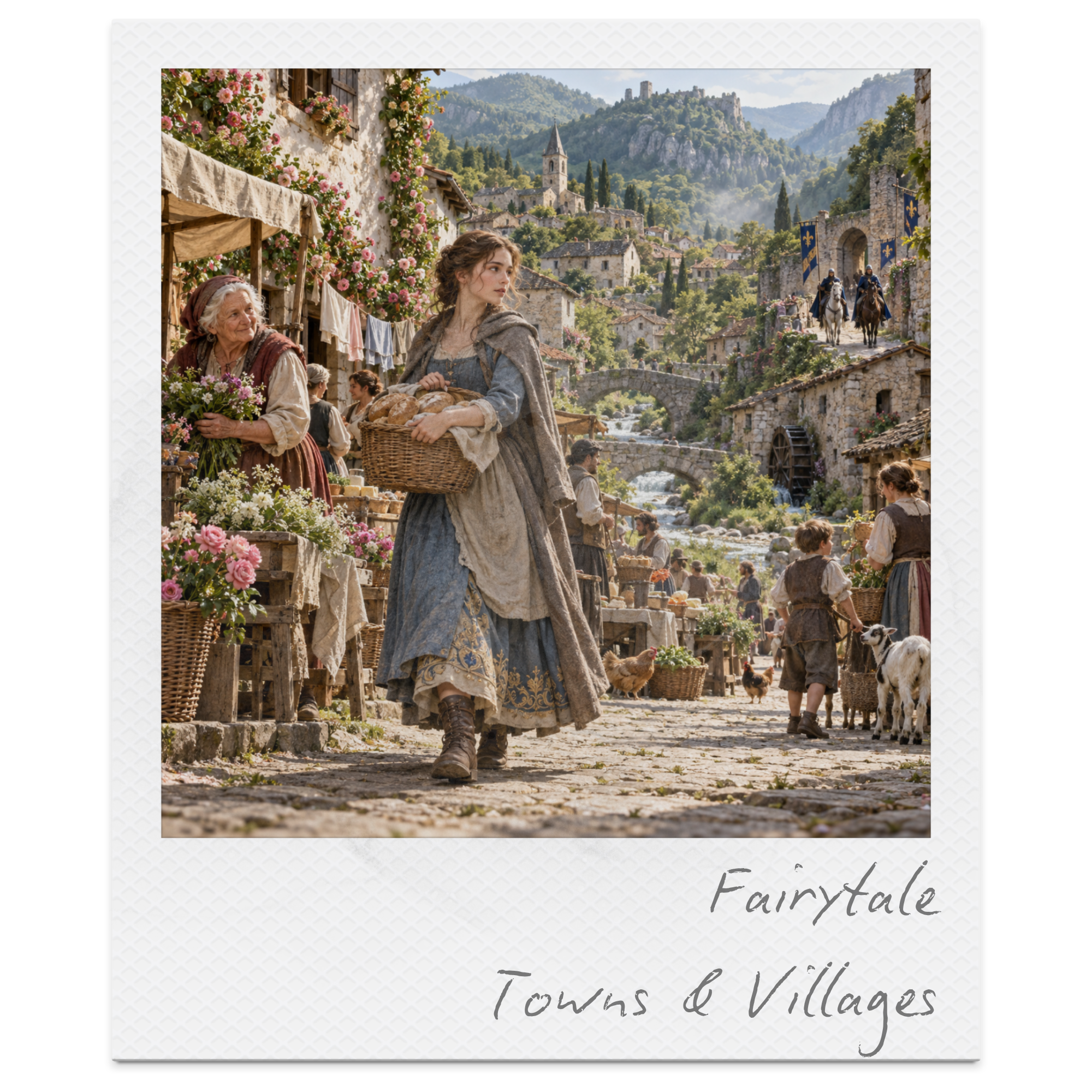
Not every fairytale begins behind palace walls. Towns and villages bring the wider world down to a more intimate scale, creating communities where bakers know the local witch, children grow up hearing warnings about the nearby forest and everyone remembers what happened the last time somebody broke an ancient tradition. They can provide a character with somewhere to call home, somewhere unfamiliar to discover or an apparently ordinary place hiding something extraordinary.
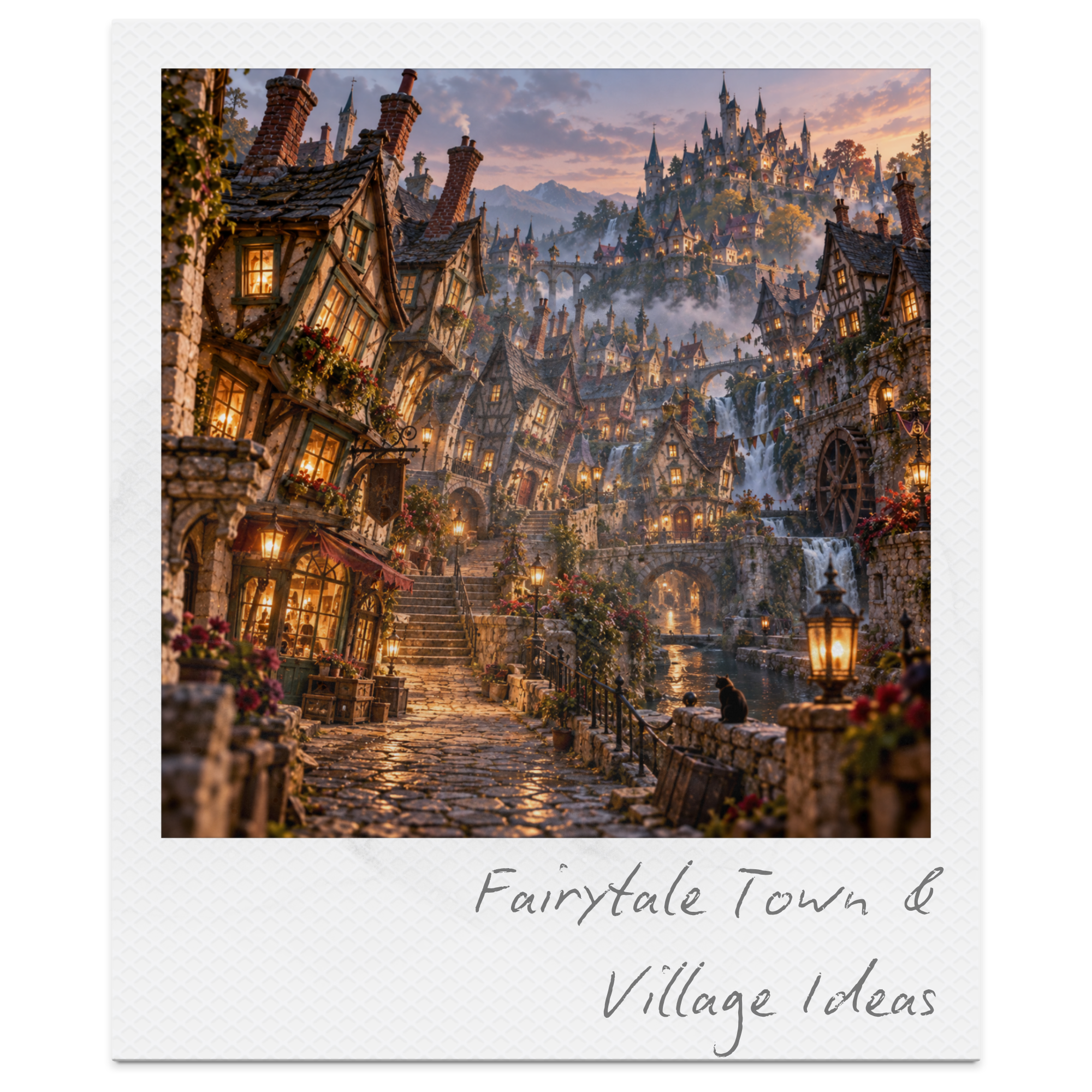
Start by thinking about what makes the settlement distinctive. It could be a colourful market town filled with peculiar shops, a tiny woodland village protected by the surrounding trees, a remote mountain community cut off by winter or a coastal settlement shaped by tides and strange gifts from the sea. Your 100 Fairytale Town & Village Ideas explores this range particularly well, including whimsical settlements, enchanted forest communities, royal and castle towns, mountain and valley villages, and waterside settings, with story possibilities built into each location.
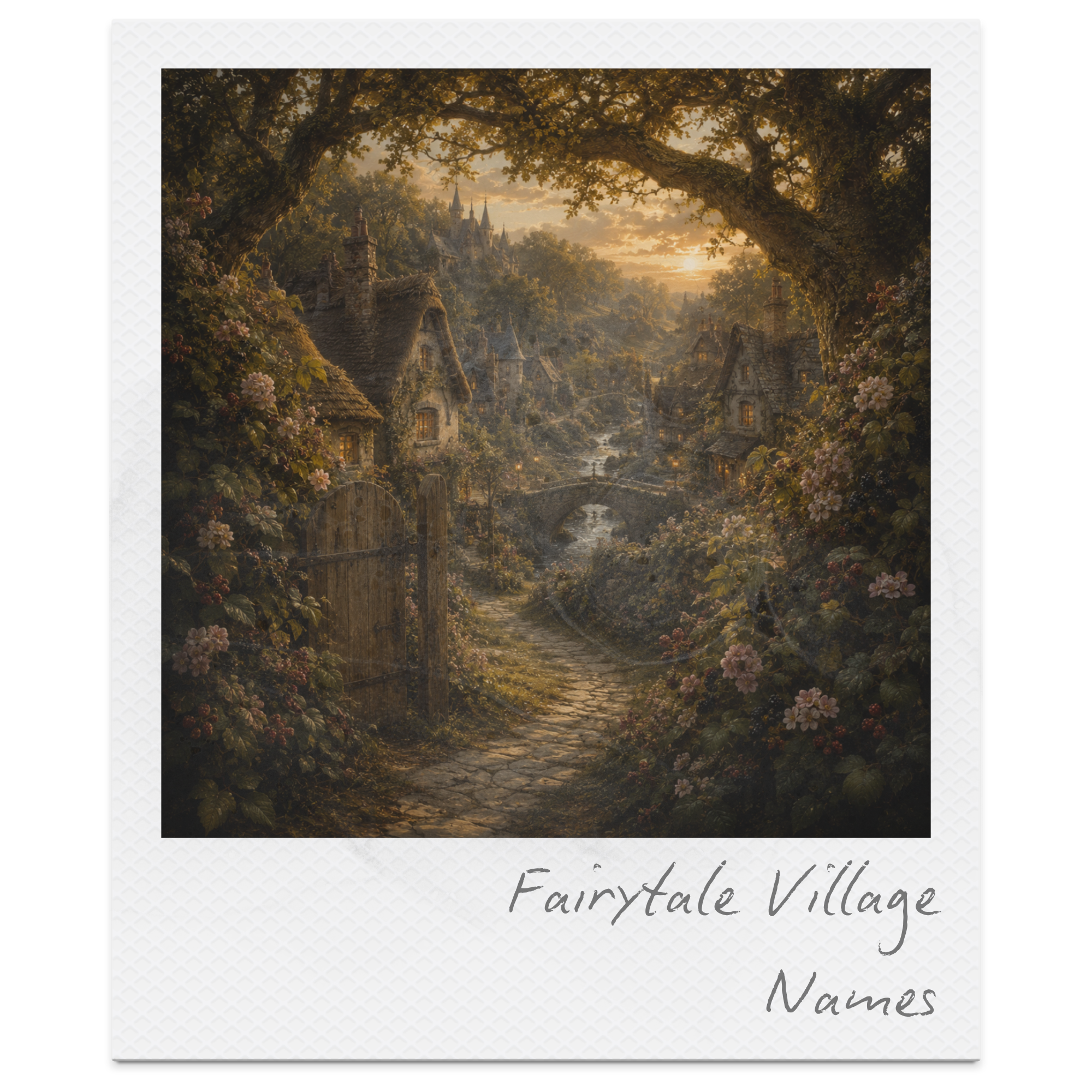
A settlement also needs an identity that makes it feel as though it existed before your protagonist arrived. Consider its name, architecture, oldest buildings, local landmarks and the stories residents tell about where they live. The 100 Fairytale Village Names can help you find a name while also providing story ideas that can begin shaping the community around it.
Most importantly, think about what happens there. Who belongs, who is treated as an outsider, which traditions does everyone observe, and what secret would the community rather keep hidden? A village becomes much more useful to a story when its people, history and peculiarities create possibilities for conflict rather than simply providing pretty cottages in the background. The 70 Fairytale Town & Village Writing Prompts can help turn the setting into an active part of the tale, with enchanted settlements, hidden secrets and magical communities designed to spark complete stories.
When creating your own town or village, begin with place, people and one memorable peculiarity. You don't need to know the history of every cottage or the name of every resident. A village where nobody enters the woods after sunset, a market town built beneath a sleeping castle or a community preparing for a festival that happens only once every hundred years already gives you somewhere a fairytale can begin.
Fairytale Cottages & Magical Homes
Not every fairytale needs a magnificent castle or an enchanted kingdom. Sometimes, the most memorable settings are much smaller: a crooked cottage hidden beneath ancient trees, a cosy thatched house surrounded by wildflowers, or a mysterious dwelling that appears only when a traveller has lost their way. Fairytale cottages can represent warmth, safety and belonging, but they can just as easily conceal danger, forbidden magic or secrets that have remained hidden for generations.
Begin by imagining where your cottage stands and who might live there. Perhaps it belongs to a kindly grandmother, a reclusive witch, a fairy godmother, an elderly herbalist or a family who have guarded an enchanted forest for centuries. Its location can reveal something about its purpose. A cottage beside a busy village road might welcome travellers, while one deep within an ancient woodland could belong to someone who deliberately wishes to remain undiscovered.
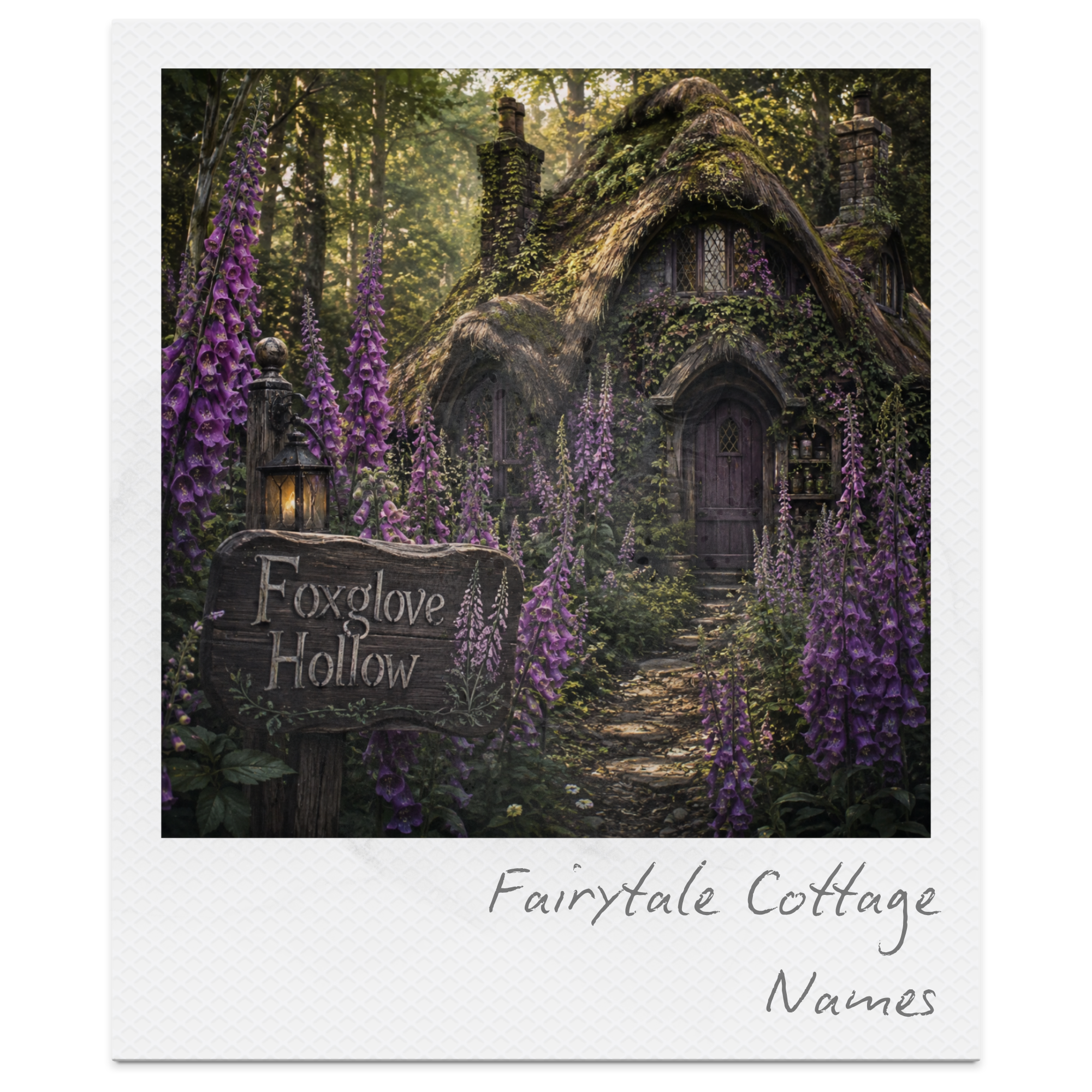
Giving your cottage a distinctive name can help establish its personality and history. A place called Rosehip Hollow suggests something very different from Blackthorn Cottage or The House of Seven Chimneys. Explore 100 Fairytale Cottage Names for inspiration, with names for cosy woodland homes, witches' cottages, enchanted hideaways and mysterious dwellings, alongside story ideas to help you develop the places and people surrounding them.
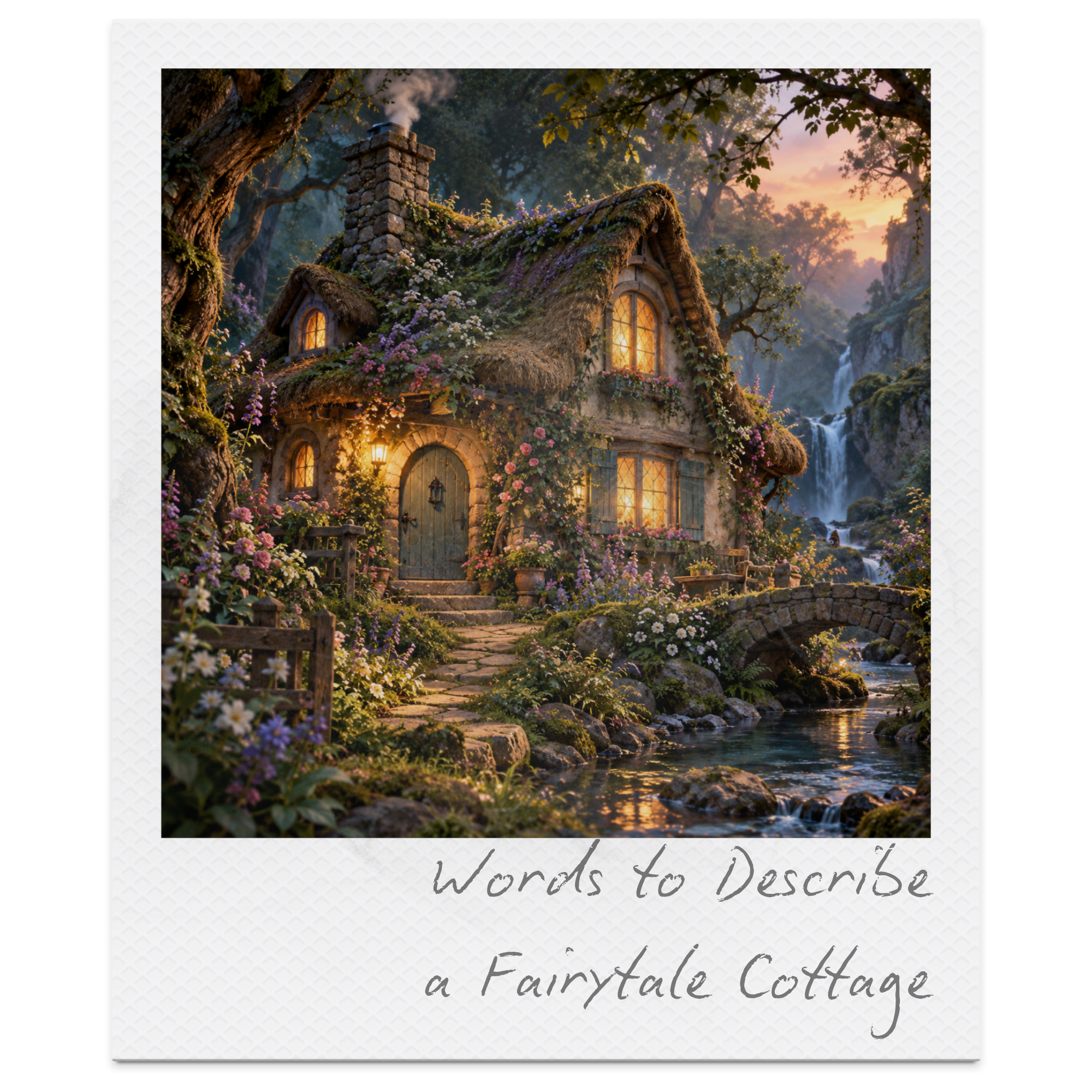
Next, consider the details that make your cottage feel as though it belongs in a fairytale. Its roof might sag beneath thick moss, its windows could glow with golden candlelight, and climbing roses might cover walls built from ancient stone. Inside, copper pots hang above a crackling hearth, dried herbs dangle from wooden beams, and shelves overflow with curious bottles, dusty books and objects whose purposes are not immediately clear. For more descriptive inspiration, 100 Words to Describe a Fairytale Cottage explores the vocabulary of thatched roofs, crooked chimneys, magical gardens, cosy interiors and sinister witches' dwellings, with meanings and example sentences to help you create vivid, atmospheric settings.
The most interesting fairytale homes often contain something that ordinary houses do not. A cottage might have a door that opens into a different season, a garden where flowers whisper warnings, or a fireplace that reveals glimpses of the future. Perhaps the house moves whenever its owner falls asleep, refuses entry to anyone who has told a lie, or appears welcoming from the outside while concealing a terrible enchantment within.
When creating your own fairytale cottage, think about the contrast between its appearance and its true nature. A frightening house might shelter the kindest person in the kingdom, while a beautiful woodland home could belong to someone who lures unsuspecting travellers inside. Give the cottage a memorable appearance, an inhabitant with a story of their own and one unusual feature that makes it impossible to mistake for an ordinary home.
After all, a fairytale cottage is rarely just somewhere to live. It might be the place where an adventure begins, where a mysterious stranger offers shelter, or where a character discovers that the smallest homes can contain the greatest magic.
Fairytale Forests
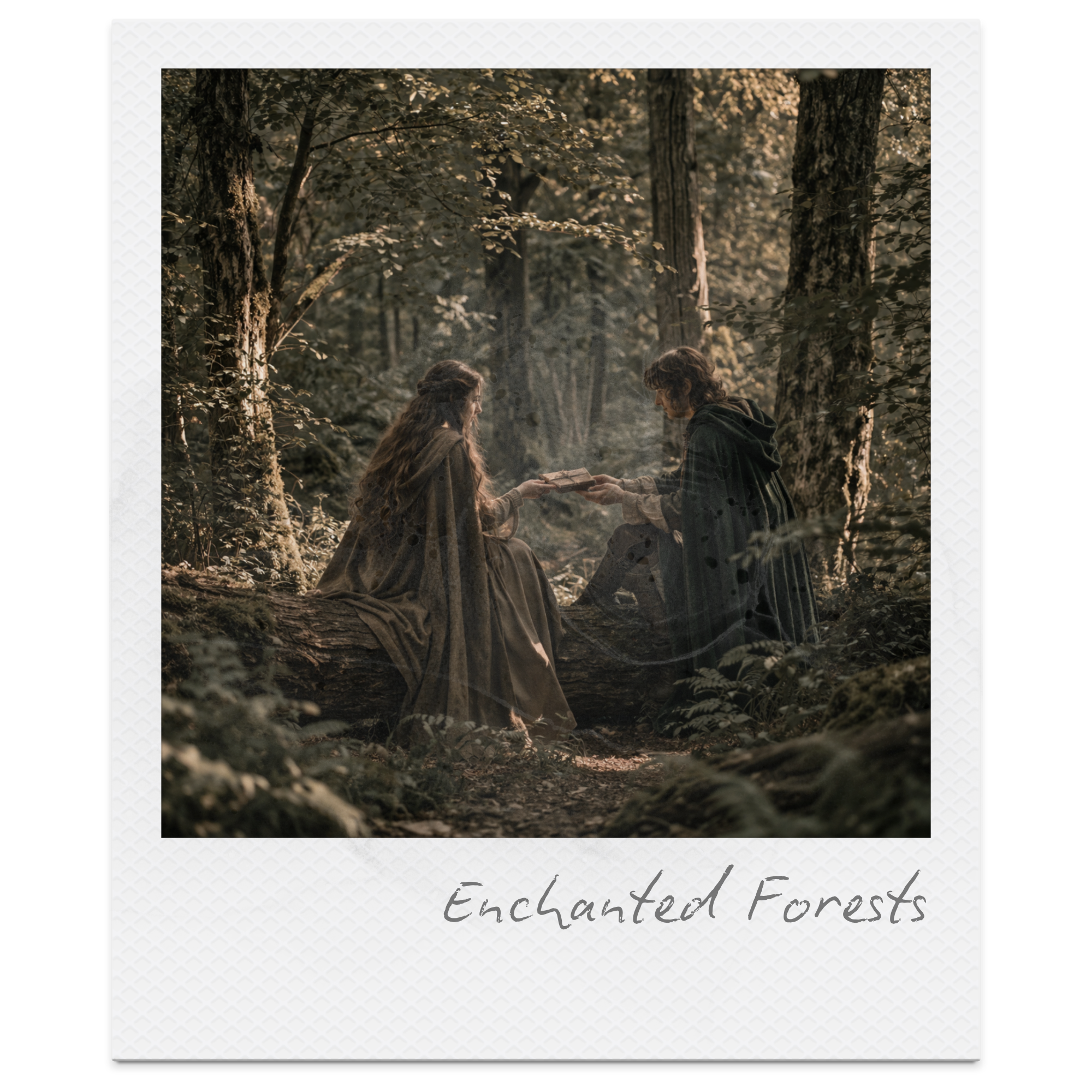
Forests have a special place in fairytales because they represent the boundary between the familiar and the unknown. A character who leaves the safety of a village, cottage or castle and enters the woods is stepping into a place where ordinary expectations may no longer apply. Paths disappear, animals speak, strangers offer suspicious bargains and places that should not exist wait between the trees. The forest can be beautiful, frightening, protective or deliberately deceptive — and sometimes it seems to have intentions of its own.
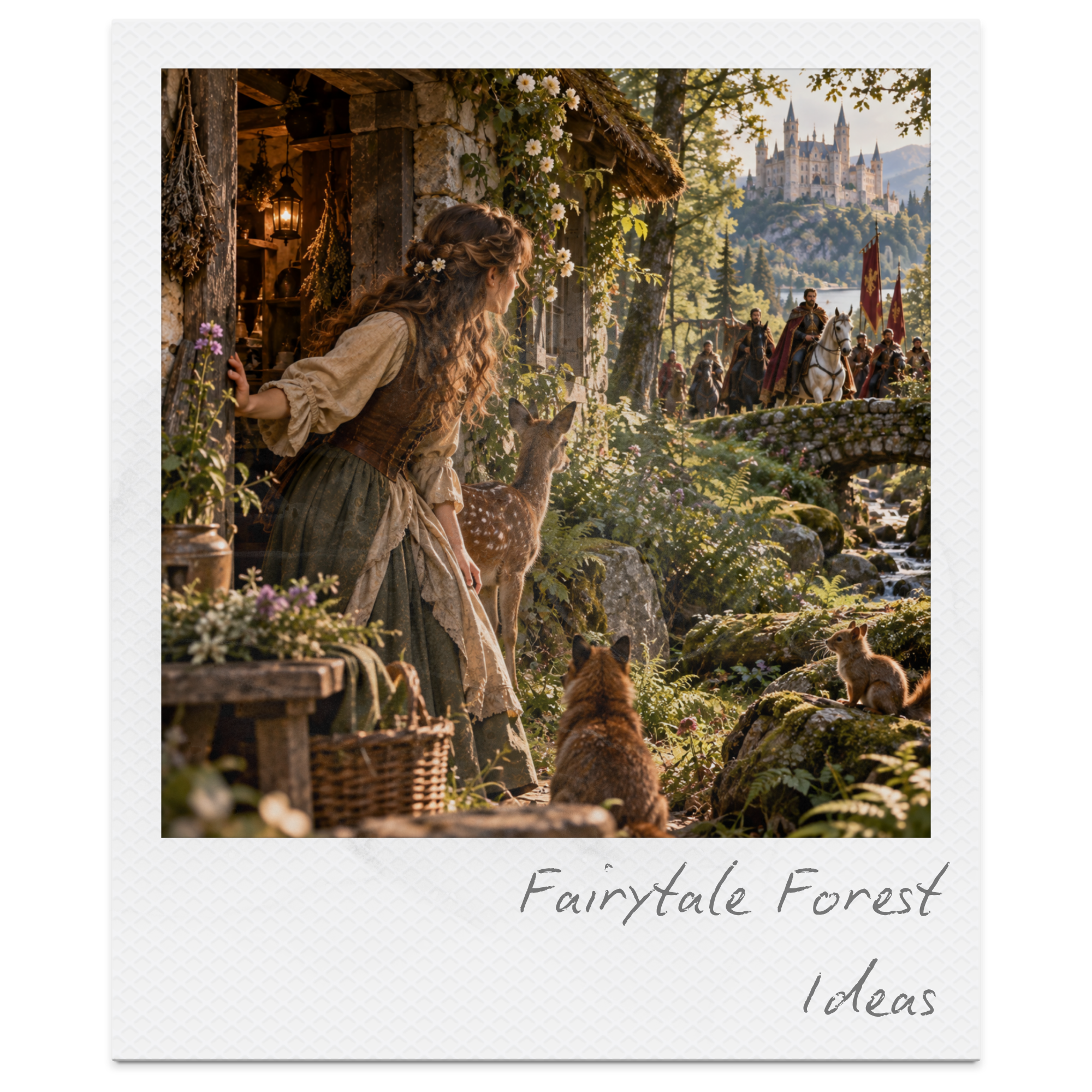
Start by deciding what kind of forest your characters are entering and what makes it different from an ordinary woodland. Perhaps its trees move every night, its flowers reveal when someone is lying, an ancient curse prevents anyone from leaving or hidden paths lead to places outside the known kingdom. The 100 Fairytale Forest Story Ideas explore enchanted woods, strange pathways, forest cottages, witches, magical creatures, curses and secrets, with multiple story possibilities for each idea.
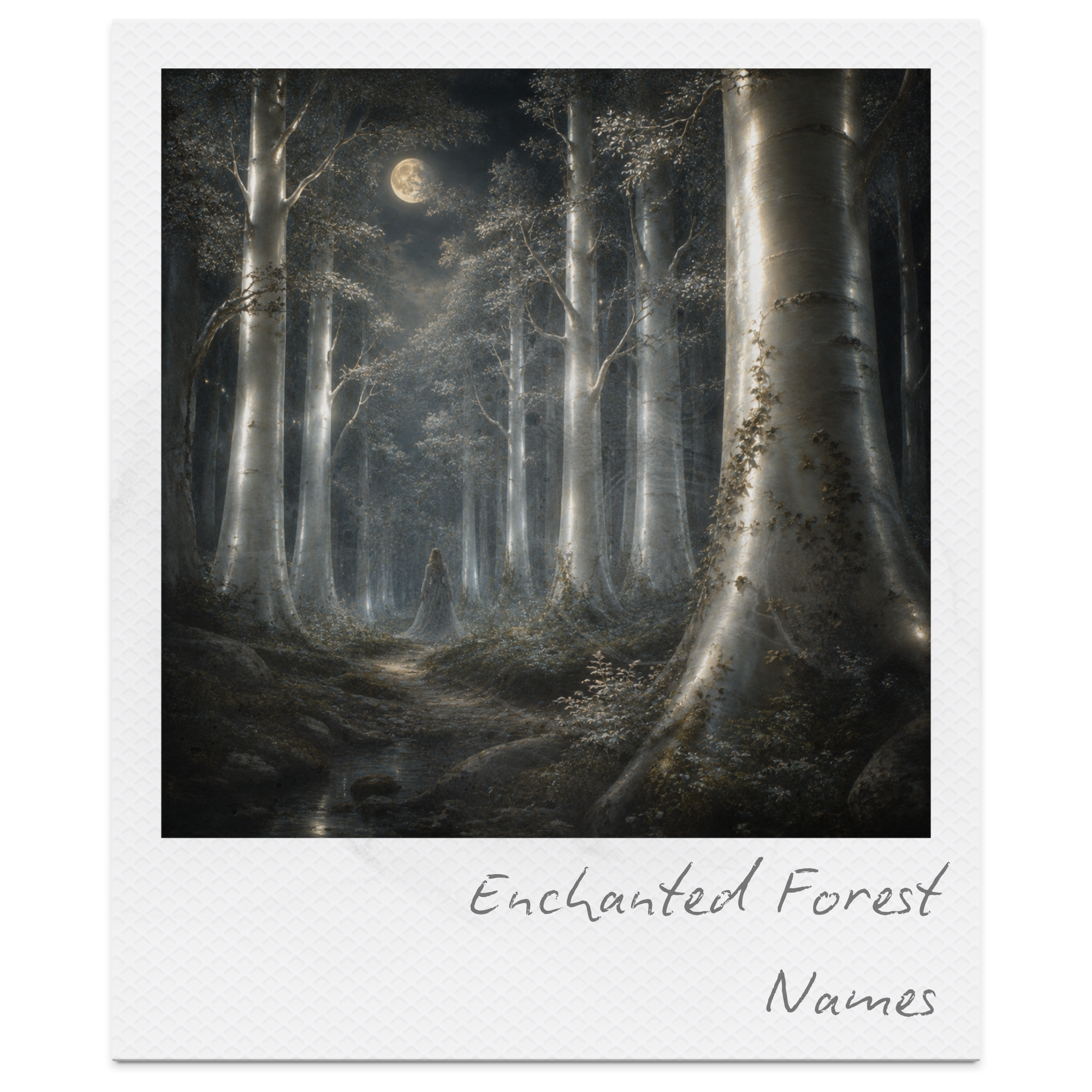
Giving the forest its own identity can also make it feel like a genuine part of the world's geography and history rather than simply the woods outside the village. Think about what local people call it, how the name originated and what it suggests about the dangers or wonders supposedly hidden there. The 100 Enchanted Forest Names and Story Ideas can help you name everything from magical woodlands and hidden forests to darker, stranger places while developing the stories surrounding them.
Then consider what happens when somebody actually crosses the treeline. A forest becomes particularly useful in a fairytale when entering it changes the direction of the story: a traveller becomes lost, a hidden cottage appears, an unexpected creature offers help or a familiar path leads somewhere it never has before. The 70 Enchanted Forest Writing Prompts provide plot prompts, characters, settings and visual inspiration for turning the woodland itself into the beginning of a story.
When building your own fairytale forest, you don't need to map every tree or explain every enchantment. Decide what the forest is known for, what people believe about it and what changes once a character enters. Leaving some of its rules unexplained can make the woods feel older than the kingdom surrounding them — a place where magic existed long before anyone thought to build roads through it.
Fairytale Seas & Oceans
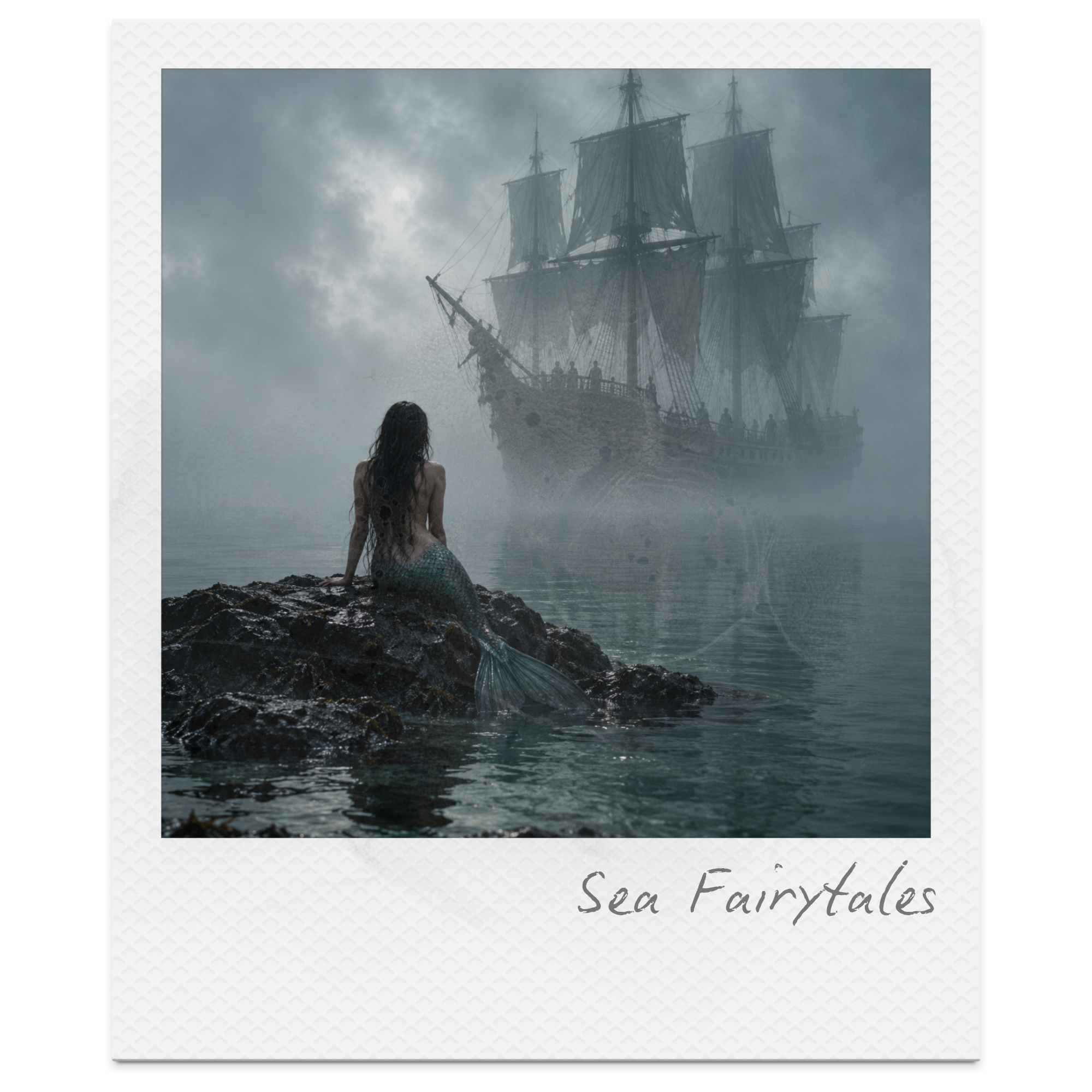
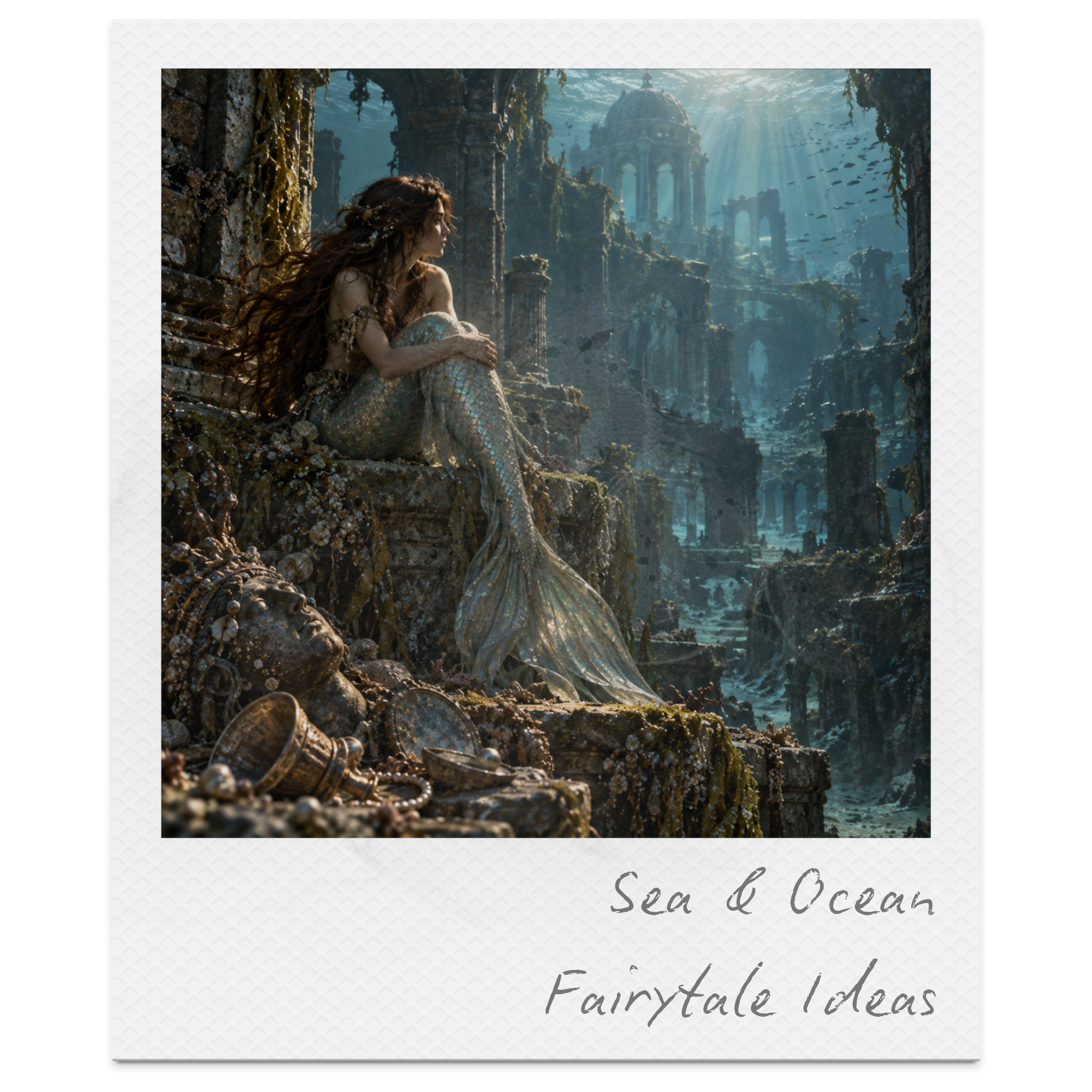
The sea creates a very different kind of fairytale world from the forests and kingdoms on land. It is vast, unpredictable and largely hidden from view, making it a natural home for magic that feels ancient and unknowable. Beneath the surface might lie drowned kingdoms, merfolk courts, forgotten palaces or creatures that have never encountered a human, while the waters above can carry enchanted ships towards impossible islands and places that appear on no map.
If you want the story to venture onto or beneath the water, use Sea Fairytales to explore mermaids, sea witches, enchanted ships, drowned kingdoms, mysterious islands and ocean magic. Think about what exists beyond the shore, who or what controls the water, how humans interact with the beings living beneath it and what might tempt a character to leave the safety of land behind.
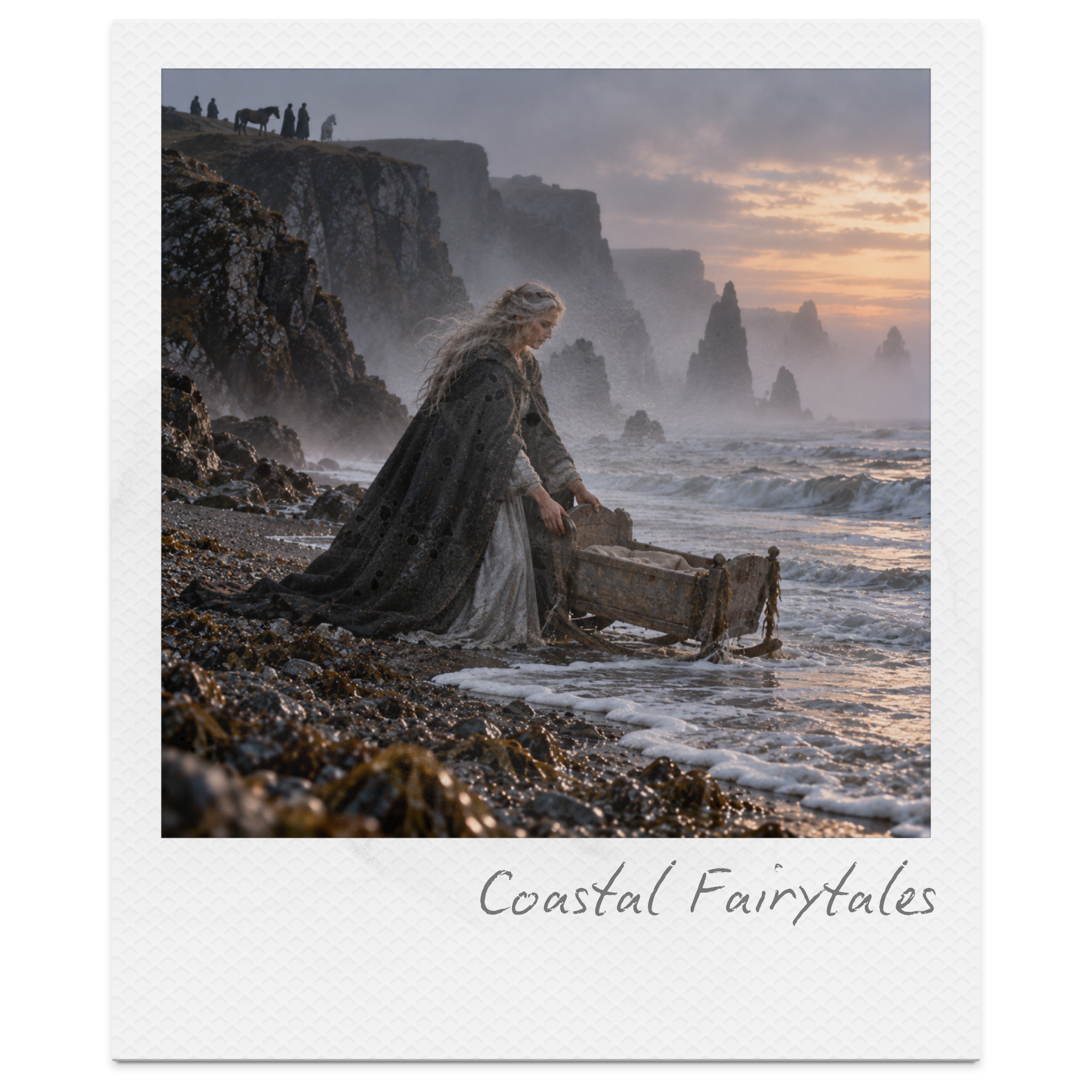
The coastline creates a different kind of setting because it exists between two worlds. Fishing villages, lonely lighthouses, sea caves, tidal paths and hidden coves can remain connected to ordinary human life while still being close enough to the ocean for something strange to emerge from it. Coastal Fairytales explores this boundary through selkies, shoreline folklore, isolated coastal communities and magic shaped by the changing tides.
Once you know what kind of maritime world you want to create, you can begin asking what stories could happen there. Perhaps a royal family rules an underwater kingdom that humans believe disappeared centuries ago, a ship is condemned to sail until someone aboard breaks an ancient curse, or an island emerges from the mist for a single night every hundred years. The Sea & Ocean Fairytale Story Ideas collection explores mermaids, sea witches, underwater kingdoms, enchanted ships, impossible islands, royal romances, ancient curses and drowned worlds, with three additional story possibilities for every concept.
When building a sea or ocean setting, think about the relationship between land, water and the unknown. Decide what people on shore believe lies beyond the horizon, what actually exists there and what happens when the boundary between those worlds is crossed. The ocean does not have to be merely another landscape in your fairytale; it can be the thing separating the known world from everything your characters have been warned never to discover.
Fairytale Mountains, Rivers & Frozen Lands
Some fairytales carry their characters far beyond castles, villages and familiar forests into landscapes where the natural world becomes part of the challenge. Mountains must be crossed, rivers create boundaries between one place and another, and winter can transform an entire kingdom into somewhere beautiful but dangerous. These settings are particularly useful when you want the journey itself to feel important, forcing characters to leave safety behind and travel through places governed by unfamiliar creatures, old magic and unexpected rules.
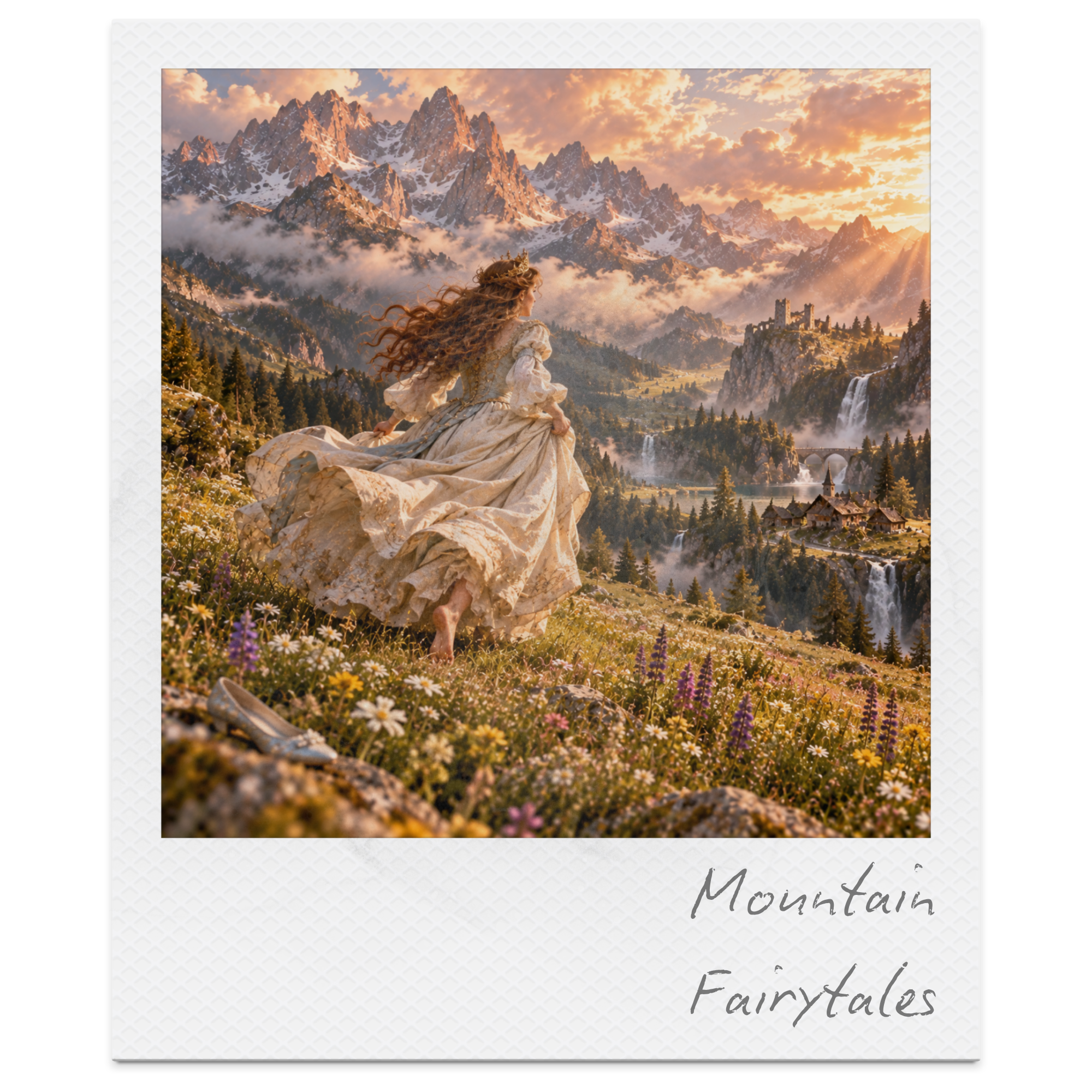
Mountains naturally create distance, isolation and obstacles. A path might wind towards a castle hidden above the clouds, a giant could sleep beneath the highest peak, or the only route into a neighbouring kingdom might cross a bridge guarded by a troll. The Mountain Fairytales collection explores trolls, giants, bargains, remote kingdoms, dangerous journeys and magical peaks, giving you plenty of ways to make the mountains more than scenery.
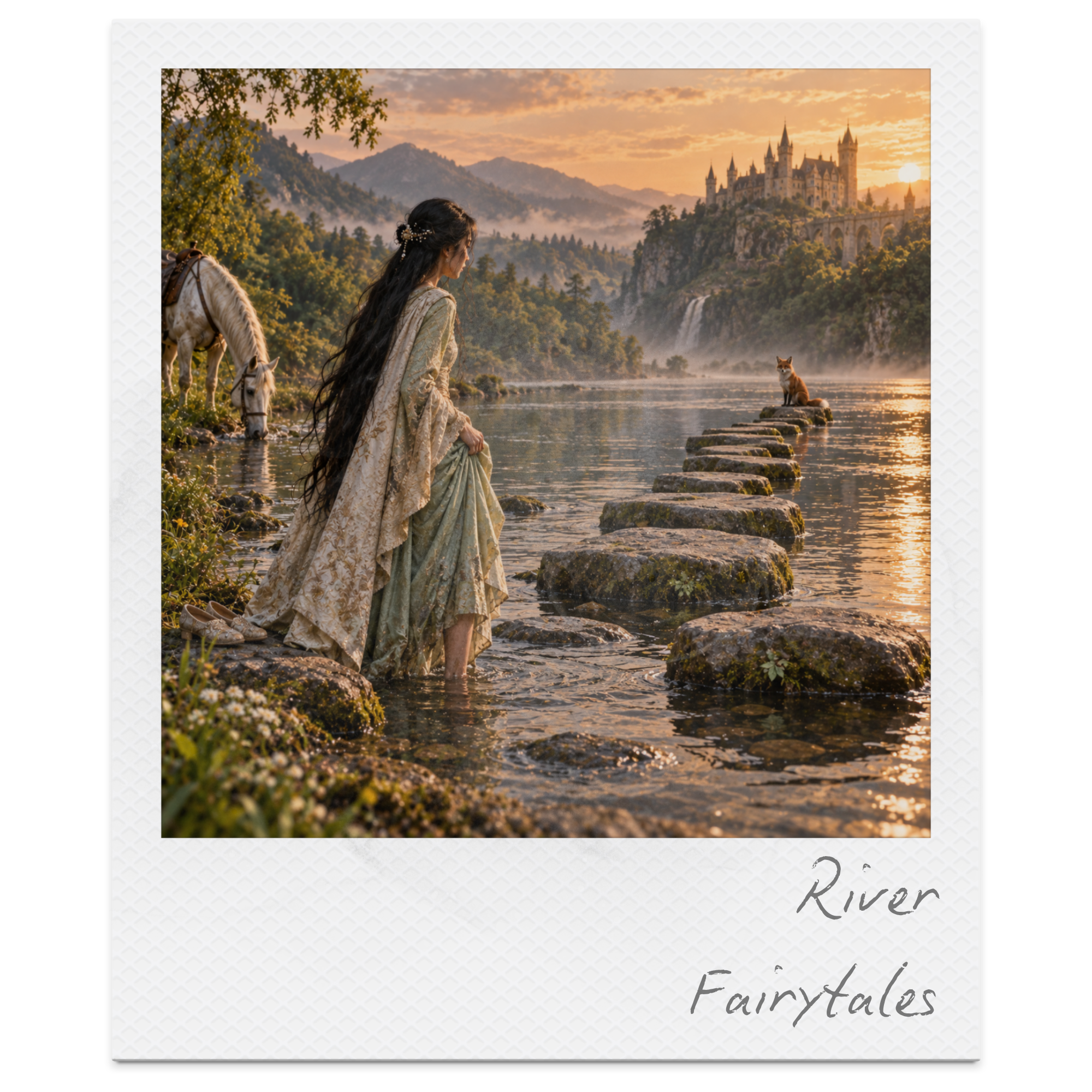
Rivers, meanwhile, naturally divide and connect different parts of a fairytale world. They can carry characters towards somewhere new, prevent them from reaching where they need to go or mark the boundary between ordinary land and somewhere magical. A bridge might demand a price for crossing, a river witch could offer help with dangerous conditions, or something precious might be carried downstream and into the hands of a stranger. River Fairytales explores witches, trolls, water magic and strange encounters along enchanted waterways.
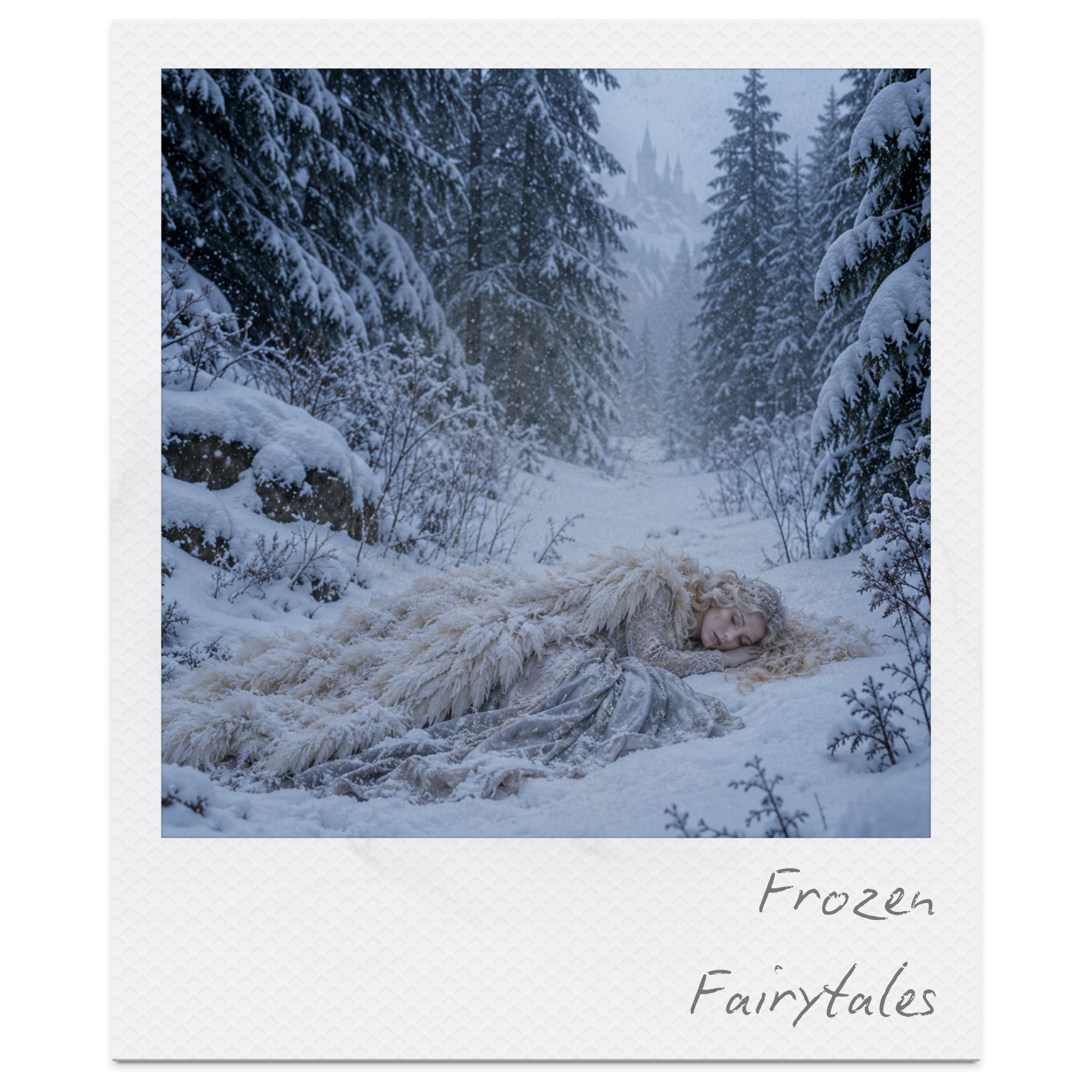
A frozen landscape changes the rules again. Snow can isolate entire communities, ice can conceal what lies beneath it, and an endless winter can become both a physical setting and the central problem of the tale. Frozen palaces, sleeping princesses, snow-covered kingdoms, winter creatures and characters searching for the return of spring all belong naturally within this kind of world. Use Frozen Fairytales to explore stories shaped by snow, ice and winter enchantment.
When choosing a natural landscape for your fairytale, consider what it makes possible and what it makes difficult. A mountain can prevent someone from reaching a kingdom, a river can force them to find another way across, and a winter that refuses to end can threaten everything they know. The strongest landscapes do not simply surround the story — they give your characters something to cross, survive, understand or overcome.
Create Your Own Fairytale Setting
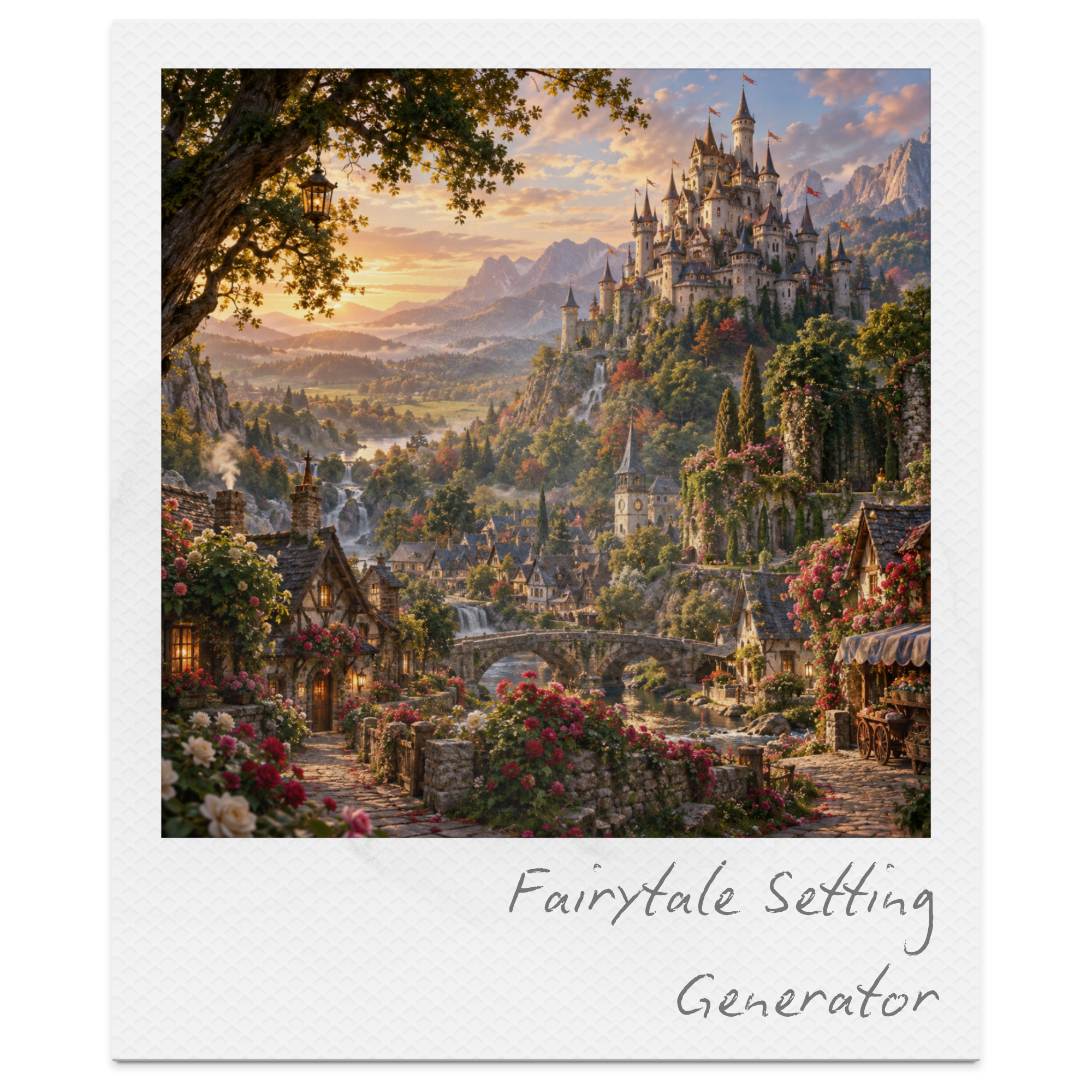
If you would rather discover your setting as you build it, the Fairytale Setting Generator can bring many of these worldbuilding elements together in one place. Choose a fairytale style or leave the generator on Random, then create an enchanted kingdom complete with its own landscape, castle, nearby village, ruler, royal family, magic and strange places waiting to be explored.
The generator also adds the details that can turn a beautiful setting into the beginning of an actual fairytale: magical beings, kingdom traditions, forbidden places, curses, enchanted objects, hidden secrets and a story hook. If most of the generated world works but one element doesn't, you can regenerate that individual part without losing the rest of the setting.
Use it as a starting point rather than a set of instructions you have to follow. Keep the details that immediately spark ideas, change anything that does not fit your story and begin making connections between the results. A forbidden place might contain the object needed to break the kingdom's curse; a royal secret might explain an old tradition; or the creature everyone fears might be the only one who knows what really happened.
Once you have somewhere for your fairytale to unfold, you can begin thinking about who holds power there and how the kingdom itself works. That takes us from choosing the landscape into the next stage of worldbuilding: building a fairytale kingdom from the inside out.
Fairytale Kings & Queens
At the centre of many fairytale kingdoms sits a king or queen whose choices shape far more than life inside the palace. A monarch might declare the law that begins the story, offer a reward for an impossible task, arrange a marriage, make a disastrous bargain or discover that all the authority in the kingdom means very little when confronted by an ancient curse. In fairytales, the crown represents enormous worldly power — which makes it particularly interesting when magic refuses to recognise it.
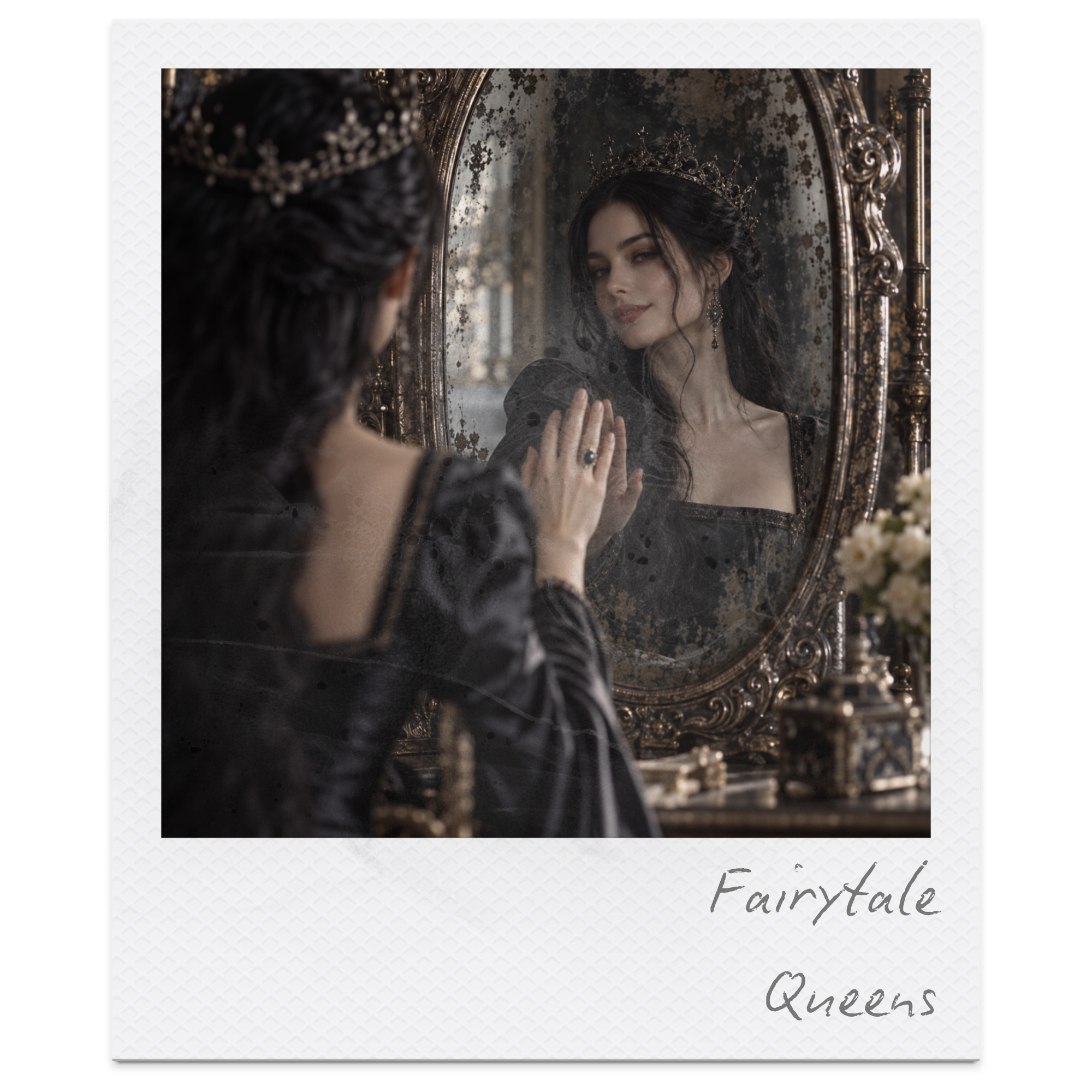
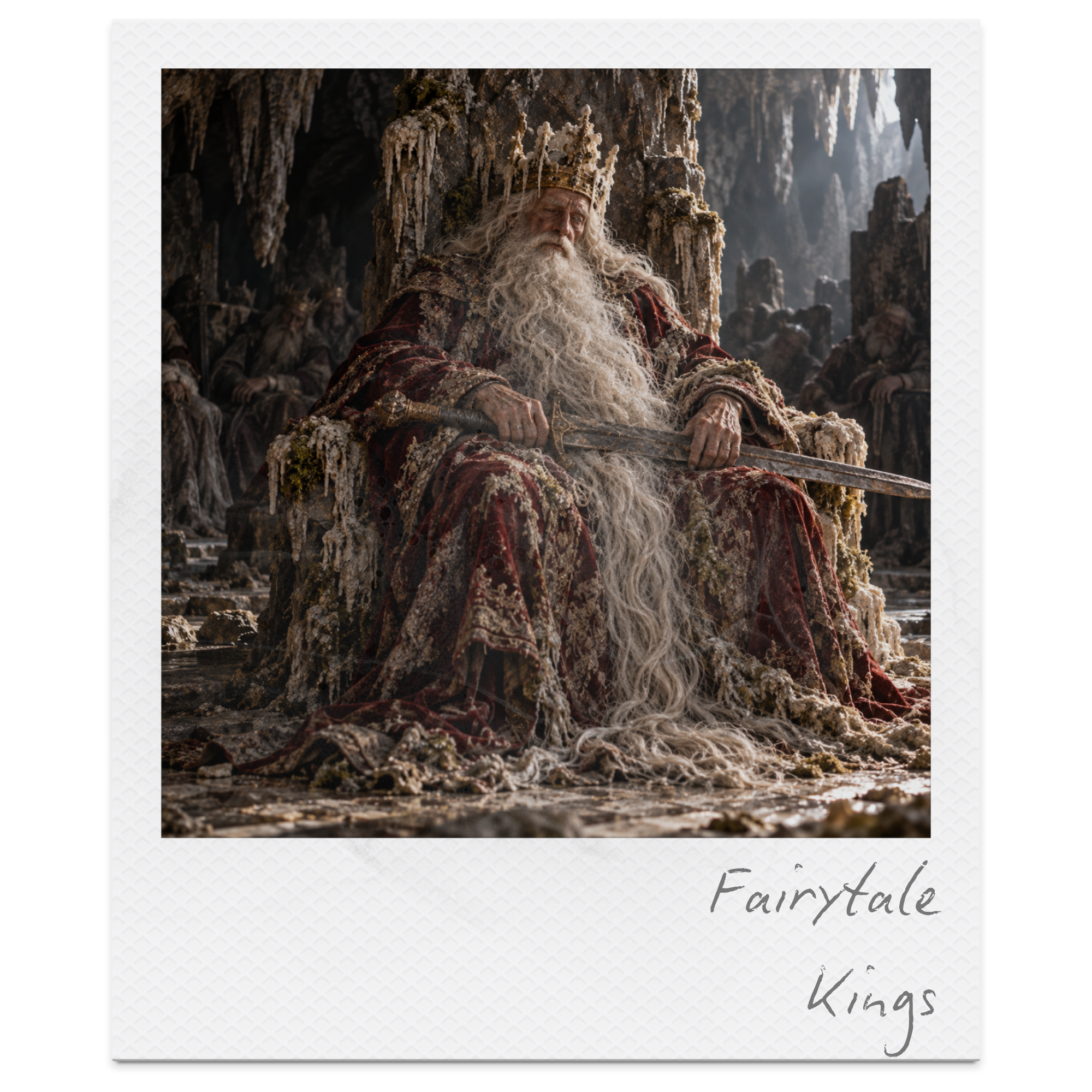
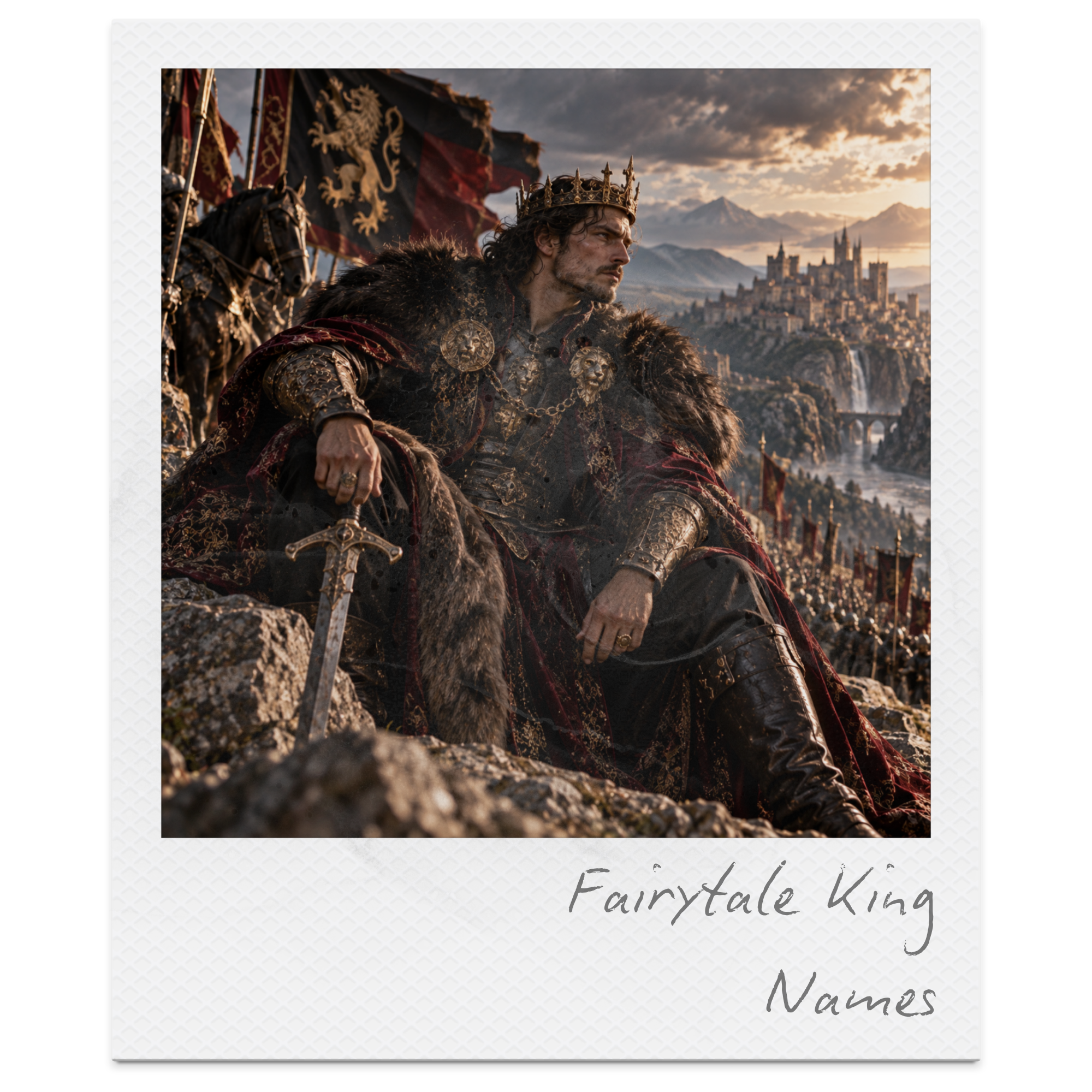
Think first about what kind of ruler your kingdom has. A beloved queen might have spent decades protecting her subjects, while another is remembered only as the wicked woman who took the throne after the old king died. A king might be wise, foolish, grieving, greedy, generous or so ancient that nobody remembers his coronation. Your monarch can also be any age: the 70 Fairytale Queen Writing Prompts explore everyone from baby queens and warrior rulers to witches and impossibly old sovereigns, while the 70 Fairytale King Writing Prompts include boy kings, ancient monarchs, grieving fathers, warriors, fools and rulers caught in strange magical bargains.
Then consider the relationship between the ruler and the kingdom itself. Fairytales allow that connection to become wonderfully literal. Spring might fail to arrive while a king mourns, roses could bloom throughout the realm whenever a queen is happy, or an ancient enchantment might bind the monarch's life to a tree, river or castle. A good ruler does not necessarily create a peaceful kingdom, and a frightening ruler does not have to be entirely wicked. Giving the crown its own duties, restrictions and consequences can make the monarchy feel like part of the world's magic rather than simply its government.
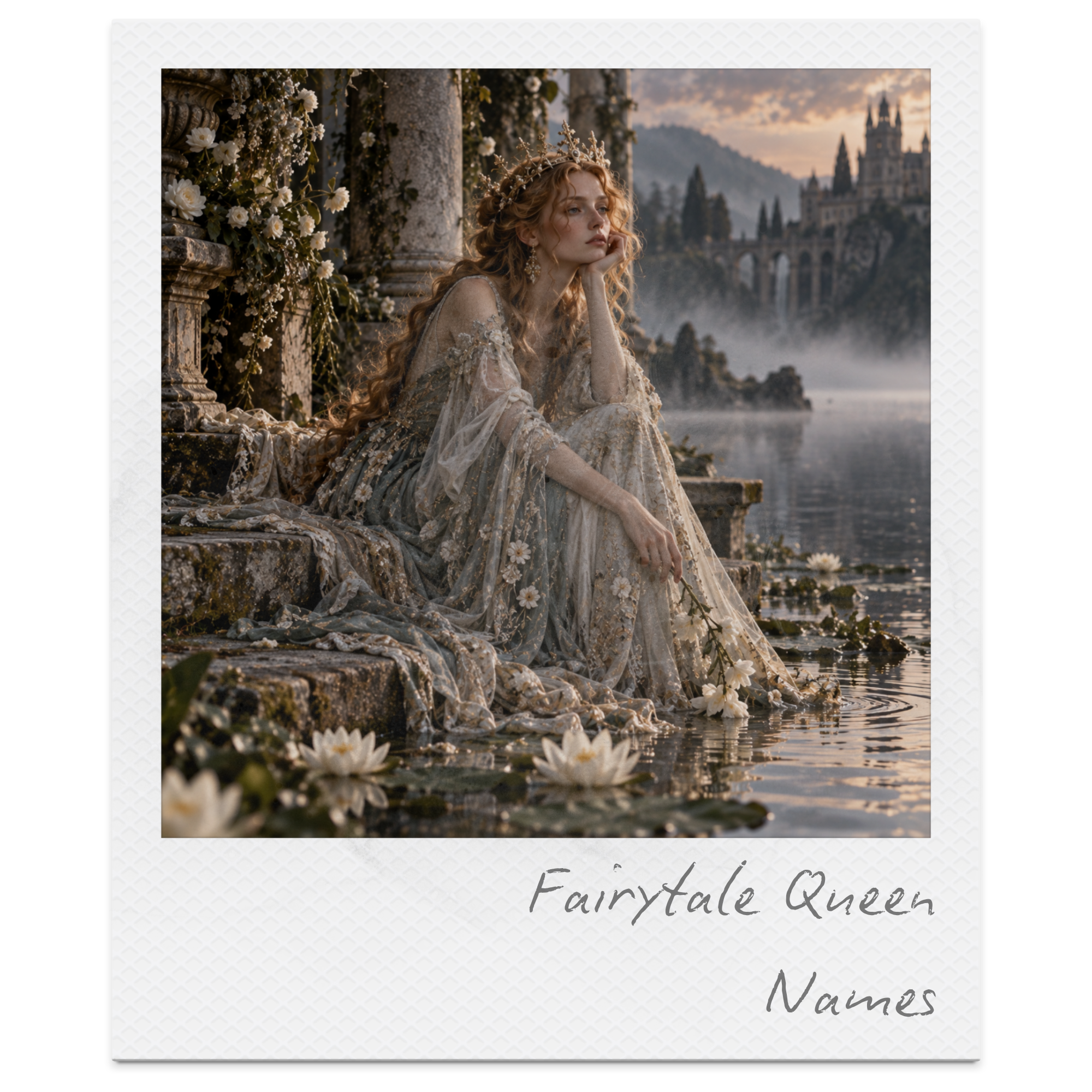
Names and titles can help establish that identity before you have developed every detail. Browse the 100 Fairytale Queen Names and 100 Fairytale King Names for royal names accompanied by meanings and story inspiration, then think about what your ruler is called by different people. Queen Isolde the Beloved creates a very different first impression from Isolde the Thorn Queen — and the most interesting question may be whether either title tells the truth.
Most importantly, give your monarch something the crown cannot fix. Armies cannot defeat every enchantment, gold cannot buy back every promise and a royal command means nothing to a talking frog, offended fairy or creature that remembers the exact wording of a bargain made twenty years earlier. The tension between enormous human authority and the strange, uncompromising logic of magic is one of the things that makes kings and queens so useful in fairytale worldbuilding.
Succession, Princes & Princesses
A fairytale crown rarely matters only to the person currently wearing it. The question of who comes next can shape an entire kingdom, creating expectations, rivalries, marriages, quests and magical problems long before a prince or princess is old enough to rule. An eldest child may have been raised from birth to inherit, a younger sibling may unexpectedly become the heir, or a royal family might become desperate when no suitable successor exists at all.
Think about how succession works in your kingdom. Does the crown automatically pass to the eldest child, regardless of gender? Must an heir prove themselves worthy? Could the monarch choose between several children, or does an ancient tradition decide who may rule? Fairytales also give you permission to make succession stranger: perhaps only someone who can lift an enchanted crown may inherit, every royal heir must complete three impossible tasks, or the throne itself rejects anyone who has broken a promise.
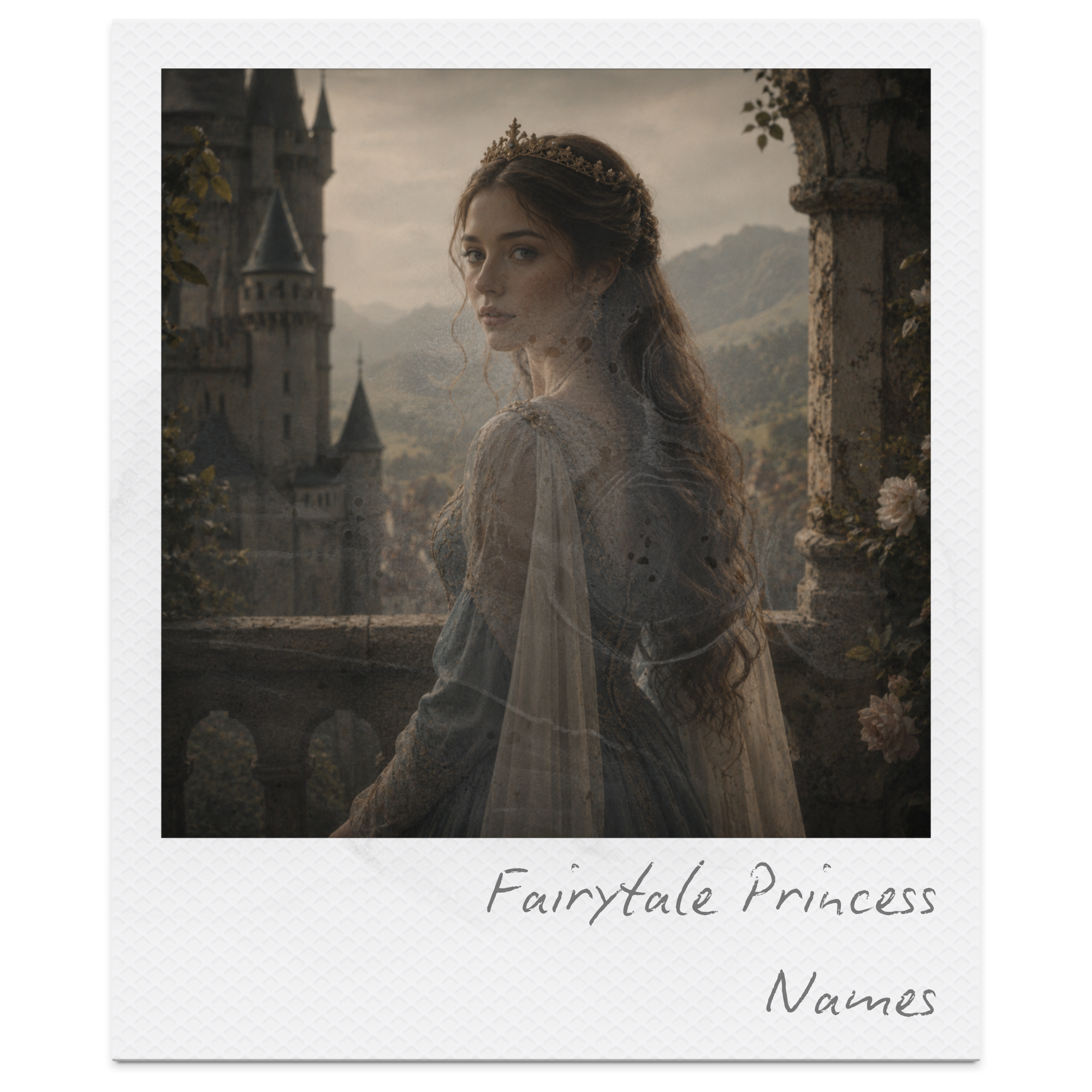
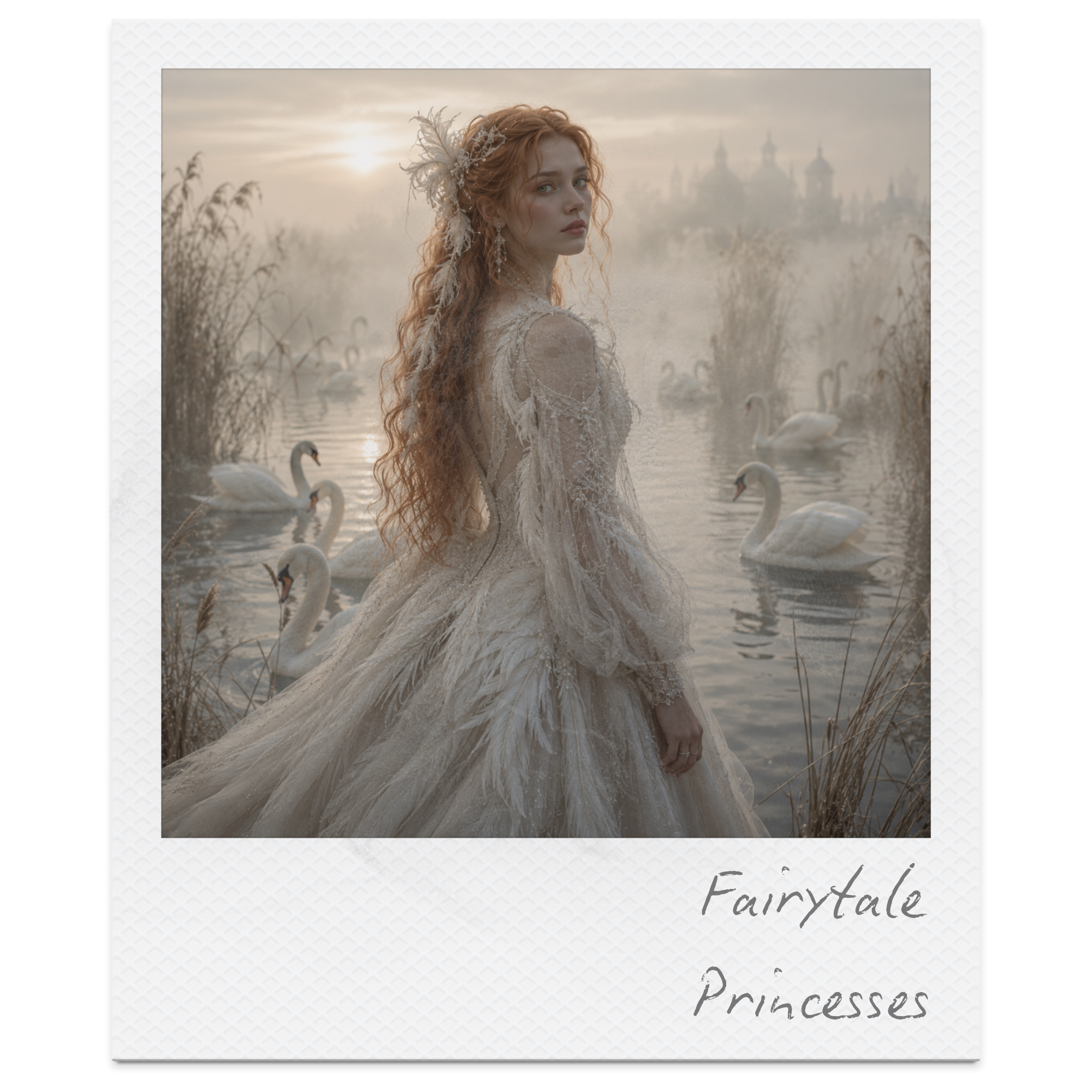
Princes and princesses become particularly interesting when their personal desires conflict with their royal future. A princess expected to inherit might disappear before her coronation, reject an arranged marriage or discover that claiming the throne will activate an old curse. The 70 Fairytale Princess Writing Prompts explore royal heroines caught between magic, responsibility and transformation, including hidden heirs, unwanted crowns, impossible tasks and kingdoms threatened by enchantment.
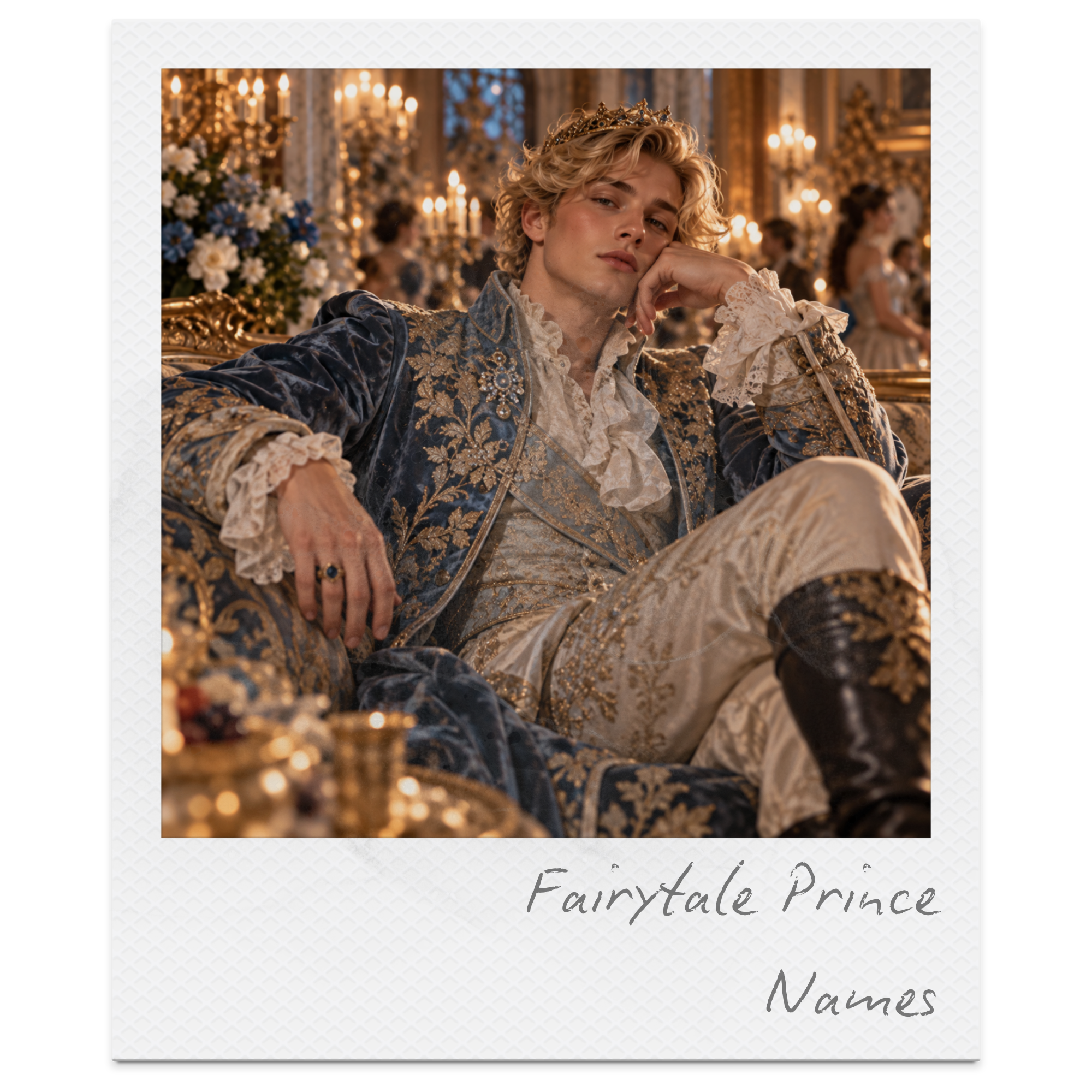
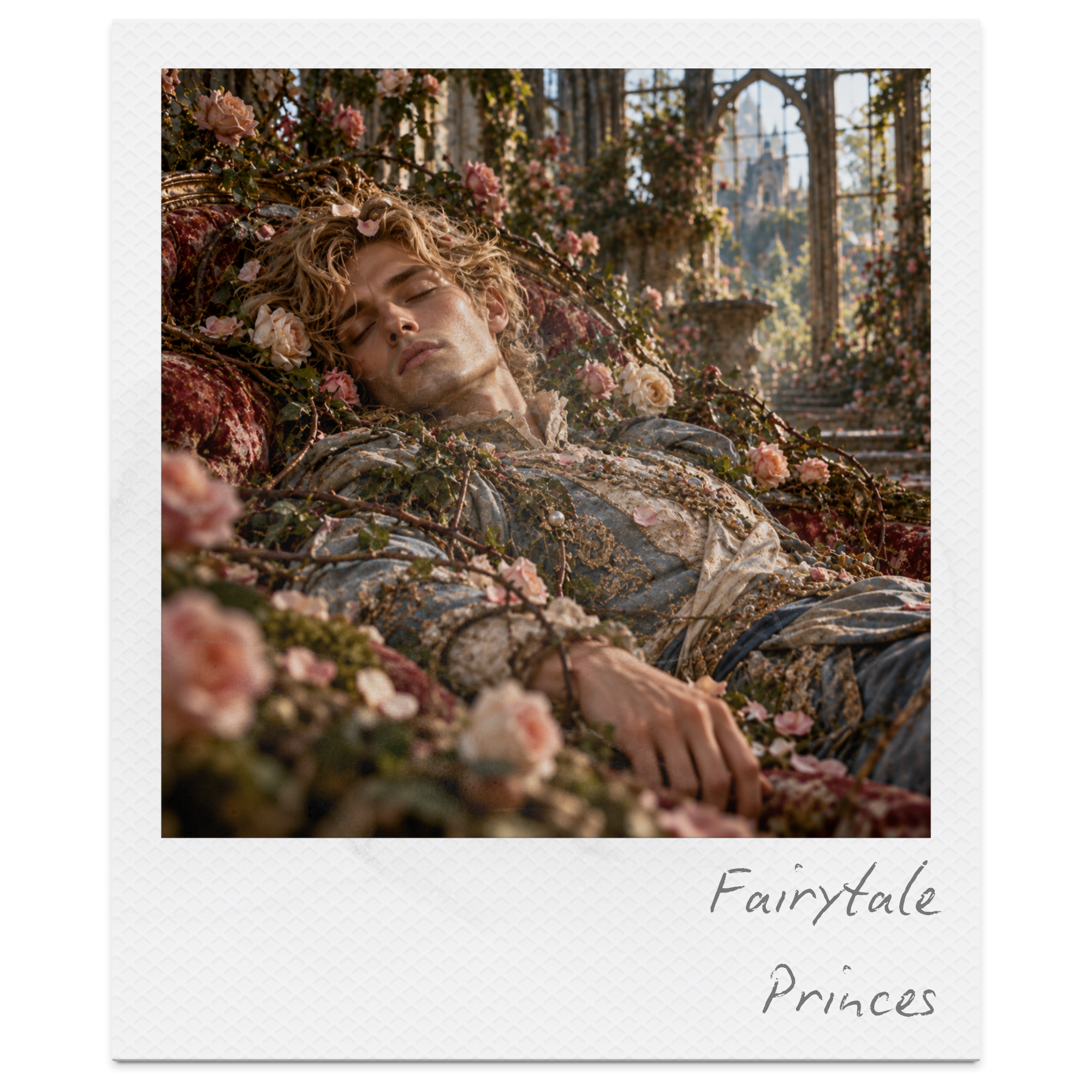
A prince can face the same pressures without having to become the traditional heroic figure who simply rescues somebody else. He might be the overlooked youngest son, the reluctant heir, the prince transformed by a curse, the royal child considered too foolish to rule or the only surviving member of a dynasty everyone believes has ended. The 70 Fairytale Prince Writing Prompts offer different ways to build stories around curses, quests, royal duties and unexpected adventures.
Names can also help establish what kind of royal figure you are creating. The 100 Fairytale Princess Names combine names with character and worldbuilding inspiration for everything from woodland princesses and warrior heirs to celestial royals and characters shaped by prophecy, duty or hidden magic. For male royals, the 100 Fairytale Prince Names similarly provides names alongside meanings and story possibilities.
When building your royal family, don't simply decide who the heir is. Ask what becoming king or queen will cost them, who might benefit if they never reach the throne and what would happen to the kingdom if the expected line of succession suddenly broke. In a fairytale, an empty throne, a missing heir or one badly worded promise can be enough to change the fate of an entire realm.
Create Your Own Fairytale Royalty
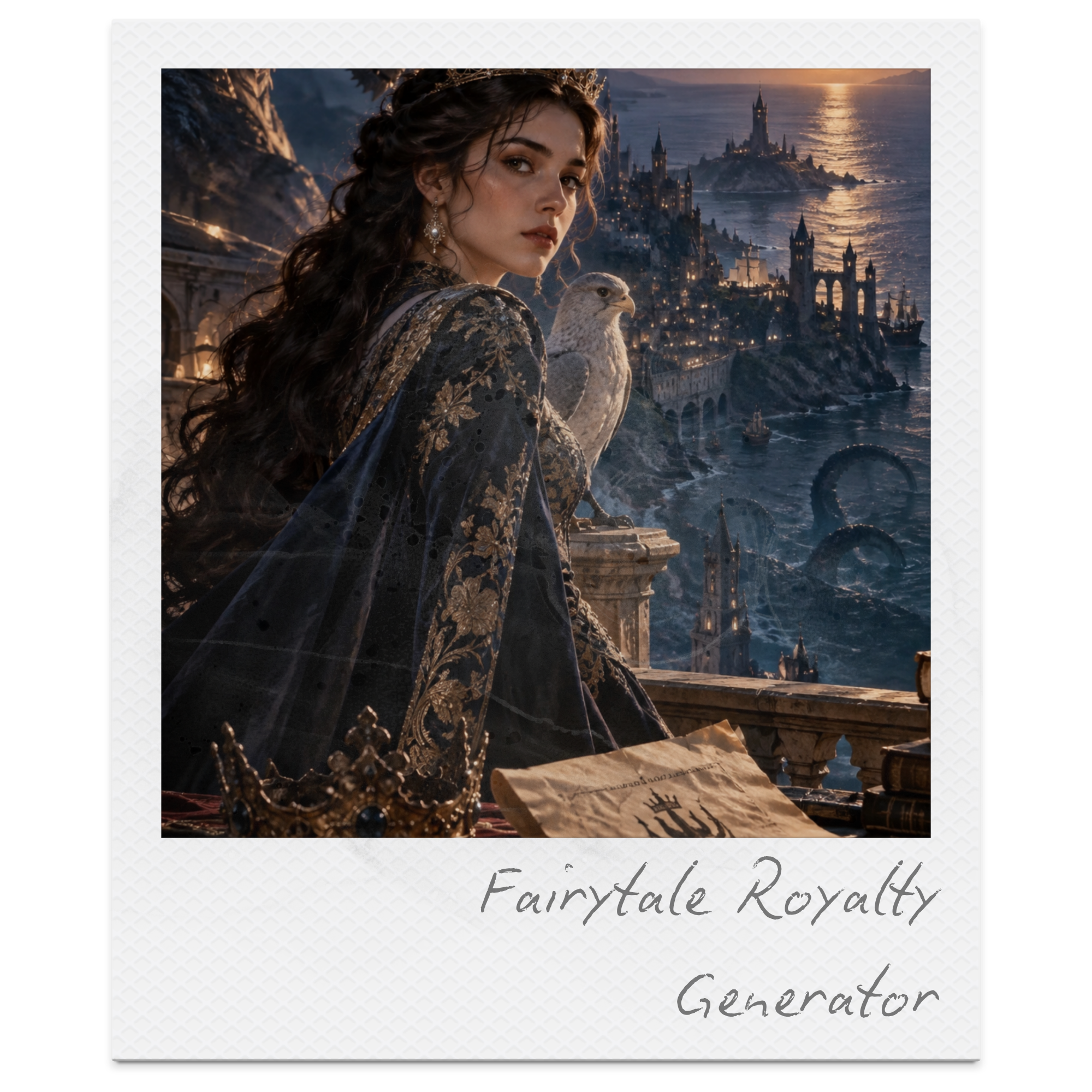
Once you have decided how royalty works within your kingdom, you can create the person who actually has to live with the crown. The Fairytale Royalty Generator creates a random king, queen, prince or princess, combining their royal position with family complications, responsibilities, magic, secrets and problems that can become the beginning of a story.
Rather than generating a title alone, it builds the wider circumstances surrounding the character: their kingdom, personality and reputation, royal family, duty, hidden secret, magical ability, fairytale curse or rule, significant royal object, ally, enemy and central story problem. Individual elements can also be refreshed, so you can keep the parts that fit your world while changing anything that sends the story in the wrong direction.
Try looking for connections between the results rather than treating each one separately. A royal secret might explain why an heir has disappeared; an enchanted object could be connected to an old family curse; or the person presented as the royal's enemy may know the truth about who should actually inherit the throne. The stranger the combination seems at first, the more interesting the fairytale it can sometimes produce.
With the royal family established, the next question is where all of this power, ceremony and family drama actually takes place — inside the castles and palaces of your fairytale kingdom.
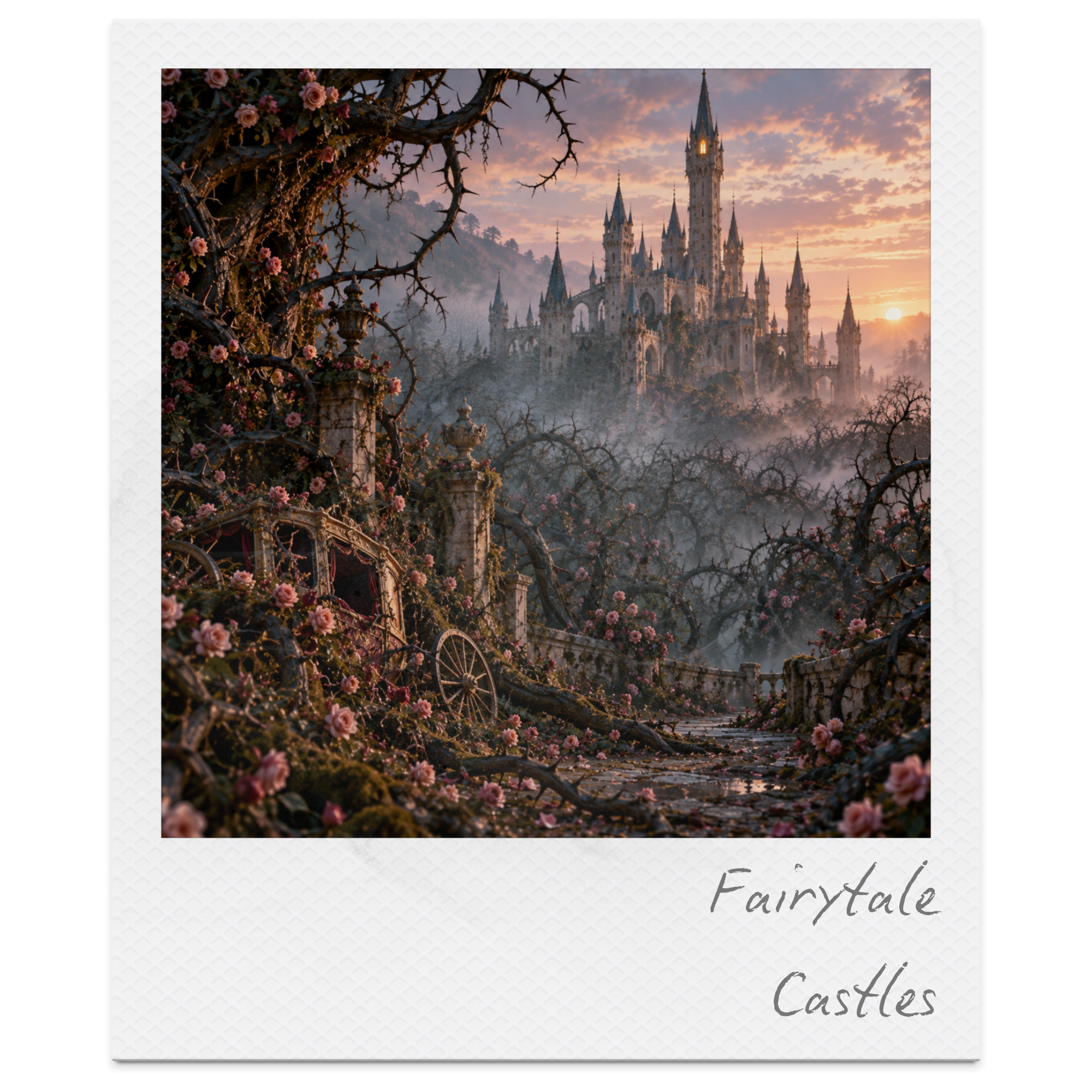
Fairytale Castles & Palaces
A castle can tell you a great deal about a fairytale kingdom before you ever meet the person sitting on its throne. A magnificent palace surrounded by gardens suggests something very different from a crumbling fortress hidden beyond the forest, a castle carved into a frozen mountain or an abandoned royal home where every candle inexplicably continues to burn. In fairytales, castles are rarely just impressive buildings: they can represent power, safety, isolation, imprisonment, wealth, family history or enchantment.
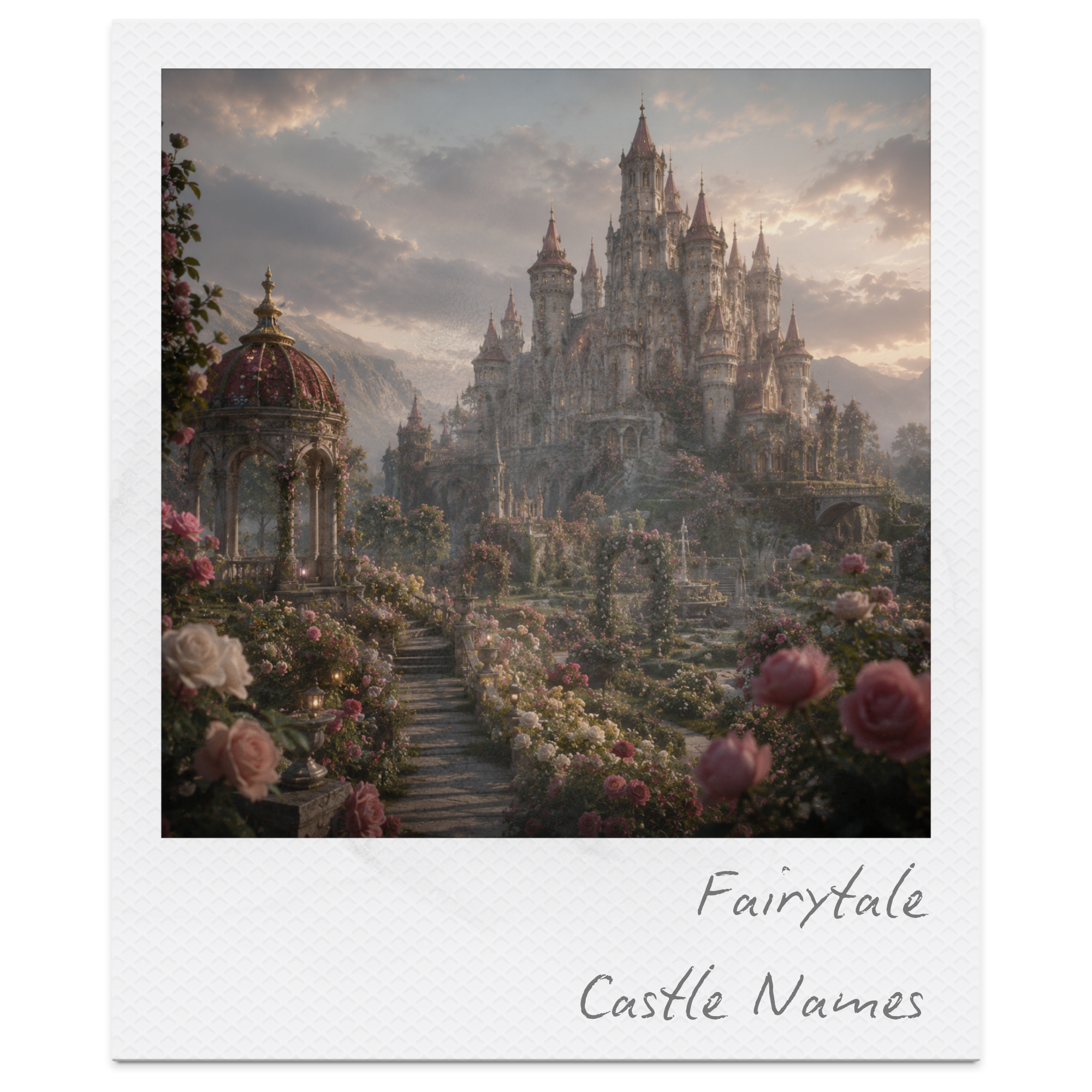
Start with the castle's identity. Where does it stand, who built it and what does its appearance reveal about the kingdom it belongs to? Its name can carry some of that history before the reader knows anything else. The 100 Fairytale Castle Names collection combines names with worldbuilding and story inspiration, making it useful for developing the place itself rather than simply finding something to put on a map.
Then step through the gates. Think about the spaces that matter to your story: throne rooms where royal decisions are made, enormous ballrooms, private apartments, towers, kitchens, gardens, hidden staircases and perhaps one door everyone has been warned never to open. The castle might also behave in ways ordinary architecture cannot. Rooms can rearrange themselves, towers can appear overnight, corridors can lead somewhere impossible or the building itself might decide who is permitted to sit on its throne.
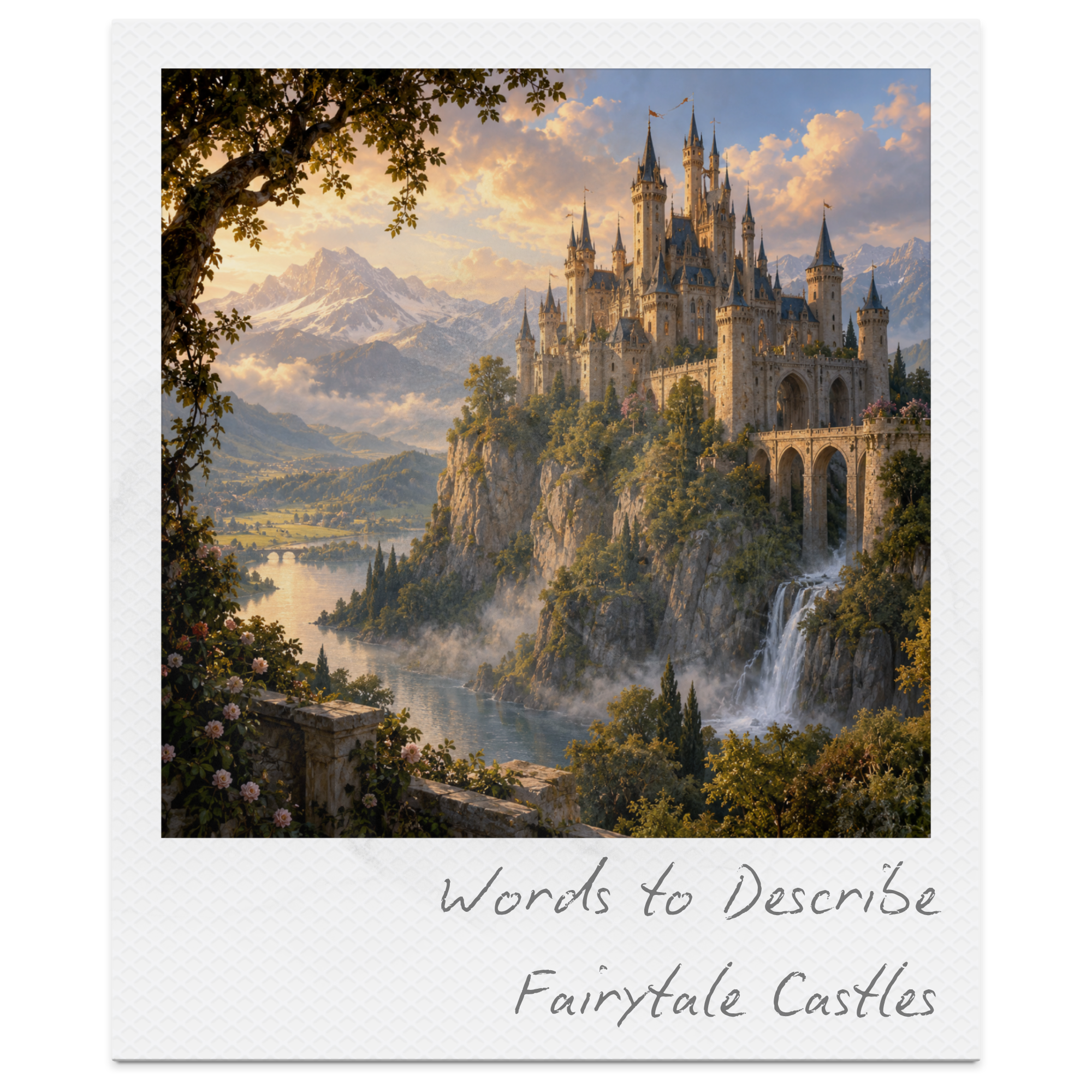
The 70 Fairytale Castle Writing Prompts explore enchanted palaces, cursed castles, forgotten royal homes and impossible strongholds through plot hooks, titles, opening and closing lines, characters, settings and visual prompts. Use them when you want the castle to become part of the story rather than simply the place where it happens. To bring your setting to life through vivid description, explore 100 Words to Describe a Fairytale Castle, featuring descriptive vocabulary and examples to help you capture everything from glittering towers and magnificent royal halls to crumbling battlements, shadowy corridors and forgotten chambers.
Most importantly, give your castle a history, a rule or a secret. Perhaps the western tower has been locked since the previous queen disappeared, the palace grows another room every midnight or the royal family believes abandoning the castle would break the enchantment protecting the kingdom. When the building has something your characters can discover, fear, escape or change, it begins to feel less like scenery and more like a piece of the fairytale itself.
Royal Influence: Laws, Punishments & Celebrations
Royalty shapes a fairytale kingdom far beyond the walls of the palace. A king or queen can decide which behaviours are rewarded, which are forbidden and what happens to anyone who breaks the rules. They can also shape the rituals that bring the kingdom together, from magnificent balls and royal weddings to coronations, feasts and celebrations that give ordinary people a rare glimpse into life at court.
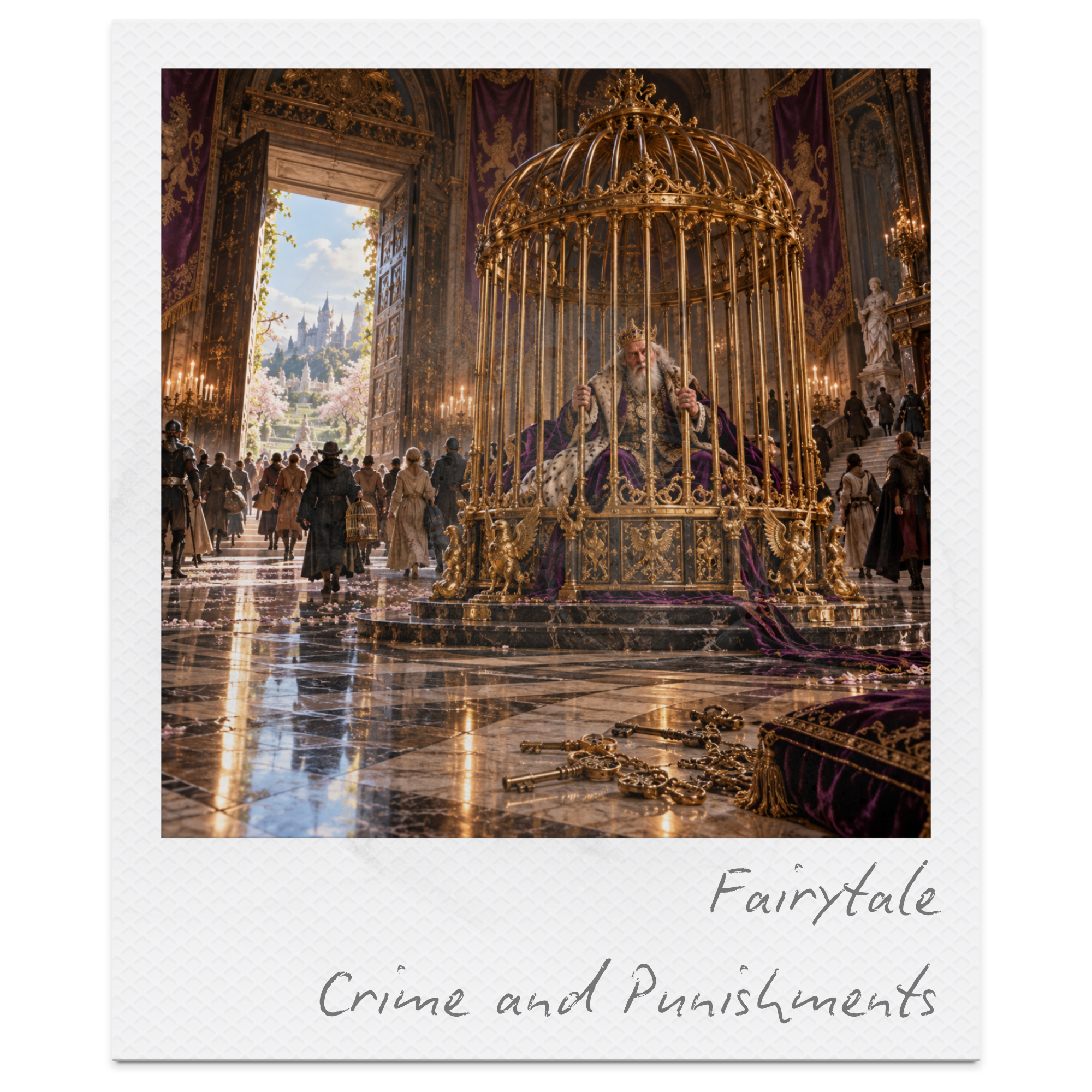
Fairytale laws are particularly interesting when they create the conditions for the story itself. A monarch might outlaw spinning wheels after hearing a prophecy, forbid anyone from entering an enchanted forest or decree that no stranger may remain inside the kingdom after sunset. Punishments can be equally unusual: imprisonment in an unreachable tower, exile beyond the kingdom's borders, an impossible task offered in place of execution or a sentence complicated by magic. The Fairytale Crime & Punishment Prompts explore crimes, accusations, trials, imprisonment, royal justice and unusual consequences that can turn the kingdom's rules into the beginning of a story.
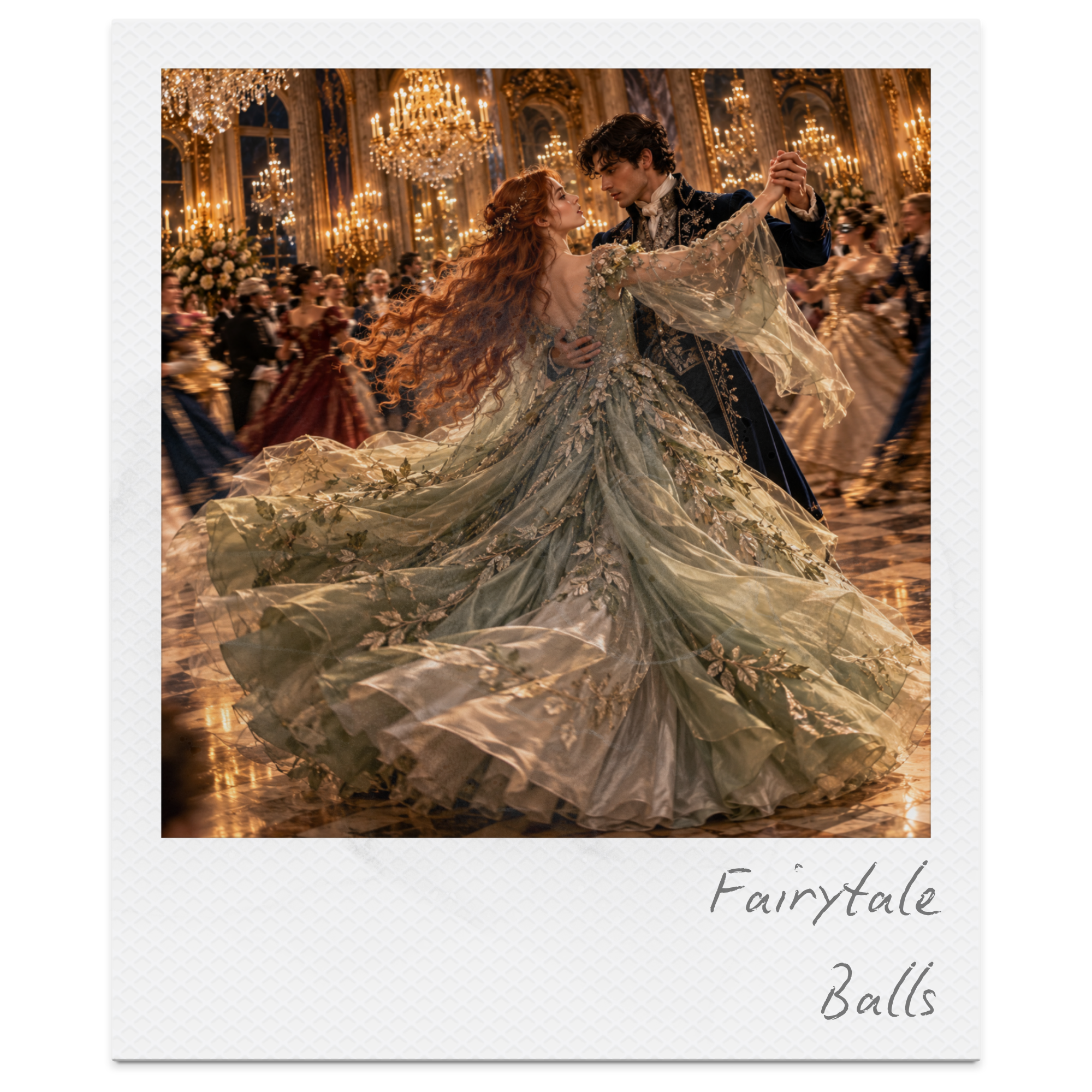
But royal influence is not only about restriction and punishment. Balls, weddings, coronations, banquets and other celebrations allow the crown to display its wealth and power while bringing together people who might otherwise never meet. A ball can introduce an unknown stranger to a prince, reunite rival royal families, conceal identities behind masks or create a deadline when an enchantment ends at midnight. The Fairytale Ball Writing Prompts explore enchanted dances, masquerades, mysterious guests, magical clothing, secret meetings and royal celebrations where the evening does not unfold quite as planned.
When developing royal influence in your own kingdom, think about what the crown asks of its people and what it gives them in return. A single strange law or centuries-old royal tradition can reveal far more about a kingdom than pages of political history — especially when your characters are about to discover what happens when that tradition is broken.


Create Your Fairytale Characters
Fairytales are filled with characters who feel instantly recognisable: the youngest daughter nobody expects to succeed, the prince sent on an impossible quest, the witch living beyond the edge of the village, the faithful servant who knows more than they reveal or the mysterious stranger encountered beside the road. These familiar roles give readers something to recognise, but the most memorable fairytale characters become much more than the archetype they begin with.
Start by thinking about the role your character plays within the tale. Are they the person who leaves home, the one who offers help, the figure standing in their way or the person whose actions set everything in motion? Princesses, witches, knights, servants, tricksters and magical helpers all carry certain expectations, and you can choose whether to fulfil those expectations, complicate them or overturn them completely.
Fairytale characters are also often defined by what they want and what they are willing to do to get it. One character might desperately want a child, another a crown, freedom, love, wealth, revenge or simply enough food to survive the winter. These desires become particularly powerful when magic offers an apparently easy solution. A wish can be granted, a bargain can solve an impossible problem and a mysterious stranger can provide exactly what someone needs — but rarely without consequences.
Consider the relationships surrounding your character too. Families are especially important in fairytales, from siblings competing for an inheritance to stepfamilies divided by jealousy, parents trying to protect their children and youngest sons or daughters underestimated by everyone around them. Friends, rivals, servants, mentors, magical helpers and unexpected companions can all influence which choices a character eventually makes.
You don't need pages of backstory before you begin. Give your character a role, a desire, a fear, an important relationship and one thing they do not yet know. From there, you can begin building the princesses and princes, witches and knights, servants and tricksters, ordinary villagers and unexpected heroes who will bring your fairytale world to life.
Fairytale Heroes & Heroines
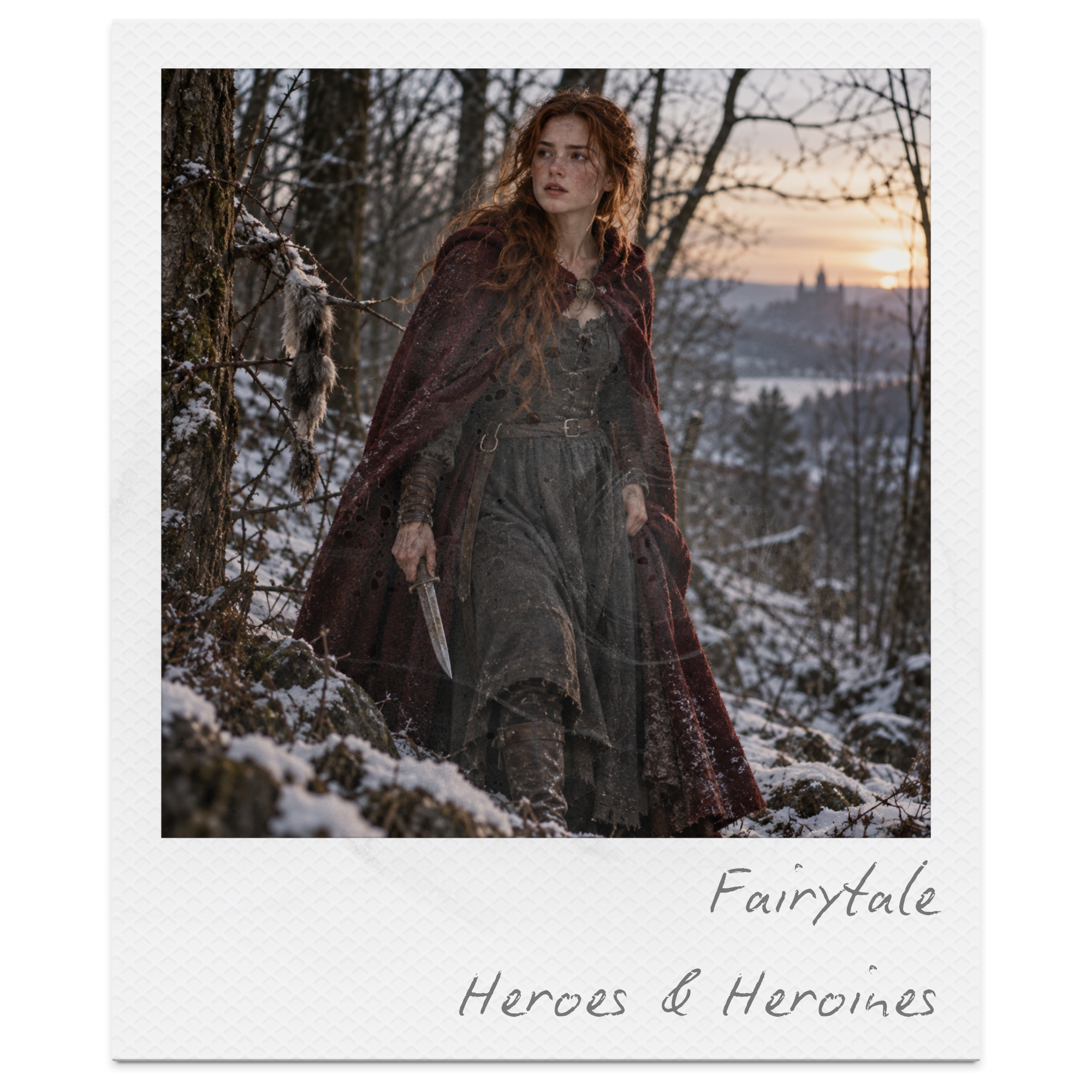
At the heart of most fairytales is someone who must leave the familiar behind and face something they are not yet prepared for. They might be a knight riding towards an impossible quest, an overlooked youngest child sent into the forest, a servant who accidentally discovers a royal secret or an ordinary person who accepts a challenge everyone wiser has refused. Fairytale heroes and heroines do not have to begin powerful; often, their willingness to act is what makes them heroic.
Think first about what your hero wants and what stands between them and it. They might be searching for a missing sibling, trying to break a curse, hoping to earn their fortune, escaping an unwanted fate or attempting to save a kingdom they have never seen. The 70 Fairytale Hero & Heroine Writing Prompts can help you explore different protagonists, quests, conflicts and story possibilities without restricting your hero to the traditional prince-or-princess role.
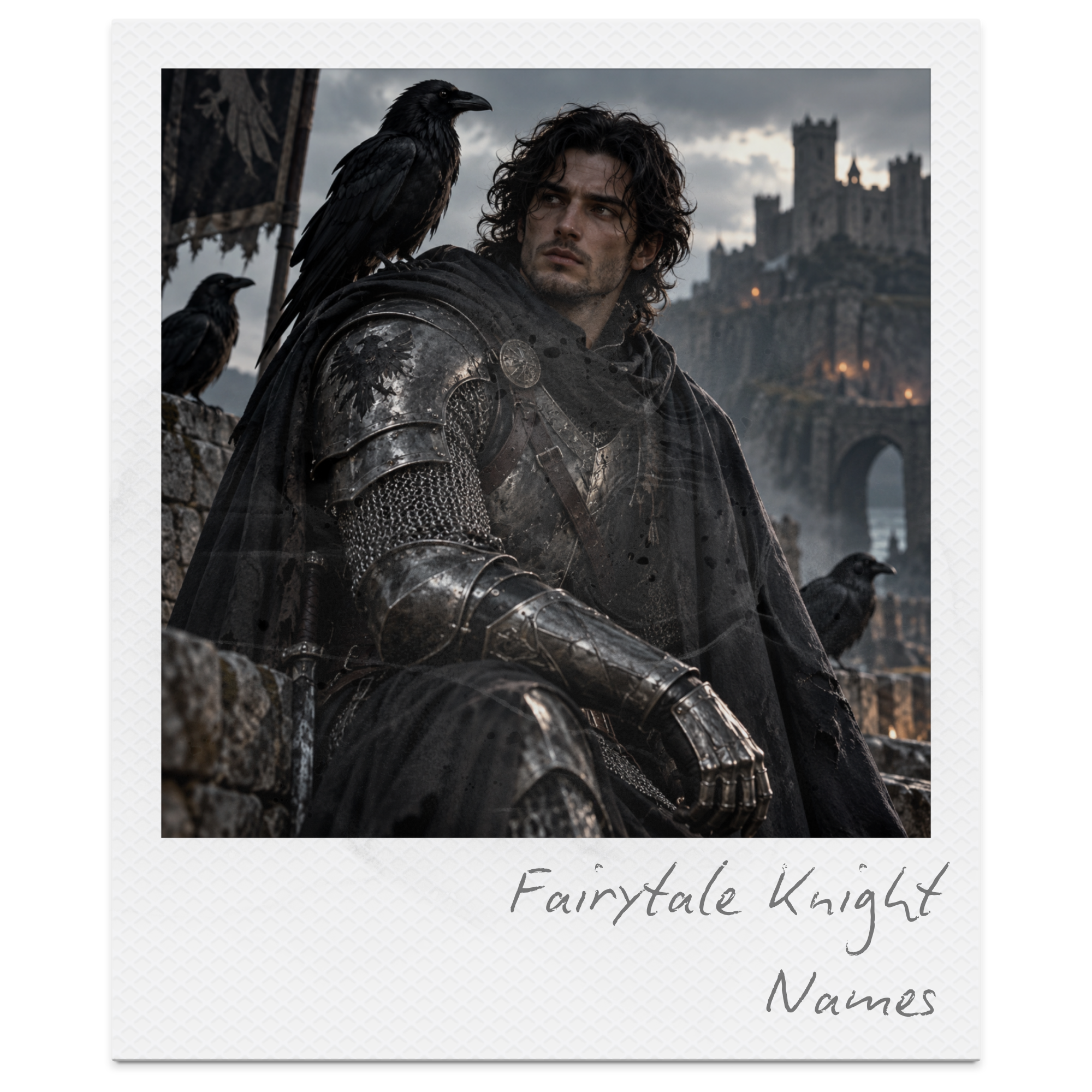
Knights are particularly useful when you want a character whose identity is already connected to duty, courage, loyalty or service — although those qualities can always be complicated. A knight might be noble and celebrated, disgraced and seeking redemption, secretly cursed, serving the wrong ruler or beginning to question the quest they have been ordered to complete. The 100 Fairytale Knight Names offers noble, cursed, magical and legendary knights with story inspiration you can use to develop characters of your own.
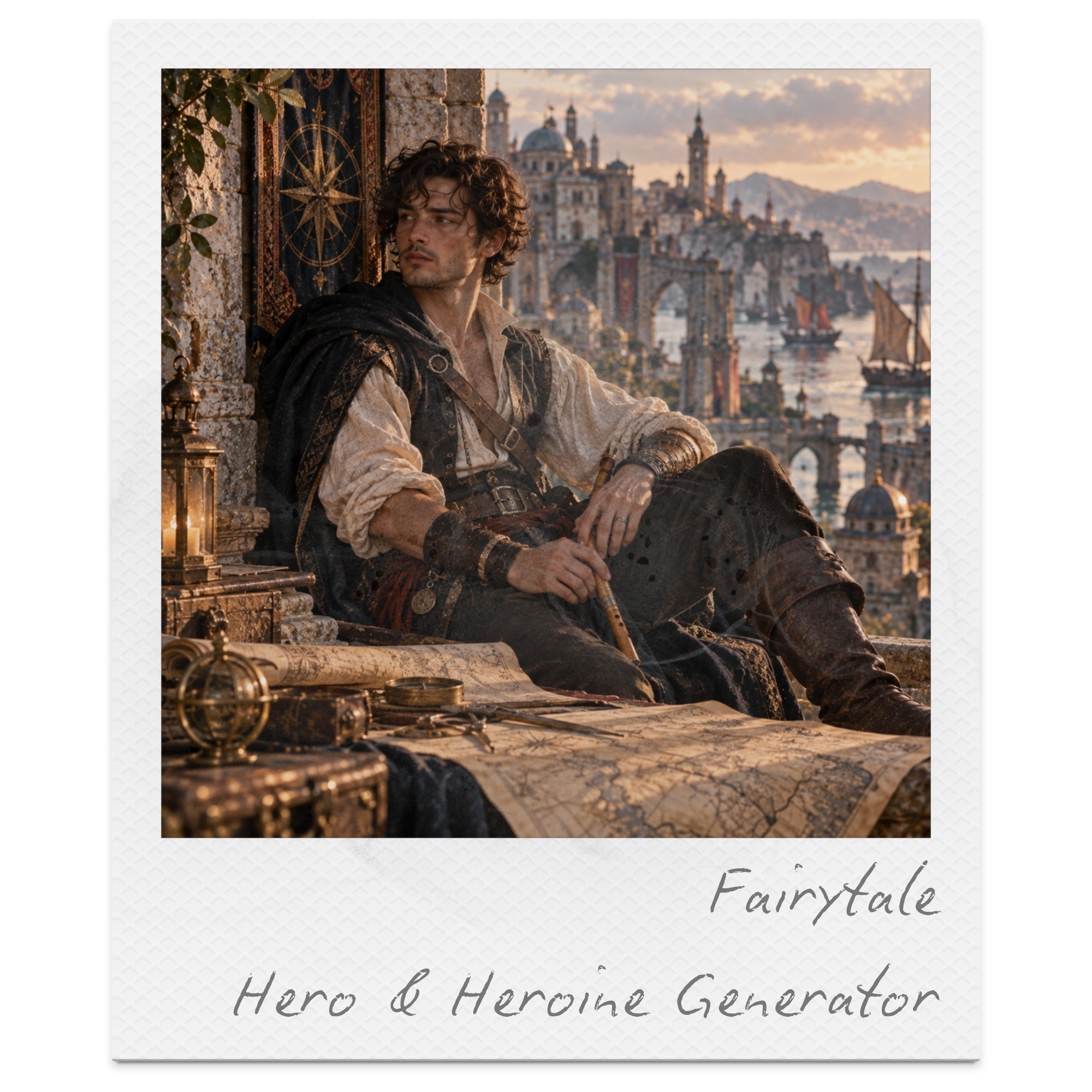
If you would rather discover your protagonist through chance, the Fairytale Hero & Heroine Generator can create a hero or heroine by combining their role with strengths, flaws, skills, desires, fears, secrets, relationships and a story problem. Keep the combinations that immediately suggest a story and change anything that does not belong in your particular fairytale world.
Most importantly, don't make your hero perfect. Courage becomes more interesting when the character is frightened; kindness matters when helping someone carries a cost; cleverness matters when strength will not solve the problem. Give your hero something they are good at, something they misunderstand and a choice that will eventually force them to decide what kind of person they really want to become.
Fairy Godmothers & Witches
Few characters signal that a story has entered the realm of fairytale quite as quickly as a fairy godmother or a witch. One traditionally arrives bearing gifts, transformations and unexpected help; the other waits beyond the familiar world with bargains, curses and dangerous magic. But the line between them does not have to be as simple as good fairy and wicked witch. Both can become mentors, antagonists, protectors, tricksters or something much harder to define.
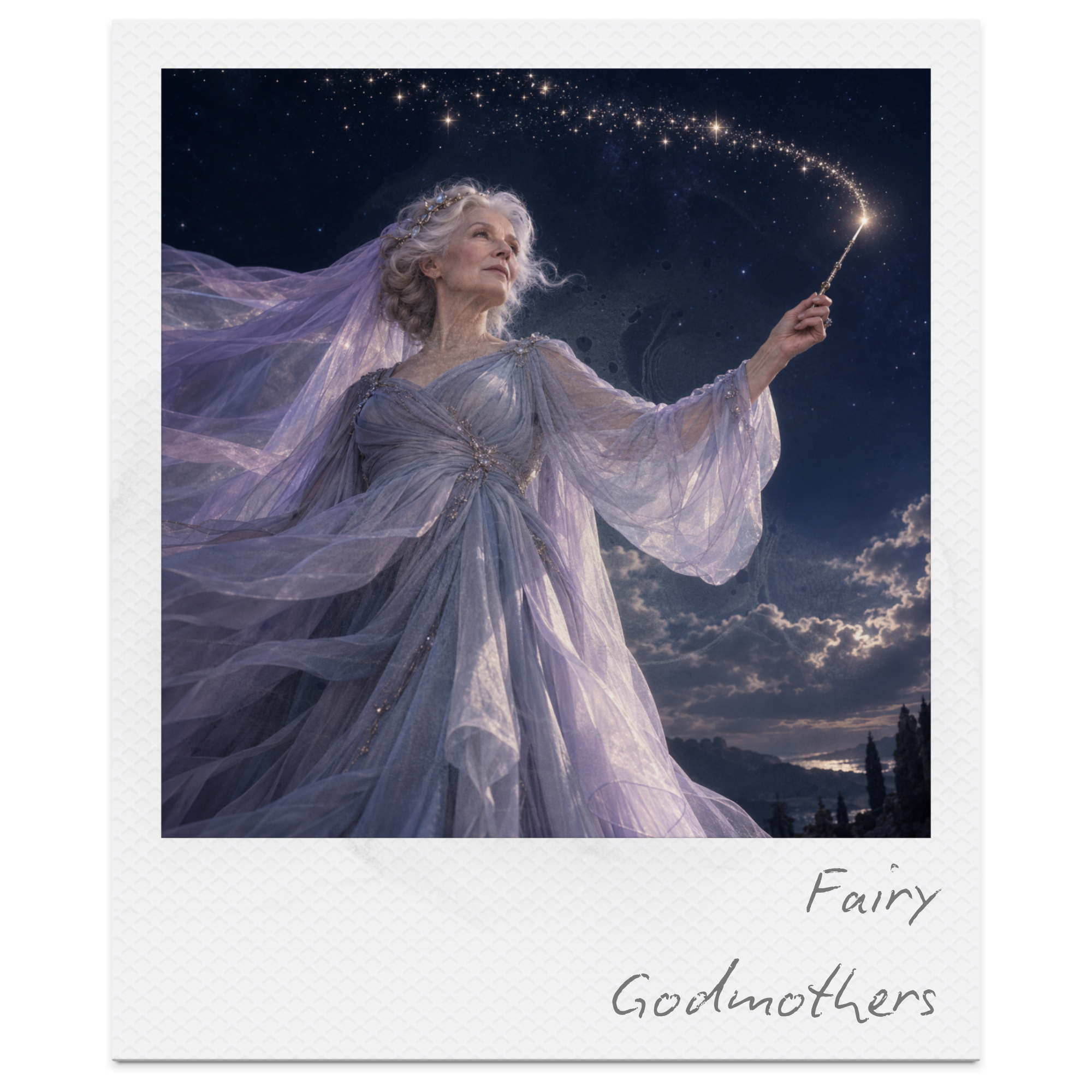
Fairy godmothers are often associated with moments of transformation. They appear when ordinary solutions have failed, offering magical clothing, impossible journeys, enchanted objects or the opportunity to change a character's fate. The 70 Fairy Godmother Prompts can help you explore traditional godmothers alongside stranger interpretations of the archetype, including magical gifts, rules, mistakes and interventions that may not work quite as their recipients expect.
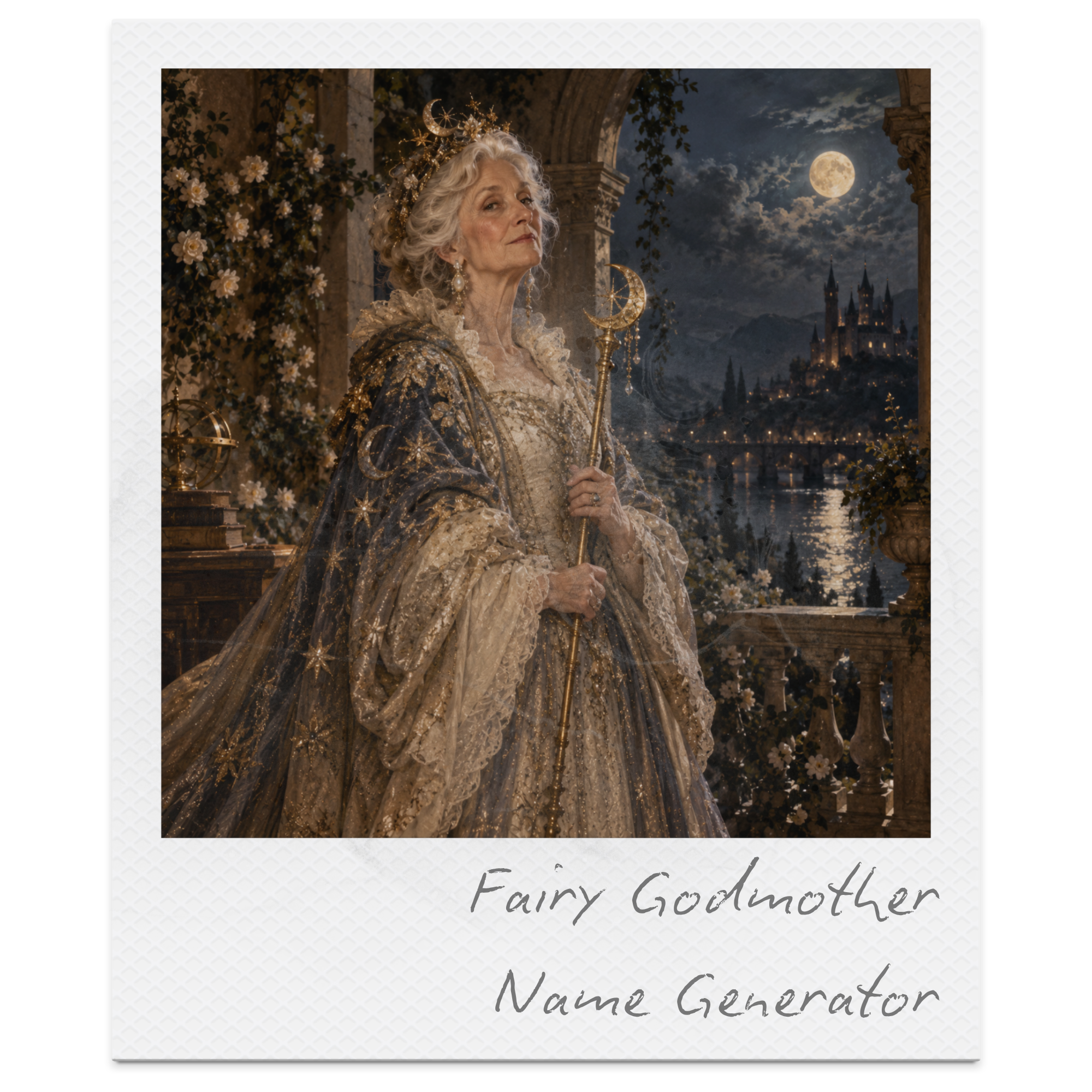
You can also create a godmother specifically for your own tale with the Fairy Godmother Name Generator. Think beyond simply choosing a pretty magical name: consider who she protects, why she has chosen them, what kind of magic she possesses and what she is forbidden from doing. A godmother who can transform anything except a living creature creates very different possibilities from one who can grant wishes but is incapable of reversing them.
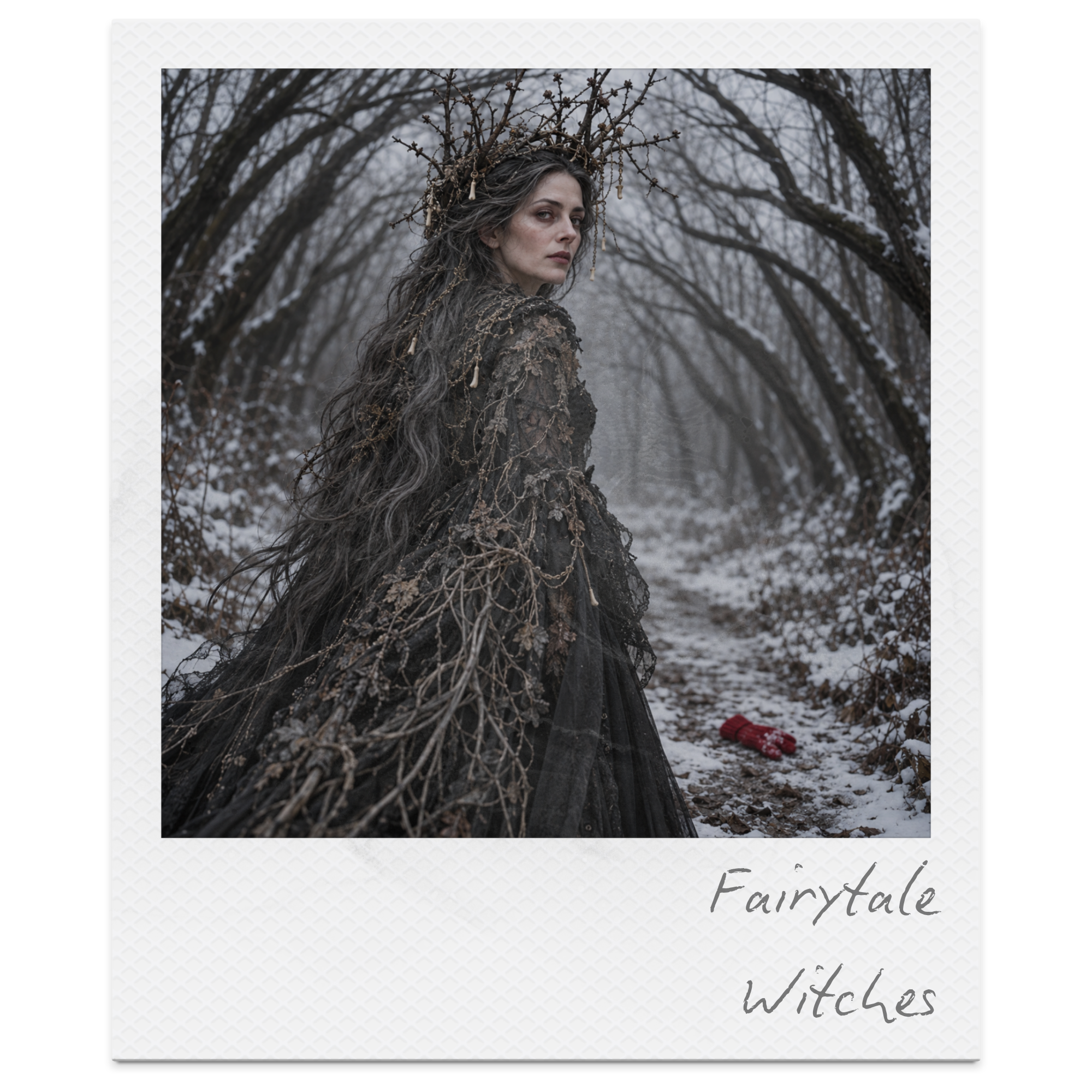
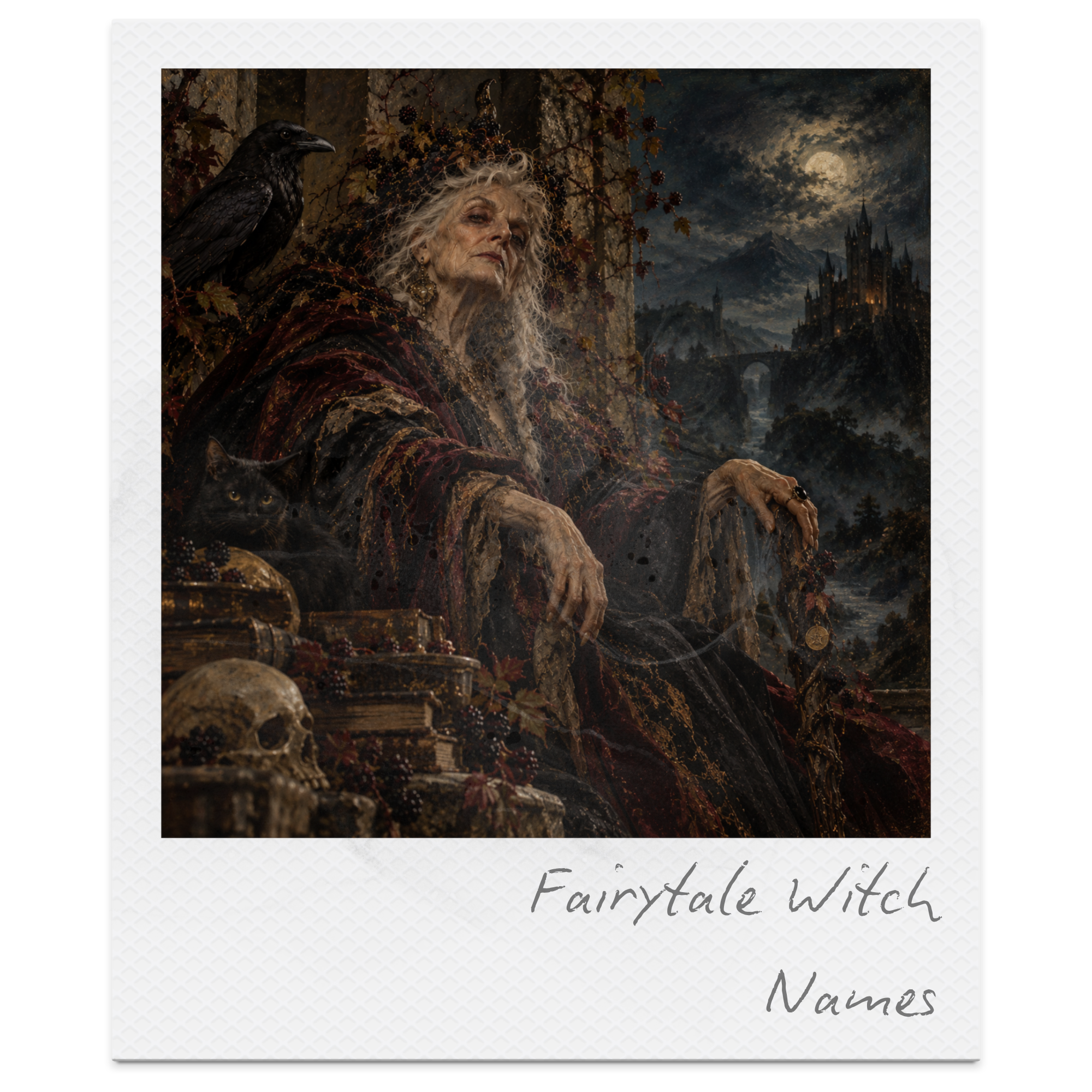
Witches allow you to explore the darker, wilder and more ambiguous edges of fairytale magic. A witch might curse a royal family, live inside an impossible cottage or demand a terrible price for something the protagonist desperately needs. But she might equally be a healer, guardian, outcast or misunderstood figure whose frightening reputation tells us more about the kingdom than it does about her. The 70 Fairytale Witch Prompts offer inspiration for building witches into stories involving magic, bargains, curses, secrets and unexpected encounters.
Even a witch's name can begin suggesting the kind of story surrounding her. The 100 Fairytale Witch Names with Dark, Magical & Enchanting Story Ideas collection moves from darker and more ominous names to magical and enchanting possibilities, giving you starting points for witches who might be feared, sought out, misunderstood or remembered through generations of local stories.
When creating either character, ask what they can do, what they want and why they choose to interfere in somebody else's story. A fairy godmother's gift can create as many problems as a witch's curse, while the frightening old woman everyone warns the protagonist to avoid may ultimately be the only person willing to help. Fairytales become much more interesting when appearances do not tell us immediately who should be trusted.
Fairytale Families
Family relationships sit at the heart of many traditional fairytales. Before the witch appears, the curse is cast or the hero sets out on an impossible journey, there is often already something wrong at home. A parent has died, a new marriage has changed the family, one child is favoured over another, siblings are competing for love or inheritance, or children discover that the adults responsible for protecting them cannot—or will not—keep them safe.
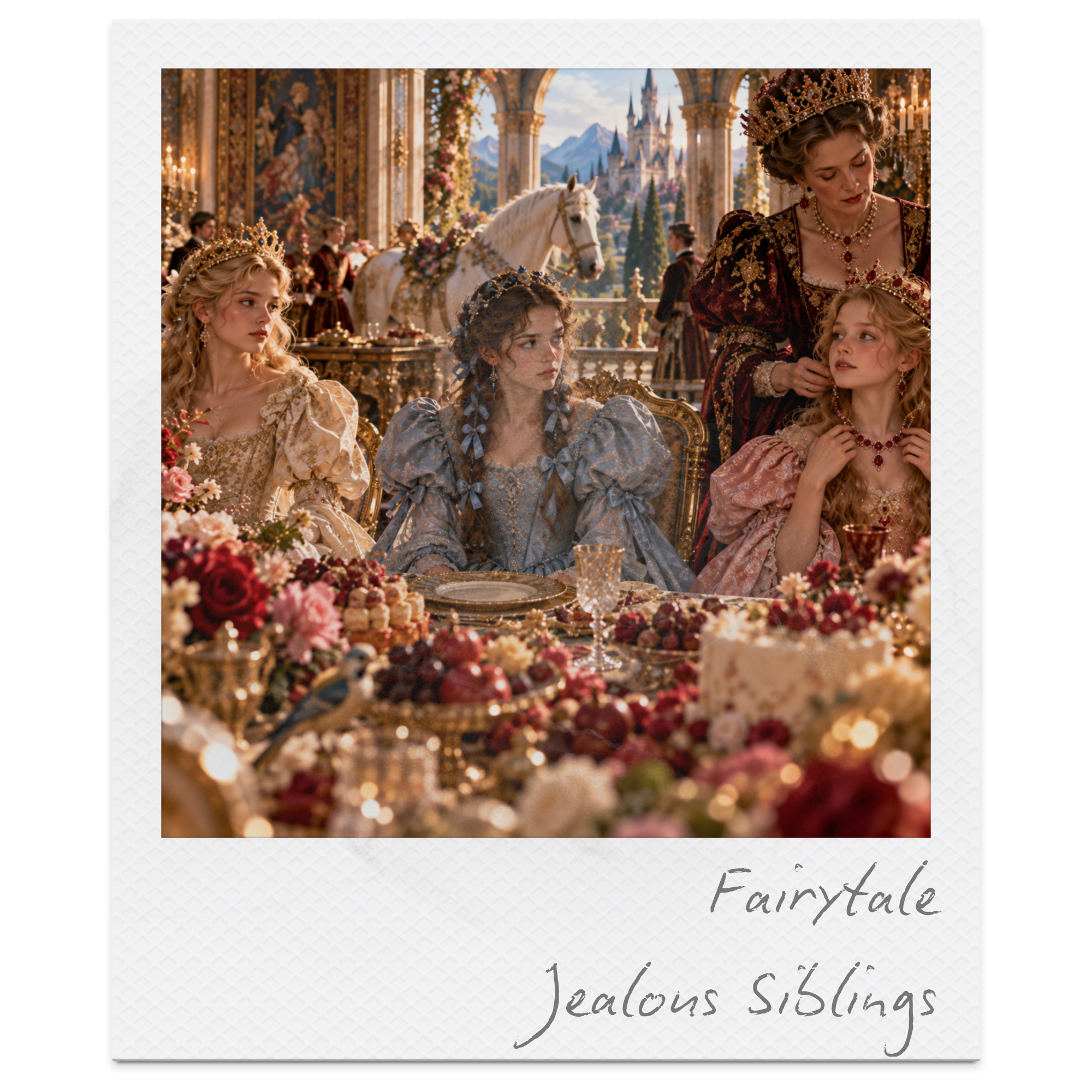
Sibling relationships are particularly useful because they can create both rivalry and extraordinary loyalty. Brothers and sisters might compete to inherit a kingdom, attempt the same impossible task or become consumed by jealousy when one sibling receives something the others believe should belong to them. But siblings can also cross kingdoms to rescue one another, keep promises for years or sacrifice their own happiness to break an enchantment. The Fairytale Jealous Siblings collection explores what happens when comparison, favouritism and resentment begin to reshape relationships between brothers and sisters.
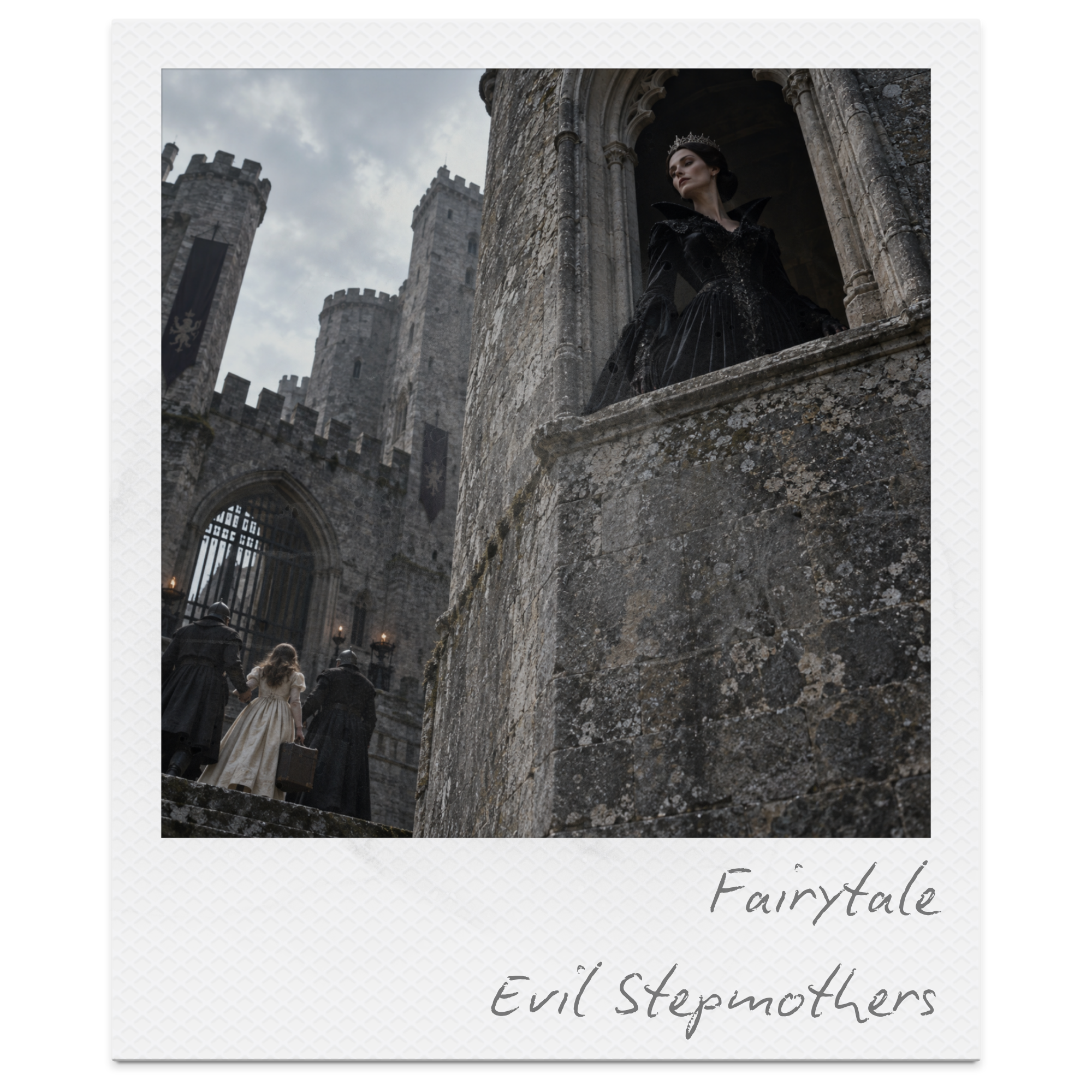
Stepparents create another classic source of fairytale conflict. The familiar wicked stepmother may be jealous of a beautiful stepdaughter, determined to secure an inheritance for her own children or willing to remove anyone standing between her family and the throne. The 70 Fairytale Evil Stepmother Prompts can help you explore these darker relationships while also giving you room to question and reinvent the archetype rather than simply reproducing it.
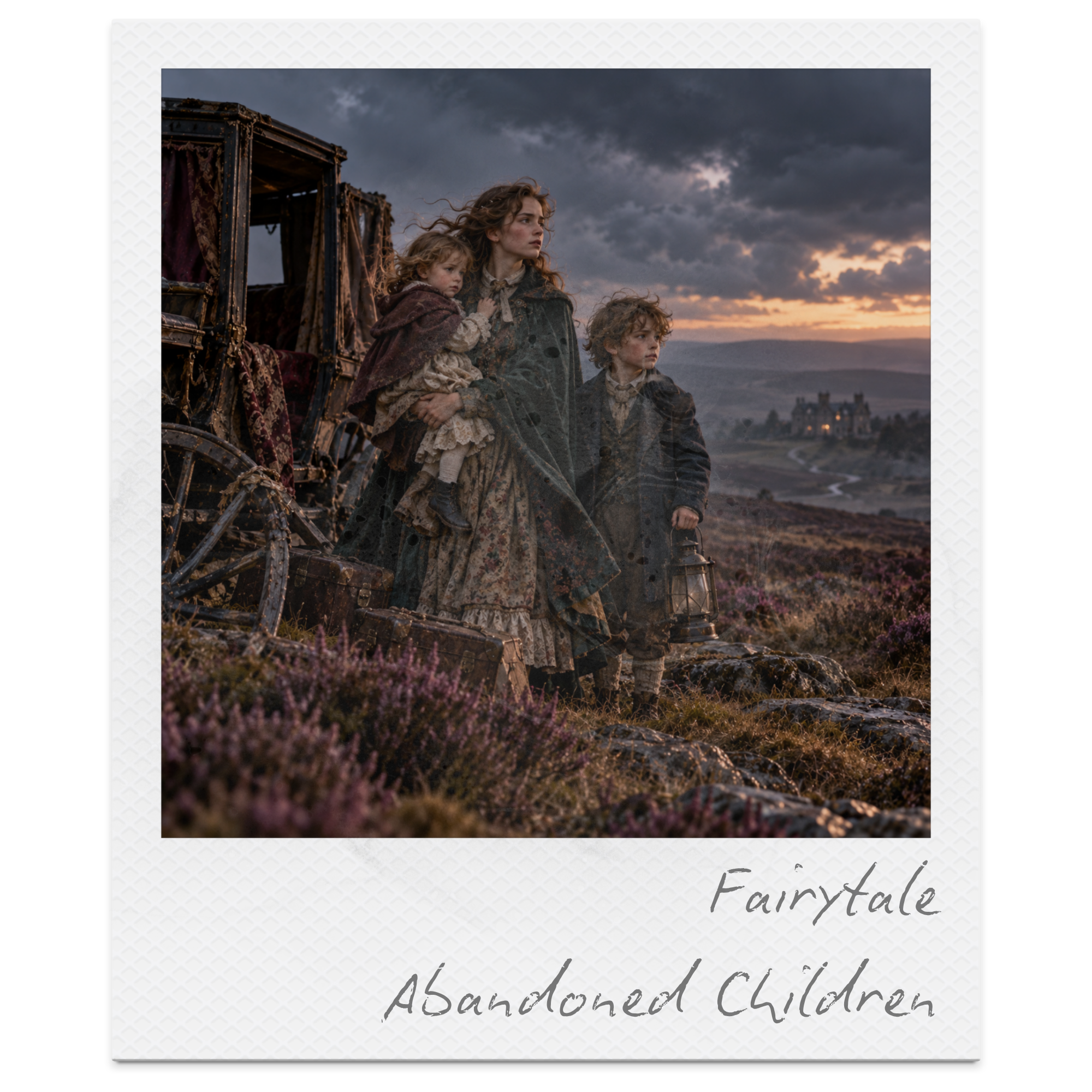
Other fairytales begin when the family itself disappears. A child may be abandoned in a forest, sent away because their parents can no longer feed them, hidden to protect them from a prophecy or deliberately left somewhere they were never expected to survive. The 70 Fairytale Abandoned Children Prompts explores the stories that can grow from that separation: children finding unexpected protectors, discovering hidden identities, building new families or eventually returning to confront the people who left them behind.
When creating a fairytale family, think about what each person believes they are owed by the others. Love, protection, inheritance, obedience, approval and belonging can all become sources of conflict when they are withheld or unevenly distributed. A magical curse may eventually complicate the story, but sometimes the most powerful reason for a character to walk into the forest is that remaining at home has become impossible.
Ordinary People & Fairytale Occupations
Not every important person in a fairytale lives in a palace, carries a sword or possesses magical powers. Fairytale worlds are also populated by bakers, shepherds, blacksmiths, seamstresses, millers, fishermen, merchants, craftspeople and countless other ordinary people whose everyday lives can place them directly in the path of something extraordinary.
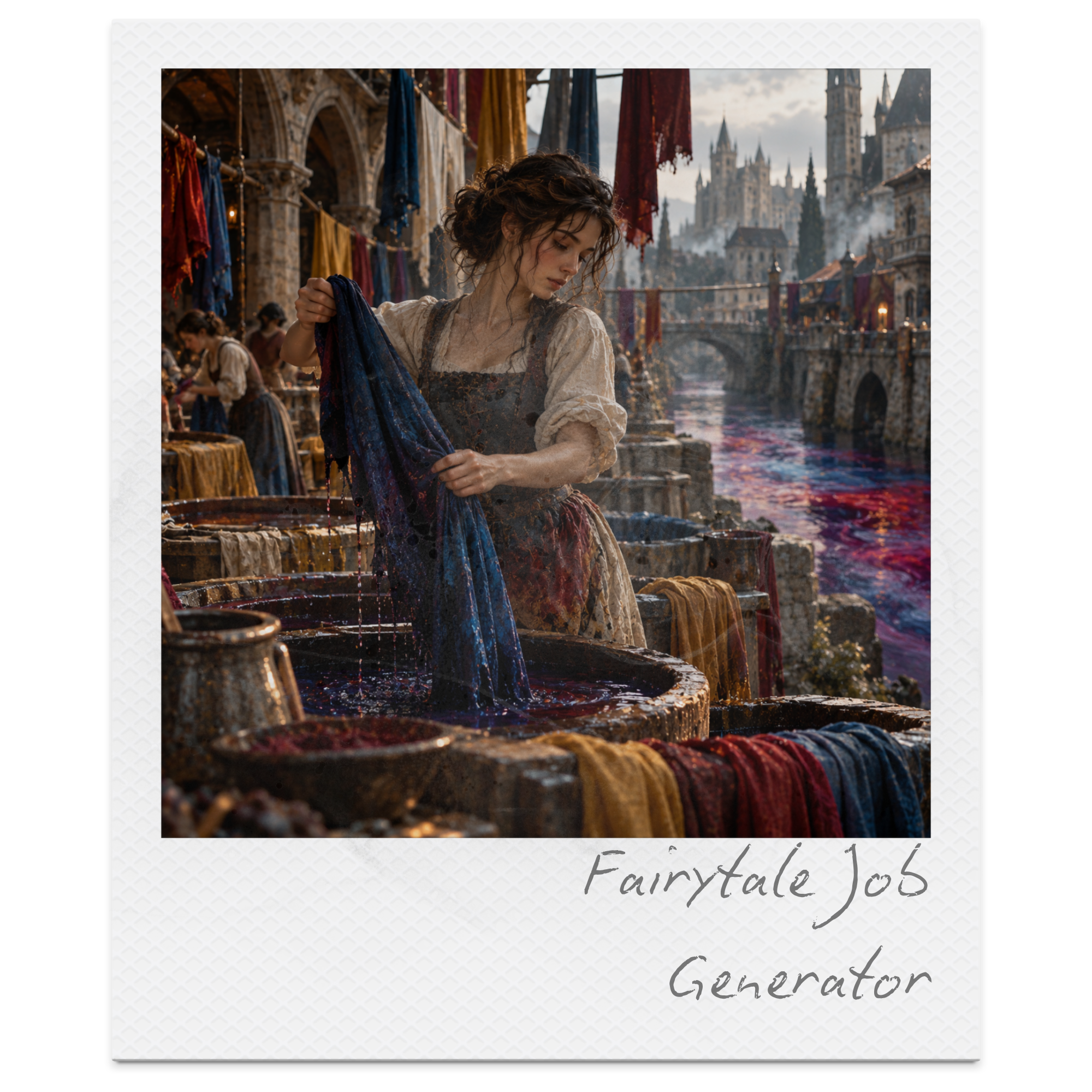
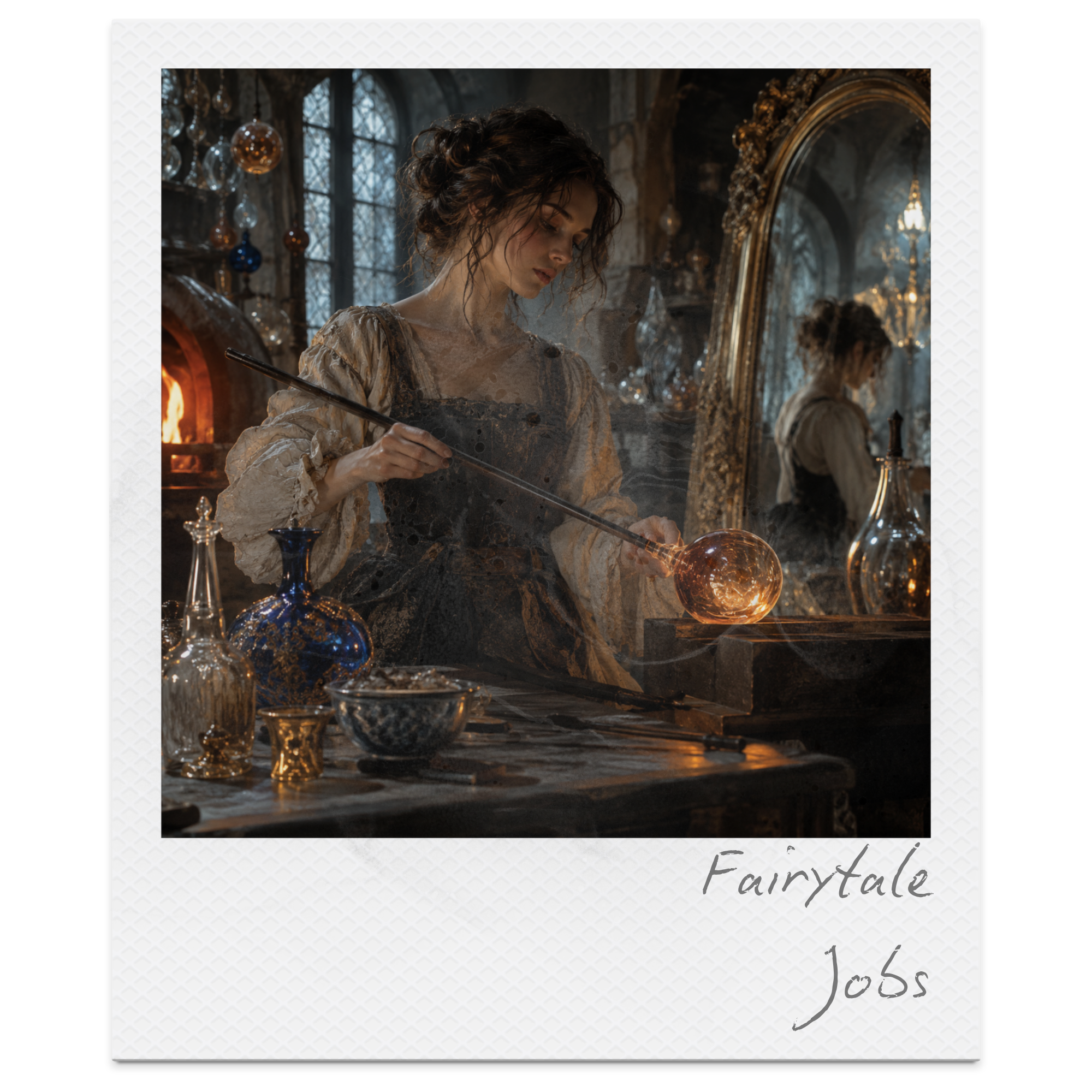
An occupation can tell you a surprising amount about a character before the story even begins. It can determine where they live, what they know, who they meet, which skills they possess and which parts of the world they understand better than anyone else. A shepherd notices when something unfamiliar enters the hills. A glassmaker recognises that the palace windows have been replaced. A dyer knows that the river should not be turning crimson by itself. Explore 100 Fairytale Jobs & Occupations: From Ordinary Trades to Magical Professions for characters whose work ranges from familiar village trades to professions that could exist only in a fairytale world.
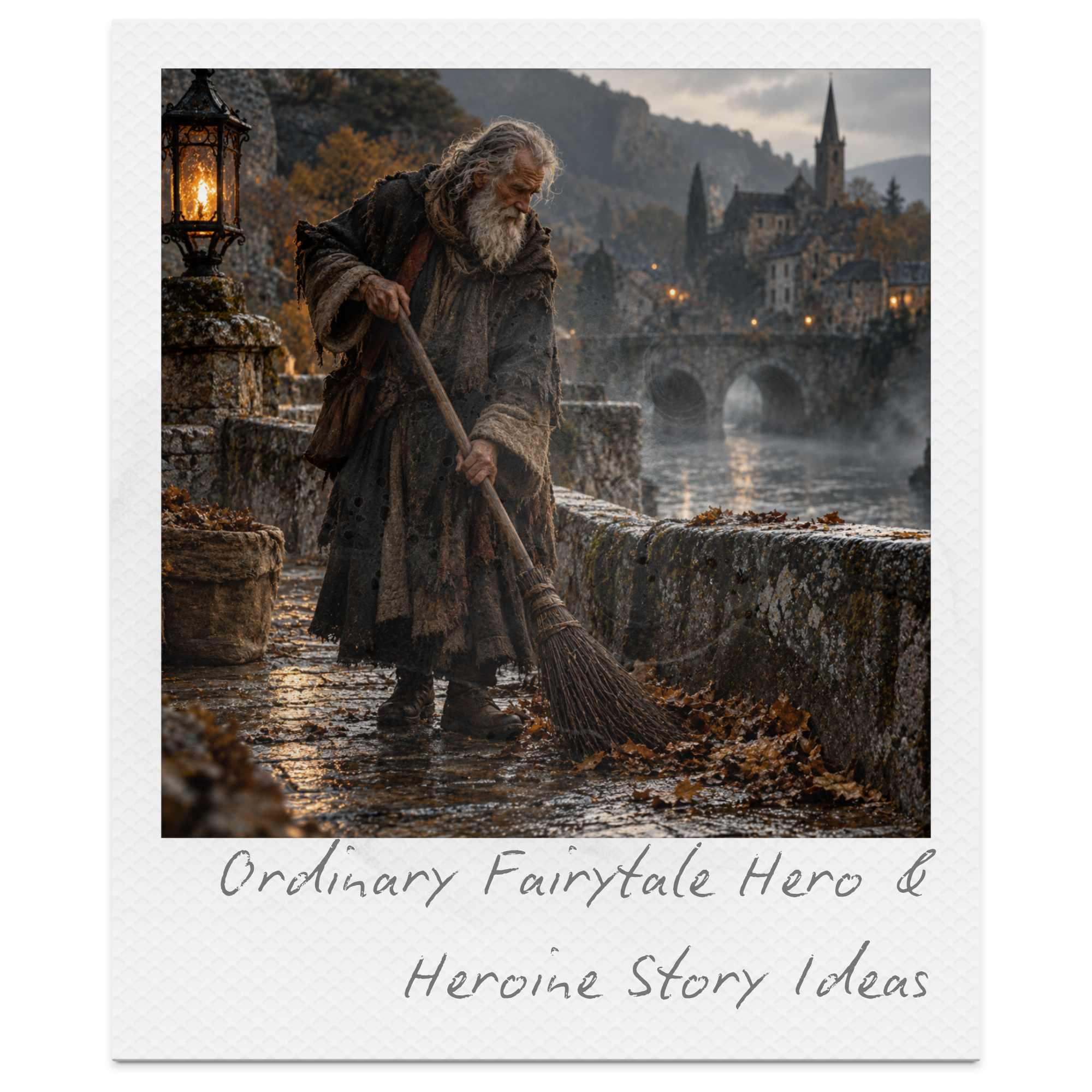
These people can also become the heroes of the story. The person who notices something is wrong does not have to be a prince, knight or chosen heir. It might be the baker who feeds a mysterious stranger, the old man who has swept the same bridge for forty years or the apprentice who accidentally discovers something their master has been hiding. 100 Ordinary Fairytale Hero & Heroine Story Ideas puts characters without royal titles or heroic reputations at the centre of their own tales.
For a completely new character, try the Fairytale Job Generator. It combines occupations with workplaces and unexpected fairytale complications, giving you the foundations of a character whose ordinary working life is about to collide with something much stranger.
Most importantly, let a character's ordinary life matter after the adventure begins. A tailor should be able to solve a problem because they understand cloth and stitching. A beekeeper might recognise behaviour everyone else overlooks. A ferryman knows the river better than the soldiers sent to search it. The skills that once seemed mundane can become precisely what allows an ordinary person to survive an extraordinary situation.
When creating these characters, ask what they do every day, what their work has taught them and what they might notice that someone wealthier or more powerful would miss. A fairytale does not need to begin with someone destined to change the kingdom. Sometimes it begins with someone simply trying to finish an ordinary day's work when magic gets in the way.
Fairytale Creatures & Beings
A fairytale world is rarely inhabited by humans alone. Fairies hide beyond familiar paths, giants live in distant castles, trolls guard bridges, dragons sleep beneath mountains and strange creatures wait in places ordinary people have learned to avoid. These beings help make the world feel larger, older and more mysterious than the small corner of it your protagonist understands.
When creating fairytale creatures, think beyond simply deciding what they look like. Consider where they live, what people believe about them, how they behave and what rules govern encounters with them. Perhaps trolls demand payment from anyone crossing their territory, merfolk are forbidden from setting foot on land, or the fairies living beyond the forest will answer any question truthfully but expect a secret in return. A creature becomes part of the worldbuilding when its existence changes how people behave.
You can also use creatures to reveal the boundaries between the ordinary and magical worlds. A village may leave bowls of milk outside each night without quite admitting why. Children might be warned never to follow white deer into the woods. Fishermen could refuse to sail when a particular song is heard from the cliffs. Even if the creatures themselves appear only occasionally, the stories, customs and fears surrounding them can make their presence felt throughout the world.
Not every magical being needs to be dangerous, and not every beautiful creature needs to be trustworthy. Fairytale beings can become helpers, tricksters, guardians, monsters, companions, messengers or obstacles, and the same creature may be viewed very differently by different communities. The important question is not simply what creatures live here? but what does living alongside them mean for everyone else?
In this section, we'll explore the creatures and supernatural beings that can inhabit your fairytale world, from familiar figures drawn from folklore to entirely original creations with their own habitats, behaviours, powers and rules.
Fairies, Fae & Changelings
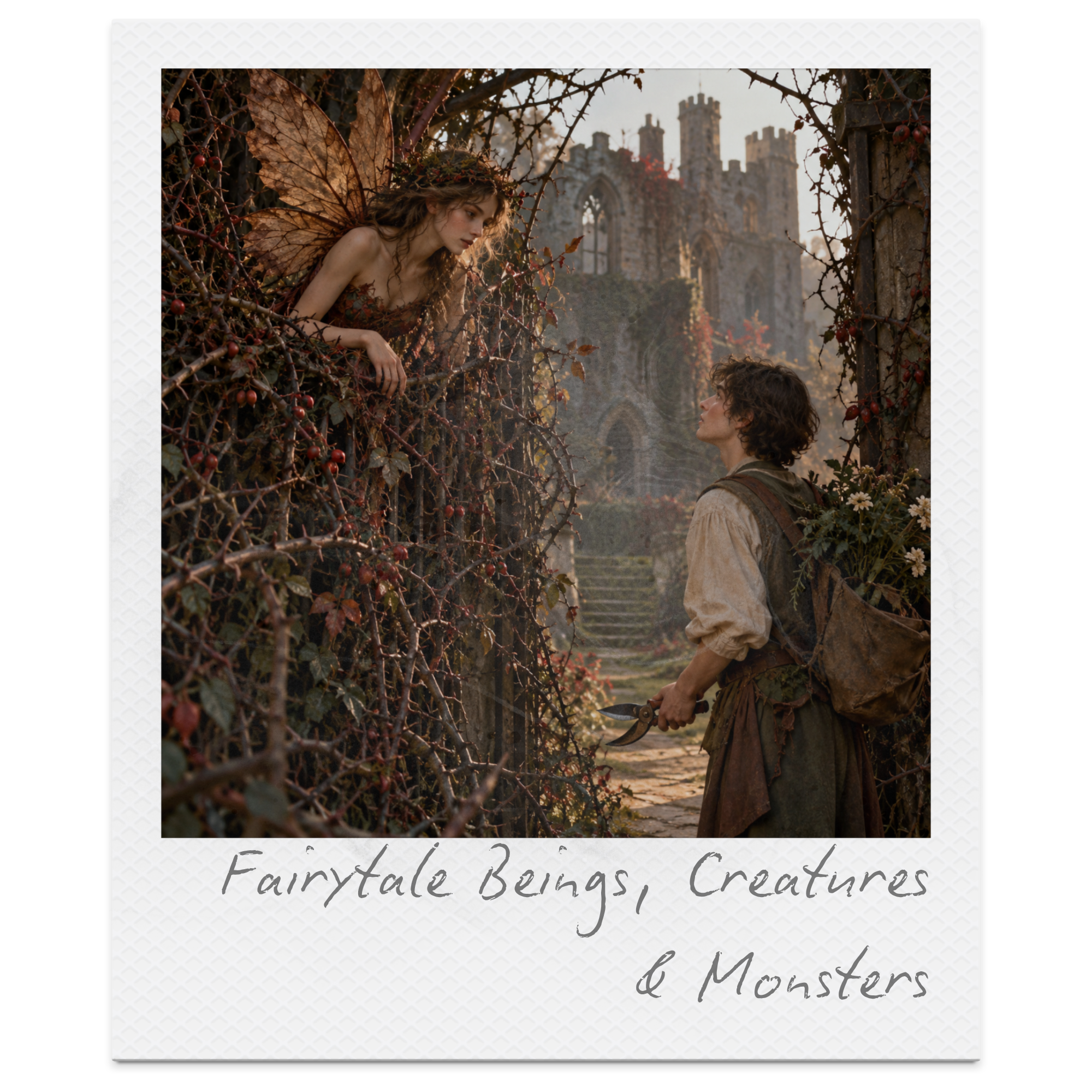
Fairies and fae can bring an older, stranger kind of magic into a fairytale world. They might inhabit hidden courts, ancient forests and places just beyond the boundaries of human kingdoms, following customs, hierarchies and rules that outsiders do not fully understand. Some are beautiful and alluring, others frightening or unpredictable, and many are most interesting when they cannot be easily divided into good and evil.
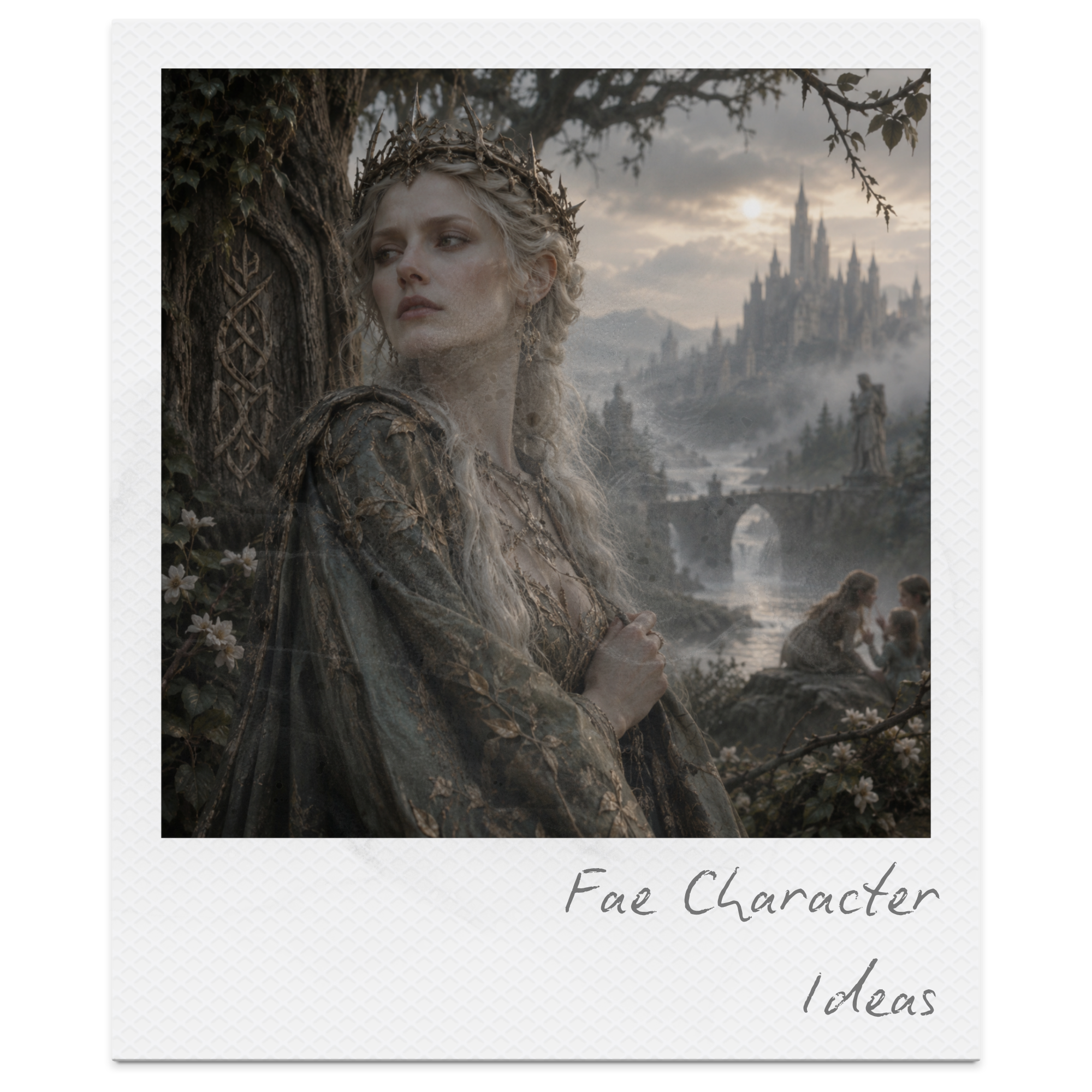
Rather than treating the fae as a single group, think about the different beings who might exist among them. The 100 Fae Character Ideas collection explores fairy royalty, woodland guardians, bargain-makers, artisans, warriors, tricksters, exiles and other characters who can help make the magical population of your world feel much larger and more varied.
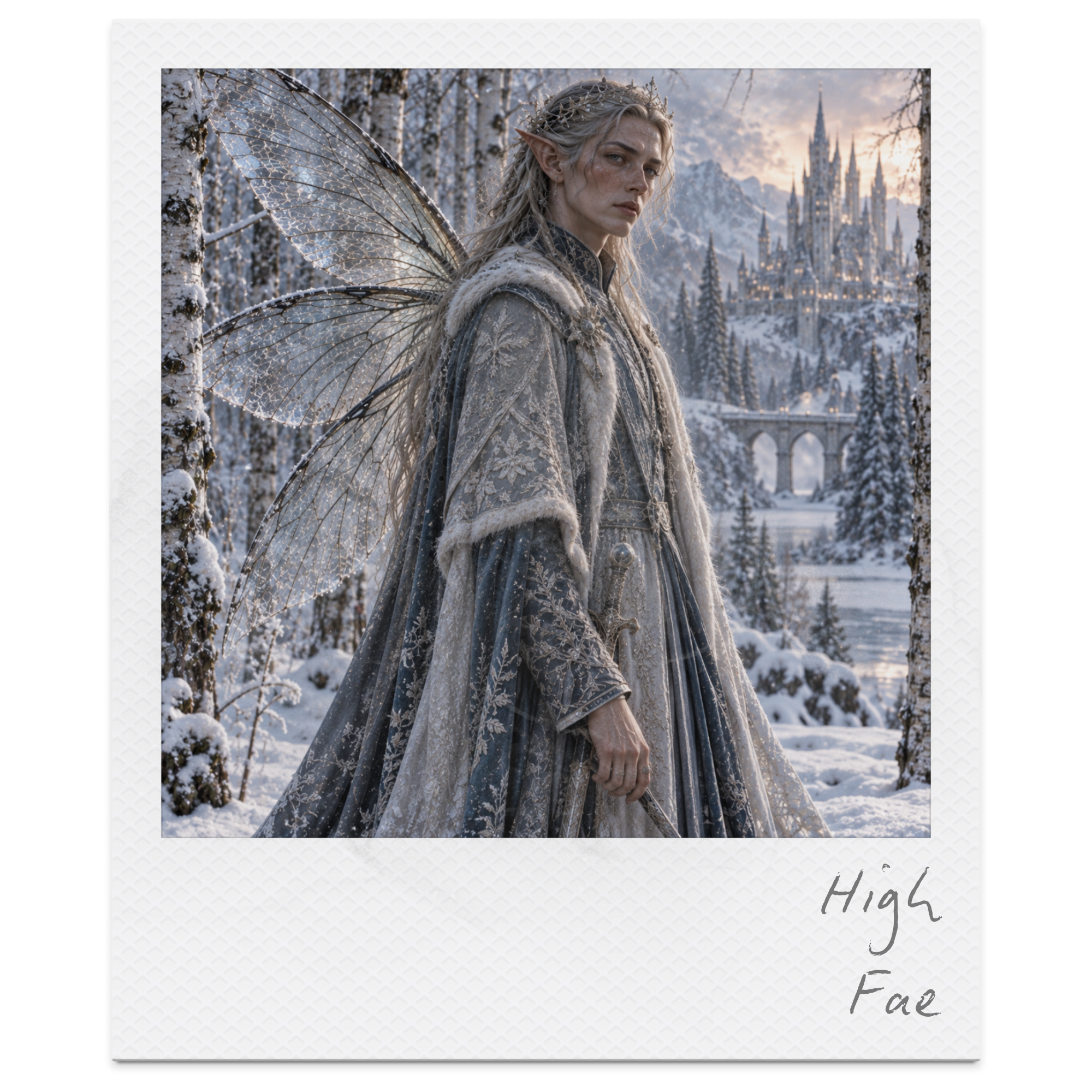
At the more powerful end of this world are the High Fae: ancient beings whose long lives, magical abilities and complex societies can place them far beyond ordinary human experience. The 70 High Fae Writing Prompts explores immortal courts, ancient magic, rival houses and fae royalty, offering inspiration for beings who possess their own histories, loyalties and struggles for power.
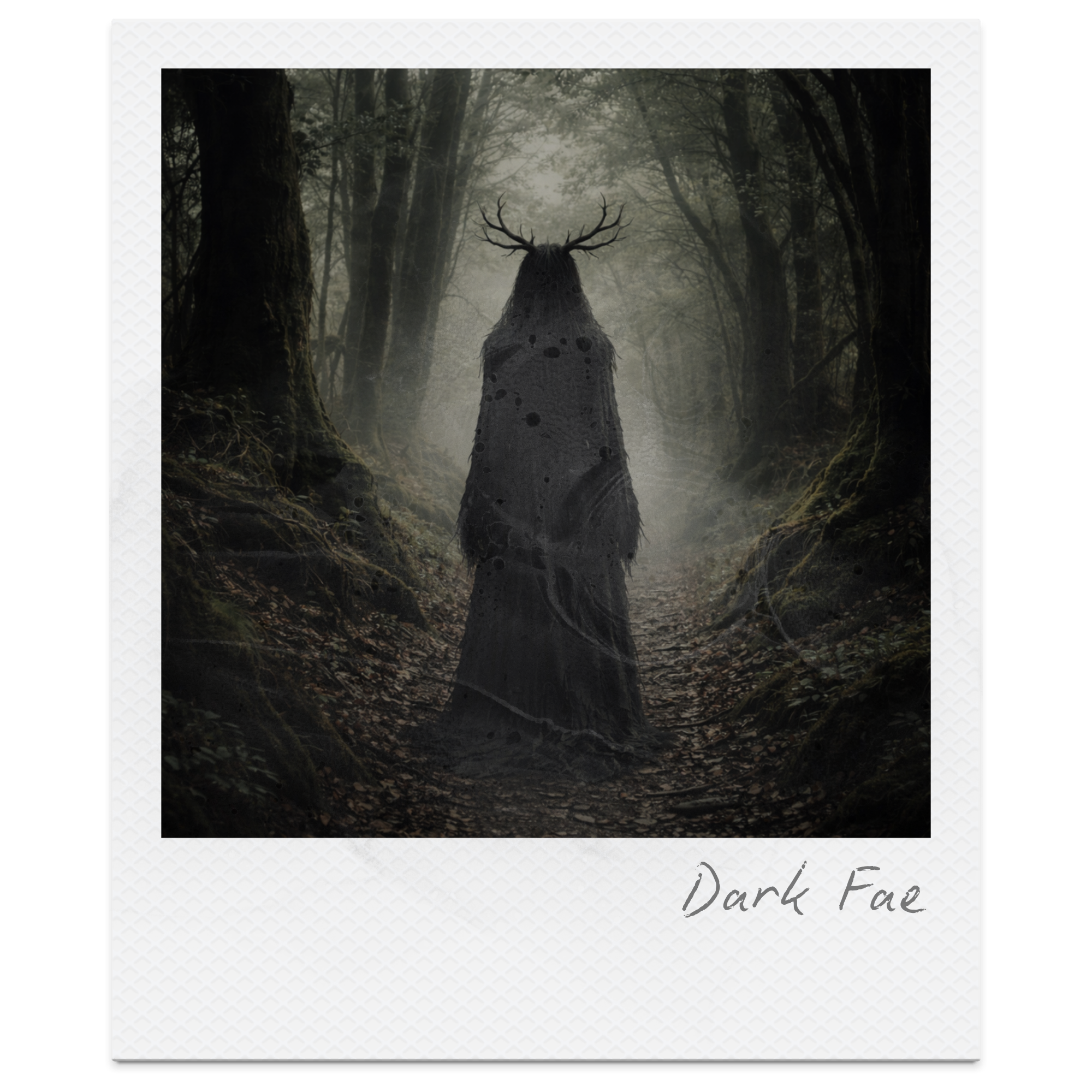
But encounters with the fae can also be much darker. They may offer bargains whose consequences are deliberately difficult to understand, follow rules that make perfect sense only to themselves or treat humans as curiosities rather than equals. The Dark Fae Folklore Writing Prompts can help you explore the more dangerous side of faerie encounters, where beauty and enchantment do not necessarily mean safety.
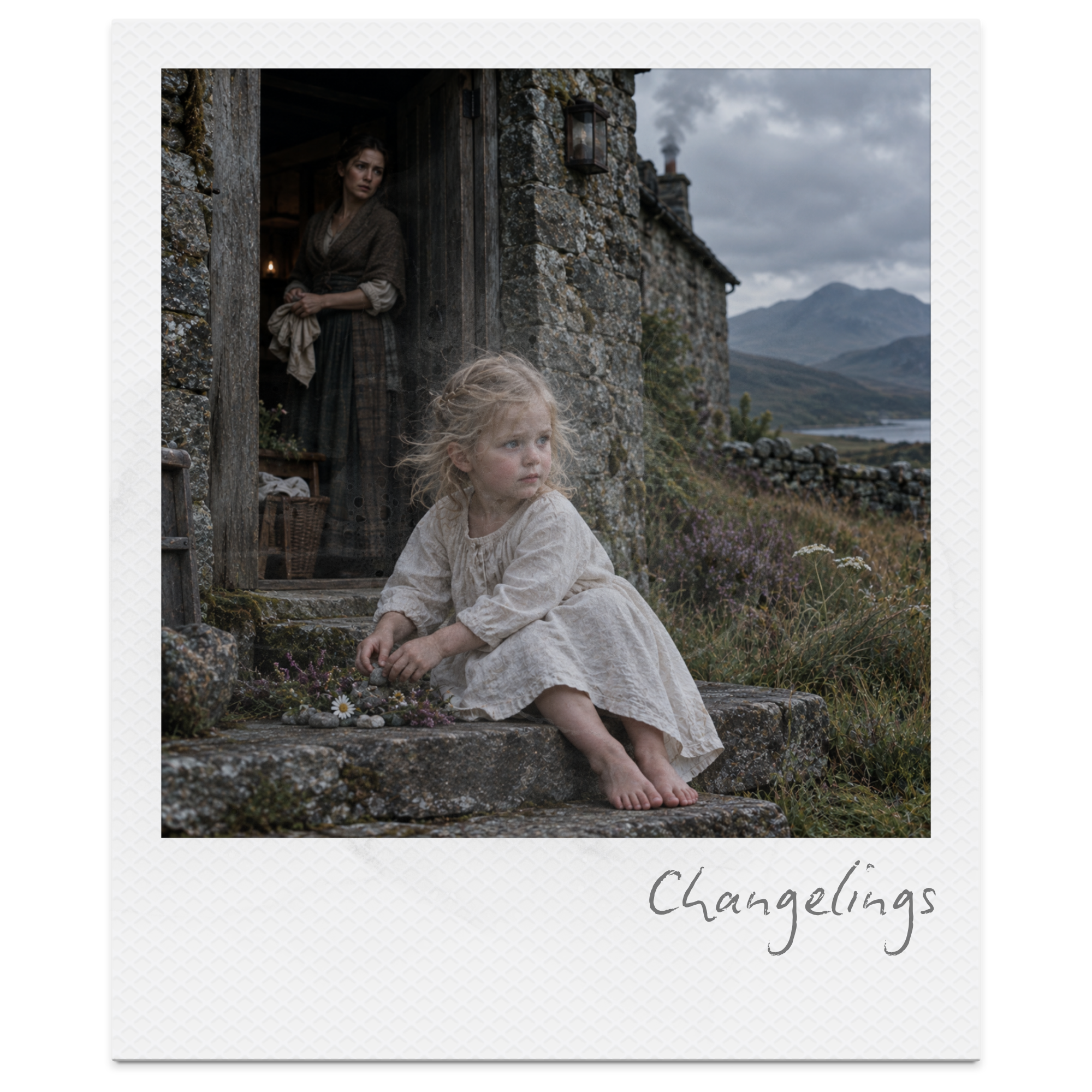
Changelings bring that danger directly into the human home. Stories of stolen children, faerie exchanges and uncertain identities create questions about family, belonging and the boundary between the human and Otherworldly. The 70 Changeling Writing Prompts explores what happens when someone has been taken, exchanged or raised in a world that may never truly have been theirs.
When adding fae to your own fairytale world, decide what separates their world from the human one and what allows that boundary to be crossed. Perhaps certain paths lead there only at dusk, names carry power, gifts create obligations or particular customs must be followed when dealing with them. The more consistent those rules become, the more the fae will feel like inhabitants of an older world with its own logic rather than magical creatures who appear only when the plot requires them.
Mythical Creatures & Fairytale Monsters
Monsters give a fairytale world its dangers, mysteries and warnings. Dragons guard forbidden treasures, giants loom over distant kingdoms, trolls wait beside bridges and ogres inhabit the places sensible travellers know to avoid. Some creatures exist to threaten the hero, but others can become guardians, companions, reluctant allies or misunderstood inhabitants of a world humans have never fully understood.
Dragons are among the most recognisable creatures in fairytales and fantasy, but they do not always need to play the same role. A dragon might terrorise a kingdom, protect an enchanted object, demand an annual tribute, sleep beneath a mountain or possess knowledge that has been forgotten by everyone else. Think about what your dragon wants, why humans fear it and what would happen if someone discovered that the stories told about it were wrong.
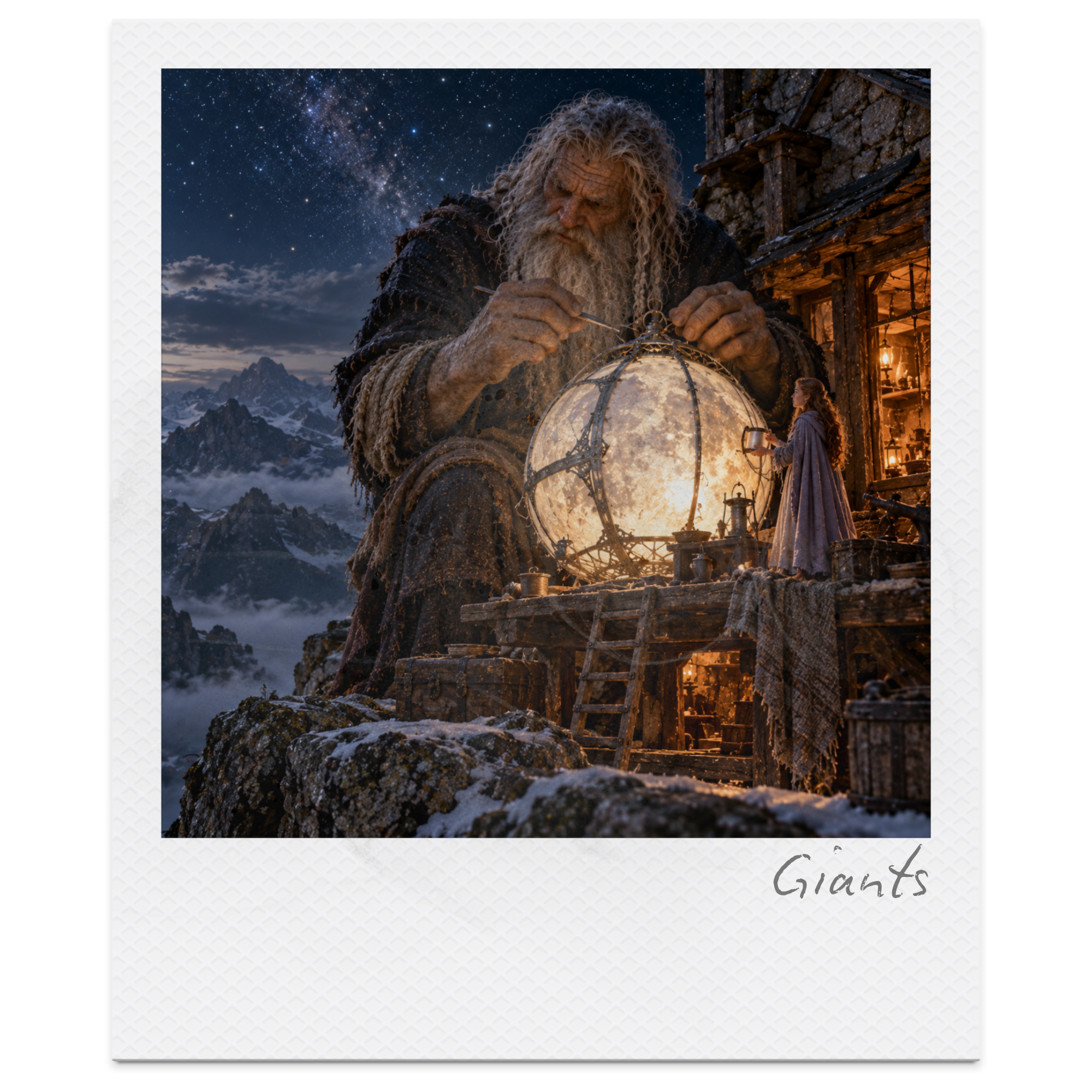
Giants can make the familiar world suddenly feel very small. The 70 Fairytale Giant Prompts explore giants through magical kingdoms, enormous castles, dangerous encounters and unexpected relationships, giving you different ways to move beyond the simple idea of a giant as something a hero must defeat.
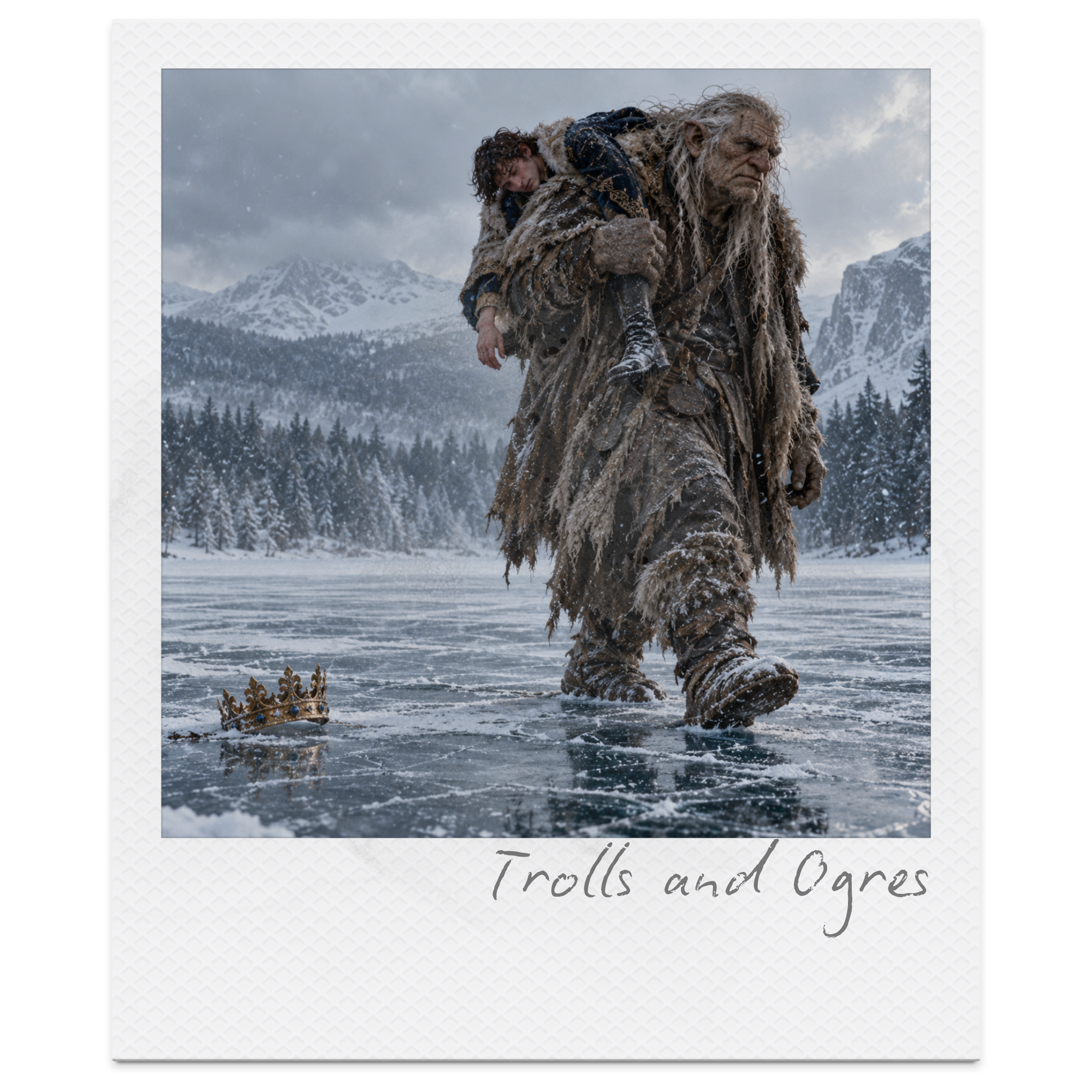
Trolls and ogres can occupy the wilder edges of the fairytale world: bridges, mountain passes, caves, forests, abandoned roads and places where travellers become vulnerable. They might demand payment, guard a boundary, set impossible challenges or simply have very different ideas about who is trespassing on whose land. Explore these possibilities with the 70 Troll & Ogre Prompts.
Your world can also contain creatures entirely of your own invention. The 100 Fairytale Creatures & Monsters offers magical beings and story ideas you can use to populate forests, mountains, kingdoms, rivers and forgotten places with something stranger than the creatures readers already know.
When creating a monster or magical creature, think about where it lives, what it wants, what people believe about it and how those beliefs affect the world around it. A village may pay tribute to the giant in the hills. Travellers might leave coins beneath a bridge before crossing. A kingdom could have been built around avoiding the sleeping dragon beneath it. The creature becomes part of your worldbuilding when people have learned to change their behaviour because it exists.
Mermaids & Sea Witches
Beneath the waves of a fairytale world, entire kingdoms may exist beyond human knowledge. Mermaids inhabit magnificent underwater palaces, sirens lure sailors towards dangerous shores, and sea witches practise strange forms of magic in caves beneath the ocean floor. These beings introduce a different kind of enchantment, where the boundaries between land and sea can become as important as the boundaries between the ordinary and magical worlds.
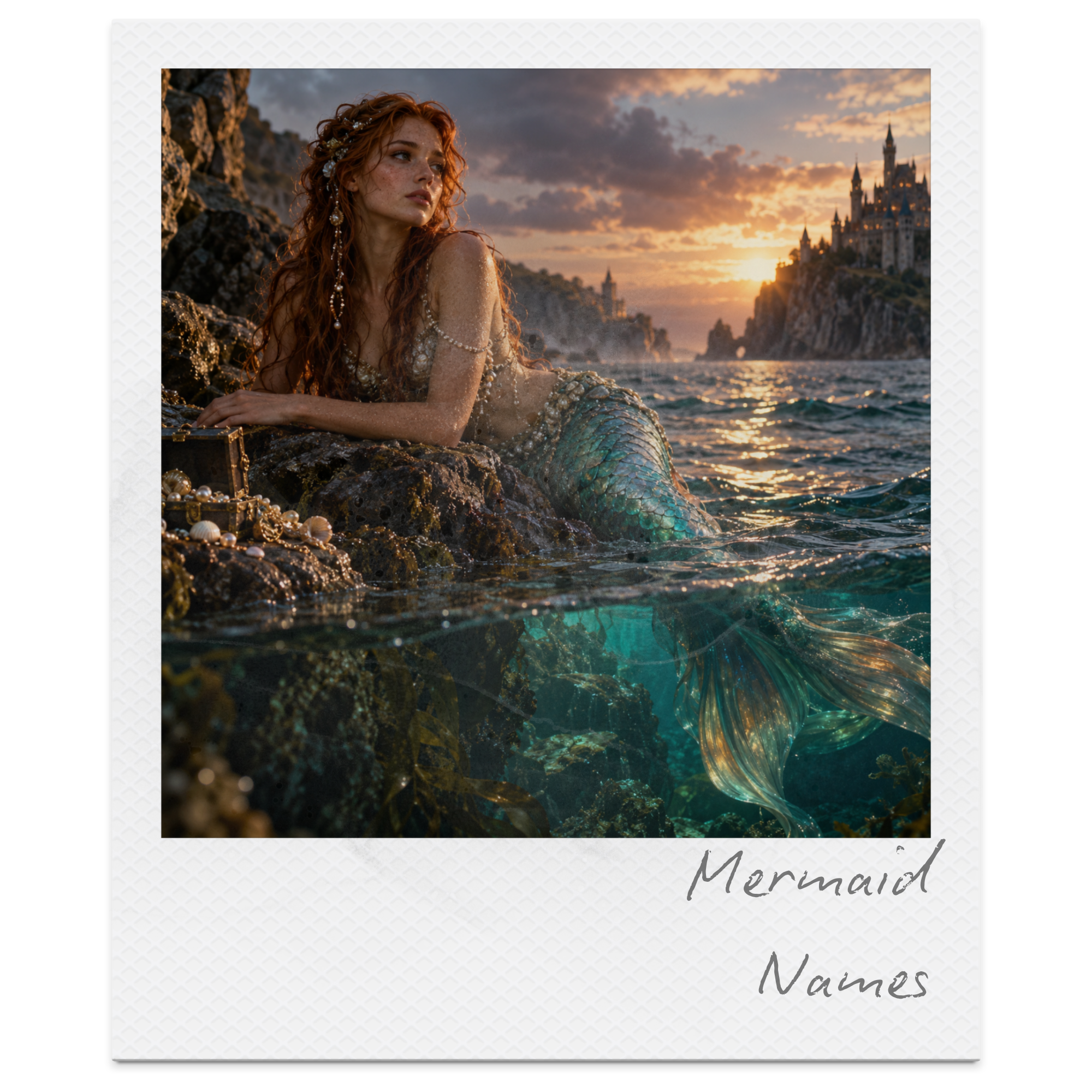
Mermaids are particularly useful for exploring belonging, transformation, forbidden love and the desire for a different life. Some may long to walk upon the shore, while others fiercely protect their underwater kingdoms from human interference. The 70 Mermaid & Siren Writing Prompts offer inspiration for developing underwater characters, encounters and adventures, while 100 Fairytale Mermaid Names can help you create mermaid princesses, mysterious sirens, royal families and other inhabitants of your ocean kingdoms.
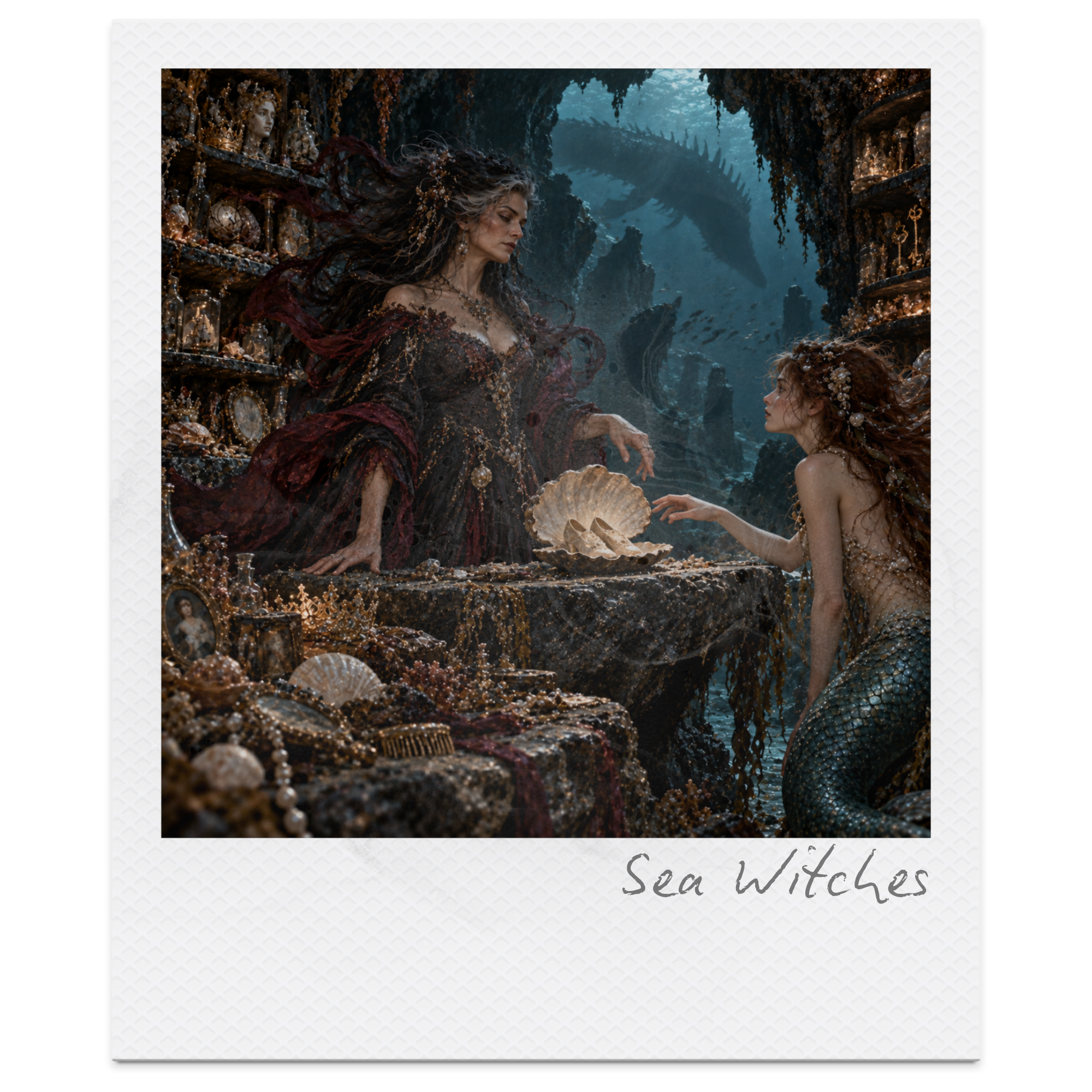
Sea witches bring a more dangerous and unpredictable presence to these worlds. They might live among shipwrecks, guard forgotten treasures, offer transformations or possess knowledge that even the rulers of the sea cannot obtain. Some are feared because of their powers, while others have been deliberately misunderstood or exiled. Explore these possibilities through the 70 Sea Witch Prompts, which can inspire magical encounters, mysterious underwater dwellings and characters whose intentions are not always immediately clear.
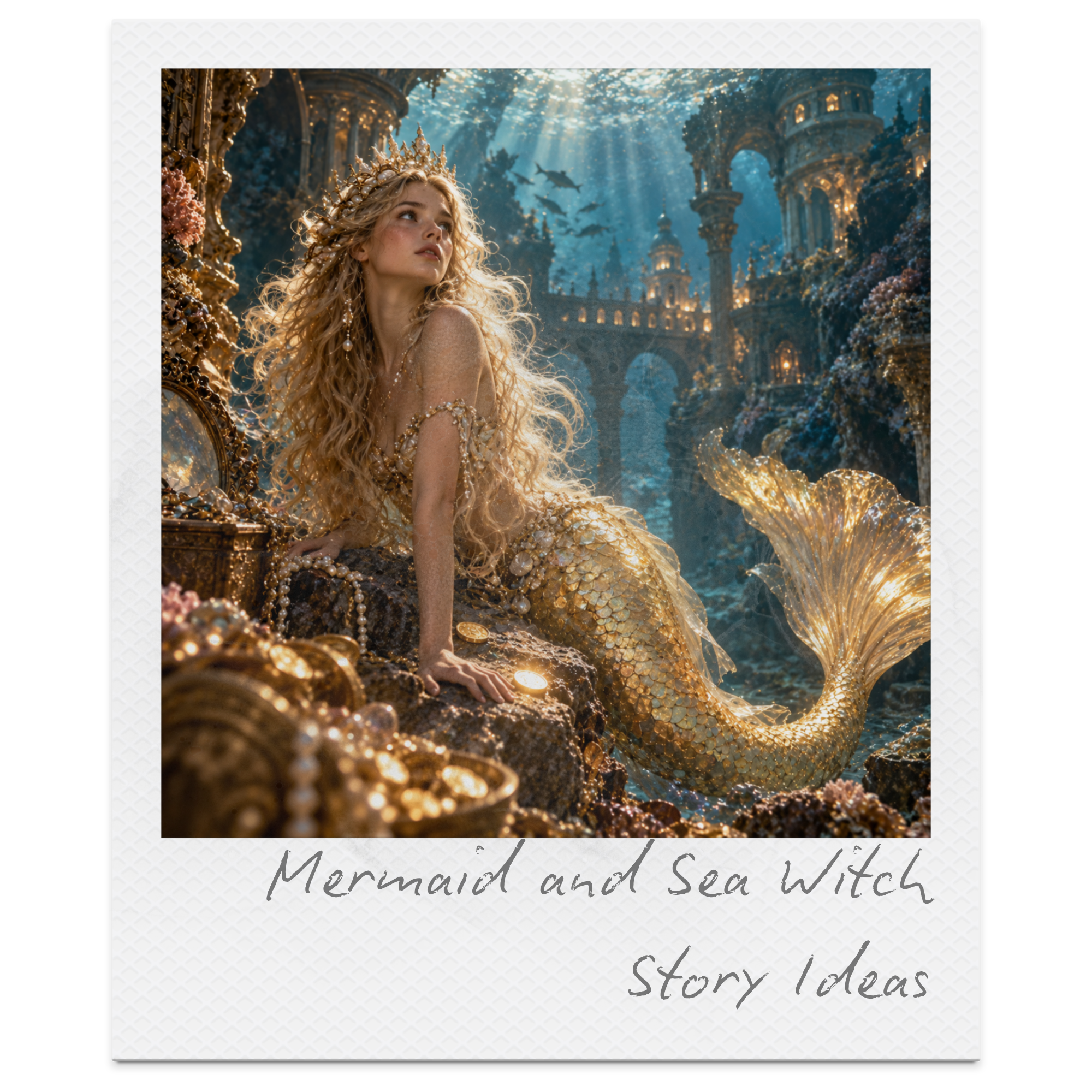
For a wider range of adventures, 100 Mermaid & Sea Witch Fairytale Story Ideas brings these beings together in original tales involving underwater royalty, dangerous discoveries, transformations, hidden secrets and conflicts between the human world and the kingdoms beneath the sea.
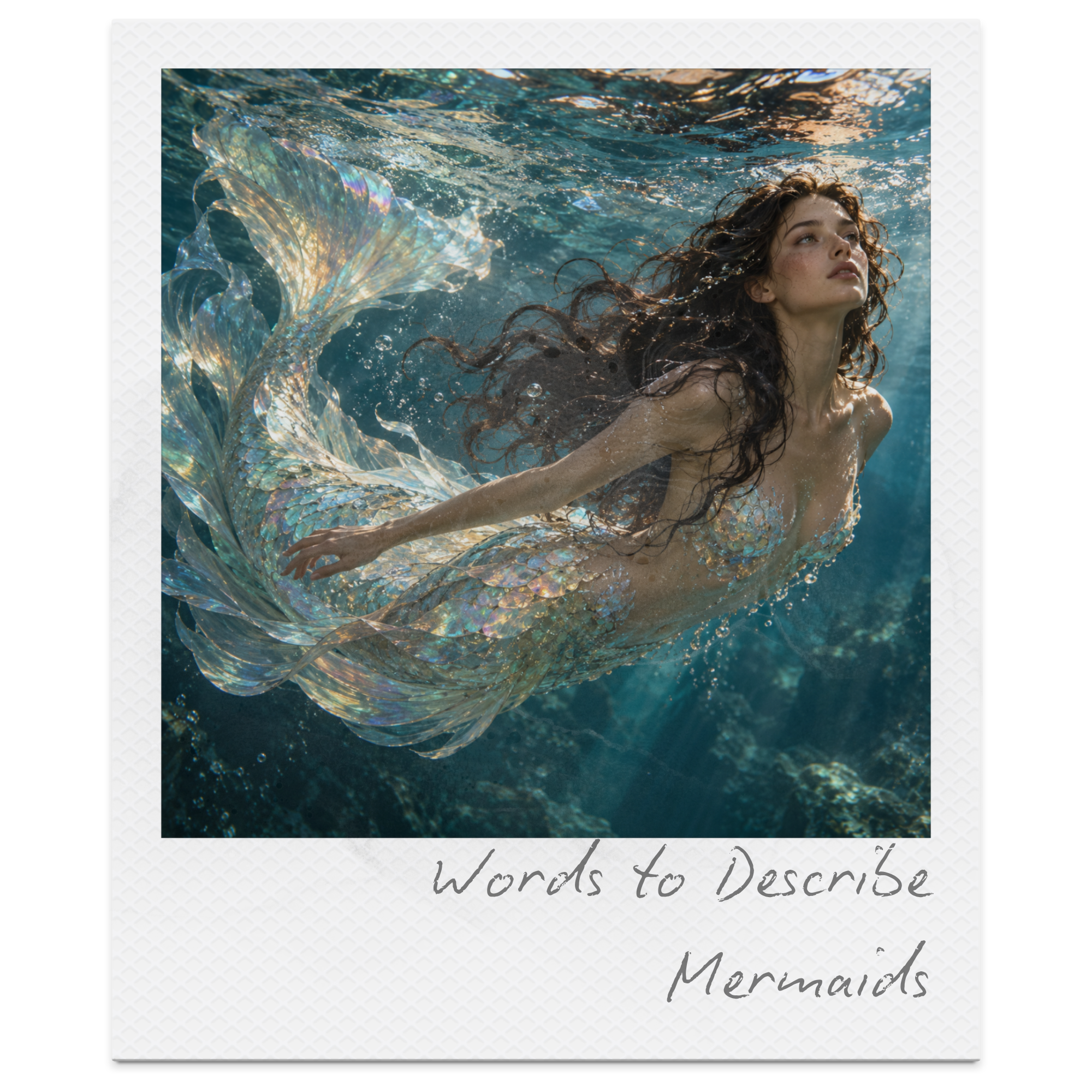
The appearance of these creatures can also shape the atmosphere of your fairytale. A mermaid might have scales resembling tarnished silver, hair that moves like drifting seaweed or a voice that carries strangely through the water. The 100 Words to Describe a Mermaid collection offers descriptive vocabulary and examples to help you create distinctive, memorable characters rather than relying on the same familiar images.
When incorporating mermaids and sea witches into your worldbuilding, consider how the underwater world interacts with the human one. Do fishermen believe mermaids bring good fortune or storms? Are sea witches feared by humans and merfolk alike? Can mermaids visit the surface freely, or must they sacrifice something to cross between worlds? These questions help turn familiar fairytale beings into inhabitants of a living world with its own relationships, traditions and mysteries.
Fairytale Magic, Wishes, Curses & Bargains
Magic lies at the heart of many fairytale worlds, but it rarely behaves like an ordinary skill that anyone can learn. A fairy godmother transforms a pumpkin into a carriage, a witch places a curse upon a newborn princess, a mysterious stranger grants three wishes, and a desperate traveller makes a bargain they may spend the rest of their life trying to escape. In fairytales, magic often appears when ordinary solutions are no longer possible, offering extraordinary possibilities while introducing dangers, obligations and consequences that characters cannot always foresee.
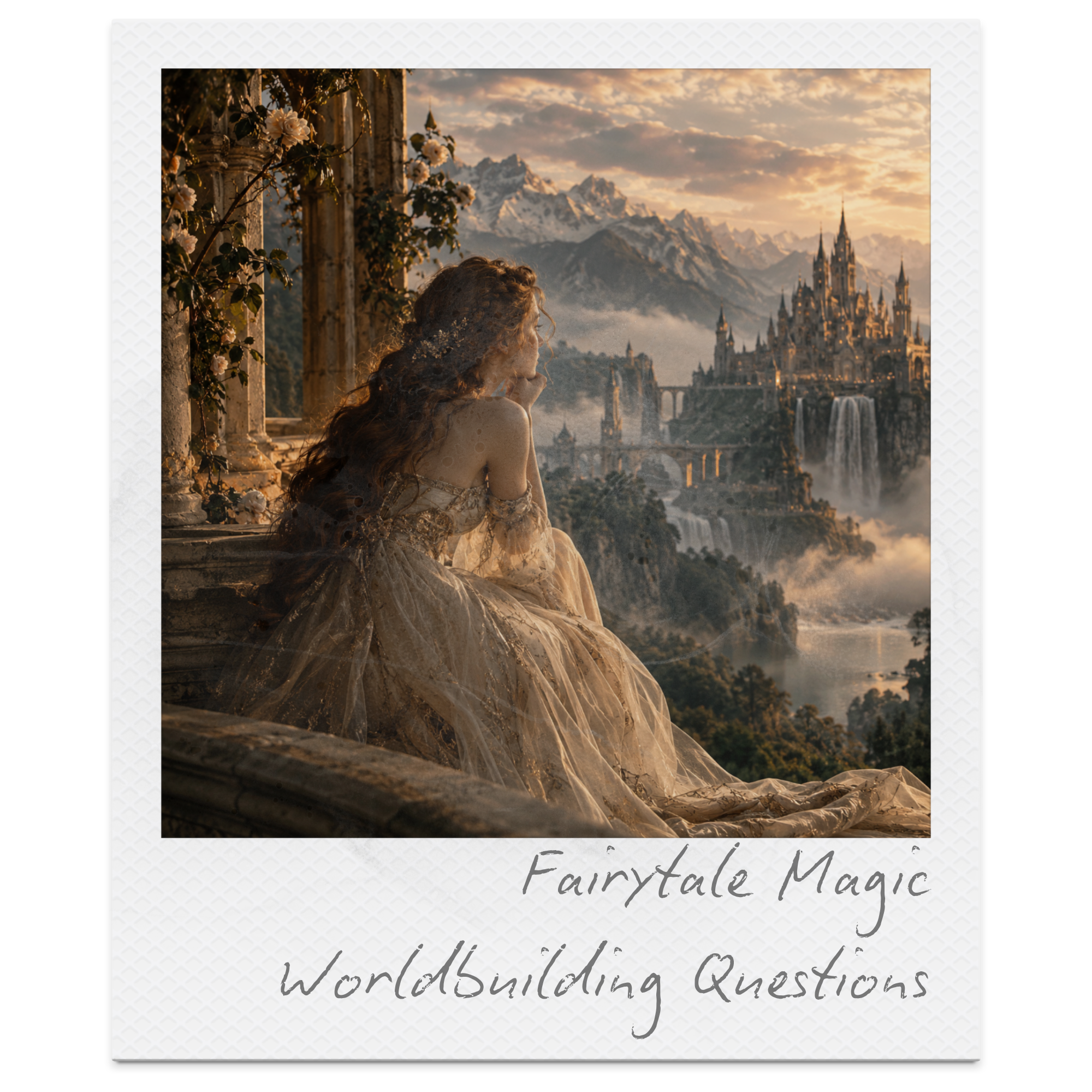
When developing magic for your own fairytale world, begin by considering where it comes from, who possesses it and what it can accomplish. Perhaps magic belongs to ancient families, is inherited through particular bloodlines or exists naturally within forests, rivers and mountains. It might be practised by witches and enchanters, bestowed by fairies, discovered in forgotten books or granted by supernatural beings. Some kingdoms may celebrate magic, while others fear it, forbid its use or attempt to control those who possess it. Use these 100 Fairytale Magic Worldbuilding Questions to develop the origins, possibilities and limitations of magic in your own storyworld.
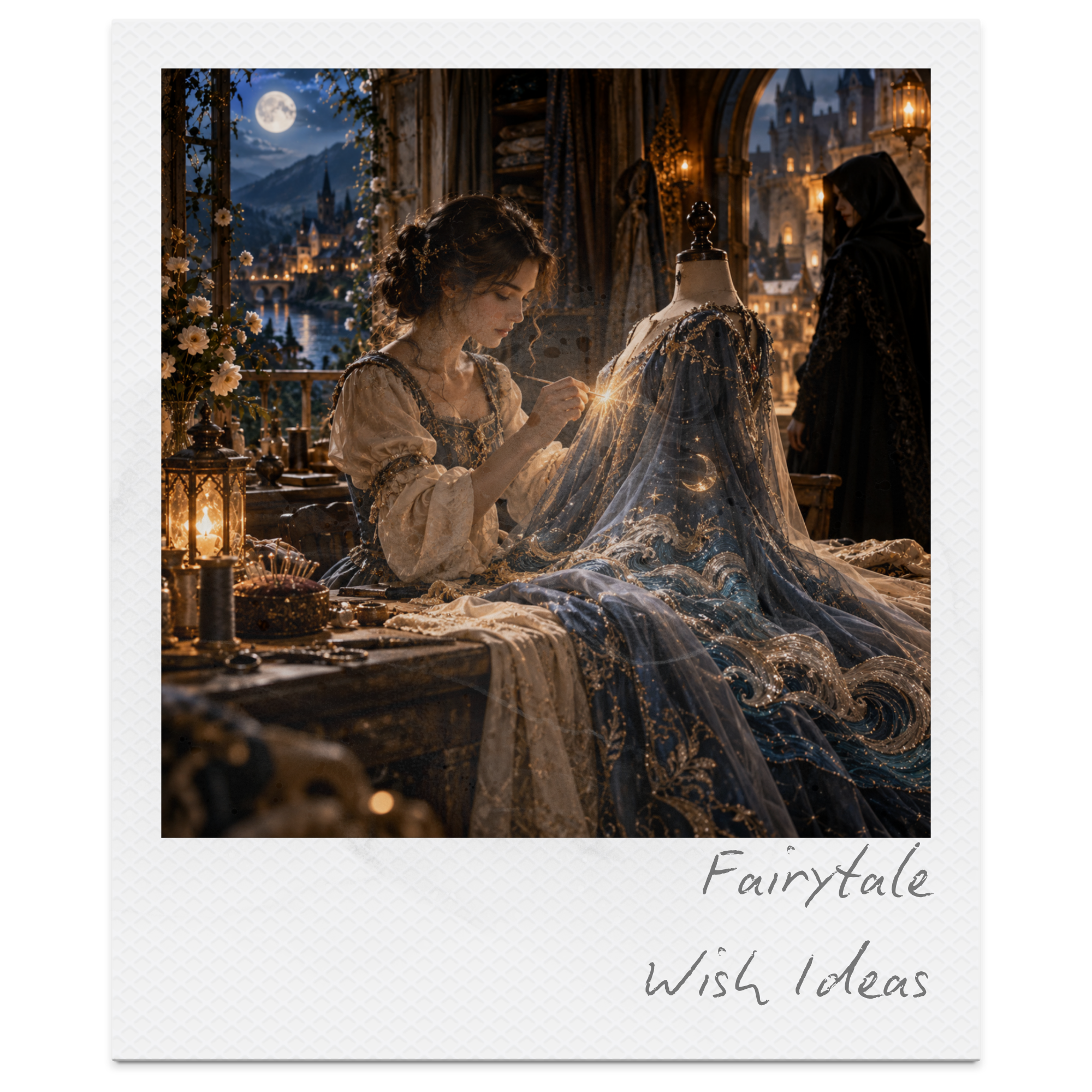
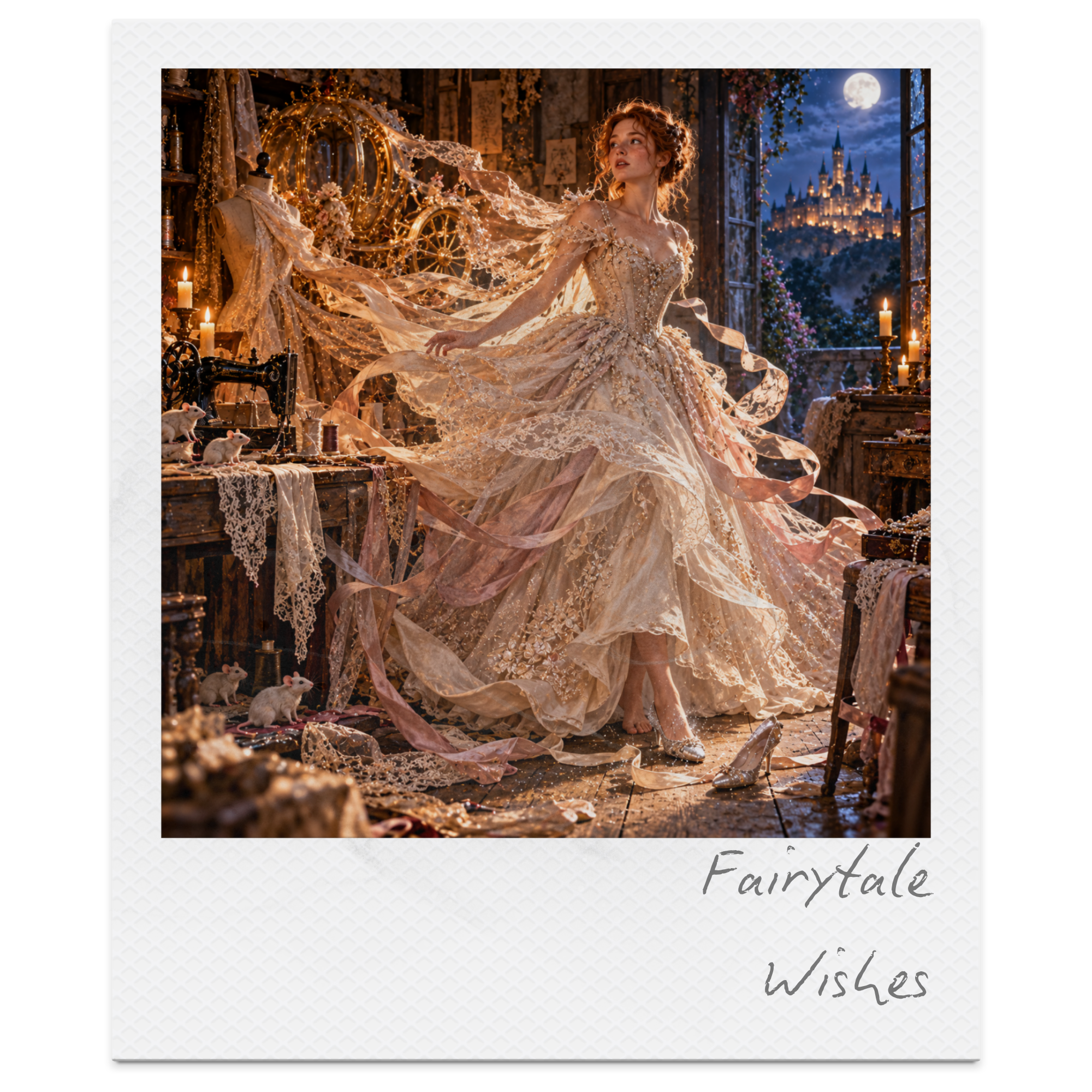
Wishes introduce the possibility of obtaining something that would otherwise be impossible. A poor farmer might wish for riches, a lonely princess might long for freedom, or a grieving parent might ask for the return of someone they have lost. Yet fairytale wishes are rarely as straightforward as they first appear. A wish may be interpreted literally, fulfil a desire in an unexpected way or reveal that obtaining something is not the same as finding happiness. Explore the possibilities with 100 Fairytale Wish Ideas and 70 Fairytale Wishes Writing Prompts, featuring magical desires, unexpected transformations and the consequences of getting exactly what you asked for.
If you're struggling to invent an original magical wish, try the Fairytale Wishes Generator for fresh inspiration. Use the results as the beginning of a story, develop them into a magical dilemma or explore how granting a character's deepest desire might change the world around them.
Curses bring a different kind of magic into the story. They can transform appearances, imprison characters, condemn entire kingdoms or bind families to misfortunes that endure for generations. A princess might fall into an enchanted sleep, a prince could be transformed into a beast, or a kingdom might remain trapped in winter until an ancient wrong is put right. When creating fairytale curses, think about who placed them, why they were cast, who suffers their consequences and what might eventually break their power.
Bargains and promises introduce another important element of fairytale magic: the idea that extraordinary gifts often come with obligations. A witch might offer a transformation in exchange for something precious, a fairy could demand an unnamed future favour, or a supernatural creature might promise assistance on the condition that its true name is never spoken. These agreements can create powerful conflicts because characters must decide what they are willing to sacrifice, whether they can trust the beings offering help and what happens when a promise is broken. For inspiration, explore 70 Fairytale Curses & Bargains Writing Prompts, featuring dangerous enchantments, impossible promises, magical punishments and agreements with unexpected consequences.
What makes fairytale magic particularly memorable is that it often follows a strange but meaningful logic of its own. A spell may work only until midnight, a curse might be broken by an unexpected act of kindness, or a bargain could depend upon the precise wording of a promise. These conditions make magic feel mysterious without allowing it to solve every problem. They also create opportunities for characters to demonstrate courage, cleverness, compassion or sacrifice.
As you build your fairytale world, remember that magic should shape the choices your characters make, not simply provide an easy solution whenever they encounter trouble. A wish might reveal what someone truly values, a curse could expose an old injustice, and a bargain may force a character to choose between something they desperately want and something they cannot bear to lose. The most compelling fairytale enchantments are those that create wonder while giving the story deeper meaning.
Magical Objects & Treasures
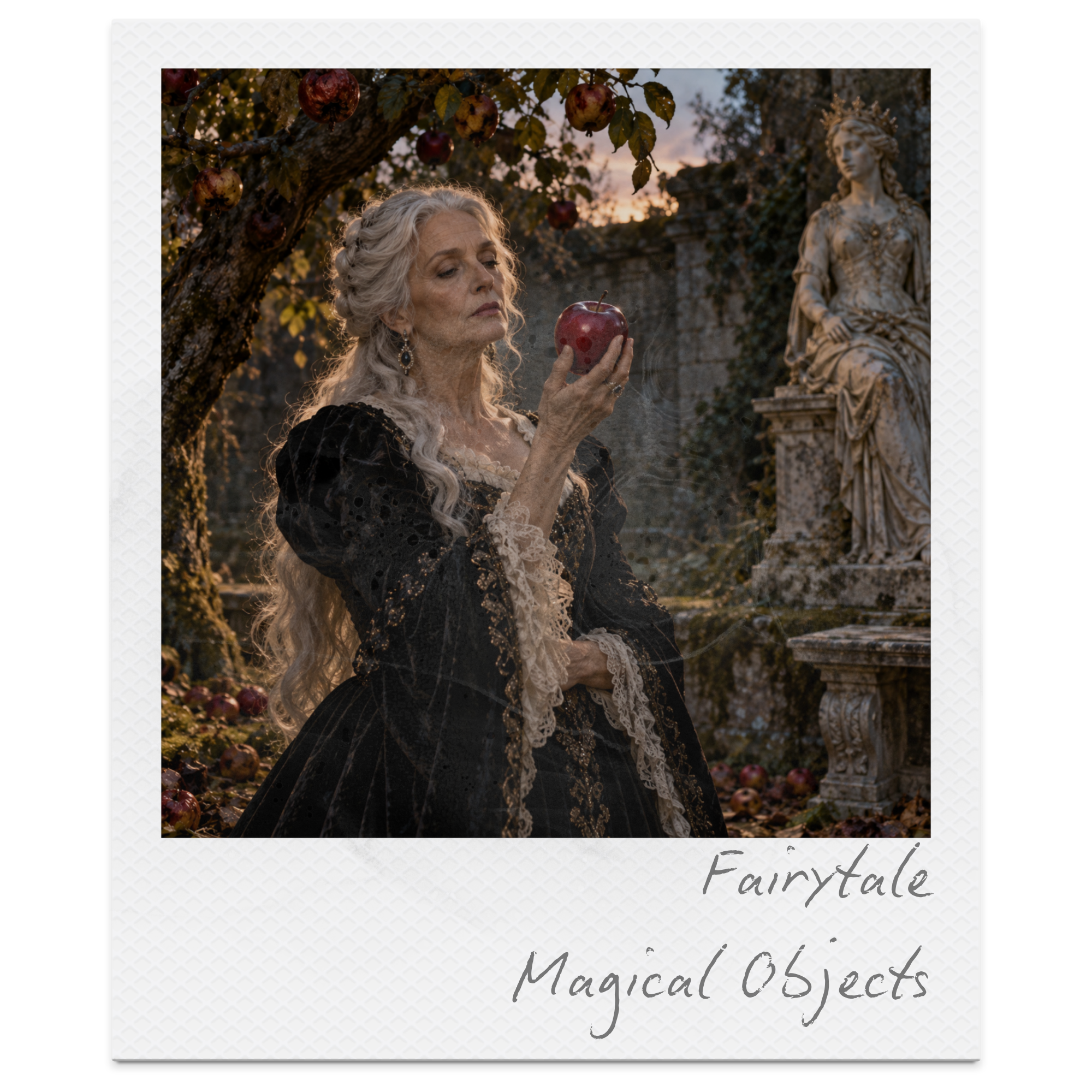
Magical objects are among the most recognisable elements of fairytale storytelling. Enchanted mirrors reveal hidden truths, golden keys unlock forbidden doors, spinning wheels carry ancient curses, and mysterious rings grant extraordinary powers. These objects may appear ordinary at first glance, yet they often possess the ability to transform lives, change the fortunes of kingdoms or set an entire adventure in motion. In a fairytale world, even the smallest possession can hold a secret far greater than its appearance suggests.
When creating magical objects for your own fairytale world, begin by considering what they are, what they can do and why they exist. An enchanted comb might transform into an impenetrable forest when thrown behind a fleeing princess. A silver needle could stitch dreams into clothing, while an ancient crown might allow its wearer to hear the voices of every ruler who came before them. For inspiration, explore 100 Magical Objects for Fairytales, featuring enchanted treasures, unusual artefacts and magical possessions that can inspire original stories.
The history of an object can be just as important as its powers. Who created it, who possessed it before your protagonist and how did it come to be lost, hidden or forgotten? Perhaps a magical sword has passed through generations of royal heirs, a beautiful necklace was stolen from a fairy kingdom, or a seemingly worthless wooden box contains something a powerful witch has spent centuries searching for. An object's origins can connect your characters to the wider history of their world, revealing old conflicts, forgotten promises and secrets that have survived long after their original owners disappeared.
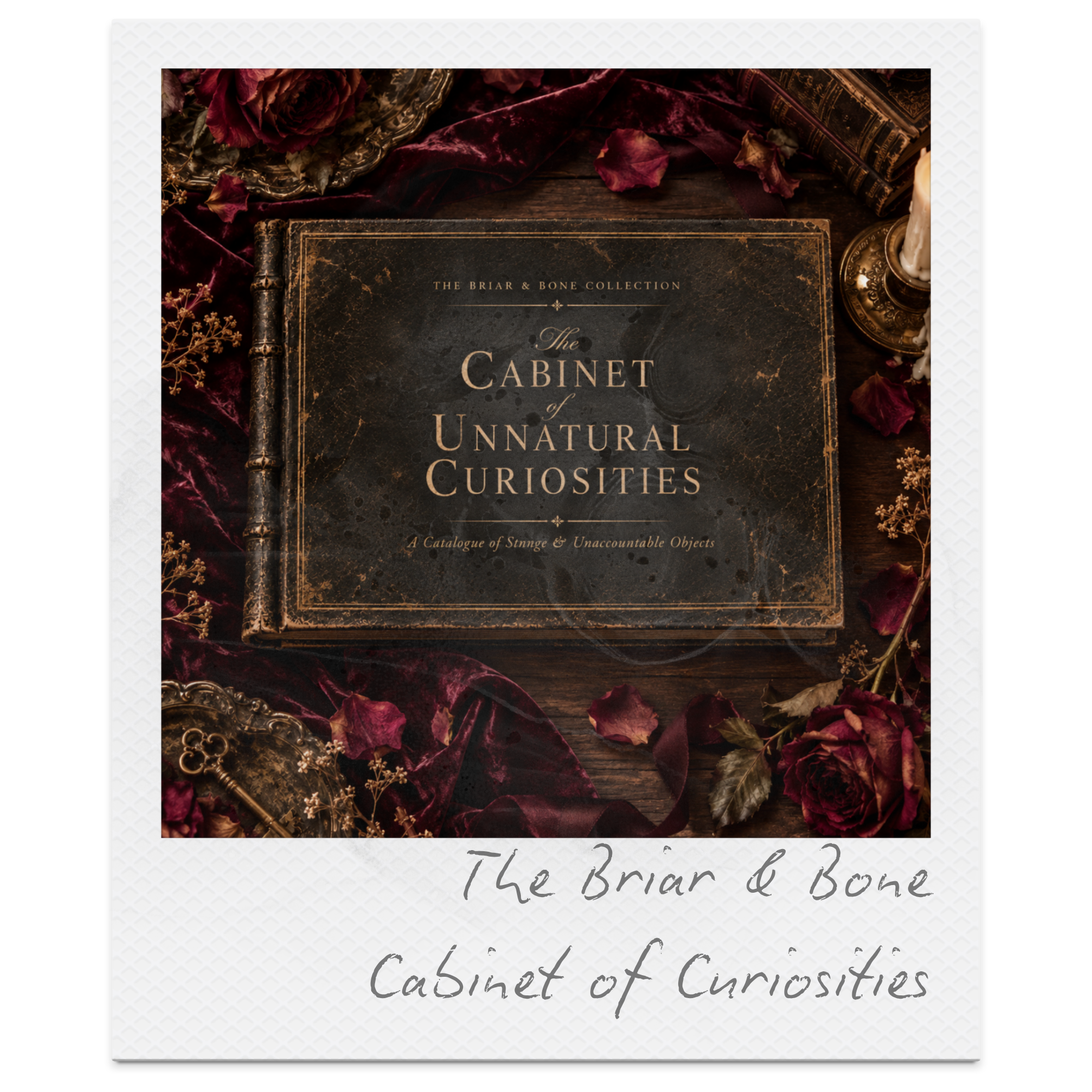
For a darker approach to artefact-inspired storytelling, explore Briar & Bone: The Cabinet of Unnatural Curiosities, an illustrated collection of mysterious objects, cursed possessions and forgotten treasures from the dark fairytale Kingdom of Rosenwald. Each artefact invites you to imagine its origins, uncover its secrets and create original stories inspired by the strange objects left behind.
Magical objects can also shape the way people live. A kingdom might protect an enchanted crown that determines its rightful ruler, while villagers leave offerings beside an ancient well believed to grant good fortune. A merchant could unknowingly sell a cursed possession, or a family might guard an heirloom whose true purpose has been forgotten. Use these 100 Fairytale Magical Object Worldbuilding Questions to develop the origins, abilities, ownership, limitations and significance of the treasures that exist within your storyworld.
The most memorable enchanted objects rarely exist simply to make a character's life easier. They create opportunities, introduce complications and force characters to make difficult choices. A mirror that reveals the future might show something its owner desperately wants to prevent. A magical cloak could make someone invisible while gradually erasing their memories. A golden key might open any locked door, but only once. These possibilities can become the foundation of an entire fairytale, particularly when an object passes into the hands of someone who does not fully understand its power.
For more story inspiration, explore 70 Fairytale Magical Object Writing Prompts, featuring mysterious discoveries, enchanted treasures, dangerous heirlooms and extraordinary possessions that change the lives of those who find them.
As you develop your fairytale world, remember that the meaning of a magical object can be more important than its power. A simple pair of shoes might represent freedom, a broken crown could symbolise a lost kingdom, and an ordinary-looking ring may carry the promise of a love that has endured for centuries. Give your enchanted objects histories, purposes and consequences, and they can become some of the most memorable elements of your fairytale world.
Fairytale Society & Everyday Life
Behind every enchanted castle, mysterious forest and royal court lies a world of ordinary people going about their daily lives. Bakers rise before dawn, merchants travel between villages, farmers tend their fields, and families gather around fires to exchange stories about the strange things that live beyond their doors. These familiar details help ground a fairytale world, making its magical elements feel all the more extraordinary when they interrupt everyday life.
When developing fairytale society, think about how people live, work, celebrate and interact with one another. A prosperous kingdom might have bustling markets, elaborate festivals and wealthy merchant families, while an isolated mountain village could depend upon generations of shared traditions and mutual protection. Consider where people obtain food, what they wear, how children are raised and which occupations are essential to their communities. Even a few carefully chosen details can suggest a society with its own history and identity.
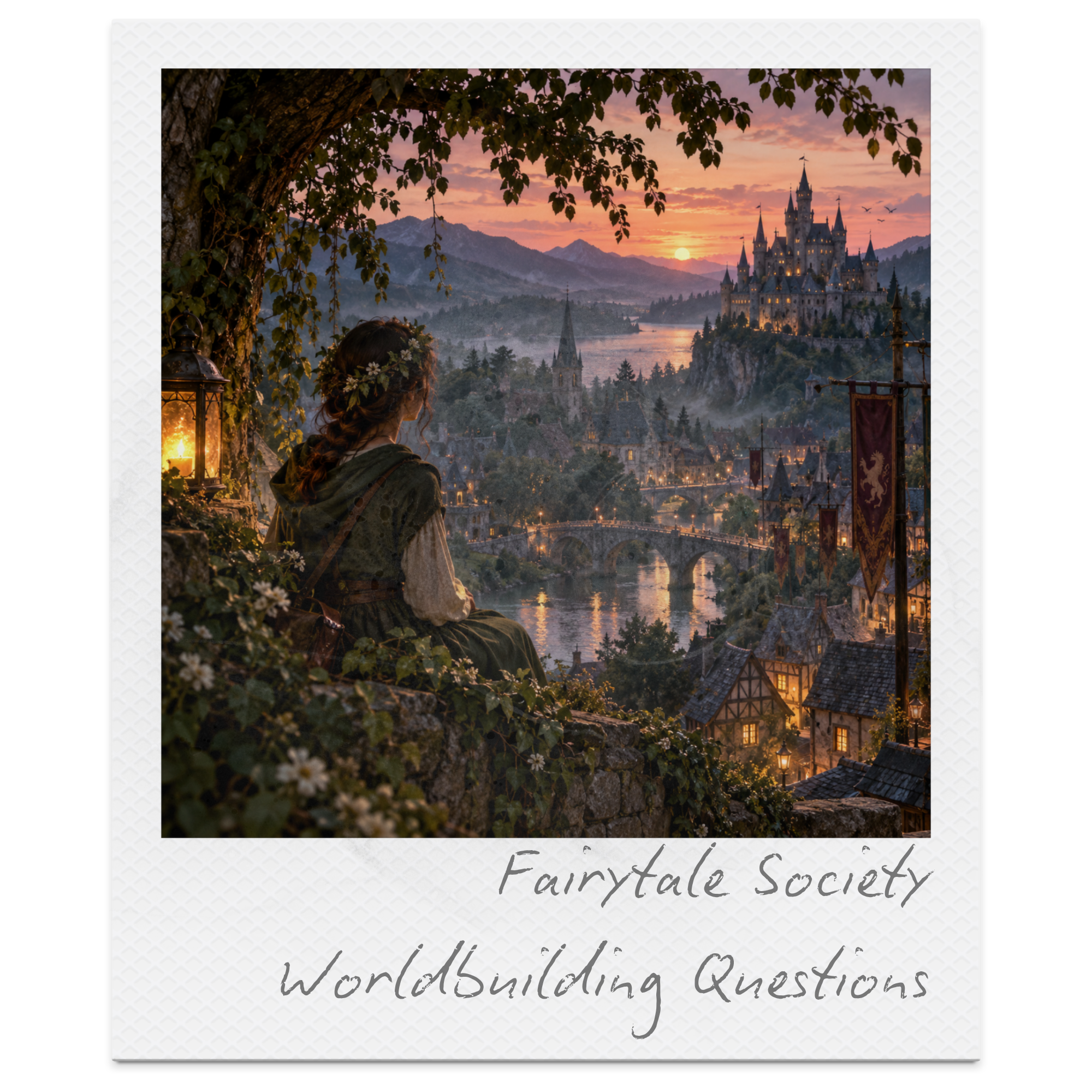
Social expectations can also shape the conflicts at the heart of a fairytale. A youngest son might be dismissed as foolish because he stands to inherit nothing, a poor girl could dream of attending a royal ball, or an apprentice might be forbidden from marrying someone above their station. Questions of wealth, marriage, inheritance, family duty and social position can create powerful motivations for characters, particularly when magic offers an opportunity to challenge the roles they have been assigned. Explore these relationships and the inequalities within your kingdom using 100 Fairytale Society Worldbuilding Questions, covering social hierarchies, magical influence, traditions and hidden injustices.
Traditions, celebrations and superstitions bring another layer of personality to your world. Perhaps villagers leave bread on their windowsills for wandering spirits, weddings must take place before sunset, or every household hangs a silver bell above its doorway to discourage unwanted visitors. Some customs might have practical origins, while others survive because nobody remembers what happened the last time they were ignored. Discover more inspiration in 100 Fairytale Traditions & Customs, featuring magical rituals, unusual celebrations and forgotten beliefs that can give your storyworld its own distinctive identity.
Consider, too, how ordinary people respond to the extraordinary. Do villagers welcome travelling witches or refuse them shelter? Are magical creatures treated as neighbours, threats or stories invented to frighten children? Does a family celebrate the birth of a child with magical abilities, or attempt to conceal those powers? Different communities within the same kingdom may hold very different beliefs, creating opportunities for conflict, misunderstanding and unexpected alliances.
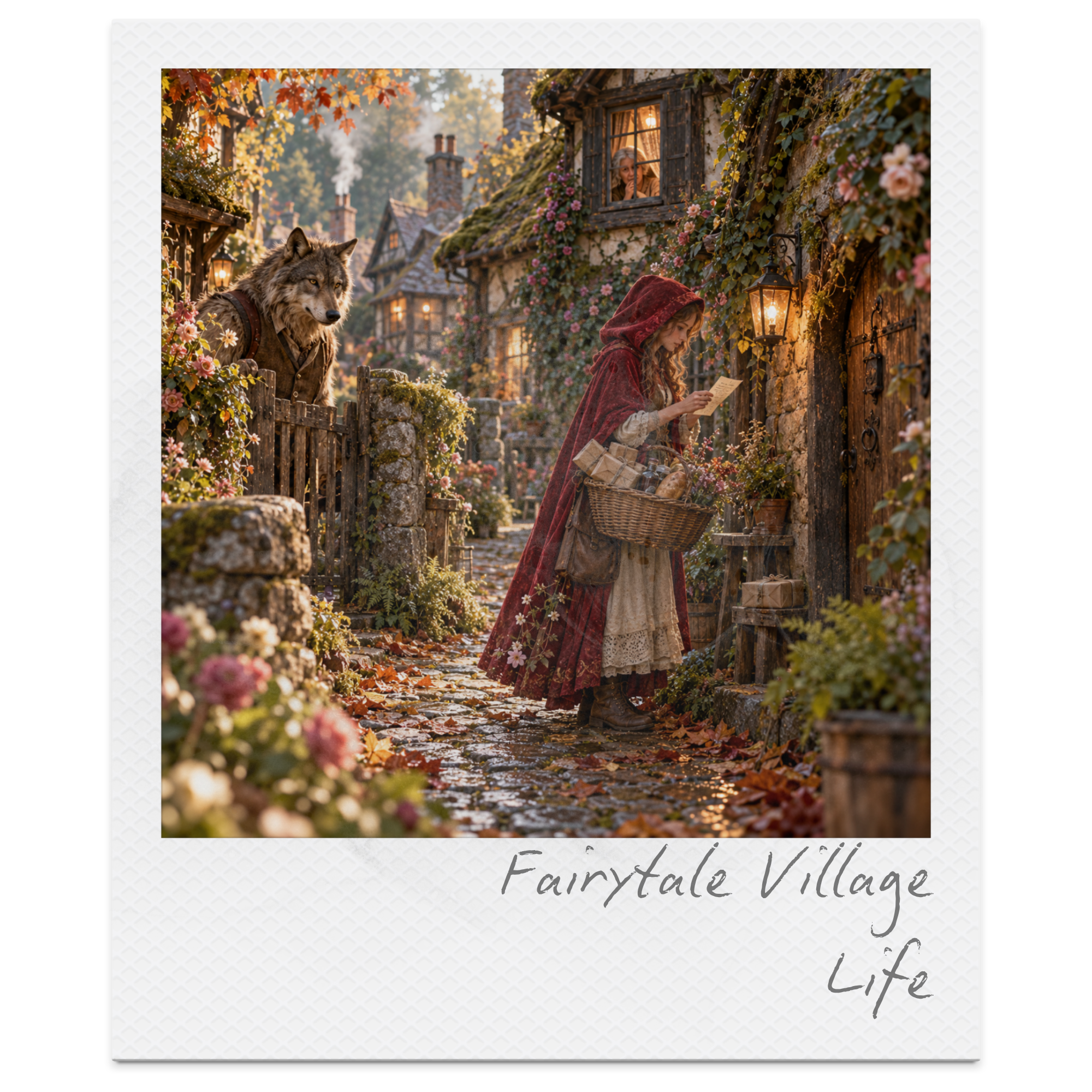
For a closer look at the smaller moments that make fairytale communities feel alive, explore 70 Fairytale Village Life Writing Prompts. From everyday magical mishaps to village secrets and unexpected discoveries, these prompts can help you imagine what happens between the grand quests, royal celebrations and extraordinary adventures.
The most convincing fairytale societies do not need complicated political systems or exhaustive histories. Instead, focus on the customs, relationships and everyday experiences that influence your characters' choices. A family tradition might explain why someone refuses an enchanted gift, a village superstition could prevent a traveller from taking the safest road, or an old social expectation might inspire a young protagonist to seek an entirely different life.
As you develop the everyday world of your fairytale, remember that ordinary life provides the contrast that makes magic meaningful. A talking animal is more remarkable when encountered by someone accustomed to tending sheep, and an invitation to a royal ball becomes more significant when the recipient has never travelled beyond their village. By giving your characters a believable world to belong to, you also give them something to protect, challenge, leave behind or eventually return to.
Fairytale Journeys & Quests
Many fairytales begin when a character leaves the safety of home and ventures into the unknown. A youngest son sets out to seek his fortune, a princess travels beyond the boundaries of her kingdom, a knight searches for an enchanted treasure, and a desperate traveller accepts a task that everyone else believes is impossible. These journeys carry characters away from familiar surroundings and into places where ordinary expectations no longer apply.
When creating a fairytale quest, begin by considering what your character wants and why they must leave home to obtain it. Perhaps they are searching for a lost family member, attempting to break an ancient enchantment, seeking a cure for a dying king or hoping to prove themselves worthy of a royal reward. The most compelling quests often begin with a simple desire but become increasingly complicated as the traveller discovers what achieving their goal will require.
Impossible tasks are particularly important in traditional fairytale storytelling. A character might be ordered to spin straw into gold, retrieve a feather from a mythical bird, sort thousands of scattered seeds before sunrise or bring back water from a spring that appears only once every hundred years. These challenges can test cleverness, kindness, patience and courage rather than physical strength alone. Explore 100 Fairytale Quest & Task Ideas for inspiration when developing magical missions, extraordinary challenges and seemingly impossible objectives.
The journey itself can be just as important as the destination. Enchanted forests, dangerous crossroads, forgotten bridges and mysterious inns create opportunities for travellers to encounter magical beings, receive warnings or make decisions that change the course of their adventures. A stranger might offer assistance in exchange for a small kindness, while an apparently insignificant choice could determine whether the hero succeeds or fails. Consider how each encounter reveals something about your character and prepares them for the challenges ahead.
Fairytale journeys often follow patterns of repetition and escalation. A hero might meet three strangers, face three trials or receive three opportunities to make the right choice. Each encounter can build upon the previous one, allowing the character to learn something important or demonstrate how they have changed. For more inspiration, explore 70 Fairytale Quest Writing Prompts, featuring magical journeys, dangerous missions, unexpected encounters and extraordinary adventures.
If you're looking for a starting point, try the Fairytale Quest Generator to develop an original quest for your story. Use the generated idea as the foundation of an adventure, then consider what obstacles, discoveries and difficult choices might transform a simple mission into a memorable fairytale.
As you build your fairytale world, remember that a quest should change the traveller as well as their circumstances. A character who leaves home seeking riches might return having discovered the value of friendship, while someone searching for a magical cure may learn that the greatest challenge is deciding whom to trust. Whether your story involves an enormous journey across several kingdoms or a single impossible task performed before dawn, the adventure becomes meaningful when its outcome reveals something about the character undertaking it.
Create a Fairytale Plot: Story Ideas & Writing Prompts
Once you have created your enchanted kingdom, developed its magical rules, imagined its inhabitants and filled its landscapes with extraordinary places, the next step is to turn your fairytale world into a story. A beautifully imagined setting provides the foundation, but it is the characters, conflicts, choices and consequences that bring that world to life.
Traditional fairytales often begin with deceptively simple situations. A youngest daughter receives an impossible task, a poor woodcutter encounters a mysterious stranger, a princess discovers a forbidden room, or an ordinary child follows an unfamiliar path into an enchanted forest. From these beginnings, stories unfold through magical encounters, dangerous bargains, unexpected transformations and challenges that test the characters in ways they never anticipated.
The strongest fairytale plots combine a clear desire with an extraordinary obstacle. Your protagonist might wish to escape an arranged marriage, rescue a missing sibling, reclaim a stolen inheritance, break an ancient curse or discover why their kingdom has forgotten its own history. What makes the story compelling is not simply whether they achieve their goal, but what they must sacrifice, discover or become along the way.
Fairytales also draw much of their power from familiar storytelling patterns. Three impossible trials, mysterious helpers, enchanted objects, hidden identities, broken promises and transformations can give a story the timeless quality of traditional folklore. Yet these conventions are wonderfully flexible. A wicked witch might become an unexpected ally, a supposedly heroic prince might conceal a terrible secret, or the promised happily-ever-after might come at a price nobody anticipated.
In this final stage of fairytale worldbuilding, we will explore how to develop an original fairytale plot, from the first spark of an idea to its central conflict, magical complications, unexpected twists and eventual resolution. Whether you want to write a whimsical adventure, a dark fairytale, a romantic fantasy or an imaginative retelling, the following story ideas, writing prompts and interactive generators will help you transform your magical world into a story worth telling.
1. Build Your Fairytale Plot: From the First Spark to the Final Spell
Every memorable fairytale begins with a change. Something disrupts the familiar world, forcing a character to make a decision, undertake a journey or confront a problem that cannot be solved through ordinary means. A royal proclamation might announce an impossible challenge, a mysterious visitor might arrive with a dangerous offer, or an ancient curse might awaken after centuries of silence.
If you're unsure where your story should begin, try Fairytale Story Sparks, our free interactive writing prompt generator. It brings together fairytale characters, enchanted settings, magical objects, dangerous bargains, mysterious secrets, opening lines and unexpected plot twists to help you discover the first spark of an original story. Use a single generated idea as your starting point or combine several elements to create something entirely your own.
When developing your fairytale plot, begin with five essential storytelling elements:
The Protagonist: Who is your story about? Perhaps an overlooked youngest child, a reluctant princess, a lonely witch, an ambitious servant or an ordinary villager who discovers an extraordinary secret.
The Desire: What does your character want? Freedom, love, belonging, revenge, recognition, a lost treasure or the chance to save someone they love?
The Conflict: What prevents them from achieving their goal? A cruel ruler, a magical curse, a dangerous bargain, an impossible task or a secret they are forbidden to uncover?
The Complications: What makes their journey increasingly difficult? Magical encounters, unexpected betrayals, hidden identities, enchanted objects and choices with unforeseen consequences can all transform a straightforward quest into something more complex.
The Resolution: How does the story end, and what has changed? Your character might break the curse, reclaim their kingdom, discover an uncomfortable truth or realise that what they wanted at the beginning is no longer what they need.
Traditional fairytales frequently use repetition and the rule of three to give their plots a satisfying rhythm. Three siblings might attempt the same challenge, three strangers might offer conflicting advice, or a protagonist might face three increasingly difficult trials. Each encounter creates an opportunity to reveal character, introduce new information or raise the stakes before the final confrontation.
You can also use familiar fairytale motifs to give your plot deeper meaning. An enchanted mirror might represent vanity or hidden truth, a locked door could symbolise forbidden knowledge, and a journey through a dark forest might reflect a character's transformation from innocence to experience. These elements become especially powerful when they influence the choices your protagonist makes rather than simply decorating the setting.
A fairytale does not need to end happily to feel complete. Some stories reward kindness and courage, while others explore the consequences of greed, jealousy, broken promises or dangerous desires. The important thing is to create an ending that grows naturally from the magical rules, conflicts and decisions established throughout the story.
Before moving on to more detailed story ideas and generators, try summarising your plot in a single sentence:
When [protagonist] must [goal], they encounter [magical obstacle], forcing them to [difficult choice] before [possible consequence].
For example:
When a village seamstress is ordered to stitch a wedding gown from moonlight, she bargains with a forgotten forest spirit, only to discover that every thread she sews steals a memory from the bride.
This simple structure gives you the foundation of an original fairytale while leaving plenty of room for magical encounters, unexpected discoveries, atmospheric settings and imaginative twists.
2. Find Your Fairytale Story Idea: Magical Premises, Titles & Unexpected Twists
Not every fairytale begins with a fully developed plot. Sometimes, all you need is an intriguing question, an unusual character or a magical situation that makes you wonder what might happen next. A kingdom where nobody can dream, a princess who collects forgotten names or a witch who sells second chances could each become the foundation of an original fairytale.
The best story ideas often combine something familiar with something unexpected. Traditional fairytales provide a wealth of recognisable ingredients, including enchanted forests, royal families, magical helpers, wicked curses, impossible tasks and mysterious strangers. By changing the relationships between these elements, you can create stories that feel rooted in fairytale traditions without simply repeating familiar plots.
For example, consider how a single premise might develop in different directions:
A magical mystery: Every morning, the royal palace wakes to discover that another room has disappeared, but only the youngest kitchen maid remembers what was inside.
A dark fairytale: A village celebrates the arrival of a fairy godmother who grants one wish each winter, until a child discovers where the wishes come from.
A romantic fairytale: A prince cursed to forget everyone he loves falls for a travelling storyteller who must invent a new way to introduce herself each morning.
An enchanted adventure: A young shepherd inherits a map showing the locations of seven lost kingdoms, including one that has not yet existed.
A twisted fairytale: A wicked witch offers to remove every curse in the kingdom, provided the royal family agrees never to discover who placed them.
Each idea contains the beginnings of a character, conflict and magical complication. However, the same premise could become a whimsical adventure, a gothic romance, a dark fantasy or a traditional fairytale depending on the choices you make as a writer.
If you're looking for inspiration, explore Fairytale Story Ideas, a collection of original premises featuring enchanted kingdoms, forgotten castles, witches, mythical creatures, dangerous bargains, magical objects and extraordinary adventures. These ideas provide starting points that you can adapt, combine or expand into short stories, novels and imaginative fairytale retellings.
You can also begin with a title rather than a plot. A compelling fairytale title can suggest an entire world before you've written a single sentence. Consider titles such as The Princess Who Borrowed Tomorrow, The Witch of Thirteen Windows or The Kingdom Beneath the Thorns. Each suggests a mystery, a magical rule or an unusual situation that invites further exploration.
For more inspiration, Fairytale Title Ideas offers original titles paired with story hooks, helping you develop plots around enchanted places, forgotten legends, magical characters and mysterious events.
Once you have found an idea that interests you, ask yourself three questions: Who is most affected by this situation? What do they stand to lose? And what unexpected discovery could change everything? Your answers will help transform an interesting concept into a story with emotional stakes, narrative direction and opportunities for meaningful character development.
Remember that originality does not require abandoning traditional fairytale conventions. Sometimes, the most memorable stories emerge when you take a familiar element and ask a different question. What if the dragon wanted to be rescued? What if the fairy godmother had used her final wish? What if the princess had placed the curse upon herself?
The goal is not simply to invent something magical, but to discover a story that could only happen because of the particular magic, characters and rules of your fairytale world.
3. Reimagine Familiar Fairytales: Retellings, Genre Twists & New Perspectives
One of the most exciting ways to create an original fairytale is to begin with a story everyone recognises and imagine how it might unfold differently. Traditional fairytales have been retold, adapted and transformed for generations, with each new version reflecting different ideas about power, love, family, morality and the consequences of magic.
A successful fairytale retelling does more than change the setting or swap the characters. It explores what happens when you challenge one of the assumptions at the heart of the original story. What if the wicked queen was protecting her kingdom? What if the prince never arrived? What if the fairy godmother's magic came from a dangerous bargain that somebody else had to pay for?
Begin by identifying the elements that make your chosen fairytale recognisable. These might include a poisoned apple, a glass slipper, a forbidden chamber, a sleeping princess, a magical transformation or an impossible task. Then consider which elements you want to preserve and which you could reinterpret.
For example, imagine how Cinderella might change across different genres:
Gothic Fairytale: A young woman attends a midnight ball in a decaying castle, only to discover that every guest has been dead for a hundred years.
Science Fiction: A servant on a distant colony planet receives an invitation to an imperial celebration, where an experimental device allows her to assume the identity of a missing princess.
Dystopian Fairytale: In a kingdom where marriages are assigned by the state, a young woman uses a royal masquerade to infiltrate the palace and expose the system controlling its citizens.
Fairytale Mystery: A glass slipper is discovered at the scene of a royal murder, and the woman it fits insists she has never visited the palace.
Dark Romance: A prince becomes obsessed with finding the mysterious woman who fled his ball, unaware that she has been deliberately hiding from him.
Each version retains something recognisable from the original fairytale while introducing a different central conflict, atmosphere and set of storytelling possibilities.
If you enjoy experimenting with familiar stories, try the Fairytale Genre Switch Generator, an interactive tool that transforms classic fairytales into gothic fiction, science fiction, dystopian stories, mysteries, horror, romance and other genres. It combines familiar fairytale elements with new settings, conflicts and creative directions to help you develop imaginative retellings.
Another approach is to tell a familiar story from an unexpected perspective. Instead of following the princess, you might write about the witch who created her curse, the servant who witnessed her disappearance or the enchanted mirror that knows the truth about the royal family. A supposedly minor character could become the protagonist, while the original hero might appear very different when viewed through someone else's eyes.
You can also reverse the traditional roles. Perhaps the dragon is guarding a dangerous secret rather than a captive princess. The wicked stepmother might be the only person who recognises an ancient threat. A fairy godmother could be the antagonist, granting wishes that slowly destroy the lives of those who receive them.
The key is to preserve the sense of wonder, danger and consequence that makes a story feel like a fairytale while giving readers something new to discover. Whether you change the genre, challenge the original moral, explore an overlooked character or imagine a different ending, a retelling should offer a fresh perspective rather than simply reproduce a familiar plot.
And remember, you do not have to retell an existing fairytale to draw inspiration from its traditions. You can borrow narrative patterns, magical rules, recurring motifs and familiar character archetypes to create an entirely original story that feels as though it belongs beside the classics.
4. Generate a Complete Fairytale Story: From Magical Idea to Original Plot
Once you have explored different story ideas, experimented with traditional fairytale conventions and considered the possibilities of retelling familiar tales, you are ready to bring everything together. Creating a complete fairytale story means connecting your characters, setting, magic and conflicts into a narrative where each element influences what happens next.
Begin with your protagonist and the world they inhabit. Perhaps your story follows a princess raised in an enchanted forest, a young witch who has inherited a dangerous family secret, or a humble baker living in a kingdom where wishes are forbidden. Consider what makes their circumstances unusual and what they believe about the world before the story begins.
Next, introduce a problem that challenges those beliefs. A forgotten prophecy might come true, a mysterious stranger could arrive with an impossible bargain, or an enchanted object might reveal that everything your protagonist knows about their family is a lie. The central conflict should give your character a compelling reason to act, whether they are seeking something, escaping danger, protecting someone or attempting to change their circumstances.
From there, develop the magical complications that make the story distinctly fairytale-inspired. Your protagonist might encounter a talking animal who offers questionable advice, discover a hidden kingdom accessible only at midnight, or receive three gifts that each carry an unexpected consequence. These encounters should do more than introduce magical spectacle: they should create obstacles, reveal secrets or force difficult decisions.
To help bring these elements together, try the Fairytale Story Generator, an interactive creative writing tool designed to create complete fairytale story ideas. It combines classic and dark fairytale styles with enchanted kingdoms, magical characters, mythical creatures, ancient curses, dangerous bargains, impossible quests, mysterious secrets and unexpected plot twists. You can customise individual elements, explore original titles and story hooks, and experiment with different combinations until you discover a premise that captures your imagination.
For example, imagine a generated fairytale built around the following elements:
Protagonist: A young royal gardener who can hear the voices of sleeping flowers.
Setting: A kingdom where the sun has not risen for thirteen years.
Magical Problem: Every spring, the royal family must sacrifice a memory to keep the kingdom's enchanted gardens alive.
Antagonist: An ancient fairy queen who believes the kingdom was stolen from her.
Unexpected Helper: A blind fox who remembers events that have not yet happened.
Plot Twist: The missing sun is hidden inside the palace, imprisoned by the very king who claims to be searching for it.
These ingredients already suggest several possible stories. The gardener might attempt to restore daylight, investigate the royal family's forgotten history or discover why the fairy queen wants the gardens destroyed. The fox's knowledge could offer clues, while the memory sacrifices might explain why nobody remembers how the darkness began.
The next step is to decide how these elements connect. Why did the king imprison the sun? What does the fairy queen know that the royal family has forgotten? Why can the gardener hear the flowers, and what might they reveal? By answering these questions, you can transform a collection of magical details into a coherent plot with mystery, conflict and emotional stakes.
Finally, consider the ending. Perhaps restoring the sun requires the gardener to surrender their own memories. Perhaps the fairy queen is the rightful ruler, and breaking the enchantment will destroy the kingdom as everyone knows it. Or perhaps the imprisoned sun has become something dangerous, and the protagonist must choose between restoring the past and creating an entirely different future.
There is no single correct way to develop a fairytale. Some writers begin with a detailed outline, while others prefer to discover their story through unexpected combinations, writing prompts and imaginative experimentation. What matters is that your magical world, characters and plot work together, creating a story in which every enchantment, secret, choice and consequence has a purpose.
Whether you are planning a short fairytale, an imaginative retelling or a longer fantasy adventure, use your generated premise as a starting point rather than a fixed set of instructions. Change the characters, combine ideas, reverse expectations and follow whichever possibilities intrigue you most.
Your fairytale world is now ready for its own story.
Final Thoughts: Bring Your Fairytale World to Life
Creating a fairytale world is about more than imagining enchanted castles, mysterious forests, magical creatures and kingdoms filled with wonder. The most memorable fairytale worlds feel as though they have existed long before the story begins, shaped by ancient traditions, forgotten histories, powerful enchantments and rules that even the bravest characters must obey.
Throughout this guide, we have explored the essential elements of fairytale worldbuilding, from choosing magical settings and developing royal families to creating unforgettable characters, mythical creatures, enchanted objects, dangerous bargains and impossible quests. Each element offers an opportunity to make your fictional world more distinctive, immersive and meaningful.
The secret to compelling fairytale worldbuilding lies in how these elements connect. A kingdom's magical laws might determine who can inherit its throne. An ancient curse could shape the traditions of an entire village. A seemingly ordinary object might hold the secret to a forgotten royal bloodline, while a journey through an enchanted forest could transform everything your protagonist believes about themselves and their world.
Remember, you do not need to develop every detail before you begin writing. Some of the most enchanting ideas emerge naturally as a story unfolds. Start with a single magical possibility, follow the questions it raises and allow your world to grow alongside your characters. Whether you are creating a whimsical kingdom filled with wonder, a dark fairytale shaped by dangerous magic or an original story inspired by traditional folklore, the possibilities are almost endless.
Above all, give your fairytale world something worth discovering. Fill it with secrets, contradictions, impossible choices, unexpected kindness and magic that carries both beauty and consequence. Create places readers long to explore, characters they cannot forget and stories that feel timeless even when they are entirely new.
After all, every enchanted kingdom, forgotten forest and extraordinary adventure begins with a little imagination.
Once upon a time, there was a world waiting to be created. Perhaps yours is next.
